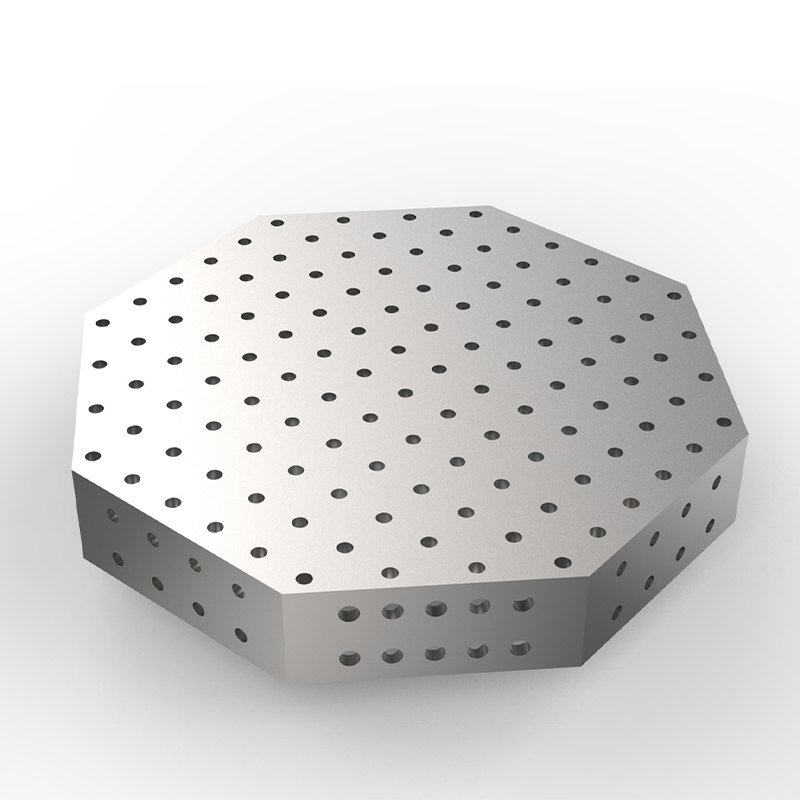
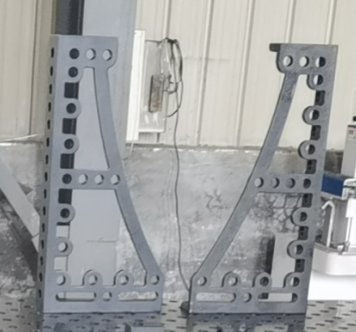
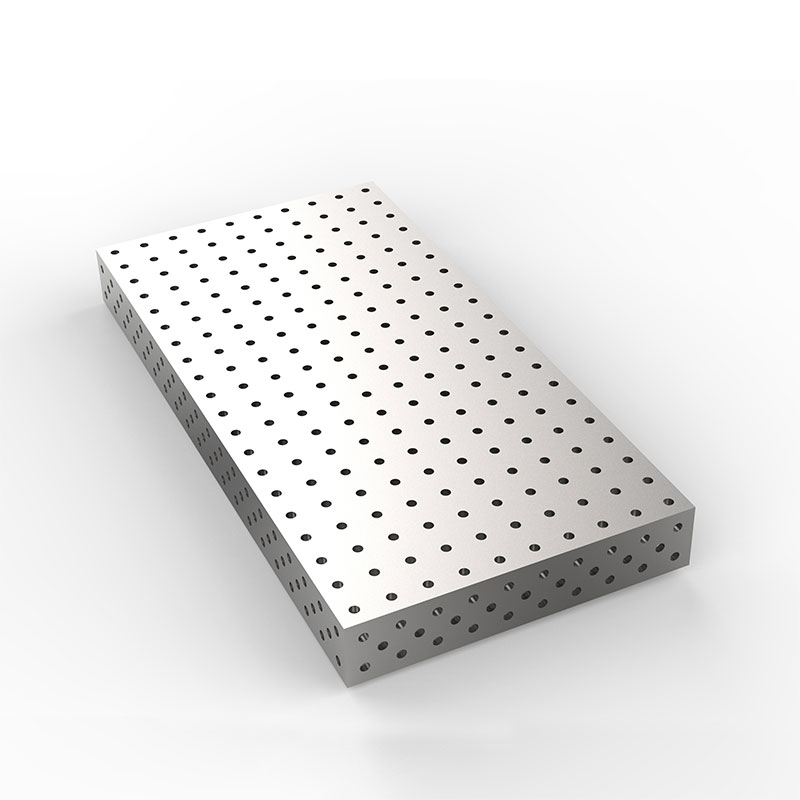
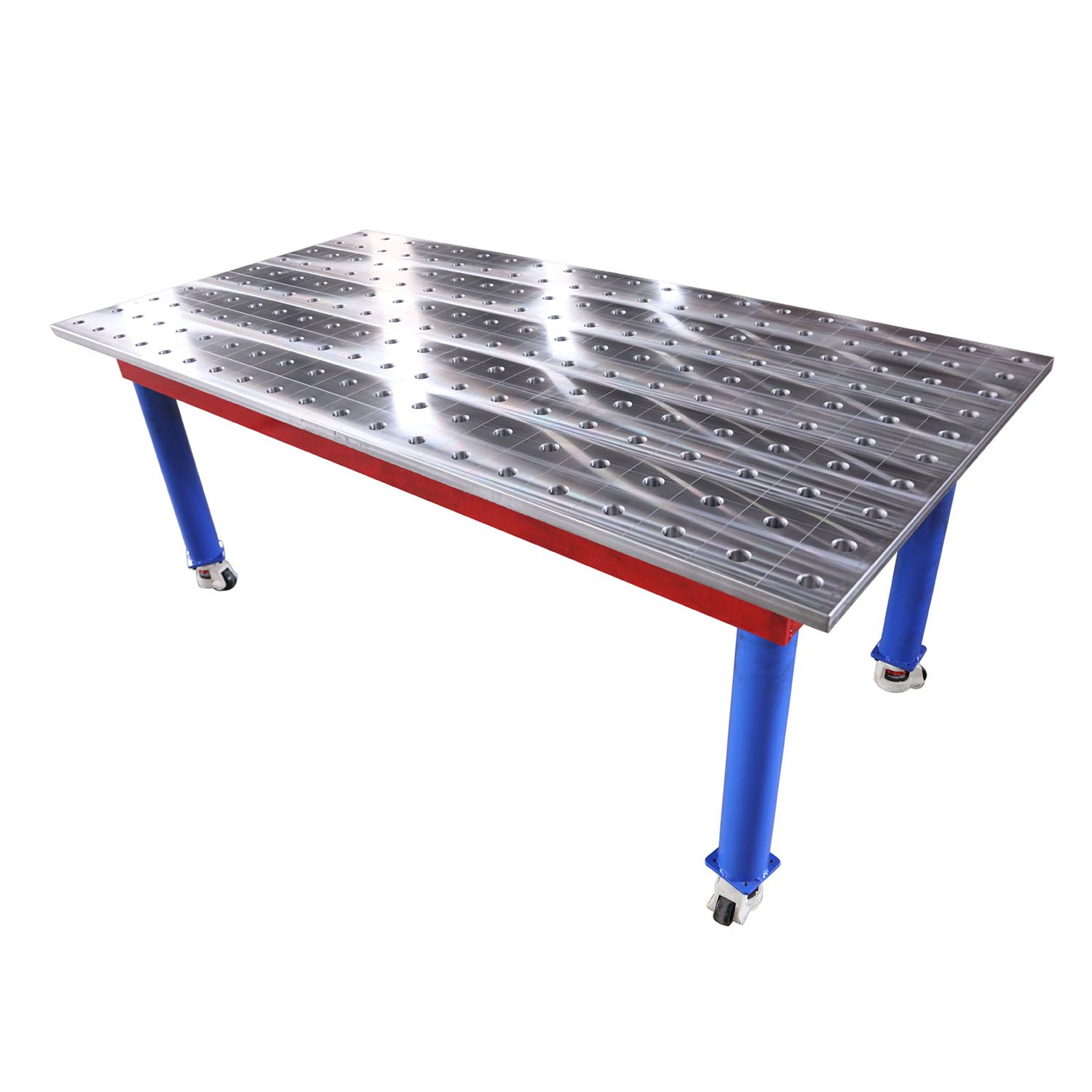
Robot welding fixtures aren’t accessories. They’re the silent engineers holding tolerances when robots move at 1.2 m/s, repeat 10,000 cycles without drift, and weld a chassis bracket with ±0.15 mm positional accuracy. We’ve seen too many automation projects stall—not from robot selection, but from fixture failure: warped base plates, misaligned locating pins, or clamps that lose grip after 300 cycles. Precision starts where the part meets the fixture—not at the TCP.
Why “Good Enough” Fixtures Break Robot Welding Economics
Robot welding fixtures do three non-negotiable jobs: locate, clamp, and stabilize. But real-world deployment reveals four hard truths.
Thermal distortion matters more than rigidity. A fixture built from 25-mm steel plate may resist deflection—but if its mounting surface lacks thermal mass or directional airflow paths, localized heating from repeated arc strikes shifts datum points by 0.2 mm within 45 minutes. We measured this on a Tier-1 agricultural equipment line using thermocouple grids embedded in fixture bases. Clamp repeatability ≠ clamp force. Pneumatic clamps rated for 8 kN often deliver only 5.3 kN after 18 months of oil mist exposure and seal wear. That’s why we specify hardened stainless steel piston rods and integrated force sensors—not just pressure gauges—on all custom robot welding fixtures. Locating isn’t about pins—it’s about sequence. First-contact surfaces must engage *before* secondary locators activate. If a part drops onto a V-block while a side pin is still retracting, micro-slippage occurs. We build sequence logic into pneumatic manifolds—not PLC code—to eliminate that variable. Serviceability kills uptime. Fixtures with buried fasteners, inaccessible grease ports, or proprietary alignment keys average 37% longer changeover time versus modular designs with standardized M6–M10 hardware and quick-release bushings. The Four Pillars of Production-Ready Robot Welding Fixtures
We don’t build fixtures to drawings. We build them to failure modes. Every design passes through these filters:
Material integrity under cyclic loading. Base plates use normalized Q345B steel (not generic “structural steel”) with Brinell hardness verified per batch. Locating pins are AISI 4140 hardened to 58–62 HRC—not 45. Why? Because 0.03 mm wear on a 12-mm pin creates 0.11 mm part shift over 5,000 cycles. We track it. Thermal management by design. All fixtures include machined coolant channels beneath high-heat zones (near weld seams), with inlet/outlet ports sized for 3 L/min flow at 0.3 MPa. No passive fins. No guesswork. Thermal imaging confirms ≤8°C delta across critical datums during 8-hour runs. Modularity without compromise. Each fixture uses ISO-standard mounting patterns (ISO 9409-1-50-4-M6) and interchangeable locator kits. Change a bracket variant? Swap three components—not re-machine six surfaces. Lead time drops from 14 days to 36 hours. Verification—not assumption. Every fixture ships with CMM-certified inspection reports: 32-point scans of datum surfaces, torque validation for all clamping circuits, and functional testing with production-weight parts under simulated cycle loads. No “as-built” approximations. When Custom Fixturing Outperforms Off-the-Shelf—And When It Doesn’t
Some teams assume modular kits solve everything. They don’t. We recently audited a European auto supplier’s line: their off-the-shelf pneumatic fixture failed 22% of first-article checks due to inconsistent jaw parallelism. The fix? A $4,200 custom base with ground granite reference surfaces and adjustable kinematic mounts. ROI came in 8.3 weeks—measured in scrap reduction alone.
But custom isn’t automatic. We decline 17% of fixture requests because they violate first principles: parts with no stable primary datum, assemblies requiring simultaneous multi-axis clamping beyond pneumatic response time, or geometries where laser tracking would outperform mechanical location. Honesty saves budgets.
Botou Haijun Metal Products Co., Ltd. builds robot welding fixtures for clients who measure success in microns—not marketing claims. Our ISO-compliant facility in Botou City runs dedicated fixture cells with CNC-machined steel bases, hardened locator systems, and integrated sensor validation. We don’t sell fixtures. We ship dimensional insurance.
What to Demand Before You Approve Fixture Design
Ask your supplier these five questions—and demand documented answers:
What’s the maximum thermal gradient you’ll allow between datum surface and clamp actuator during continuous operation? Show us the fatigue life calculation for the weakest structural link—using actual cycle count, not theoretical max. How do you verify clamping force decay across 10,000 cycles—not just initial calibration? Provide the CMM traceability chain: from master gauge block to final inspection report. What’s your mean time to repair (MTTR) for field-replaceable components? Not “under warranty”—under production pressure. If answers involve “typically,” “usually,” or “our standard practice,” walk away. Robot welding fixtures don’t tolerate ambiguity. They demand specificity—down to the alloy grade, heat treatment curve, and surface finish Ra value.
Robot welding fixtures define the boundary between robotic motion and repeatable precision. They’re where engineering intent meets metal reality. Choose based on thermal data—not brochures. Verify with CMM—not confidence. Build for 10,000 cycles—not first-article approval. Botou Haijun Metal Products Co., Ltd. delivers robot welding fixtures engineered for that standard—no exceptions, no compromises, no excuses.