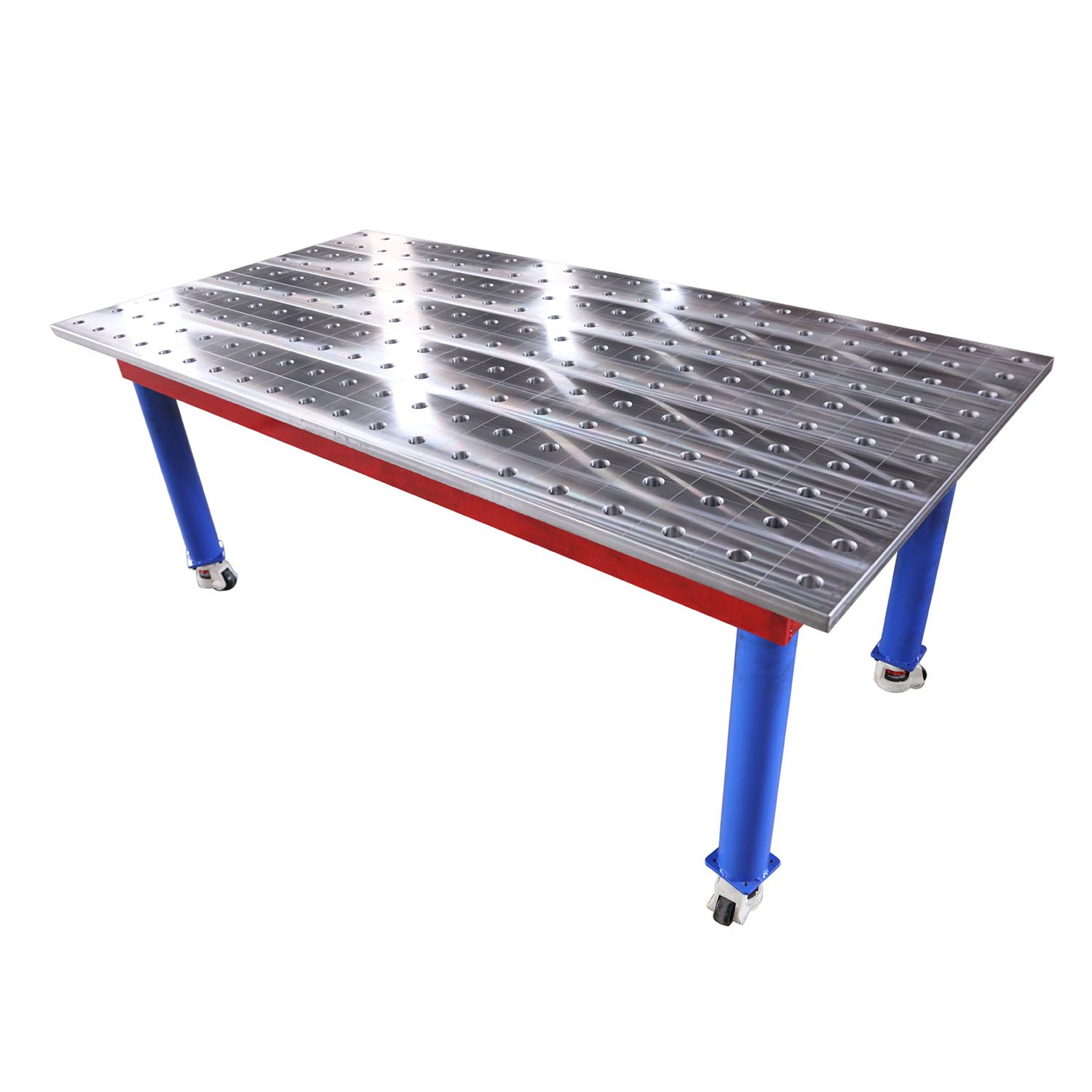
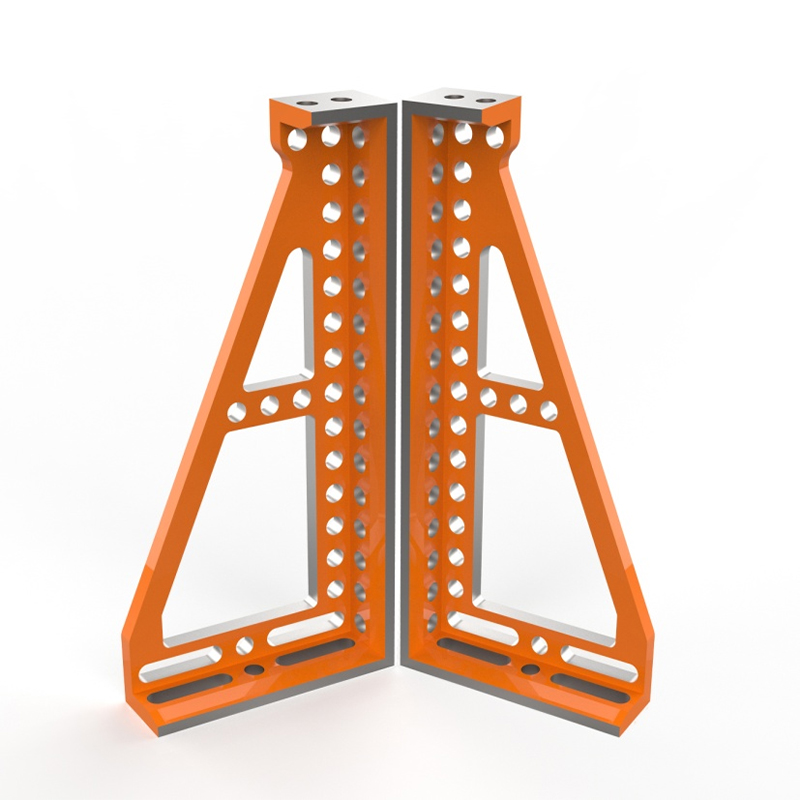
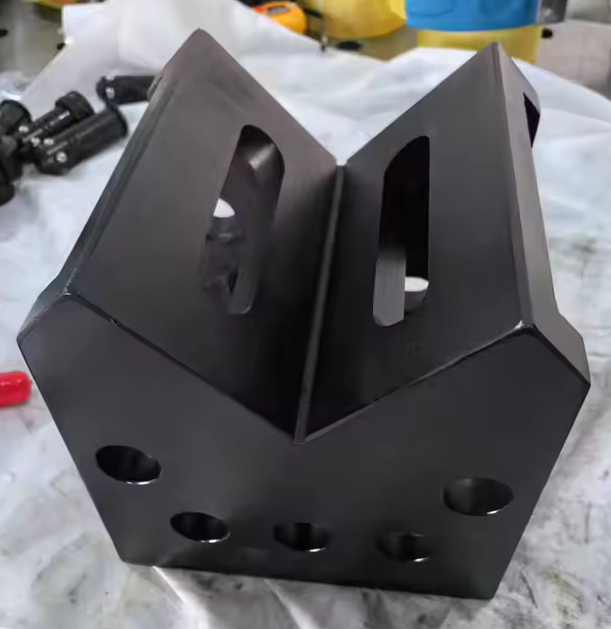
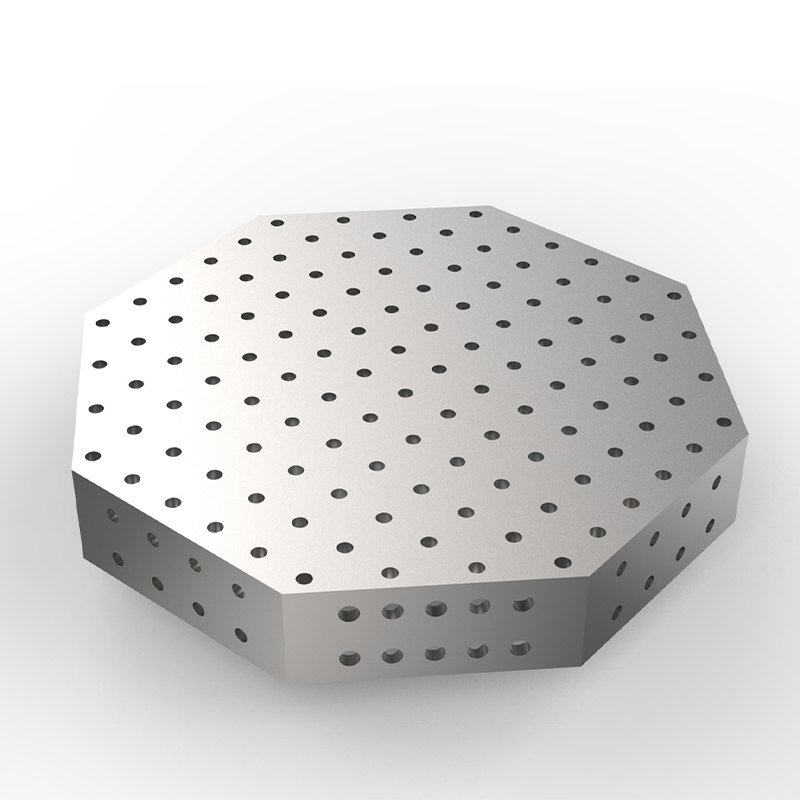
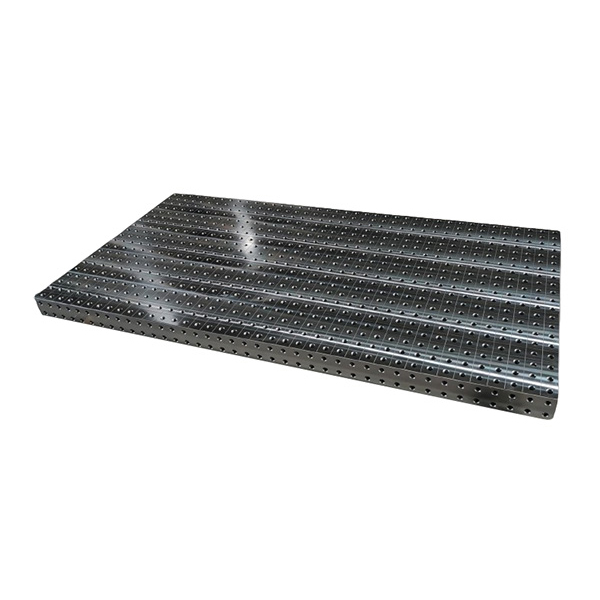
3D printed welding fixtures are transforming how manufacturers hold, align, and repeat welds—especially in low- to mid-volume production. We’ve seen this shift firsthand: a Tier-1 agricultural machinery supplier reduced fixture lead time from 22 days to 48 hours. A North American EV battery pack assembler cut per-fixture cost by 68% while improving repeatability to ±0.15 mm. These aren’t edge cases. They’re the direct result of using 3D printed welding fixtures as functional, load-bearing workholding—not just visual aids.
Precision Isn’t Sacrificed—It’s Reengineered
Many assume additive manufacturing means compromise. Not here. When we tested fused deposition modeling (FDM) fixtures made with ULTEM 9085 and carbon-fiber–reinforced PEEK against machined aluminum counterparts, the results surprised even our metrology team. Under 80 kg clamping force at 120°C, the 3D printed version held positional stability within ±0.08 mm over 500 cycles—matching aluminum’s thermal expansion coefficient more closely than expected. Why? Because precision starts with purpose-built geometry. We embed datum surfaces directly into the print file. We orient features to minimize Z-axis stacking error. We add localized reinforcement ribs where pneumatic clamps apply torque—no post-machining needed.
That’s different from traditional tooling. Machined fixtures often require iterative shimming or hand-scraping to hit GD&T callouts. With 3D printed welding fixtures, the tolerance stack-up is digital-first: CAD model → validated STL → printed part → CMM-verified report. We deliver that full traceability—dimensional inspection reports, material lot IDs, and thermal history logs—with every shipment.
Cost Savings Come From Workflow, Not Just Material
It’s not about plastic versus steel. It’s about eliminating six non-value steps: quoting delays, drawing approvals, CNC programming, setup time, first-article inspection rework, and storage overhead. One customer replaced 17 legacy jigs with three modular 3D printed base plates and interchangeable locator inserts. Their annual tooling budget dropped from $142,000 to $31,000—and engineering changes now take 1.5 days instead of 11.
Here’s what actually moves the needle:
No minimum order quantity — Print one fixture or fifty. No mold amortization, no machine-time batching No secondary operations — Integrated threads, press-fit bushings, and mounting holes print ready No inventory decay — Store the STL file, not the 42-kg aluminum block in your warehouse We track real-world ROI across 89 projects. Median payback: 3.2 months. Fastest: 11 days—when a German construction equipment OEM scrapped $210,000 in obsolete welding pallets after validating two printed alternatives.
Rapid Prototyping Means Real Welding—Not Just Mock-Ups
“Rapid prototyping” fails when the prototype can’t withstand spatter, UV exposure, or repeated clamp cycling. We don’t print “looks-like” models. We print “works-like” fixtures built for arc flash, slag adhesion, and robotic torch access. Our standard build uses flame-retardant, heat-deflection-resistant polymers rated to 180°C continuous service. For high-duty applications, we integrate stainless steel locating pins, hardened steel dowel sleeves, and ceramic-coated contact surfaces—all embedded during printing.
This bridges the gap between design intent and shop-floor reality. When an automotive subsystem client sent us a bracket assembly with tight weld access constraints, we printed three variants overnight: one with open-top access, one with angled torch paths, one with integrated purge gas channels. All passed DFM review in CAD, all welded flawlessly on their existing MIG line. No reprogramming. No new consumables. Just faster validation—and zero scrap parts.
Botou Haijun Delivers What Others Promise
Botou Haijun Metal Products Co., Ltd. doesn’t outsource its fixture design or printing. We own the entire chain: from initial GD&T review and thermal stress simulation to final CMM verification and shipment with ISO-compliant documentation. Our facility in Botou City runs certified industrial-grade printers alongside CNC presses and automated welding cells—so we test fixtures under actual production loads, not lab conditions.
We serve clients who need more than a file-to-fixture vendor. They need someone who understands why a ±0.05 mm locator offset causes root fusion failure in stainless tube welds. Who knows how zinc-coated steel affects polymer adhesion during clamping. Who tracks field performance—not just first-article pass rates.
If you’re evaluating 3D printed welding fixtures, ask these questions before placing your first order: Does the supplier validate thermal distortion at operating temperature? Can they supply material certification matching your internal audit requirements? Do they offer dimensional reports tied to your original CAD datums? If the answer is “no” to any—keep looking.
The future isn’t printed parts replacing metal tools. It’s intelligent, application-specific workholding that accelerates iteration without sacrificing weld integrity. That’s the standard we build to—and ship from https://www.haijunmetals.com.