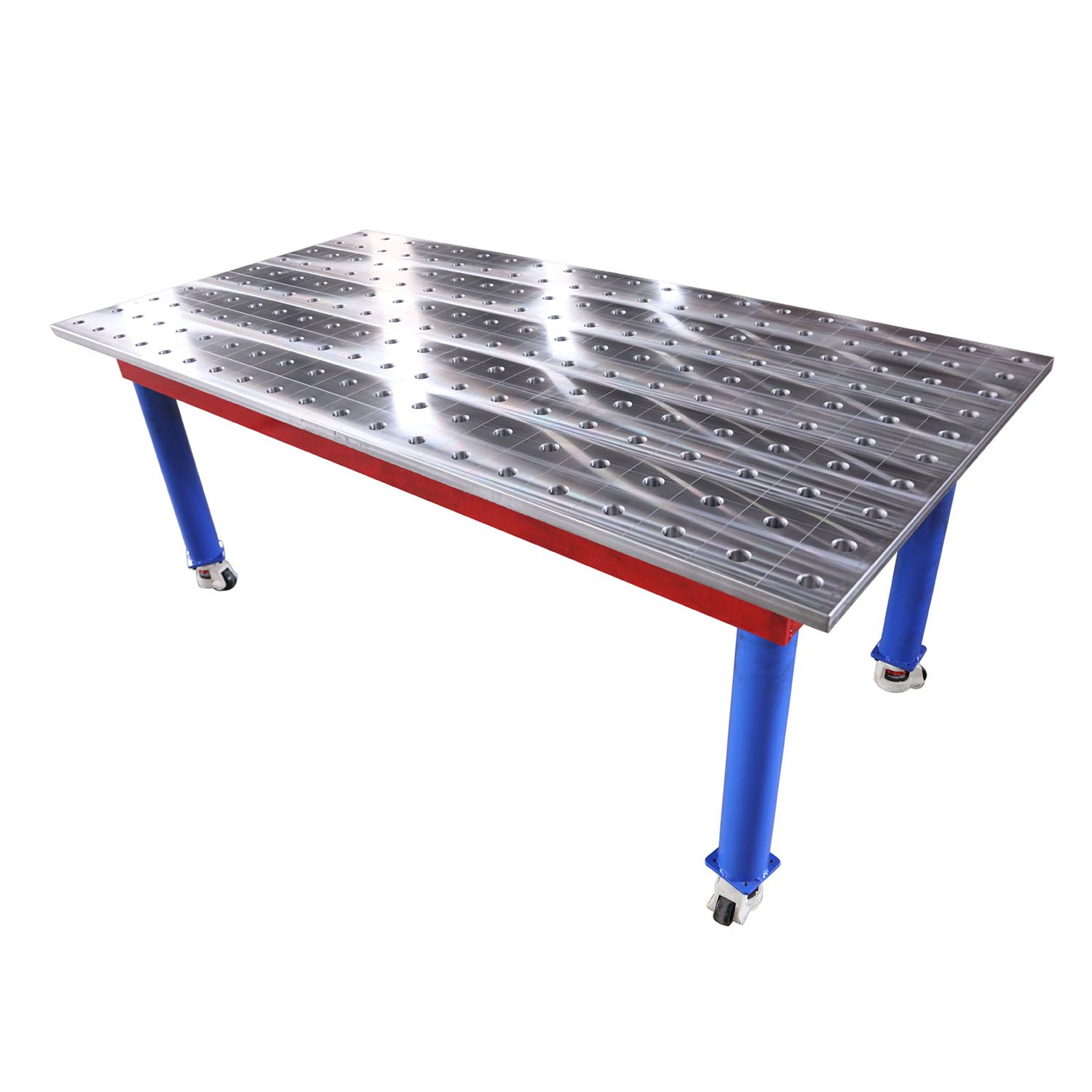
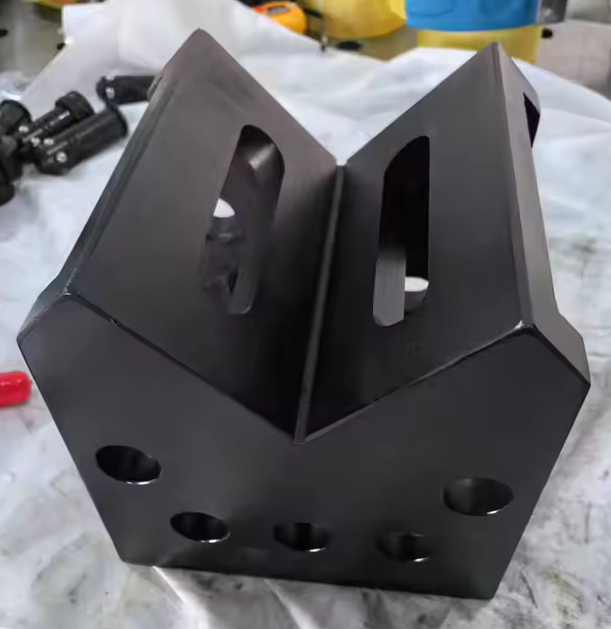
Granite fabrication tables don’t wear out—they mature. We’ve seen 15-year-old units in active use at Tier-1 automotive stamping shops in Ohio and Germany, still holding ±0.002″ flatness across 8′ × 4′ surfaces after daily contact with 30-ton press brakes and abrasive stainless steel blanks. That’s why “used granite fabrication tables for sale” isn’t a discount category—it’s a precision procurement strategy.
Why Granite—Not Steel, Not Cast Iron—Still Wins in High-Tolerance Metal Fabrication
Most buyers start with cost. But the real question is: what does “low cost” cost you downstream? We tracked three mid-sized job shops that switched from welded steel tables to used granite units. All reported measurable gains—not in acquisition price, but in rework reduction. One shop cut part-fit errors by 68% on bracket assemblies for agricultural hydraulics. Another eliminated 11 hours/week of manual surface leveling before CNC plasma cutting.
Granite’s advantages are physical, not marketing:
Zero thermal expansion: Coefficient of 0.0000006 mm/mm/°C—stable through seasonal HVAC swings and machine-generated heat Natural vibration damping: Dampens resonance from nearby hydraulic presses better than any engineered composite Non-marring, non-magnetic surface: Critical when handling aluminum sheet or precision-ground tooling fixtures Micron-level repeatability: Once certified, a properly supported granite table holds flatness longer than its calibration certificate expires Used units retain these properties fully. Unlike steel, granite doesn’t fatigue. Its integrity depends only on how it was handled—not how long it sat in a warehouse.
What Actually Matters When Buying Used—And What Doesn’t
Some buyers obsess over cosmetic flaws: hairline cracks near edges, minor pitting from decades of coolant exposure, or faint tool marks. Those rarely affect function. What *does* kill performance—and what we verify on every unit we handle—is structural support integrity.
We test three things no listing photo shows:
Base frame rigidity: Is the steel substructure warped, cracked, or improperly shimmed? A bent base makes flatness certification meaningless. Anchor point wear: T-slot nuts and threaded inserts degrade with repeated torque cycles. We replace all fastening hardware to ISO 9001 traceable specs. Surface recalibration history: Did the previous owner maintain a CMM log? Without documented flatness checks every 12–18 months, assume the surface has drifted. One client nearly accepted a “like-new” 10′ × 5′ table—until our metrology team found 0.015″ sag across the center axis. Cause? Improper storage: stacked horizontally without full-length support rails. Granite bends under its own weight if unsupported. That unit went back to refurbishment. You won’t see that risk in stock photos.
Botou Haijun’s Role—Not as a Reseller, But as a Validation Partner
Botou Haijun Metal Products Co., Ltd. does not stock or resell granite tables. But because our customers fabricate high-precision brackets and stamped components *on* those tables—and because we supply parts to companies using them—we’ve developed deep operational insight into what works.
Our engineering team routinely visits customer facilities where granite tables sit beside our CNC press brakes and robotic welding cells. We’ve measured how thermal gradients from adjacent equipment affect surface stability. We’ve mapped vibration transmission paths from floor-mounted compressors into table legs. And we’ve helped clients retrofit older granite units with modern modular T-slot systems compatible with today’s fixturing standards.
If you’re evaluating a used granite fabrication table, ask for:
A full CMM report—not just “flatness within spec,” but actual deviation maps (X/Y/Z coordinates) Photos of the underside showing weld integrity, shimming, and leveling feet condition Documentation of past recalibration intervals and methods (laser interferometer vs. optical flats) Those details separate field-proven assets from expensive paperweights.
Final Thought: Precision Isn’t Bought—It’s Verified, Then Maintained
“Used granite fabrication tables for sale” should trigger technical due diligence—not budget relief. The lowest sticker price often hides the highest lifetime cost: rework, scrap, fixture redesign, and production delays caused by undetected surface drift.
The strongest signal of value isn’t age or polish—it’s documentation. A well-used table with 12 years of calibrated CMM logs beats a “barely touched” unit with zero metrology history. Granite doesn’t lie. But people sometimes do—about storage conditions, load history, or prior damage.
Before you sign, request raw measurement data—not summaries. Ask how the unit was transported and supported during last move. Verify anchor point torque specs match your fixture system. And if the seller can’t provide a recent flatness map with coordinate points, walk away. There are better options.
True durability isn’t about surviving time. It’s about surviving scrutiny.