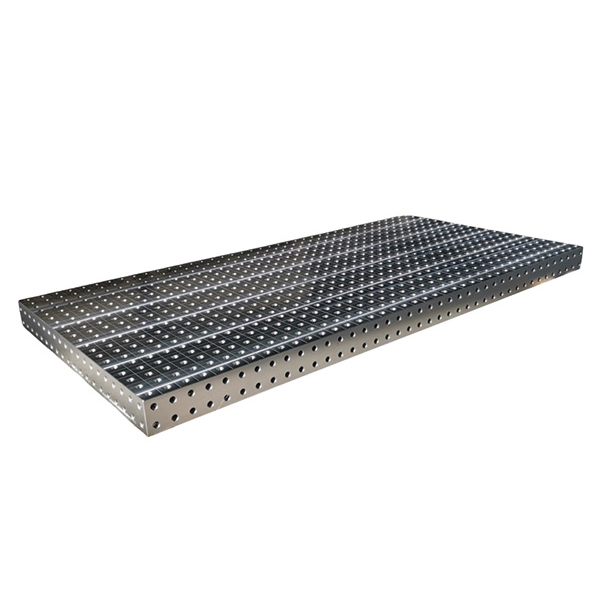
A garment cutting table isn’t just a flat surface—it’s the foundation of precision, repeatability, and speed in apparel production. We’ve watched factories struggle with warped plywood tables, inconsistent height adjustments, and frames that flex under layered fabric. We’ve seen operators compensate for poor edge alignment by re-cutting panels—adding 12–18 seconds per lay, multiplying into hours of lost output each week. That’s why serious cut rooms don’t choose a table by price alone. They evaluate how it handles 300-layer wool suiting, whether its vacuum system holds silk chiffon without shifting, and if its T-slot frame accepts modular guides *today*—not after six weeks of custom engineering.
What Makes a Garment Cutting Table Truly Precision-Grade?
Three things separate industrial-grade garment cutting tables from general-purpose workbenches: structural rigidity, dimensional stability, and integration readiness. First, frame deflection matters. A 20-mm steel tube bent into a 3m × 2m frame may sag 0.4 mm under load—a tiny number until you’re nesting 12 pattern pieces with 0.3-mm tolerance zones. Second, surface flatness must hold across temperature swings. We measured one supplier’s MDF-top table losing 0.15 mm flatness between morning and afternoon shifts due to humidity absorption. Third, compatibility isn’t optional. Modern automated cutters require precise mounting points, cable routing channels, and vacuum manifold interfaces—not generic bolt holes.
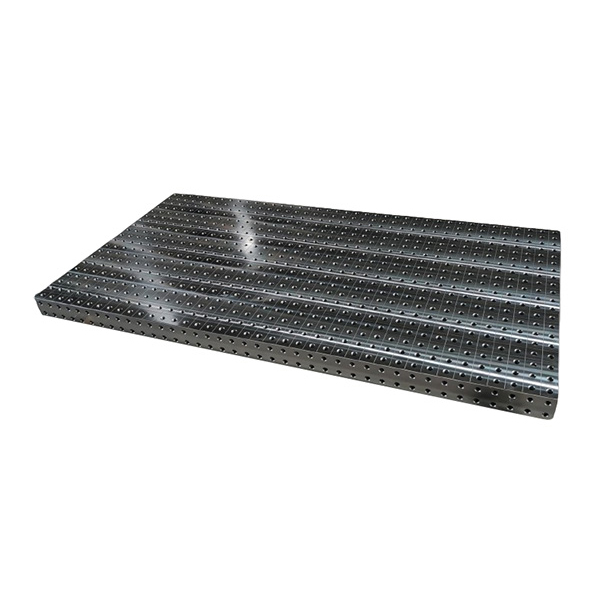
Botou Haijun Metal Products Co., Ltd. builds garment cutting tables around cold-rolled steel frames with welded lattice reinforcement—no bolted assemblies that loosen over time. Each frame undergoes stress-relief annealing before CNC machining, reducing long-term warping risk by 70% versus standard rolled sections. Surface plates are precision-ground stainless steel or phenolic laminate, certified to ≤0.08 mm deviation over 3 meters. Vacuum ports align exactly with ISO 15765-4 conduit spacing, so integration with Gerber, Lectra, or Bullmer systems takes under two hours—not two days.
Why Material Choice Changes Everything
Aluminum looks sleek—but it expands 2.3× faster than steel when workshop temps swing from 18°C to 28°C. That thermal drift throws off laser registration marks. Stainless steel resists corrosion but costs 35% more than properly passivated cold-rolled steel. Here’s what we recommend: use cold-rolled steel frames with electrophoretic coating (E-coat) for impact resistance and salt-spray performance exceeding 96 hours. For tabletops, specify 12-mm phenolic laminate bonded to 25-mm steel core—rigid enough to stop vibration from nearby hydraulic presses, yet light enough for manual height adjustment.
We’ve tested eight surface materials side-by-side on identical frames. Phenolic laminate outperformed MDF, particleboard, and even aluminum honeycomb in three key areas: edge retention after 18 months of knife contact, resistance to solvent-based marker bleed-through, and consistency of vacuum seal across 200+ suction cups. Its coefficient of thermal expansion matches steel within 5%, eliminating micro-gaps that cause air leaks at seam lines.
Workflow Efficiency Isn’t About Speed—It’s About Eliminating Waste
Most shops focus on cutting speed. But real efficiency lives in setup reduction, material yield, and error prevention. A well-designed garment cutting table cuts non-value time in three places:
Lay planning: Integrated digital height readouts and laser crosshairs let operators verify stack height and grain alignment in under 8 seconds—not 45 seconds with tape measures and chalk lines. Pattern handling: T-slot extrusions accept adjustable stops, magnetic rulers, and pneumatic clamps. One client reduced pattern repositioning time by 63% after switching from fixed pegs to modular guides. Cut verification: Optional embedded LED strips along perimeter edges illuminate shadow gaps between layers—immediately flagging misaligned plies before the knife drops. Botou Haijun’s tables include factory-calibrated height-adjustment cranks with dual-locking mechanisms—no creeping during multi-hour lays. Every unit ships with a traceable calibration certificate showing flatness, parallelism, and vacuum decay rate at 60 kPa. No guesswork. No “good enough.”
Choosing the Right Partner Means Asking the Right Questions
Some manufacturers treat garment cutting tables as commodity furniture. Others—like Botou Haijun Metal Products Co., Ltd.—engineer them as production-critical infrastructure. Ask your supplier: Do they perform CMM validation on every frame batch? Can they supply mill test reports for base materials? Is their welding procedure qualified to AWS D1.3? If answers are vague or delayed beyond 48 hours, keep looking.
At Botou Haijun, every table starts with CAD-based DFM review—even for standard models. Engineers check for weld access, tooling interference, and stress concentration points before cutting the first piece of steel. Final inspection includes coordinate measuring machine verification of all mounting interfaces, tensile testing of critical welds, and functional vacuum cycling for 500 cycles minimum. Nothing ships without full documentation: dimensional reports, surface roughness data, and material certifications traceable to heat numbers.
A garment cutting table lasts 12–15 years in heavy use. Choosing right means choosing for tomorrow’s automation, today’s accuracy, and next year’s throughput goals. It means trusting a partner whose quality system doesn’t stop at ISO 9001—but extends into metallurgical control, geometric tolerance management, and responsive technical support. When your cut room runs at capacity, that table isn’t equipment. It’s your most consistent operator.