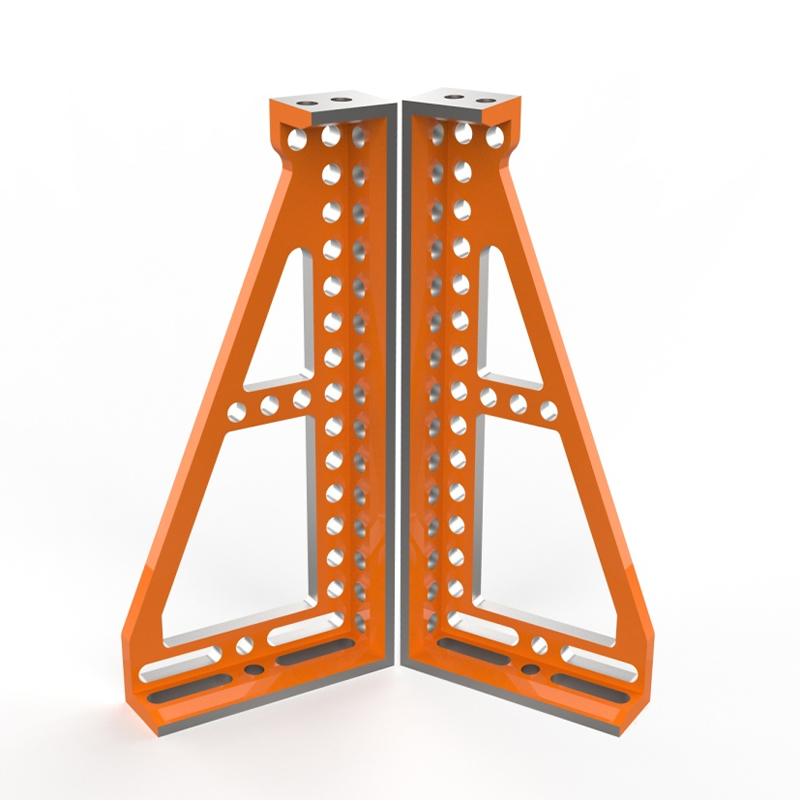
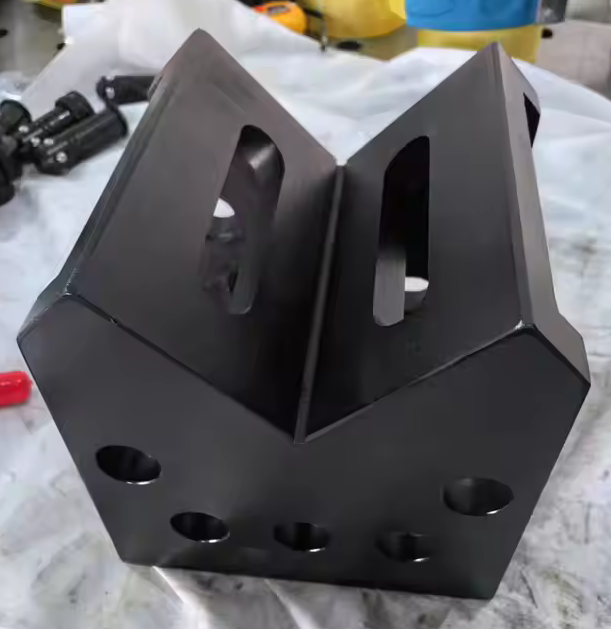
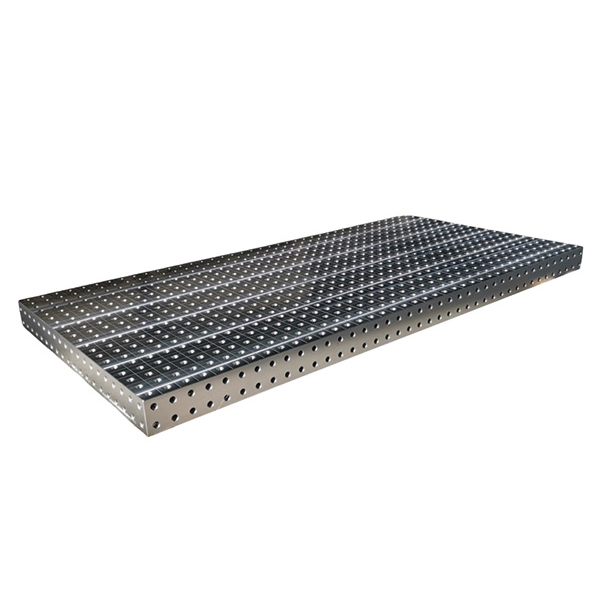
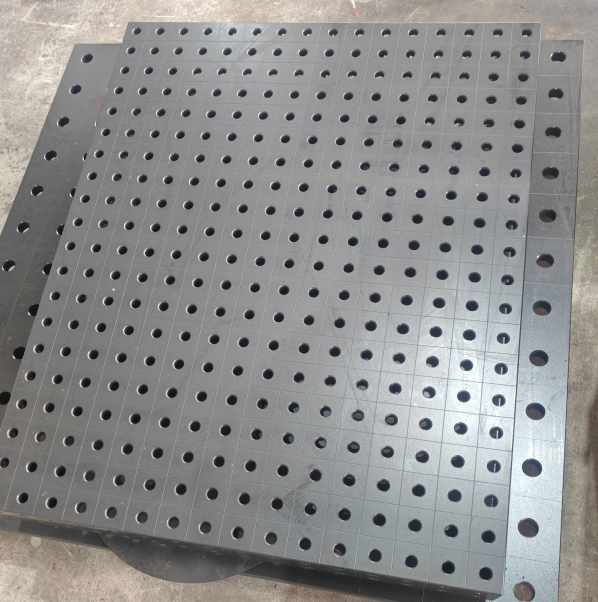
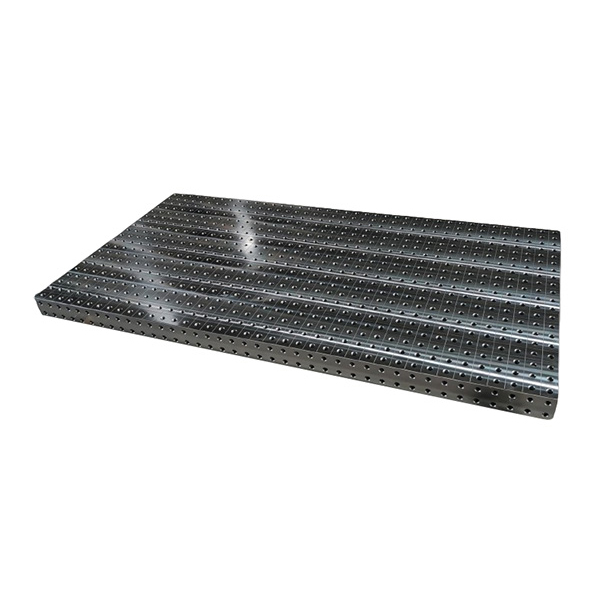
Welding table jigs aren’t accessories—they’re force multipliers. In our shop, we’ve seen teams cut weld cycle time by 40% just by swapping generic clamps for purpose-built welding table jigs. One agricultural equipment client reduced rework from 12% to under 2% after switching from manual layout to repeatable jig-based fixturing. That’s not incremental improvement. It’s dimensional control made physical.
Why “Good Enough” Fixturing Fails Under Real Load
Most fabricators start with angle irons, C-clamps, and magnetic bases. They work—until heat distortion kicks in, until the third part of a 50-piece run shifts 0.3 mm, until a bracket fails fatigue testing because weld penetration varied across the batch. We’ve measured it: unsecured parts deflect up to 0.8 mm during tack welding alone. That tiny movement propagates into misaligned flanges, inconsistent root gaps, and stress concentrations no post-weld grinding can fix.
True fixturing does three things simultaneously: locates, supports, and restrains. Locating pins hit datums—not approximate edges. Support pads match part contour—not flat steel plates. Restraint forces counter thermal expansion vectors—not just gravity. That’s why welding table jigs built on modular T-slot tables outperform ad-hoc setups every time: they turn variability into repeatability.
Four Non-Negotiables in Jig Design (Backed by 7 Years of Field Data)
We validate every custom jig against these four criteria—before cutting the first plate:
Thermal Compensation: Base plates use 12-mm-thick cold-rolled steel—not 6-mm—because thinner material warps faster under arc heat. We add relief slots under high-heat zones to let expansion happen away from locating surfaces. Load Path Integrity: Every clamp force routes directly into the table’s structural frame—not through stacked adapters. A single 12-kN pneumatic clamp loses 35% effective force if mounted on two 10-mm spacers. Datum Consistency: All primary locators reference the same surface plane. Mixing hole-based and edge-based location on one part causes cumulative error. We enforce “one master datum per axis” in every DFM review. Tooling Accessibility: Weld access holes are sized to fit MIG guns—not just “big enough.” We test with actual torch angles: 30°, 45°, and 60° approaches. If the nozzle hits the jig at 45°, the hole gets enlarged or offset. These aren’t theoretical ideals. They’re failure modes we’ve logged across 1,200+ production runs—from stainless exhaust manifolds to aluminum robotic end-effectors.
When Off-the-Shelf Jigs Fall Short (And What to Do Instead)
Some might argue: “Why not buy standard welding table jigs?” Because real parts rarely match catalog profiles. A customer once ordered five identical “universal engine mount jigs”—only to discover their cast-aluminum housing had draft angles varying ±0.5° across batches. The jig held Part #1 perfectly. Parts #2–#5 required shimming, re-torquing, and final hand-fitting.
That’s where vertical integration matters. At Botou Haijun Metal Products Co., Ltd., we design, stamp, bend, and weld jigs in-house—no external tooling vendors, no handoffs. When a Tier-1 automotive supplier needed jigs for a new EV battery tray, we delivered functional prototypes in 11 days: CAD model → laser-cut base plate → CNC-bent locator arms → welded assembly → CMM validation. No waiting for machined castings. No tolerance stack-up from multiple suppliers.
Our clients don’t pay for “jigs.” They pay for first-part-right consistency—and that only happens when fixturing is engineered as part of the component’s manufacturing system, not bolted on after.
Building Trust, One Dimension at a Time
Welding table jigs expose weaknesses in your process—fast. If your parts won’t locate consistently, the jig reveals it. If your material springback isn’t modeled, the jig shows the gap. That transparency is uncomfortable—but necessary.
At Botou Haijun Metal Products Co., Ltd., we treat jig projects like joint development: shared GD&T reviews, stamped inspection reports for every locator pin, salt spray testing on zinc-nickel coated clamping surfaces. We don’t ship “finished” jigs—we ship documented repeatability. Every shipment includes CMM data showing max deviation across 20 consecutive parts. Not averages. Not best-case readings. Worst-case, measured.
The strongest weld isn’t the one with the most filler metal. It’s the one placed exactly where the design intended—every time. welding table jigs make that intention executable. And when your fixturing performs like a precision instrument—not a placeholder—you stop fighting distortion, scrap, and schedule slips. You start shipping confidence.