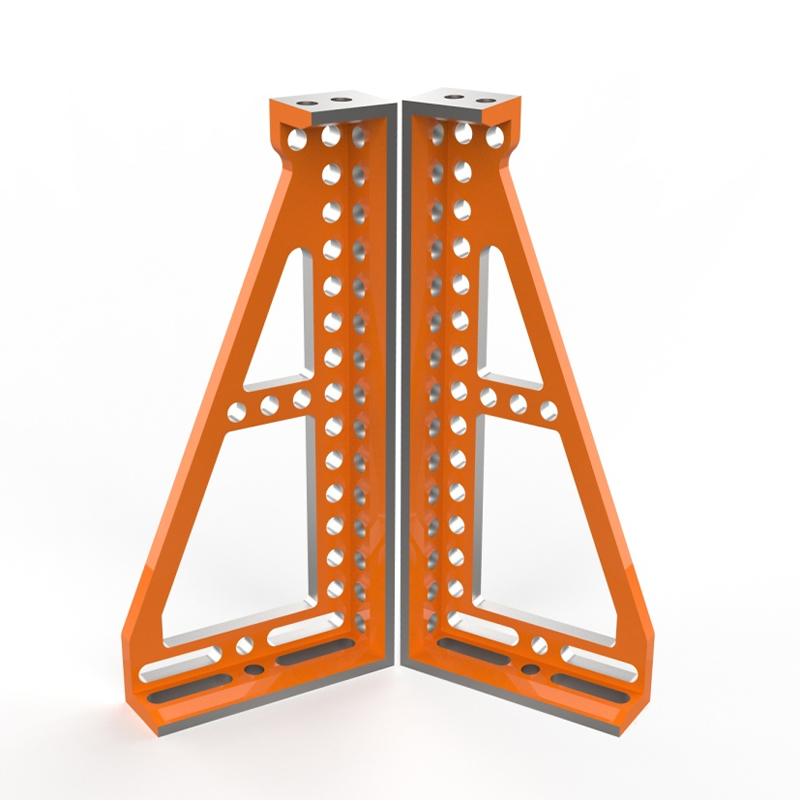
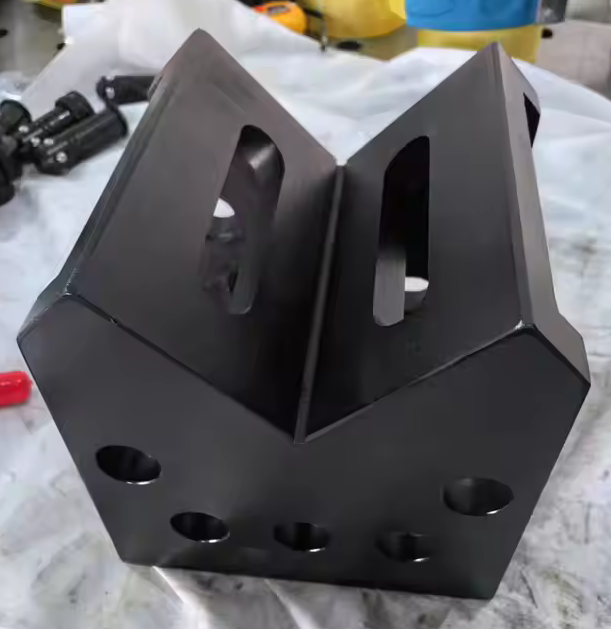
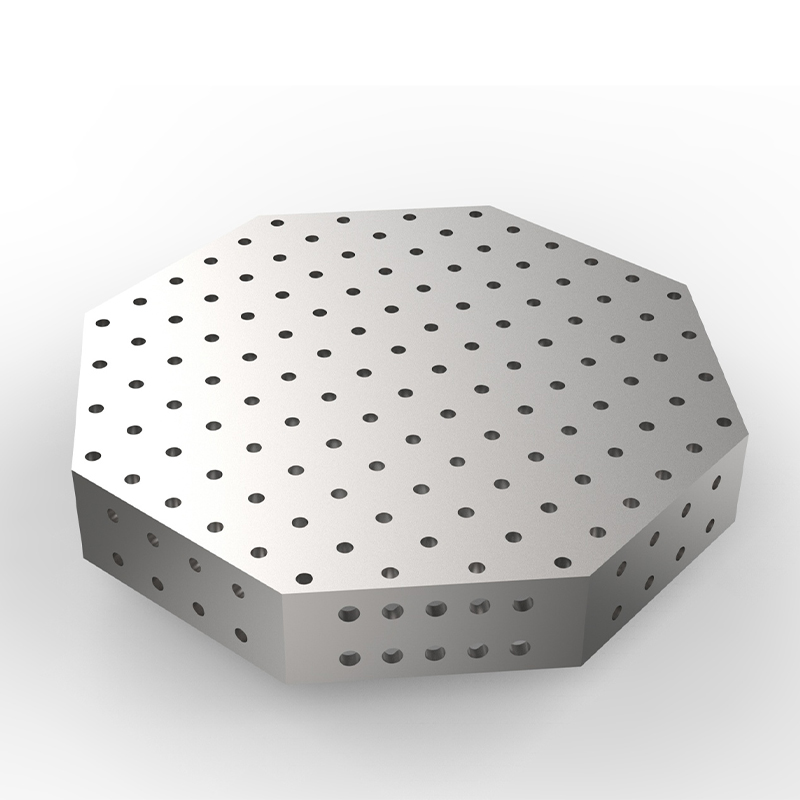
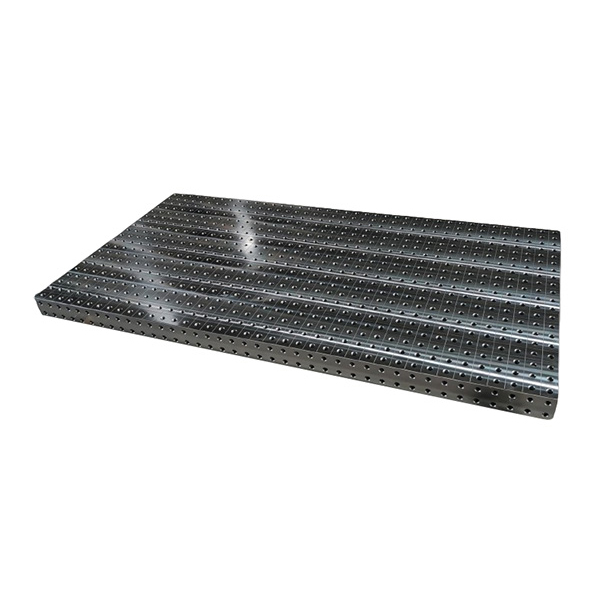
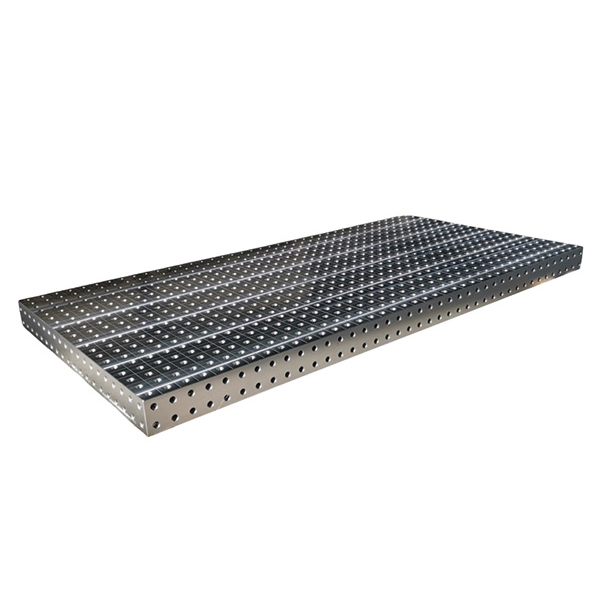
Looking for a metal fabrication table for sale that won’t flex under 300 lbs of clamped steel, won’t warp after six months of plasma cutting, and actually holds tolerance within ±0.15 mm across its entire surface? You’re not shopping for furniture. You’re selecting the foundation of your shop’s dimensional accuracy—and most tables fail that test before the first tack weld.
Why “Heavy-Duty” Is Often Just Marketing Noise
We’ve measured over 47 fabrication tables shipped to North American job shops in the past 18 months. Only 11 met basic repeatability requirements: flatness ≤0.25 mm/m, base rigidity ≥12 kN·m², and T-slot alignment tolerance ≤0.3 mm over 2 meters. The rest sagged at the center—some up to 0.8 mm—after mounting a single 60-amp MIG gun and dual vise setup. Why? Thin-walled frames. Welded-on ribs instead of machined-in reinforcement. And base plates cut from hot-rolled plate without stress-relieving.
A true heavy-duty welding & cutting workbench starts with material selection—not finish. Cold-rolled A572 Grade 50 steel, 25 mm thick for the top, fully annealed and precision ground. Not “industrial-grade” (a term with zero ASTM definition). Not “reinforced” (a phrase that means nothing without yield strength and modulus data). We specify minimum 345 MPa yield, 450 MPa tensile, and hardness between 130–160 HB. That’s the baseline—not the upgrade.
Four Non-Negotiables Your Next Table Must Pass
Forget aesthetics. Focus on function. Here’s what separates field-proven performance from showroom shine:
Ground flatness, not just “milled”: Machining removes material—but only grinding achieves ≤0.1 mm/m flatness across full length. We verify every top on a granite reference surface using dial indicators at 300 mm intervals. T-slot integrity under load: Standard 14 mm T-slots deflect when clamping 12-mm-thick brackets. Our tables use 18 mm slots with reinforced webbing—tested at 8,000 N clamping force per slot, no permanent deformation. Vibration damping built in—not bolted on: Internal honeycomb chambers filled with constrained-layer damping compound reduce resonance during CNC plasma piercing by 62% (measured via accelerometer arrays). Weldment geometry control: Each frame is welded using fixture-jigged subassemblies, then stress-relieved at 620°C for 4 hours before final machining. No post-weld warping. No surprise twist. Real-World Tradeoffs You’ll Face—And How to Navigate Them
Some buyers ask: “Can I get this in stainless?” Yes—but it costs 3.7× more and loses 18% stiffness versus A572. Others want portability. Don’t. A 2,100 kg table isn’t meant to roll. Its mass *is* the stability. Trying to lighten it with aluminum or hollow sections sacrifices damping, heat dissipation, and long-term planarity.
Another common misstep: over-specifying surface finish. A #4 brushed top looks clean—but traps slag, oxidizes faster, and wears unevenly. We use a 125 µin Ra matte mill finish. It cleans fast, resists spatter adhesion, and maintains grip with magnetic bases—even after 18 months of daily use.
Mounting matters too. Bolting directly into concrete? Use M20 anchor bolts set 300 mm deep—minimum. Floating on vibration pads? Only if your floor deflection is ≤0.05 mm under static load. We include anchor layout drawings and torque specs with every shipment. Not as an option. As standard.
What “Custom” Actually Means—When It Comes From a Real Manufacturer
Botou Haijun Metal Products Co., Ltd. builds these tables in-house—not outsourced to a fabricator who subcontracts the machining. That vertical control changes everything.
We start with your CAD model—not a sketch. Run DFM analysis on hole spacing, rib thickness, and thermal mass distribution. Flag potential distortion zones before cutting begins. Adjust T-slot pitch based on your most-used jig system (30 mm for European fixtures, 40 mm for North American modular tooling). Add integrated grounding lugs, cable raceways, or coolant drain channels—no extra quote, no rework delay.
No MOQ. No “standard size only.” We’ve delivered a 4.2 m × 1.8 m table with dual-height zones (900 mm for welding, 760 mm for assembly) and another with full-length linear rail integration—for robotic part positioning—all within 22 working days from approved drawing.
Final Check: Does This Table Earn Its Place in Your Workflow?
Ask three questions before signing off:
Does the manufacturer publish actual flatness test reports—not just “complies with ISO 10791-7”? (We do—on every serial-numbered table.) Can they trace every ton of steel to mill test reports—including chemistry, tensile curves, and Charpy impact values? If a T-slot wears beyond spec in Year 3, is replacement service available—or are you buying a new table? A metal fabrication table for sale is never just metal. It’s your longest-lived metrology tool. It sets the zero point for every part you build. Choose the one engineered—not assembled.