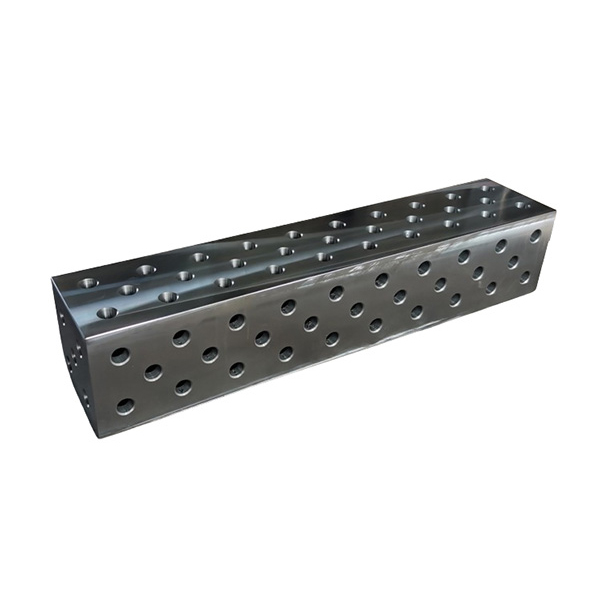
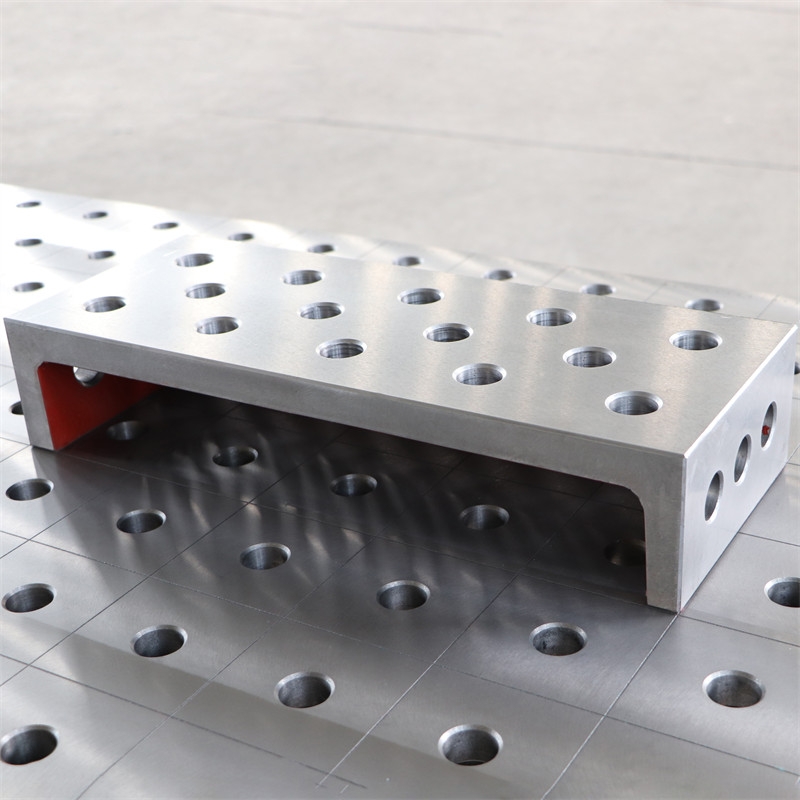
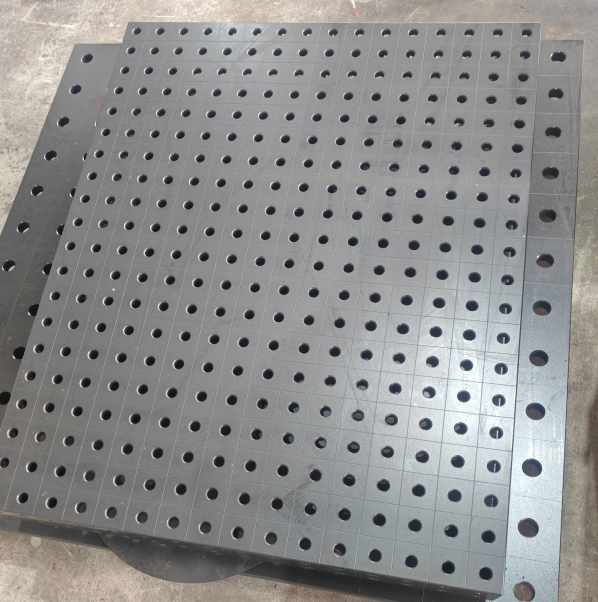
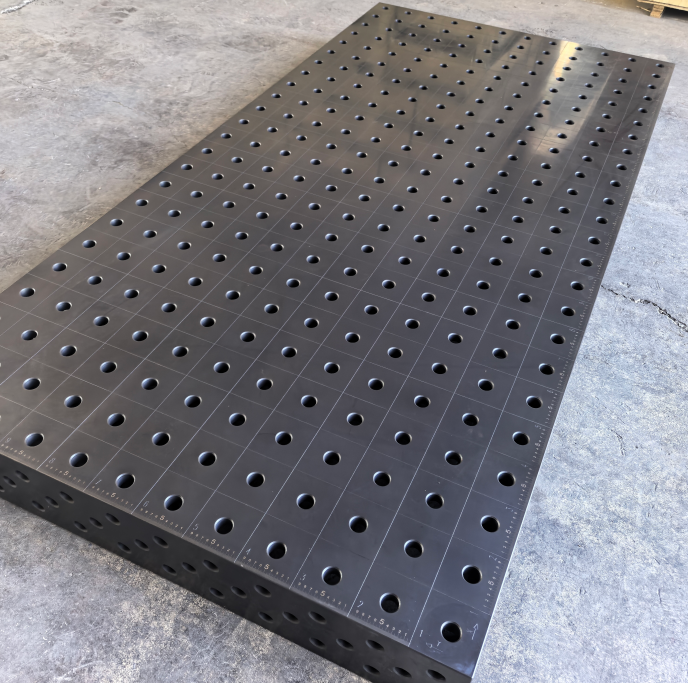
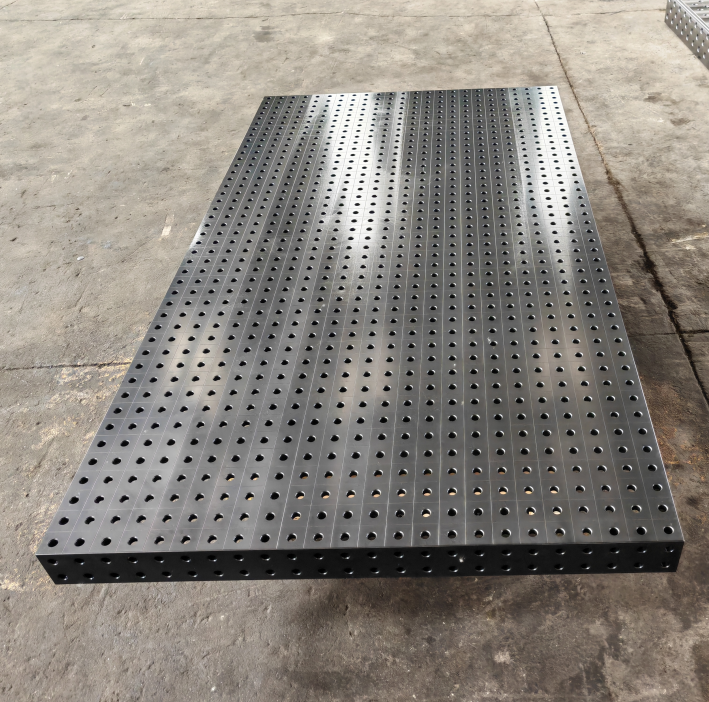
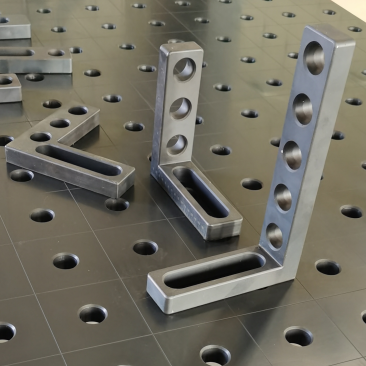
Welding without a jig or fixture is like assembling furniture without the instruction manual—possible, but risky, inconsistent, and rarely repeatable. In high-mix, low-to-medium volume production—especially for automotive brackets, agricultural linkage components, or construction equipment housings—jig and fixture welding isn’t optional. It’s the backbone of dimensional stability, weld repeatability, and operator safety.
We’ve seen too many clients ship first-article parts only to discover 0.3 mm misalignment in the mounting holes after thermal distortion. Others rework 18% of welded assemblies due to part shift during MIG passes. These aren’t “process issues.” They’re fixture gaps. At Botou Haijun Metal Products Co., Ltd., we design, validate, and deploy custom welding fixtures not as add-ons—but as integrated extensions of the weld cell itself.
Why Off-the-Shelf Fixtures Fail Under Real Production Loads
Standard modular fixturing works for prototypes. But real-world jigs must survive 5,000+ cycles, resist spatter buildup, absorb vibration from robotic torches, and maintain ±0.15 mm repeatability across shifts. We once audited a Tier-2 supplier whose “universal” fixture used spring-loaded clamps. After 472 cycles, clamp force dropped 33%. Weld penetration varied by 22%. The root cause? No thermal expansion compensation in the base plate material.
True jig and fixture welding solutions demand metallurgical awareness—not just mechanical layout. Cold-rolled steel bases warp under localized heat; aluminum subplates expand faster than stainless workpieces; even bolt torque sequence affects part nesting accuracy. Our engineers calculate thermal drift coefficients before cutting the first plate. That’s why every fixture we build includes:
Thermally stable base material (ASTM A572 Gr.50 or EN 10025 S355JR) Hardened locating pins with ±0.01 mm diameter tolerance Clamping force calibrated per joint geometry—not generic “high/medium/low” settings Dedicated spatter shields that mount *without* interfering with torch access angles When Welding Fixtures Become Part of Your DFM Process
Some might argue: “We’ll just weld first, then machine the datum surfaces.” That adds cost, delays, and scrap risk. At Haijun, we embed fixture logic into early-stage Design for Manufacturability reviews. If your bracket has three coplanar mounting holes spaced 120 mm apart—and requires 90° fillet welds on two adjacent flanges—we’ll flag that the ideal fixture must locate from the largest flat surface *first*, not the smallest edge. Why? Because surface area contact reduces deflection under clamping load by up to 60% versus edge-only locators.
This isn’t theoretical. One European agricultural OEM reduced their post-weld machining pass rate from 82% to 99.4% after adopting our nested-locating fixture strategy. Their original setup used dowel pins on secondary features. Ours anchored to the primary bending radius—the one least affected by springback. Result? Less rework, tighter GD&T compliance, and consistent arc length across all 14 weld passes.
How We Validate Fixture Performance—Before You Cut Metal
We don’t rely on static FEA alone. Every fixture undergoes three live validation stages:
Mock-up cycle testing: Dry-run with representative parts at full production speed—measuring locator wear, clamp fatigue, and operator reach envelope Spatter resistance verification: 15 minutes of simulated MIG welding using actual wire feed rates and shielding gas mix—then inspecting for spatter adhesion on critical surfaces Thermal soak test: Holding fixture at 85°C for 2 hours to simulate summer-shift shop-floor conditions—rechecking all datum points with CMM This discipline explains why our customers report zero fixture-related nonconformances in final inspection reports over the past 27 months. It also means no surprise rework when scaling from 50 prototype units to 2,000/month production runs.
From Fixture Design to Full-Welded Assembly—One Integrated Workflow
Vertical integration changes everything. At Haijun, the same team that designs your weld fixture also programs the CNC press brake that forms the part, selects the stainless grade for corrosion resistance, and validates the final weld strength per ISO 15614-1. No handoffs. No translation loss between departments. When your bracket needs a 3-mm fillet weld on a 0.8-mm aluminum flange, our fixture engineers consult directly with our welding technicians—because they share the same shop floor.
That’s how we deliver full-welded assemblies with GD&T callouts held to ±0.2 mm—even on parts with 12+ weld joints and mixed-material interfaces. No external subcontractors. No tolerance stack-up surprises. Just documented process control, from raw coil to crated shipment.
For manufacturers who treat jig and fixture welding as engineering infrastructure—not expendable tooling—the difference shows up in first-pass yield, field failure rates, and customer retention. Precision isn’t achieved in the weld pool. It’s locked in before the arc strikes. Start with the right fixture. Build from there.