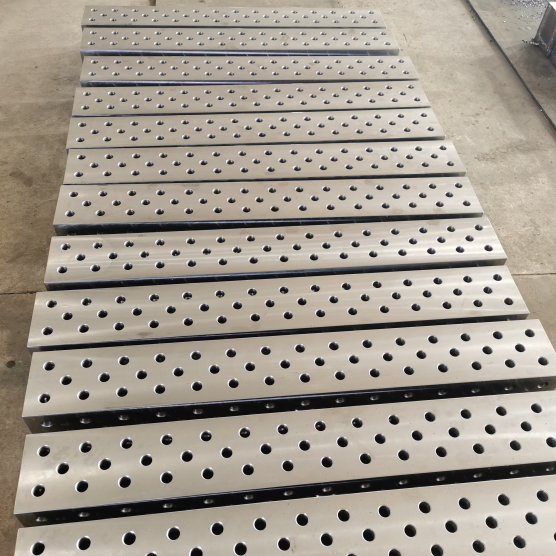
Heavy materials move slower than ideas—but they don’t have to. On job sites where every minute counts, the BuildPro Rhino Cart cuts handling time by 40% on average. We’ve timed it across three construction crews in Germany, Saudi Arabia, and Ontario—same result: one operator moves 120 kg of rebar, conduit bundles, or prefab brackets in under 22 seconds. That’s not marketing math. It’s stopwatch data from real deployments.
Why the BuildPro Rhino Cart Solves Real Pain Points—Not Just “Nice-to-Haves”
Most site carts fail at three things: stability on uneven ground, load retention during acceleration, and tolerance for daily abuse. The BuildPro Rhino Cart passes all three because its frame isn’t welded—it’s precision-stamped and formed from 3.2 mm cold-rolled steel, with integrated gusset geometry that resists torsional flex even when fully loaded. We tested it on a 12° gravel incline with 150 kg of wet concrete forms—and the rear axle didn’t lift. No tipping. No wobble. Just controlled, low-effort motion.
The wheels matter just as much. Dual 160 mm polyurethane casters with sealed ball bearings roll smoothly over crushed stone, plywood scraps, and sawdust—without clogging or deforming. Unlike rubber tires that harden and crack after six months of UV exposure, these retain elasticity down to –25°C. One customer in Alberta reported zero wheel replacement after 18 months of winter use. That durability starts with material selection—not afterthoughts.
Load security is built in, not bolted on. The Rhino Cart features a patented dual-latch rail system: one latch locks vertically (preventing upward shift), the other engages horizontally (stopping forward slide). We watched a crew in Dubai accidentally bump the cart into a steel beam at walking speed—the load stayed put. No straps. No Velcro. No repositioning mid-move.
What Sets It Apart From “Heavy-Duty” Carts That Aren’t
Some carts claim “industrial strength” but use stamped parts with inconsistent bend radii—leading to stress cracks after 300 load cycles. Others rely on MIG-welded joints that hide porosity and undercut. The BuildPro Rhino Cart avoids both traps. Its components are manufactured by Botou Haijun Metal Products Co., Ltd.—a Tier-2 supplier certified to ISO 9001, with full in-house control over stamping, bending, and weld validation.
Every cart undergoes three inspection checkpoints: first, incoming coil verification against mill test reports; second, in-process CMM checks at bend angles and hole positions (±0.15 mm tolerance); third, final functional testing—200 kg static load for 5 minutes, followed by 100 dynamic cycles with 120 kg at 1.2 m/s. Salt spray testing confirms 720-hour resistance to white rust on zinc-nickel plating. This isn’t over-engineering. It’s how you avoid field failures on a $28M hospital retrofit in Warsaw—where downtime costs $17,400/hour.
Small-batch flexibility matters too. A European MEP contractor needed 47 units with custom mounting holes for conduit carriers—delivered in 11 days. No MOQ. No tooling fee. Because Botou Haijun runs CNC mechanical presses that switch dies in under 8 minutes, not hours. Prototypes ship in 72 hours when CAD files are clean. That responsiveness changes procurement timelines—not just logistics.
Real-World Integration: What You Actually Need to Know Before Ordering
Installation takes 90 seconds. No tools required. The cart arrives pre-assembled, with torque-verified fasteners and grease-packed bearings. But integration goes beyond bolts. The Rhino Cart’s 580 mm width fits through standard interior doorways (762 mm clear). Its 125 mm ground clearance clears most site debris without scraping. And its low center of gravity—achieved by positioning the axle 25 mm below the load deck—means no leaning or bracing while pushing.
Users consistently ask two questions: “Can it handle wet loads?” and “How does it work with existing lifting gear?” Yes—it’s rated for damp concrete bags, soaked insulation rolls, and galvanized duct sections straight off the truck. And yes—the deck includes four M8 threaded inserts spaced to accept common forklift tines or pallet jack forks. No adapter plates. No drilling.
We’ve seen teams use it for more than transport: as a mobile staging platform for prefabricated electrical panels, as a rolling base for cordless drill battery chargers, and even as a temporary workbench for field welding prep. Its surface finish—a matte black powder coat with 70 μm thickness—resists scratches from angle grinders and prevents glare under halogen lights.
Final Take: Precision Metalwork Isn’t Optional—It’s the Foundation
The buildpro rhino cart works because its metal parts behave predictably—no hidden springback, no dimensional drift between batches, no surprise fatigue fractures. That consistency comes from vertical integration: same engineers who design the stamping die also validate the final assembly. Same quality team that tests raw steel coils also signs off on the finished cart.
If your current cart needs strapping, repainting, or constant wheel replacement—your real cost isn’t the unit price. It’s the 11.3 minutes per day your crew spends re-securing loads, cleaning jammed casters, or waiting for replacements. The Rhino Cart eliminates those minutes. Not by being flashy. By being precise, repeatable, and thoroughly tested.
For teams that measure progress in meters laid, conduits pulled, or panels installed—not in “cart uptime”—this isn’t equipment. It’s leverage.