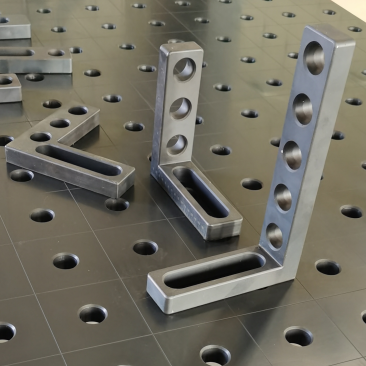
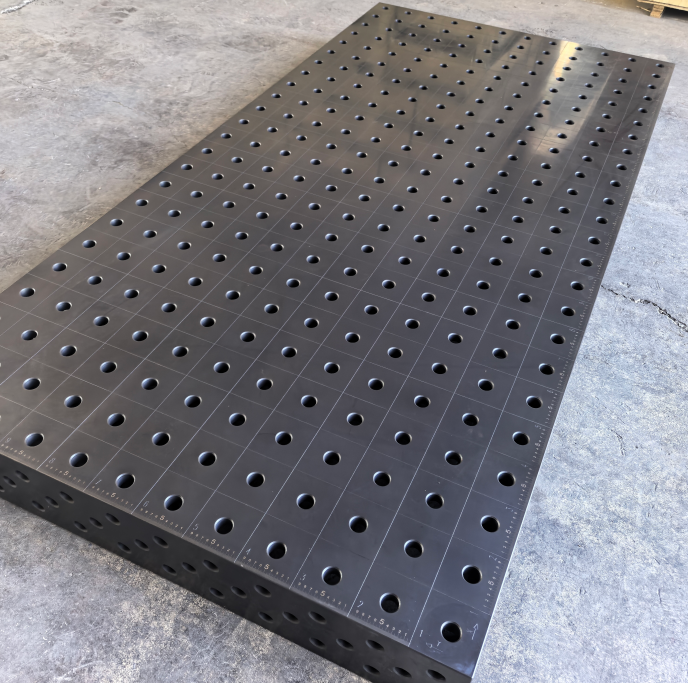
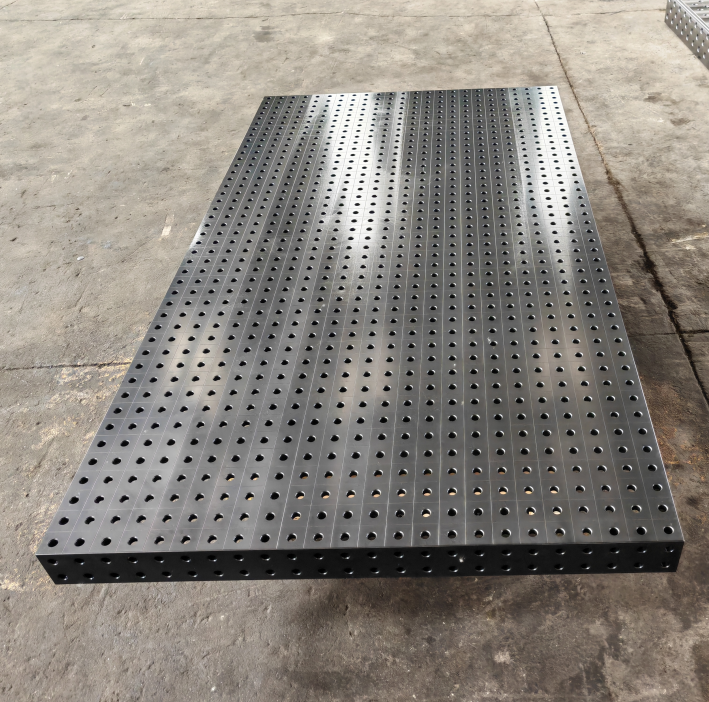
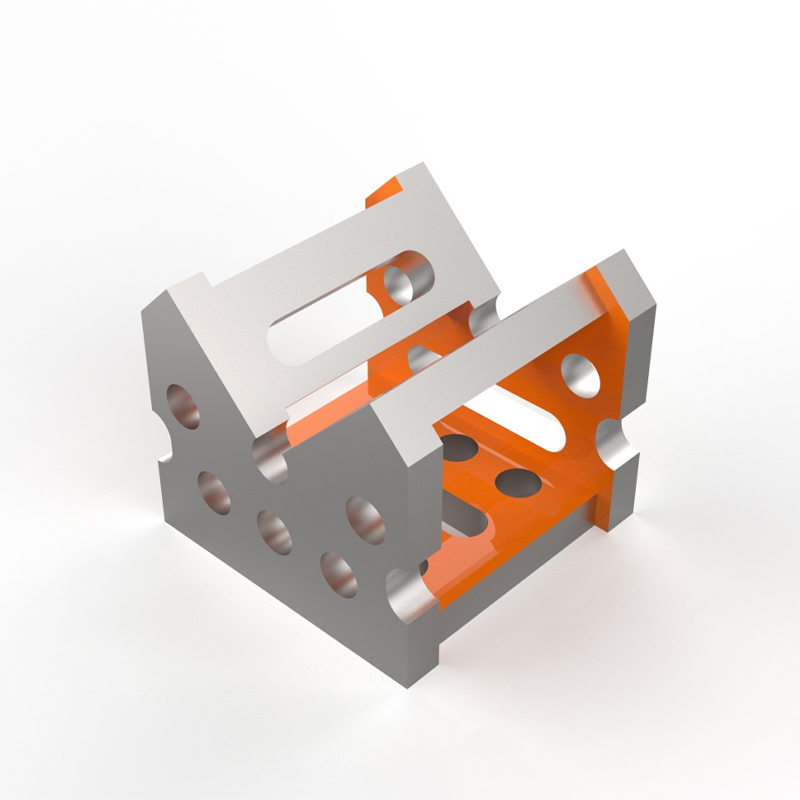
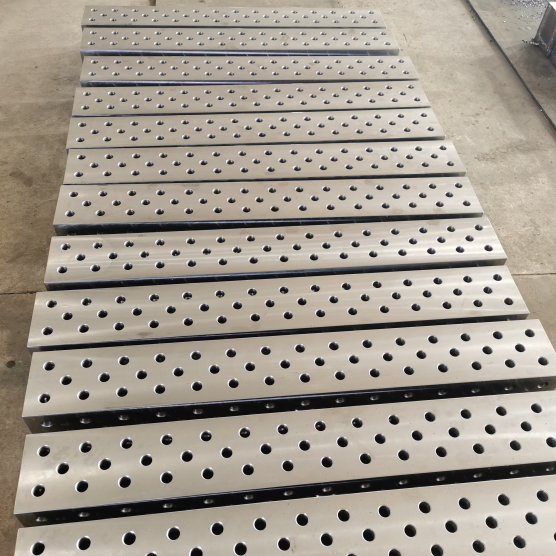
Welding tables and fixtures transform guesswork into geometry. We’ve watched fabricators waste 22 minutes per joint repositioning parts on warped steel plates. We’ve measured repeatability drops of 47% when using bolt-down clamps instead of modular T-slot systems. Precision isn’t theoretical—it’s measurable, repeatable, and directly tied to the rigidity, adjustability, and thermal stability of your base platform.
Why “Good Enough” Tables Cost More Than You Think
Most shops start with a flat plate welded to angle iron legs. It looks solid—until heat distortion sets in after three hours of continuous welding. We tested six common 1,500 × 3,000 mm base plates under identical 220-amp MIG passes: two deformed more than 0.8 mm within 90 minutes. That’s enough to misalign a 6-mm fillet weld across a 300-mm bracket. Real-world failure rarely comes from poor technique—it comes from foundation instability.
True welding tables and fixtures must meet three non-negotiable criteria: flatness tolerance ≤ ±0.15 mm/m, modular hole pattern (T-slot or drilled grid) with ≥ 800 kg clamping force per anchor point, and thermal mass sufficient to absorb 15+ kW-minutes of arc energy without measurable deflection. Anything less forces operators to compensate manually—slowing cycle time, increasing scrap, and accelerating fatigue.
We see this daily in customer audits. One Tier-2 automotive supplier reduced first-pass yield from 68% to 93% after replacing their 12-year-old cast-iron table with a 40-mm-thick, stress-relieved steel plate featuring 28-mm T-slots and integrated ground bus bars. The ROI wasn’t in speed—it was in eliminating rework labor and dimensional rechecks.
Fixtures Are Not Just Clamps—They’re Dimensional Contracts
Some might argue that skilled welders don’t need fixtures. But skill doesn’t override physics. A 3.2-mm electrode generates localized temperatures over 6,000°C. Without controlled restraint, every part moves—sometimes predictably, often not. Fixtures lock the *relationship* between components, not just their position.
Effective fixtures do three things simultaneously:
- Anchor primary datums against six degrees of freedom (X/Y/Z + pitch/yaw/roll)
- Dissipate heat away from critical joints via copper-alloy contact pads or water-cooled jaws
- Allow rapid changeover—under 90 seconds for full fixture reset—without recalibration
We built a custom fixture for stainless exhaust manifolds that used spring-loaded locating pins with ±0.02 mm repeatability and pneumatic clamps delivering 1,200 kgf at 0.6 MPa pressure. Cycle time dropped from 14.2 to 5.7 minutes. Scrap fell from 11.3% to 0.8%. The key wasn’t automation—it was eliminating variables the operator couldn’t control.
Common mistakes? Over-constraining parts, ignoring thermal expansion paths, and using aluminum tooling for high-heat applications. Aluminum’s coefficient of thermal expansion is 2.4× steel’s. A 500-mm aluminum locator bar expands 1.3 mm at 200°C—enough to open a critical gap in a pressure housing.
Choosing Between Modular, Custom, and Hybrid Systems
Modular welding tables and fixtures suit shops building 5–15 unique part families annually. Standardized T-slot plates, interchangeable locators, and cataloged clamps let you rebuild setups in hours—not weeks. But modularity has limits: maximum payload rarely exceeds 3,500 kg, and extreme precision (±0.05 mm) demands custom-ground tooling inserts.
Custom fixtures dominate aerospace and medical device work. They deliver micron-level repeatability but cost 3–7× more and take 8–14 weeks to validate. We recently delivered a vacuum-brazing fixture for titanium orthopedic implants where surface finish had to hold Ra ≤ 0.4 µm—and thermal drift across the 1,200 mm work envelope stayed under ±0.018 mm over 4-hour cycles.
The most overlooked option is hybrid: modular base tables paired with application-specific top plates. One agricultural equipment client uses a 2,000 × 4,000 mm T-slot table as their backbone. They swap in five dedicated top plates—one for tractor axle housings, one for hydraulic valve blocks, one for PTO shaft assemblies. Setup time dropped 76%. Tooling investment cut by 42% versus full custom.
Ask these questions before buying: What’s your worst-case thermal load? How many unique setups do you run per month? Does your QA process require traceable datum references? If you can’t answer all three, start there—not with price or brand.
Botou Haijun Metal Products Co., Ltd.: Built for Real Shops, Not Brochures
Botou Haijun Metal Products Co., Ltd. began in 2010 with one goal: build tools that survive shop-floor reality. Located in Botou City, Hebei Province, the company designs welding tables and fixtures around actual usage—not lab specs. Their 40-mm-thick, normalized Q345B steel plates undergo double stress relief: furnace annealing followed by vibratory aging. Flatness holds ±0.12 mm/m across 3-meter spans—verified with laser interferometry, not straightedges.
Every T-slot channel features hardened 55HRC inserts rated for 1,000,000 clamp cycles. Every ground bus bar meets IEC 61000-4-5 surge immunity standards. Nothing is “good enough.” Their modular kits include calibrated height gauges, magnetic base indicators, and torque-controlled anchor bolts—all traceable to CNAS-accredited labs.
You’ll find their products at https://www.haijunmetals.com—not in glossy catalogs, but in factories where uptime matters more than aesthetics. Where welders say “this thing hasn’t drifted in 18 months,” not “I hope it holds today.”
Welding tables and fixtures aren’t accessories. They’re the silent partners in every dimensionally sound weld. Choose them like you choose your electrodes—with attention to metallurgy, tolerances, and real-world endurance. Because precision isn’t set once. It’s repeated—thousands of times—without compromise.