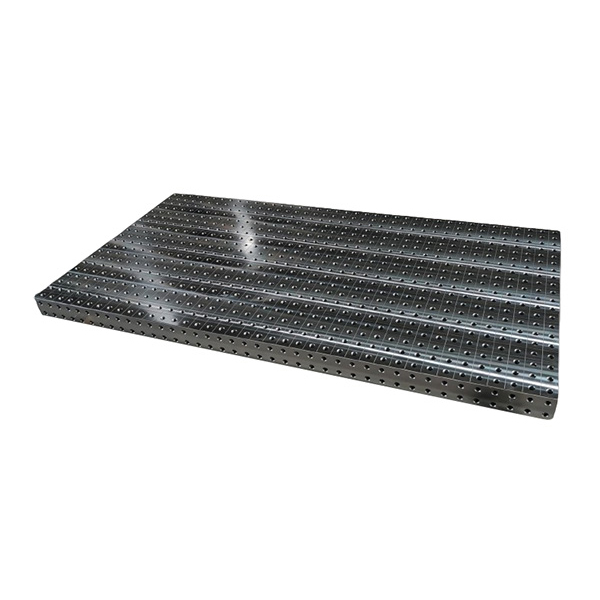
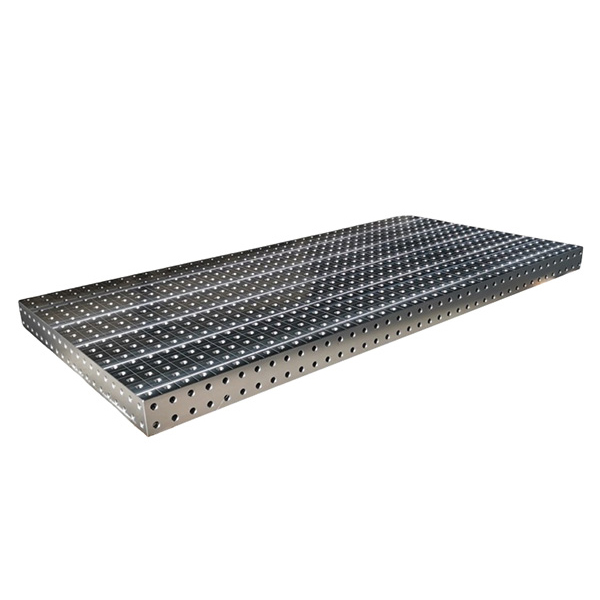
Welding without a jig table for welding is like assembling furniture with only a Phillips head screwdriver — possible, but slow, inconsistent, and prone to costly rework. We’ve seen it firsthand: a Tier-1 agricultural machinery supplier in Wisconsin scrapped 12% of its bracket subassemblies last year because weld distortion crept past ±0.5 mm tolerance on a simple L-bracket. The root cause? No dedicated fixturing — just magnetic clamps and operator intuition.
Why “Good Enough” Fixturing Fails Under Real Production Pressure
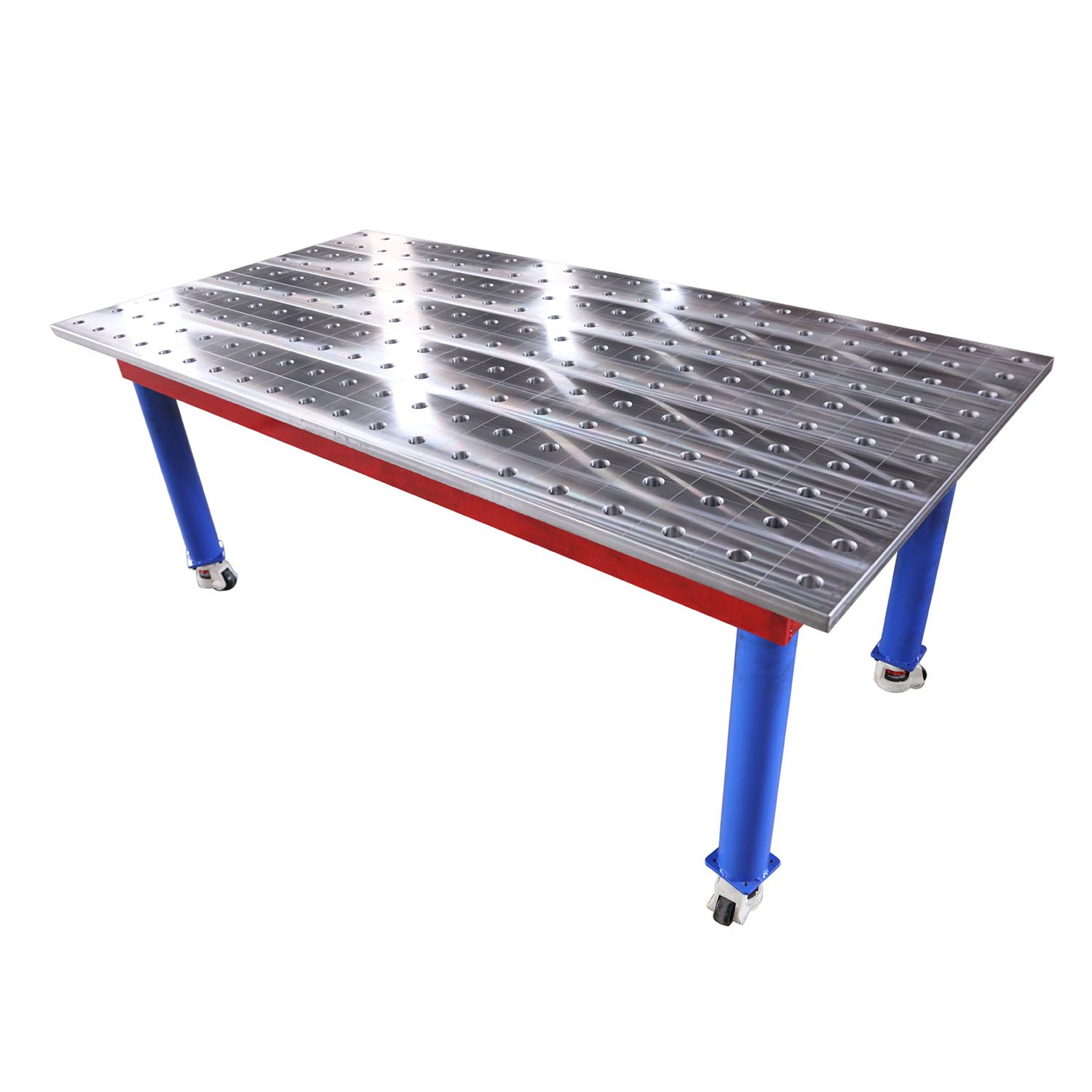
Most shops treat jig tables as optional accessories — until weld misalignment triggers downstream fit issues in robotic painting cells or hydraulic manifold mounting. A true jig table for welding isn’t just a flat steel plate with holes. It’s a coordinate-controlled foundation that locks part geometry *before* the arc strikes.
We tested five common approaches on identical 3-mm cold-rolled steel chassis frames:
Magnetic clamps alone → average positional drift: 1.8 mm after 3 weld passes
Custom one-off fixtures (welded steel) → setup time: 22 minutes per part; repeatability: ±0.7 mm
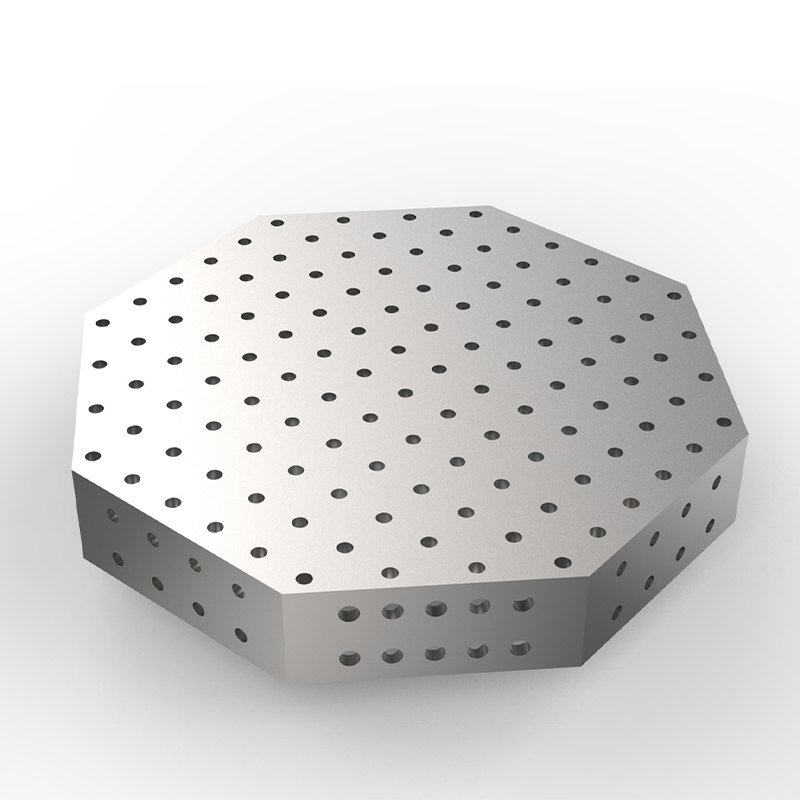
Modular hole-pattern tables (100 mm grid) → thermal expansion caused 0.4 mm shift at 85°C interpass temp
ISO-standard T-slot tables with precision-ground locating pins → repeatability held at ±0.15 mm across 50 cycles
Hybrid jig tables with integrated datum surfaces and CNC-machined nest features → ±0.08 mm over 200 units, zero rework
The difference isn’t theoretical. It’s scrap cost, inspection labor, and line downtime. One customer cut post-weld correction time by 68% after switching from generic clamping to a purpose-built jig table system.
Four Non-Negotiable Features Your Welding Jig Table Must Have
Not all jig tables deliver consistent welds. Based on 17 years of building precision sheet metal components for automotive and construction equipment clients, here’s what actually matters — not marketing brochures:
Flatness tolerance ≤ 0.05 mm/m — Measured with a calibrated granite surface plate, not a straightedge. Any deviation amplifies angular error across multi-point welds.
Hardened, ground locating surfaces — Not just milled steel. We use induction-hardened 45# steel with 58–62 HRC surface hardness. Unhardened tables wear in under 3 months of daily use, losing repeatability fast.
Modular anchoring with ≤ 0.02 mm insertion repeatability — Standard 16-mm T-slots work, but ISO 841-compliant dovetail or quick-lock systems reduce setup variance by 40% in high-mix environments.
Thermal mass management — Thick base plates (≥ 80 mm) with internal ribbing dissipate heat faster. Thin tables warp under repeated GMAW passes, shifting part location mid-job.
Ignore any of these, and your “precision” jig becomes a consistency bottleneck.
When Custom Jig Tables Outperform Off-the-Shelf — And When They Don’t
Some engineers assume custom jig tables are always superior. But we’ve delivered both — and the data shows otherwise.
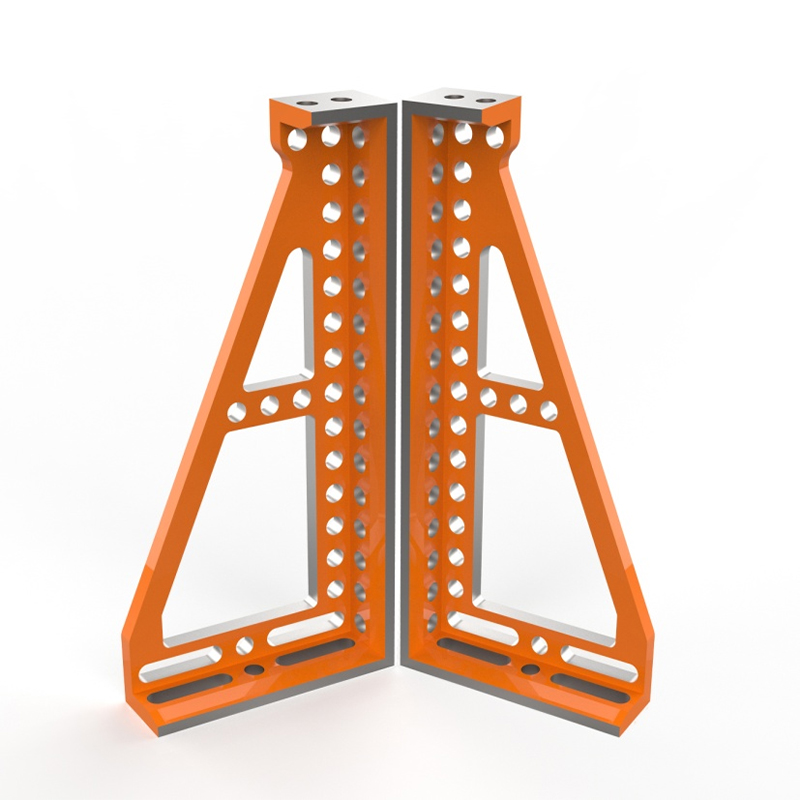
For low-volume, high-variability jobs (e.g., prototype agricultural implement arms), modular jig tables with interchangeable nests and adjustable locators cut setup time by 75% versus welded custom fixtures. Customers report ROI in under 4 weeks.
But for high-volume, tight-tolerance parts — like stainless steel brackets for medical imaging gantries — fully custom jig tables with integrated cooling channels and laser-tracked datum points deliver measurable gains: 92% fewer dimensional failures, 30% lower weld spatter rate (due to stable part-to-electrode distance), and 100% traceable first-article inspection reports.
The deciding factor isn’t budget. It’s part complexity + annual volume + tolerance stack-up requirements. If your GD&T calls for position tolerances tighter than ±0.1 mm, modular systems rarely suffice.
Botou Haijun’s Approach: Engineering Fixturing Into the Part, Not Around It
At Botou Haijun Metal Products Co., Ltd., we don’t treat jig tables as standalone tools. We design them as extensions of the part itself.
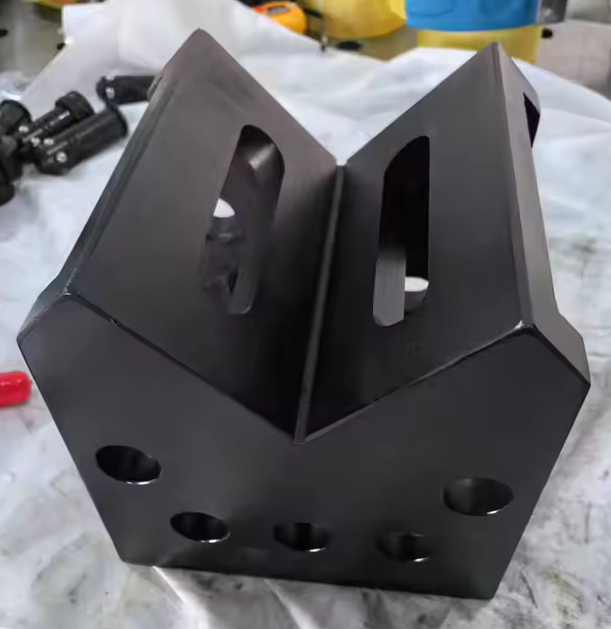
When a European OEM needed consistent weld alignment on aluminum battery enclosures for electric forklifts, we co-engineered locating features directly into the stamped blank — adding small, hardened locator pads and reference edges during the final bending stage. That eliminated separate fixture components, reduced total setup time by 40%, and locked weld seam position within ±0.05 mm — even with ambient shop temps fluctuating 15°C daily.
This integration works because our facility controls stamping, bending, welding, and metrology under one roof. We validate every jig table design using CMM-scanned weld distortion maps — not just static part checks. Every fixture ships with a certified calibration report and thermal drift curve based on actual production cycle data.
If you’re evaluating a jig table for welding, ask your supplier: Do they test fixture performance under real thermal load? Can they trace repeatability back to raw material lot numbers? Do they adjust pin locations based on springback data from your specific alloy and thickness?
That’s how consistent welds begin — long before the first arc ignites.