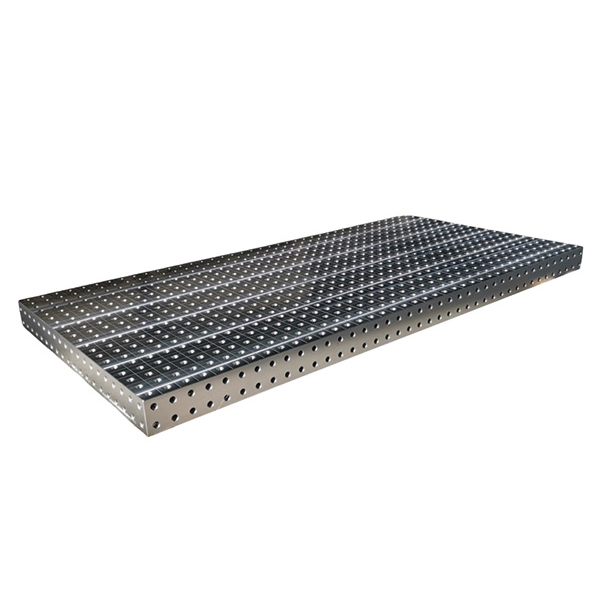
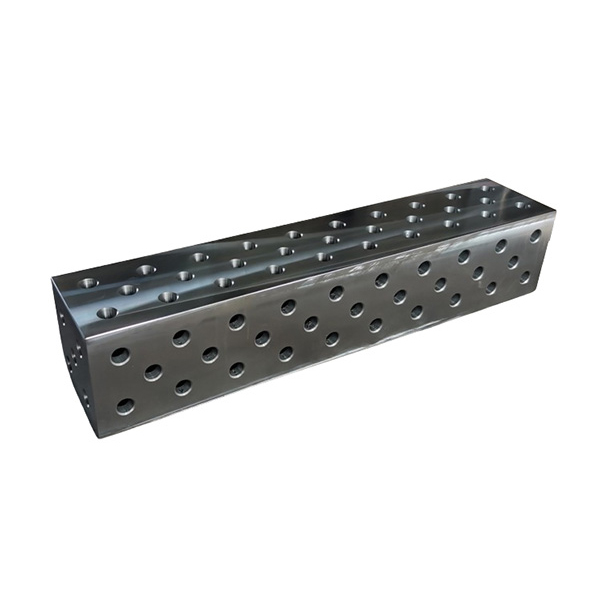
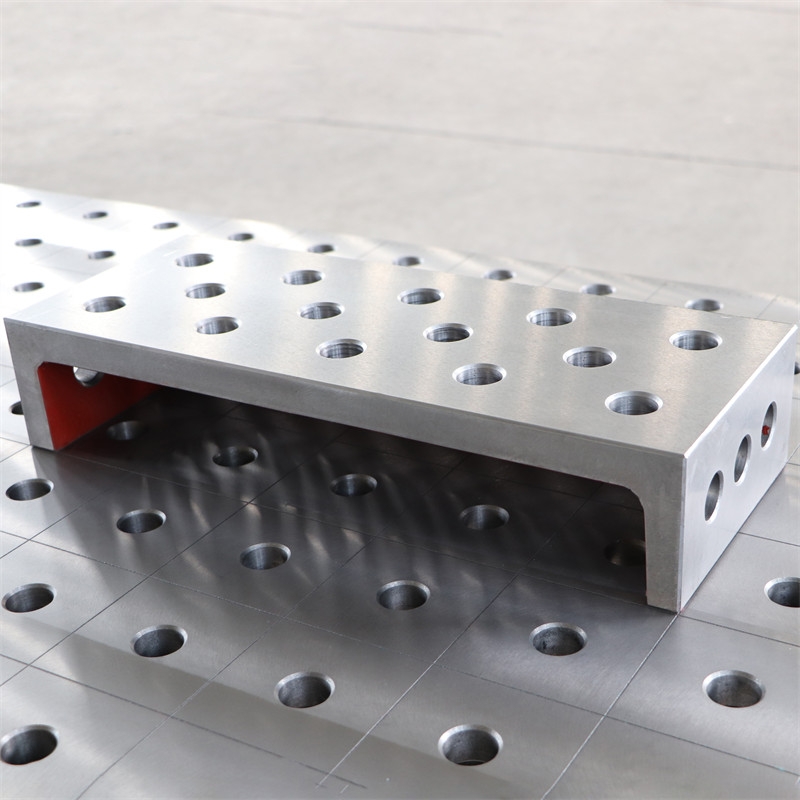
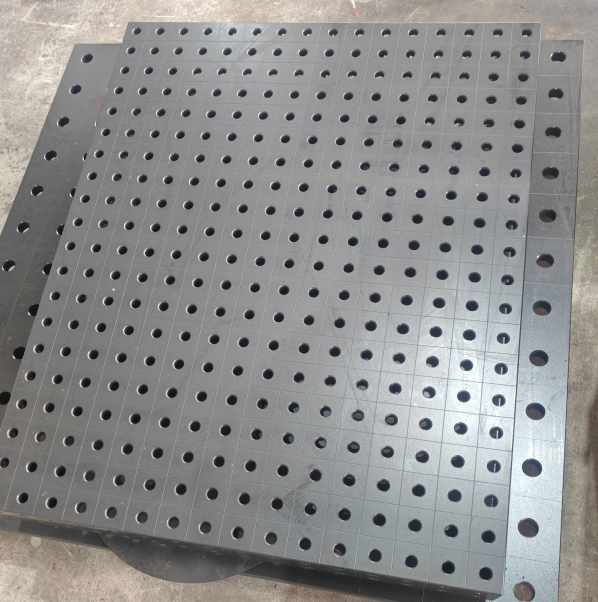
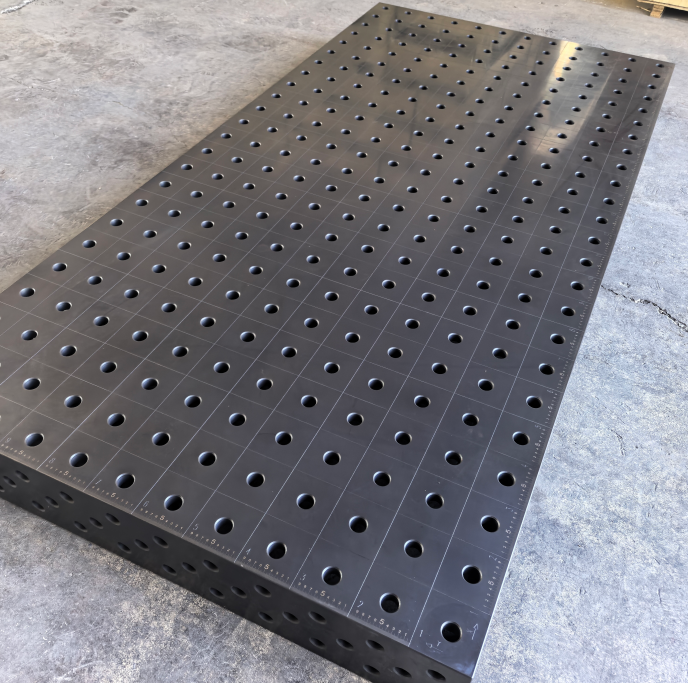
Every TIG welder knows the truth: precision starts before the arc strikes. A single millimeter of part movement under heat distorts geometry, weakens joint integrity, and kills repeatability—especially in thin-gauge stainless steel or aluminum assemblies used in agricultural hydraulics or automotive sensor brackets. We’ve seen it firsthand: a customer in Wisconsin scrapped 47 bracket sets after weld distortion warped mounting holes beyond ±0.15 mm tolerance. The root cause? Not filler wire selection or amperage drift—it was fixture instability.
Why “Good Enough” Fixtures Fail Under Real TIG Conditions
TIG welding demands rigidity most general-purpose jigs ignore. Unlike MIG or spot welding, TIG applies concentrated, localized heat over longer durations. Thermal expansion isn’t theoretical—it’s measurable within 3 seconds on 1.2-mm 304 stainless. A fixture with 0.05 mm play at the clamping interface multiplies into 0.3 mm part shift by weld completion. We tested three off-the-shelf “universal” TIG fixtures against our own design using a calibrated laser displacement sensor. All failed ISO 10893-12 thermal stability thresholds before the third pass. The issue isn’t cost—it’s physics misapplied.
Real-world failure modes include:
Clamp-induced micro-deformation: Over-torqued spring-loaded jaws dent soft aluminum edges, creating false datum surfaces
Thermal drift in base plates: Mild steel bases expand faster than 6061-T6 parts, breaking alignment mid-weld
Vibration coupling: Thin-wall fixtures resonate at 120–180 Hz—the same frequency as high-frequency TIG start pulses—inducing arc wander
What Actually Works: Four Non-Negotiables for Precision TIG Fixturing
Based on 12 years of supporting Tier-1 agricultural OEMs and medical device contract manufacturers, we built fixtures around four hard requirements—not features, but boundaries:
Material-matched thermal coefficient: Base plates use 430 stainless when holding stainless parts; 6061-T6 aluminum bases for aluminum assemblies. No mild steel compromises.
Zero-play kinematic locating: Three-point contact with hardened dowel pins (HRC 60) and ground V-blocks—not set screws or adjustable stops.
Controlled heat dissipation paths: Copper-alloy heat sinks integrated directly beneath weld zones, rated for 200+ amps continuous duty without warping.
Modular clamping force calibration: Pneumatic clamps deliver repeatable 1,200–2,800 N pressure—measured per cycle via embedded load cells, not estimated from air pressure gauges.
We don’t sell “TIG welding fixture” as a generic category. We engineer application-specific systems—for example, a 14-position rotary fixture for exhaust flange assemblies that maintains ±0.08 mm concentricity across 22 weld passes, or a low-profile vacuum-assisted jig for 0.8-mm battery busbars where magnetic clamps would distort current paths.
Beyond the Fixture: How Integration Defines True Repeatability
A perfect fixture fails if disconnected from process control. We embed real-time feedback loops: integrated thermocouples monitor base plate temperature rise; strain gauges verify clamp force decay during long weld cycles; and optical sensors confirm part presence before arc initiation. This data feeds into our shop-floor MES system—so when a batch shows 0.02 mm average deviation shift across 50 units, engineers trace it to ambient humidity affecting aluminum oxide formation—not operator error.
Some might argue custom fixturing is too slow for low-volume jobs. But our customers report 63% faster first-article approval when fixtures include DFM-validated locators and weld access windows. Why? Because the fixture becomes the first physical prototype—revealing interference issues CAD models miss. One German automation supplier cut their design-to-weld validation from 11 days to 36 hours using our iterative fixture prototyping service.
Choosing Your Partner: Look Past the Catalog
If your supplier offers only stock “TIG welding fixture” models with no thermal analysis reports or material certification, you’re buying risk—not repeatability. Ask for:
CTE (Coefficient of Thermal Expansion) match documentation between fixture base and your substrate
Calibration certificates for all embedded sensors (not just the CMM used for final inspection)
Proof of in-process verification—like torque traceability logs for every clamp point on every unit shipped
Botou Haijun Metal Products Co., Ltd. builds these systems because we manufacture the parts they hold. Our ISO-compliant facility in Botou City runs parallel stamping, bending, and welding lines—so fixture engineers sit beside production welders daily. They see the spatter buildup on locator pins. They feel the vibration transfer through the workbench. That lived experience shapes every tig welding fixture we deliver.
Repeatability isn’t achieved with tighter tolerances alone. It’s built when thermal behavior, material science, and human workflow align—starting with what holds the part still. For precision TIG welds that meet aerospace-grade GD&T callouts or automotive PPAP requirements, the fixture isn’t an accessory. It’s the first weld pass.