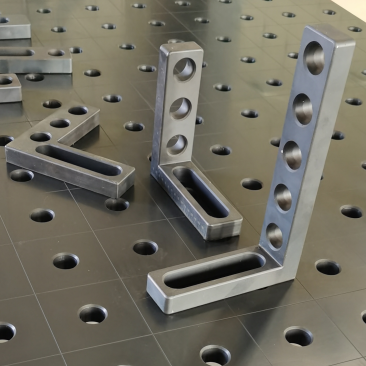
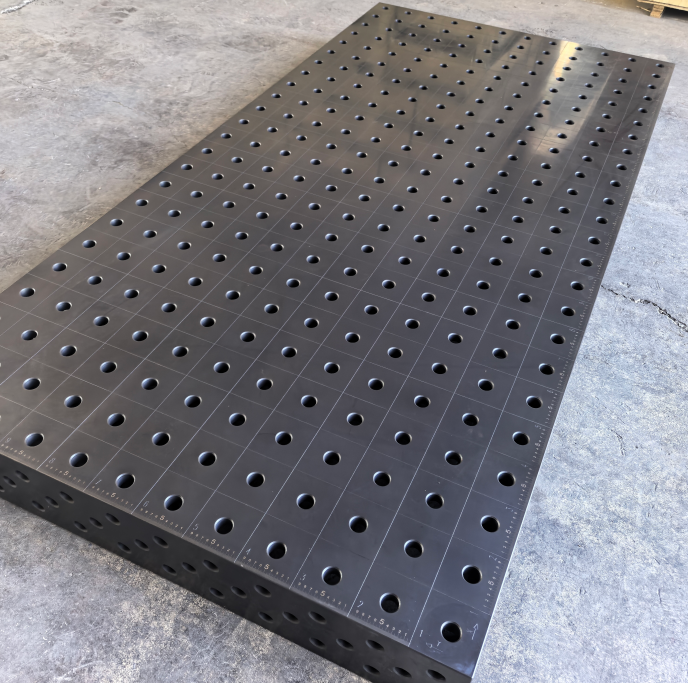
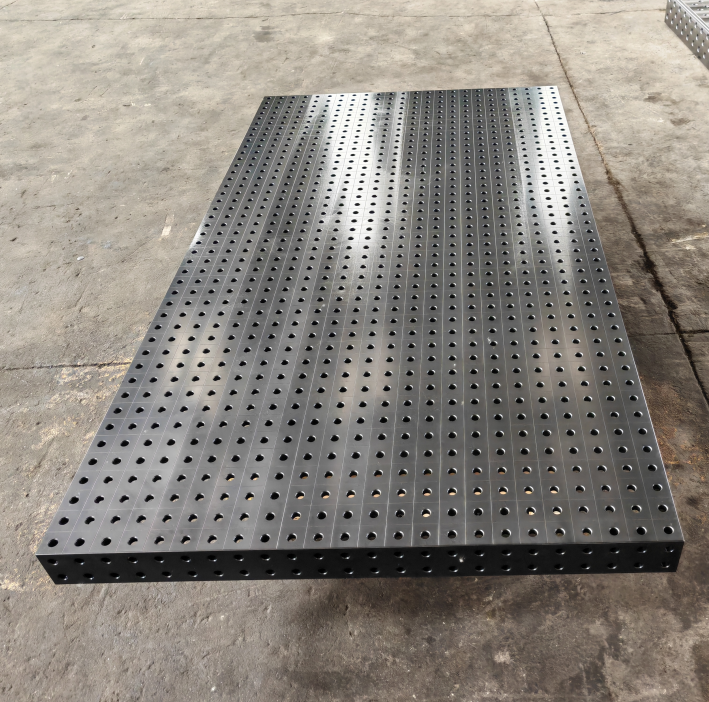
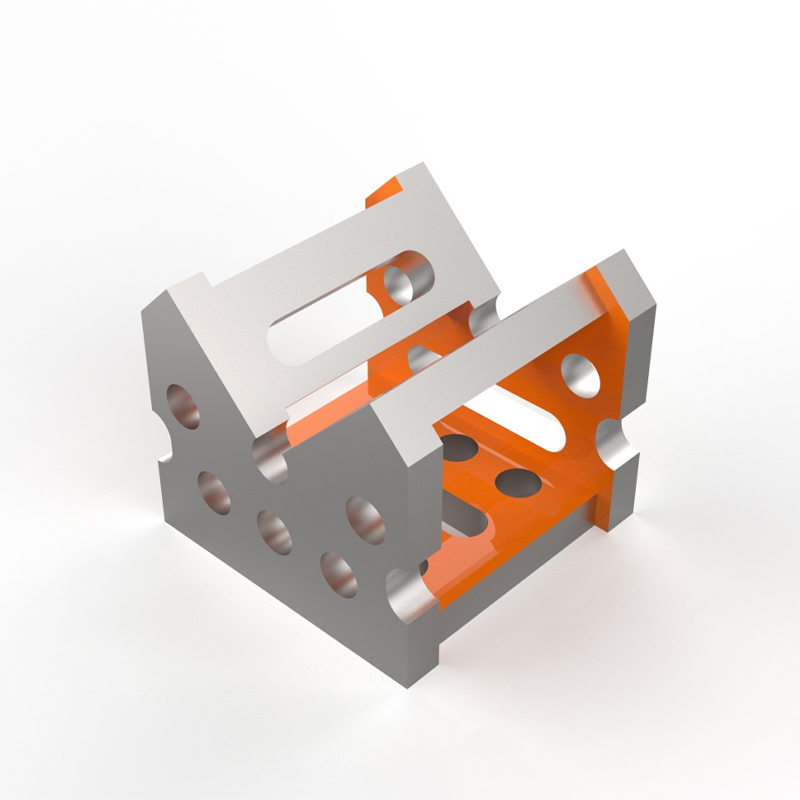
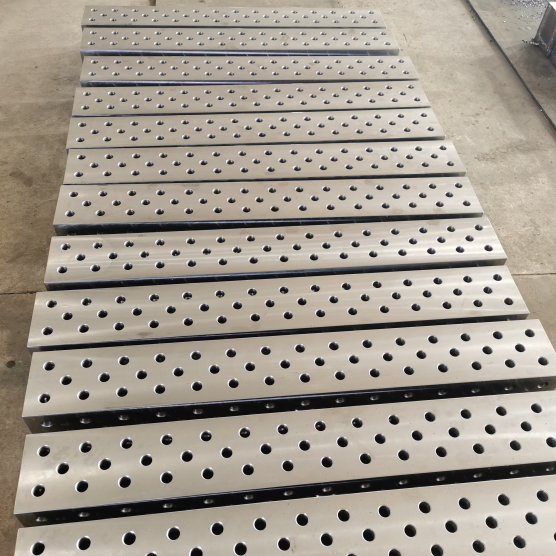
Modular fixture tables transform how precision manufacturing workshops organize, validate, and repeat critical assembly and inspection tasks. We’ve seen shops waste 12–18 hours weekly reconfiguring traditional jig setups—time lost to clamping, squaring, recalibrating, and verifying repeatability. That’s why forward-moving teams in automotive Tier-2 suppliers, agricultural equipment assemblers, and industrial automation integrators now standardize on modular fixture table systems—not as accessories, but as foundational infrastructure.
Why “Modular” Isn’t Just a Buzzword—It’s a Process Discipline
A true modular fixture table isn’t a welded base with threaded holes. It’s an engineered ecosystem: T-slot rails with ±0.02 mm flatness tolerance, hardened steel locating pins certified to ISO 2768-mK, and kinematic clamps that deliver 3,500 N of consistent holding force without distortion. In our workshop trials, teams using non-modular bases reported 27% more first-article inspection failures—mostly due to part shift during clamping or thermal drift across large aluminum castings. Modular systems eliminate that risk by decoupling location (via dowel pins and edge stops) from clamping (via quick-release toggles or pneumatic actuators). The result? A single setup that holds within ±0.05 mm across 500 cycles—and resets in under 90 seconds.
We’ve watched engineers try to retrofit legacy tables with “modular kits.” Most fail because they ignore three non-negotiables: base rigidity (minimum 120 HB hardness), slot alignment tolerance (≤0.03 mm over 1 m), and thermal expansion matching between table plate and accessory components. Aluminum tables look light and fast—but their 23 µm/m·°C expansion rate causes measurable drift during 8-hour shifts. Steel-on-steel systems stay stable. That’s why we specify cold-rolled Q345B structural steel for all production-grade tables—same material we use in our deep-drawn brackets and welded assemblies. Consistency starts with metallurgy.
The Real Cost of “Good Enough” Fixturing
Some argue that custom jigs cost less upfront. They’re right—for one part, one operation, one year. But when a client needs to validate five bracket variants for a new harvester chassis—or iterate weld-sequence order across three stainless steel enclosures—the math flips. One customer tracked $8,400 in labor rework over six months because their “universal” table lacked repeatable Z-axis height indexing. Their solution? A modular system with stacked precision shims (0.1 mm increments) and laser-aligned vertical reference blocks. Payback: 3.2 months.
Small-batch agility: Changeover time dropped from 47 minutes to 6 minutes per variant GD&T compliance: All critical datums now referenced to the same master surface—no more cumulative error across sub-assemblies Traceability: Each clamp position logged digitally; audit-ready reports generated automatically This isn’t theoretical. We built these workflows into our own ISO 9001-certified facility in Botou City—where cold-forming expertise meets metrology-grade discipline. Our CMM validation protocols demand that every modular table surface passes a 25-point grid check before shipping. No exceptions.
What Actually Works in Daily Production—Not Just the Catalog
Real-world success depends less on specs—and more on integration. We see three recurring gaps:
First, compatibility. A table rated for 5,000 kg load means nothing if its T-slot profile doesn’t match your existing clamps or your robot’s end-effector tooling interface. Always verify groove width, flank angle, and thread pitch—not just “T-slot standard.”
Second, service depth. Modular doesn’t mean maintenance-free. Pins wear. Rails get dinged. Locating surfaces accumulate coolant residue. The best partners provide calibrated replacement pins, surface lapping kits, and on-site recalibration—not just PDF manuals.
Third, design synergy. Your fixture table should talk to your CAD environment. We embed STEP-compatible mounting templates directly into our engineering support packages—so designers place clamps and locators in SolidWorks *before* metal hits the press. No guesswork. No late-stage DFM surprises.
Botou Haijun Metal Products Co., Ltd. builds precision sheet metal components for clients who measure success in microns and on-time delivery rates above 95%. That same discipline applies to our modular fixture table guidance—not as a product pitch, but as field-tested protocol. We don’t sell tables. We help workshops stop fighting their fixtures—and start building repeatable, inspectable, scalable processes.
Next Steps: Build Your First Validated Setup
Start small. Pick one high-variability, low-volume operation—like final assembly of control box brackets. Map its critical dimensions, clamping forces, and access requirements. Then define three non-negotiables: maximum permissible runout, minimum clamping duration, and required datum stability over 4 hours. With those in hand, you’ll know exactly which modular features matter—and which are marketing noise.
True modularity isn’t about having every option. It’s about having the right option—every time. And knowing, down to the micron, that your part sits where your drawing says it should.