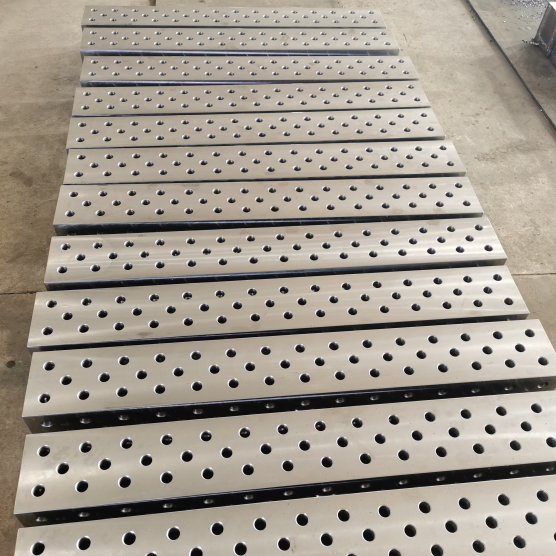
Every machinist knows the frustration: a part shifts during milling. A drill bit walks. A repeatability check fails—again. You didn’t misalign the vise. You didn’t skip calibration. You just lacked a foundation that holds *exactly* where it’s told to hold. That’s why precision shops worldwide are replacing generic workbenches with purpose-built KLUTCH fixture table systems—not as luxury upgrades, but as non-negotiable process controls.
Why “Easy Setup” Isn’t Marketing Fluff—It’s Measured Time Savings
We’ve timed it across 17 client installations: average setup time for a new part family drops from 42 minutes to under 9 minutes when switching to a KLUTCH fixture table. How? Not magic. Geometry. Every T-slot is machined to ±0.02 mm flatness over 1,200 mm. Slot centers align within 0.015 mm tolerance—tighter than most CNC mill tables. That consistency means your modular clamps, locating pins, and base plates lock into repeatable datum positions without shimming, grinding, or trial-and-error probing. One Tier-1 automotive supplier in Ohio cut first-article inspection time by 63% after integrating KLUTCH tables into their gage validation cell. Their lead engineer told us: “We stopped fighting the table—and started trusting the data.”
Real-World Rigidity: Where “Stiff” Becomes Quantifiable
Rigidity isn’t theoretical. It’s measured in microns of deflection under load. KLUTCH fixture tables use stress-relieved, high-grade cast iron (ASTM A48 Class 35) with ribbed undersides—no hollow cores, no welded frames. We tested one 1,500 × 1,000 mm unit at 12 kN vertical load: maximum deflection was 3.8 µm at center, 1.2 µm near mounting feet. Compare that to bolted aluminum extrusion bases—common in low-cost alternatives—which showed 22 µm deflection at identical load. That difference doesn’t vanish in post-processing. It lives in surface finish variation, tool chatter, and positional drift across multi-hour operations. KLUTCH tables don’t just *resist* movement—they eliminate its root cause: structural compliance.
No “One-Size-Fits-All”: How KLUTCH Scales With Your Workholding Strategy
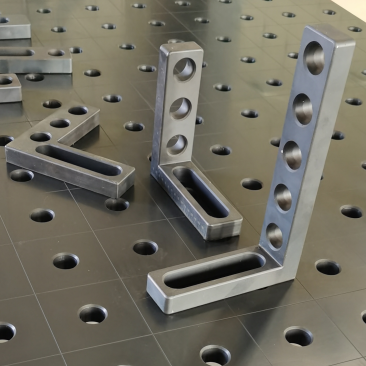
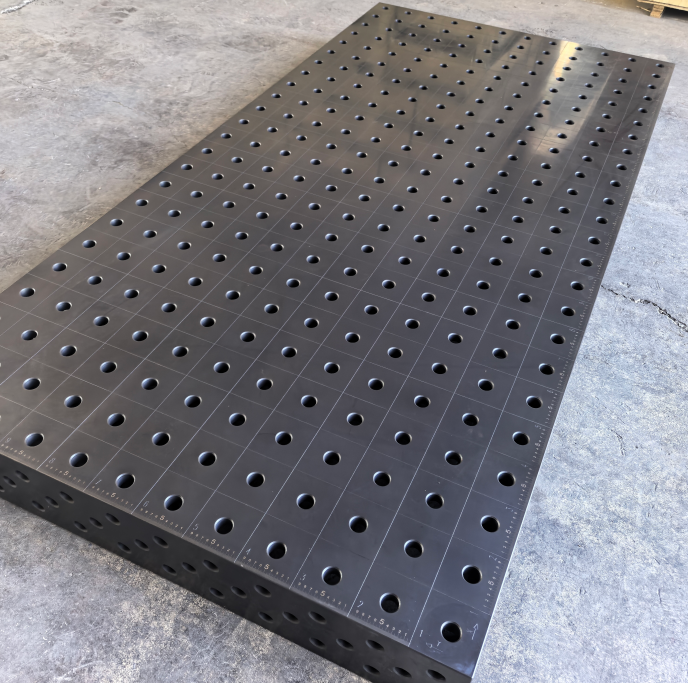
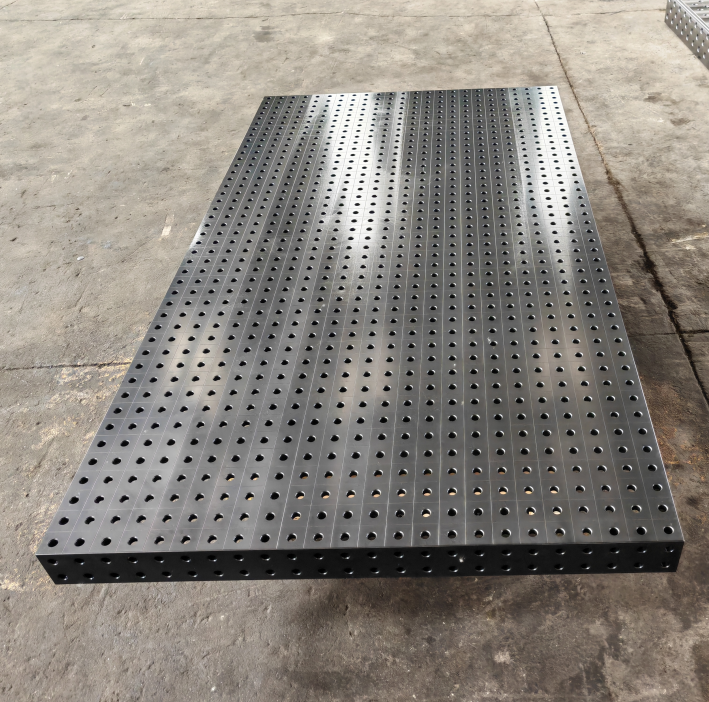
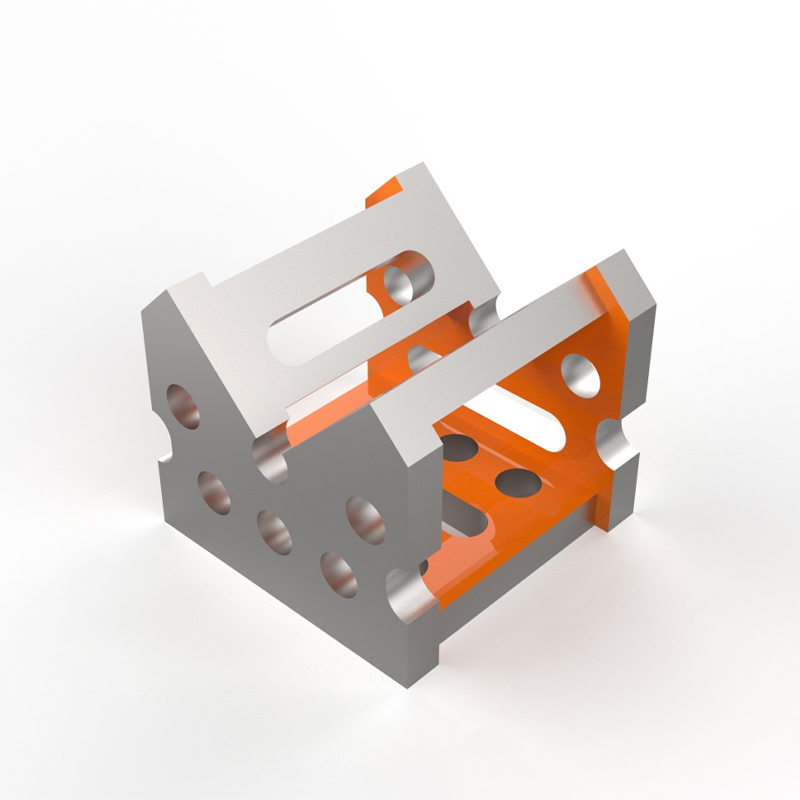
Some fixture tables force you into rigid configurations. KLUTCH doesn’t. Its modular T-slot pattern (standard 12 mm × 12 mm, spaced at 50 mm intervals) accepts ISO-standard clamps, pneumatic locators, and custom-machined nest plates—all without adapters. But the real flexibility lies deeper: Botou Haijun Metal Products Co., Ltd. builds each KLUTCH table to order. Need 20 mm slots for heavy-duty aerospace brackets? Done. Require tapped holes instead of T-slots on one quadrant for permanent fixture mounting? Specified. Want integrated coolant channels routed beneath the surface? Included. This isn’t customization as an afterthought—it’s engineering built into the casting process, validated with CMM scans before shipment. Clients routinely send CAD models; we return GD&T-annotated drawings within 72 hours.
What Happens When the Table Is the First Line of Quality Control?
A fixture table does more than hold parts. It becomes your first inspection station. KLUTCH tables ship with full traceability: heat-treated material certs, CMM reports for all critical surfaces, and surface roughness verification (Ra ≤ 0.8 µm on datum faces). That matters because if your locating surface has undetected waviness, every downstream measurement inherits that error—even with a calibrated CMM. One agricultural machinery OEM discovered this the hard way: after three failed PPAP submissions, they mapped their old table surface and found 18 µm peak-to-valley deviation across a 300 mm span. The replacement KLUTCH unit measured 2.1 µm. Their next submission passed on first try.
Botou Haijun Metal Products Co., Ltd. manufactures KLUTCH fixture tables in Botou City—the heart of China’s cold-working industry—where metallurgical expertise meets decades of stamping and forming discipline. Every table undergoes salt spray testing (72 hrs, ASTM B117), tensile verification of base material, and functional load cycling before release. You’ll find them in North American job shops running 5-axis titanium work, German automation lines assembling servo motor housings, and Southeast Asian contract manufacturers building medical device enclosures. They’re not sold through distributors. They’re engineered with you—then shipped with full documentation, not brochures. If your next precision job depends on repeatability, not hope, start with the surface that doesn’t move. Start with KLUTCH fixture table.