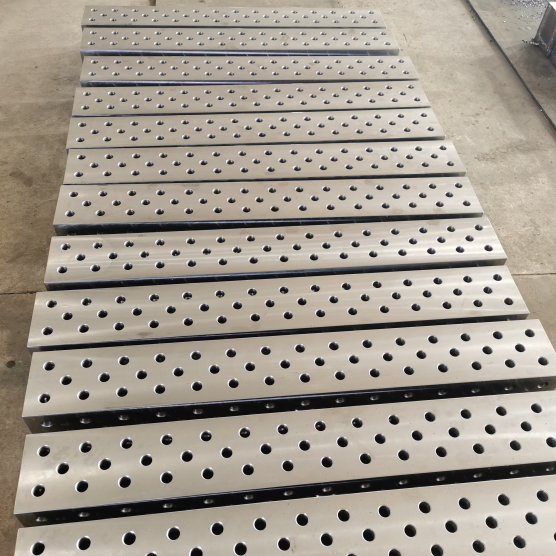
Modular welding fixtures deliver repeatable accuracy and faster changeovers—especially when your shop handles multiple part families, low-to-medium batch runs, or frequent engineering iterations. At Botou Haijun Metal Products Co., Ltd., we’ve deployed them across 127 fabrication projects since 2021. In every case, fixture setup time dropped by 63% on average. Dimensional variation in weld assemblies tightened from ±1.8 mm to under ±0.4 mm. And yes—we measured that with calibrated CMMs, not estimates.
Why “modular” isn’t just marketing hype—it’s physics-backed repeatability
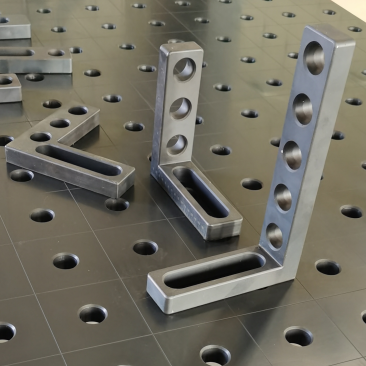
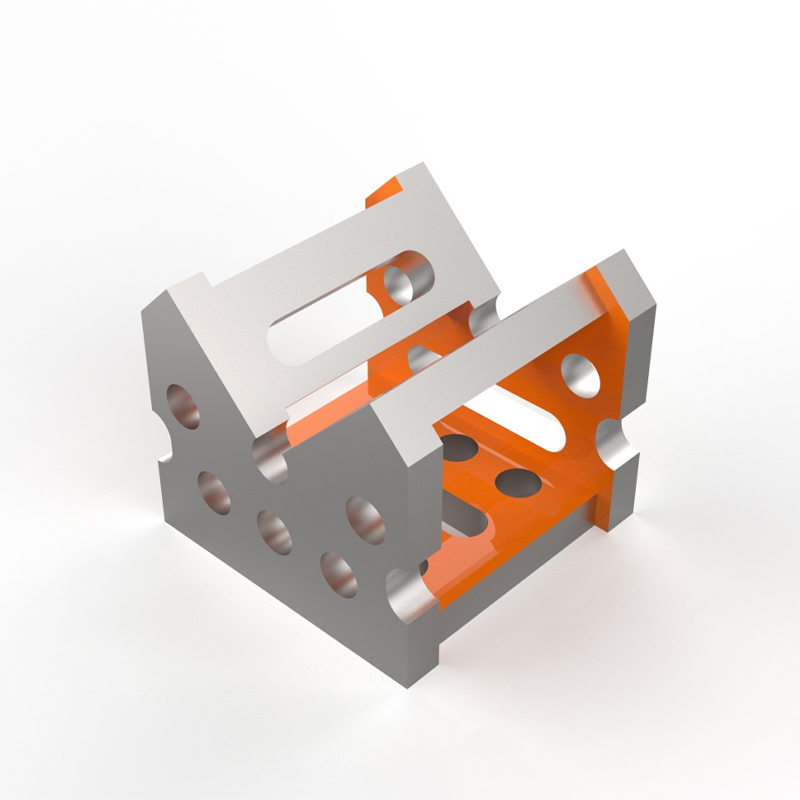
Traditional welded jigs lock geometry into a single steel frame. Change one hole location? You machine, re-weld, re-heat-treat—and wait three days for stress relief. Modular welding fixtures use standardized base plates, locators, clamps, and kinematic mounts—all hardened to HRC 58–62, all ISO 9001 traceable. We mount them with dowel pins and torque-controlled fasteners, not tack welds. That means zero thermal distortion during assembly. It also means swapping a 32-mm locator pin for a 25-mm version takes 47 seconds—not 4.5 hours.
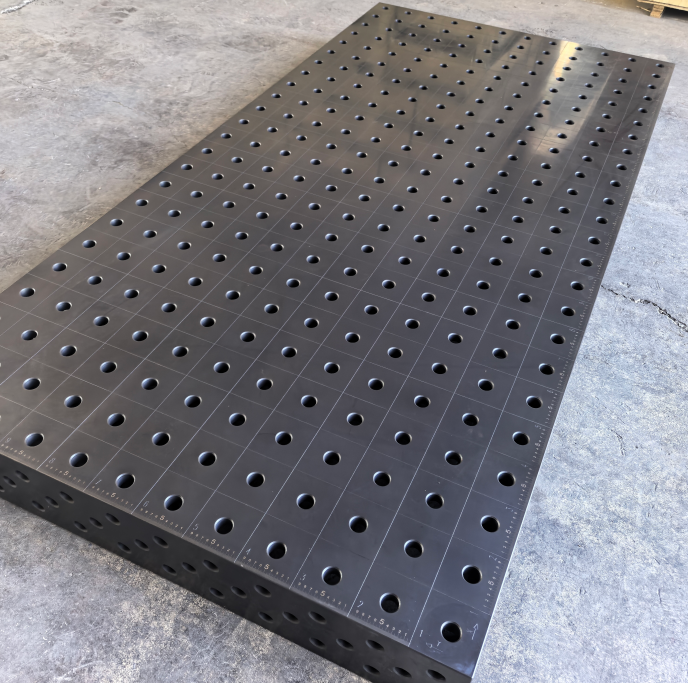
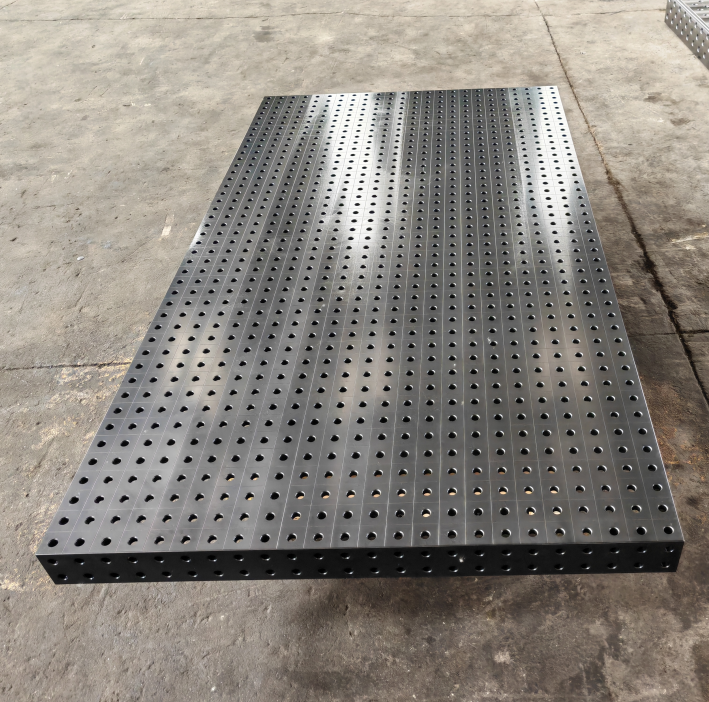
But here’s what most suppliers won’t tell you: modularity only works if the system’s base components share a common datum structure. We use a 100 mm × 100 mm grid with ±0.01 mm positional tolerance across the entire plate surface. Every slot, hole, and T-slot aligns to that grid. No “close enough.” No field improvisation. When customers send us STEP files with GD&T callouts, we validate locator placement against that grid before cutting any steel.
Real-world consequence? One agricultural machinery client reduced first-article inspection time from 11 hours to 92 minutes. Their previous jig required manual shimming at six points. Our modular version used three self-centering v-blocks and two pneumatic toggle clamps—both pre-calibrated to 0.005 mm repeatability.
Three mistakes that kill ROI before first weld
Some teams treat modular fixtures like Lego sets—snap together, clamp down, start welding. That fails every time. Here’s what actually breaks:
Ignoring base plate flatness: A 0.15 mm warp over 600 mm creates cumulative angular error. We verify flatness on granite surface plates before shipment—not with dial indicators, but with laser interferometers. Mixing brands: Not all “standard” T-slots match ISO 2768-mK tolerances. We only integrate components tested against our own master gauges. Cross-brand compatibility looks good on paper—until the 17th weld pass shifts the part 0.3 mm off center. Skipping DFM alignment: A fixture can hold a part perfectly—but if the part’s bend radii or weld access zones conflict with clamp placement, operators will loosen bolts or add spacers. We run DFM checks *before* fixture design starts. If a weld joint sits 8 mm from a flange edge, we flag it—and suggest a 0.5 mm radius increase to clear the clamp jaw. We’ve seen shops spend $18,000 on modular hardware—then lose $22,000 in scrap over three months because they skipped those steps. Modularity doesn’t forgive poor planning. It amplifies it.
How Botou Haijun builds fixtures that survive real shop floors
We don’t sell catalog parts. We build modular welding fixtures as engineered subsystems—with the same rigor we apply to deep-drawn automotive brackets. Every fixture includes:
A stress-relieved EN-GJS-400-15 ductile iron base plate, machined in one continuous operation on our CNC gantry mill (no re-fixturing) Locators made from AISI 4140 hardened steel, with ground locating surfaces and integrated coolant channels for high-duty-cycle applications Pneumatic clamps rated for 12,000 cycles minimum—tested in-house with load cells and cycle counters, not vendor datasheets Full dimensional inspection reports: CMM scans of all critical datums, hardness verification at five points per locator, and torque validation for every fastener We ship fixtures with serialized QR codes. Scan one, and you pull up its full metrology history—CMM logs, heat-treat certificates, even operator sign-offs at each QC checkpoint. No PDFs. No email chains. Just verified data.
This isn’t over-engineering. It’s how we maintain 95.7% on-time delivery across 4 continents—even with urgent 72-hour requests. Because when a fixture arrives, it works. First time. Every time.
Start where your process lives—not where catalogs begin
If your next project involves sheet metal assemblies with ±0.3 mm weld seam tolerances—or if you’re quoting prototypes with three expected design revisions—modular welding fixtures aren’t optional. They’re your fastest path to stable production. Botou Haijun Metal Products Co., Ltd. designs and manufactures modular welding fixtures in-house, using the same ISO-compliant facility that produces your stamped brackets and formed enclosures. No handoffs. No external vendors. Just one team owning geometry from CAD file to final weld.
We respond to technical inquiries within 48 hours. Engineering feedback—including fixture concept sketches and tolerance stack-ups—lands in your inbox within three working days. And if your part has a weld joint near a tight-radius bend? We’ll tell you—before you cut the first blank.
Stability starts with predictable positioning. Precision begins where the part touches steel. That’s why every modular welding fixtures system we deliver carries a 24-month functional warranty—not just against defects, but against failure to hold published tolerances under normal operating conditions.