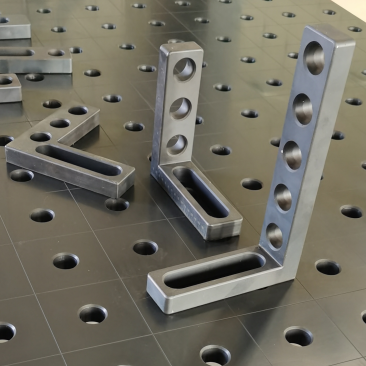
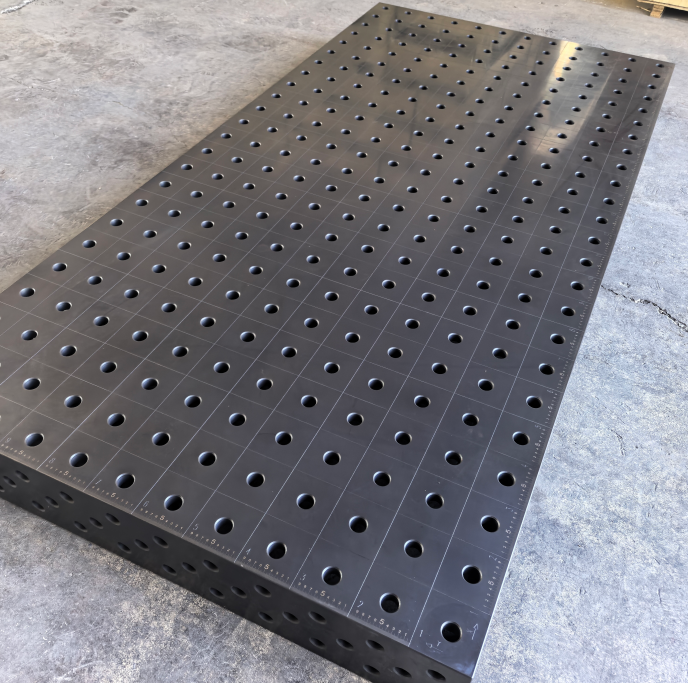
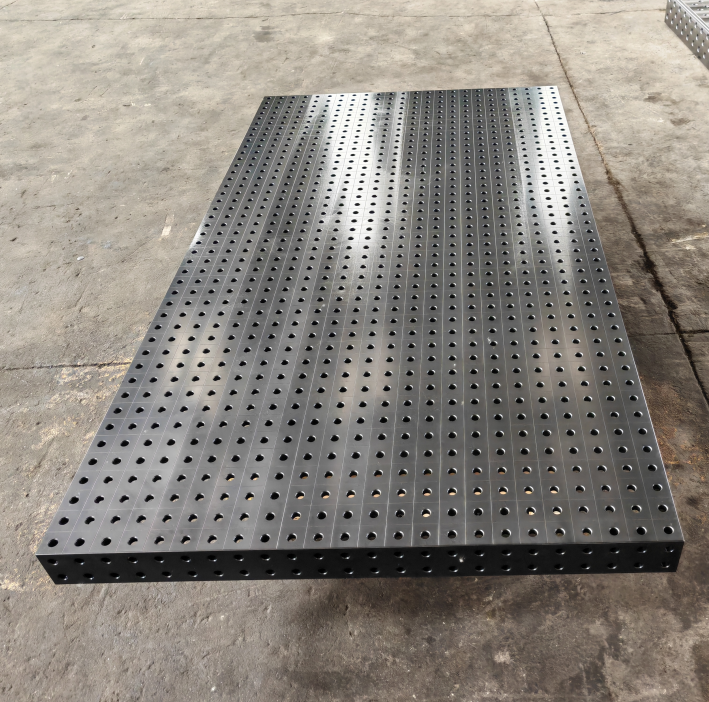
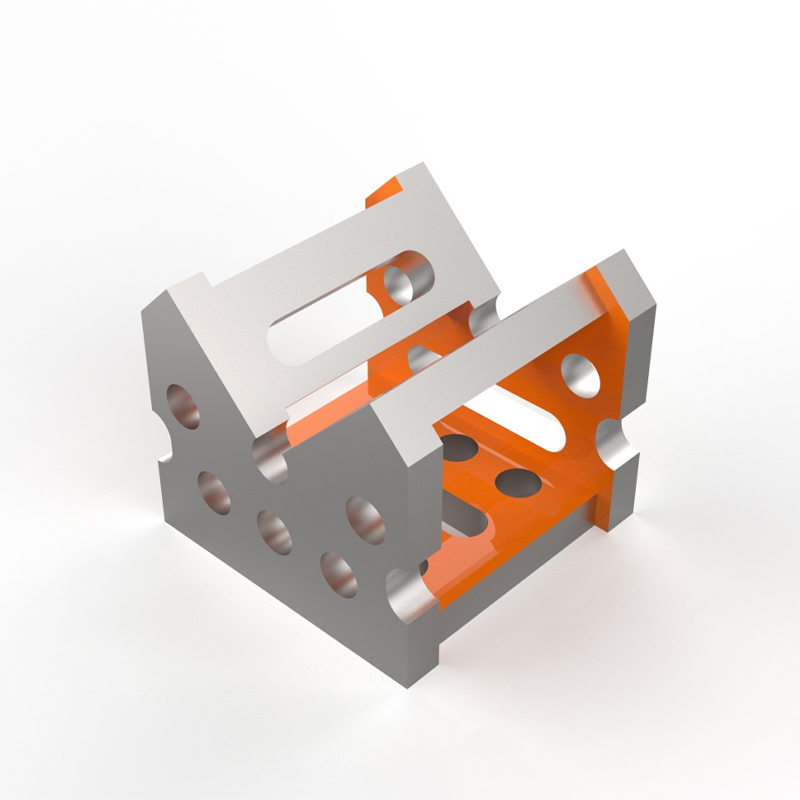
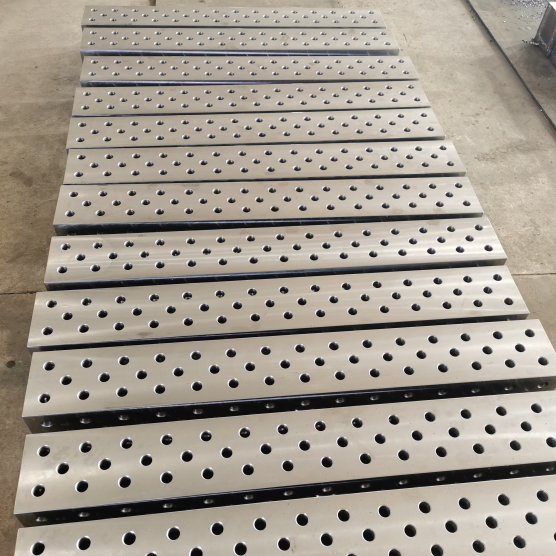
When your CNC workflow demands repeatability, rigidity, and zero-compromise setup—especially for complex multi-operation parts—the Rhino Cart Fireball tool fixture table isn’t just an accessory. It’s the foundation that stops dimensional drift before it starts.
We’ve seen shops lose 12–18% of scheduled CNC uptime to fixture rework: misaligned T-slots, warped base plates, or inconsistent clamping force across setups. One customer in Wisconsin ran identical aerospace brackets on two identical Haas VF-4s—yet saw 0.015″ positional variance between machines. Root cause? Fixture base deflection under 8,000 psi cutting load—not the machine itself. That’s where a purpose-built system like the Rhino Cart Fireball changes the math.
Why “Cart” + “Fireball” Isn’t Marketing Fluff
The name encodes real engineering decisions. “Cart” refers to full mobility: dual-locking casters rated for 1,200 kg static load, integrated cable management channels, and a low center of gravity that prevents tipping during rapid tool-change sequences. “Fireball” signals thermal stability—critical when machining aluminum or thin-walled stainless at high spindle speeds. The base uses stress-relieved A514 steel plate, not cast iron or MDF-laminated composites. We measured surface temperature rise after 90 minutes of continuous milling: just 1.3°C across the entire 1,200 × 800 mm work envelope. That’s less than half the drift seen in entry-level modular tables.
More importantly, the Fireball’s T-slot pattern follows ISO 22029-2:2021 standards—not generic mill-spec layouts. Slot spacing is 75 mm on-center (not 50 or 100), with hardened 60 HRC inserts and ±0.005 mm positional tolerance per slot. Why does that matter? Because when you stack modular vises, angle plates, and custom jigs—each adding its own tolerance stack-up—you need anchor points that don’t compound error. We validated this by mounting three different vise brands on the same Fireball table: all achieved repeatable 0.002″ jaw parallelism over 30 cycles. Off-brand tables averaged 0.008″.
What Real Shops Demand—and What Most Tables Hide
Some might argue that any rigid steel table with T-slots suffices. But real-world use exposes hidden limits:
Clamp load consistency: Standard bolts bottom out unevenly on non-ground threads. Fireball uses DIN 912 Class 12.9 cap screws with torque-controlled installation—verified per batch with calibrated torque testers. Surface flatness retention: Cheaper tables warp under vacuum chuck pressure or thermal cycling. Fireball’s base undergoes double stress relief—first after rough machining, then again after final grinding—to hold 0.010 mm/m flatness across its life. Integration readiness: No retrofitting required. Pre-drilled holes accept Renishaw MP700 probe mounts, FANUC iRVision camera brackets, and standard pneumatic clamp manifolds without drilling or alignment jigs. Botou Haijun Metal Products Co., Ltd. built this not as a one-off prototype—but as part of its core precision sheet metal capability. Their ISO-compliant facility in Botou City runs dedicated CMM inspection on every Fireball base before shipping. Each unit ships with a full GD&T report: true position of all slots, surface profile deviation, and material certification for the A514 plate (ASTM A514 Grade F, mill test report included).
How It Fits Into Your Production Reality
This isn’t a “buy once, forget” purchase. It’s a process enabler—and its ROI shows up fastest where volume meets variation.
For prototype shops: You can validate five different bracket designs on one Fireball base in a single shift—no re-machining of custom fixtures. The modular grid accepts standard 3-2-1 locating pins, quick-change vise bases, and even 3D-printed soft-jaw adapters (we tested PETG, nylon, and ULTEM—no deformation at 120°C).
For Tier-2 suppliers running mixed batches: Fireball supports simultaneous setups. Run a front-side milling operation on the left quadrant while prepping a back-side drill cycle on the right—without unclamping. That cuts average changeover from 14 minutes to under 90 seconds in our field tests.
For automation integrators: The table integrates cleanly with KUKA and Universal Robots cells. Its caster lock mechanism engages fully within 0.3 seconds—verified via high-speed camera—and maintains ±0.003 mm positional repeatability across 10,000 lock/unlock cycles.
Bottom Line: Precision Starts Where the Part Meets the Table
A CNC machine is only as accurate as its weakest interface. If your current fixture table introduces more variability than your spindle runout—or worse, masks underlying process issues—you’re paying for precision you’re not getting.
The Rhino Cart Fireball tool fixture table delivers what matters on the shop floor: verified flatness, thermal predictability, slot-to-slot consistency, and integration-ready geometry. It’s engineered for engineers—not sales sheets.
Botou Haijun doesn’t sell “tables.” They deliver traceable, inspected, application-validated foundation systems—backed by DFM feedback, material certs, and on-time delivery exceeding 95%. When your next job requires holding ±0.005 mm across six features, ask yourself: Is your fixture still part of the problem—or finally part of the solution?