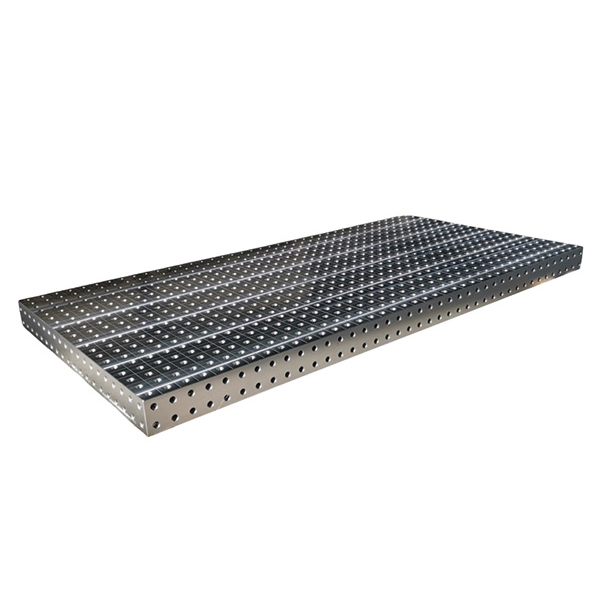
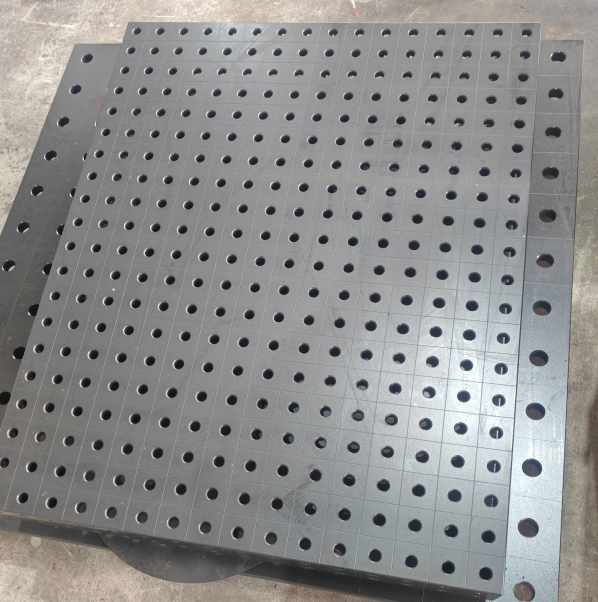
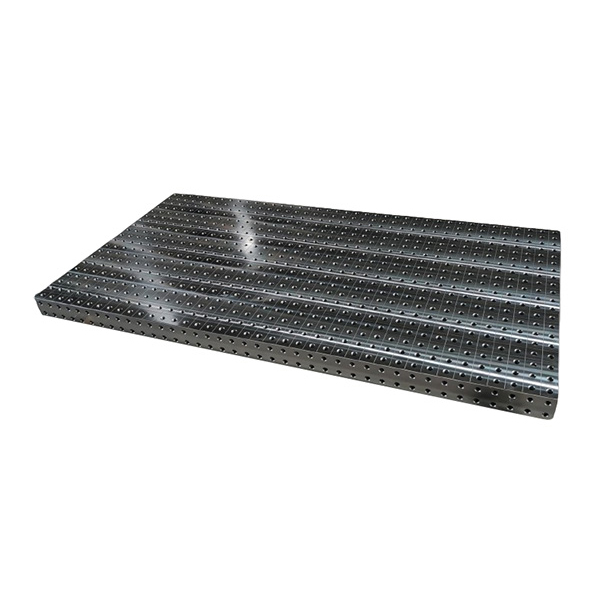
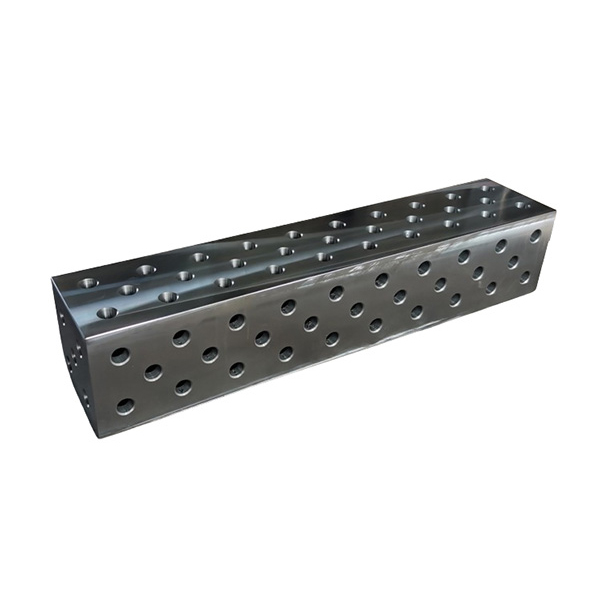
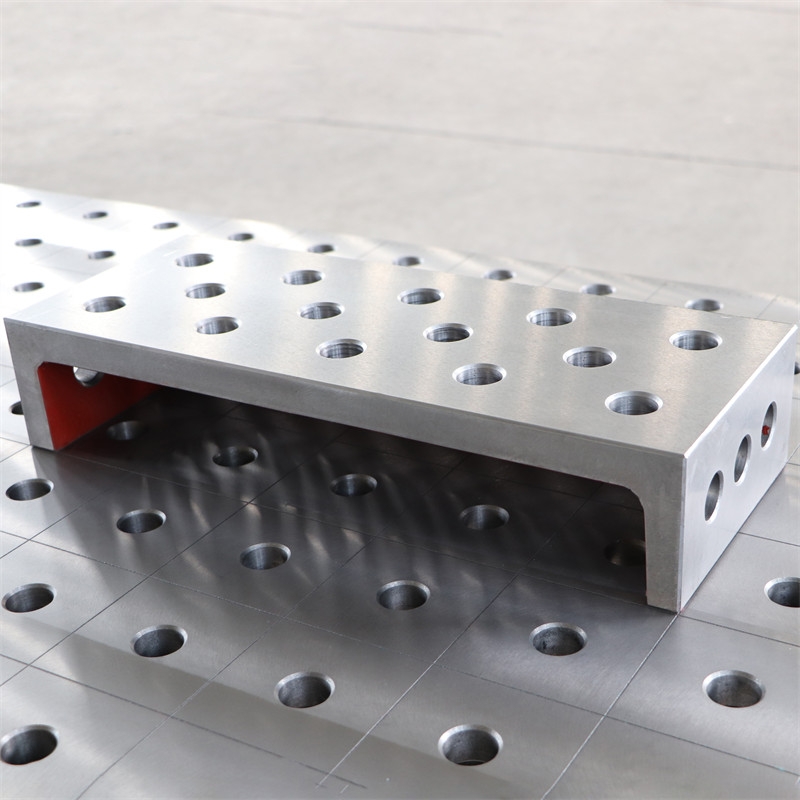
Every precision workshop faces the same silent bottleneck: the table beneath the workpiece. Not just any surface—but a custom fabrication table engineered to hold tolerances, absorb vibration, anchor fixtures, and survive daily metal-on-metal contact. We’ve seen CNC operators rework parts twice because the table shifted under clamping force. We’ve watched laser-cut brackets fail functional testing after weld distortion—traced back to uneven thermal expansion in an off-spec base plate. These aren’t edge cases. They’re daily friction points that erode repeatability, inflate scrap rates, and delay first-article approvals.
Why Off-the-Shelf Tables Fail Under Real Workshop Loads
Standard steel workbenches look rugged until you load them with 40-kg deep-drawn chassis assemblies or apply 12-ton bending force across a 1.2-meter span. Then warping begins—not visibly, but in microns. A 0.08 mm deflection at the far end of a 1,500 mm table translates to ±0.15° angular error in a welded subassembly. That’s enough to misalign mounting holes for hydraulic valve blocks or throw off robotic welding torch paths.
We measure this routinely. In one recent validation for an agricultural implement client, three identical off-the-shelf tables—each rated for 1,000 kg static load—showed 0.23 mm, 0.31 mm, and 0.47 mm sag under uniform 800 kg loading. None met the ±0.05 mm flatness tolerance required for their bracket-stamping jig. The root cause? Non-uniform rib spacing, inconsistent plate thickness, and unverified yield strength in the base material.
A true custom fabrication table starts not with dimensions—but with application physics. What’s the max clamping torque? How many fixture points need M10 threaded inserts at precise 0.02 mm positional tolerance? Does the table interface with a CMM arm or integrate pneumatic locators? These define the structure—not the other way around.
Four Non-Negotiables in Precision Table Engineering
Based on over 1,200 custom table builds since 2016, we isolate what separates repeatable performance from costly rework:
Material integrity verification: No mill test report? No build. Cold-rolled Q235B and S355JR plates must show certified tensile strength (≥470 MPa), elongation (≥22%), and hardness (120–160 HB). Aluminum 6061-T6 requires proof of T6 temper—verified by Rockwell B-scale testing before machining. Stress-relieved fabrication: All base plates undergo thermal stress relief at 620°C for 4 hours, followed by controlled cooling. Skipping this step invites slow creep during long production runs—especially critical for tables holding multi-axis inspection fixtures. Localized reinforcement: Rib geometry isn’t symmetrical—it’s mapped. High-load zones get tapered ribs with 12-mm base thickness; low-stress areas use 6-mm ribs spaced at 250 mm centers. We validate every layout with FEA buckling analysis pre-weld. Tolerance stacking control: Threaded inserts aren’t press-fit. They’re helicoil-installed into reamed, counterbored holes—with position tolerance held to ±0.015 mm via CNC jig boring. Surface flatness is verified on a granite reference plane using a dial indicator and master straightedge—not a spirit level. How Small-Batch Flexibility Drives Real ROI
Many shops assume custom tables demand high MOQs and 12-week lead times. That’s outdated. At Botou Haijun Metal Products Co., Ltd., we build single-unit prototype tables in 11 working days—including full DFM review, material certification, and CMM final inspection. Why? Because our ISO-compliant facility integrates stamping, bending, welding, and precision machining under one roof. No external vendors. No handoff delays. No tolerance stack-up between suppliers.
This vertical control delivers measurable outcomes: One Tier-1 automotive supplier reduced their bracket assembly cycle time by 22% after switching from modular aluminum tables to our welded-steel custom fabrication table with integrated pneumatic clamps and datum pins. Another client cut first-article approval time from 17 days to 4 days—because their new table held GD&T callouts across all 14 critical features without iterative shimming.
Cost remains a valid concern—but misjudging it is costlier. A $4,200 custom table delivering 0.02 mm repeatability pays back in 3.2 months when it eliminates one weekly scrap event averaging $1,350 in labor and material. Off-the-shelf alternatives rarely deliver that ROI. They trade upfront savings for hidden operational drag.
What Your Next Custom Fabrication Table Needs to Do—Not Just Be
Your table shouldn’t just “hold parts.” It must actively support your process goals. Ask these questions before quoting:
Does it anchor your existing jigs—or require redesigning all tooling? Can its surface withstand repeated MIG welding spatter without compromising flatness? Is its weight distribution optimized for your floor’s load rating—or will it require structural reinforcement?
Are mounting holes positioned for your CMM probe access—or will you lose 30% measurement coverage? If answers require assumptions, you’re not ready to build. Start with a CAD model—and send it to engineering. Botou Haijun Metal Products Co., Ltd. provides free DFM feedback within three working days. No sales pitch. No gatekeeping. Just actionable input: where to add ribs, which materials avoid galvanic corrosion with your stainless fixtures, how to sequence welds to minimize distortion.
A custom fabrication table is the foundation of precision—not an afterthought. It’s where tolerances begin, not where they end. When your table holds true, everything downstream aligns. When it doesn’t, nothing else matters.