Welding fixtures hold parts in exact position—no guesswork, no rework. When tolerances shrink to ±0.1 mm and cycle times demand repeatability across 500+ units, conventional jigs fail. That’s where 3D welding fixture systems step in—not as add-ons, but as engineered extensions of the welder’s intent.
Why “3D” Changes What Fixtures Can Do
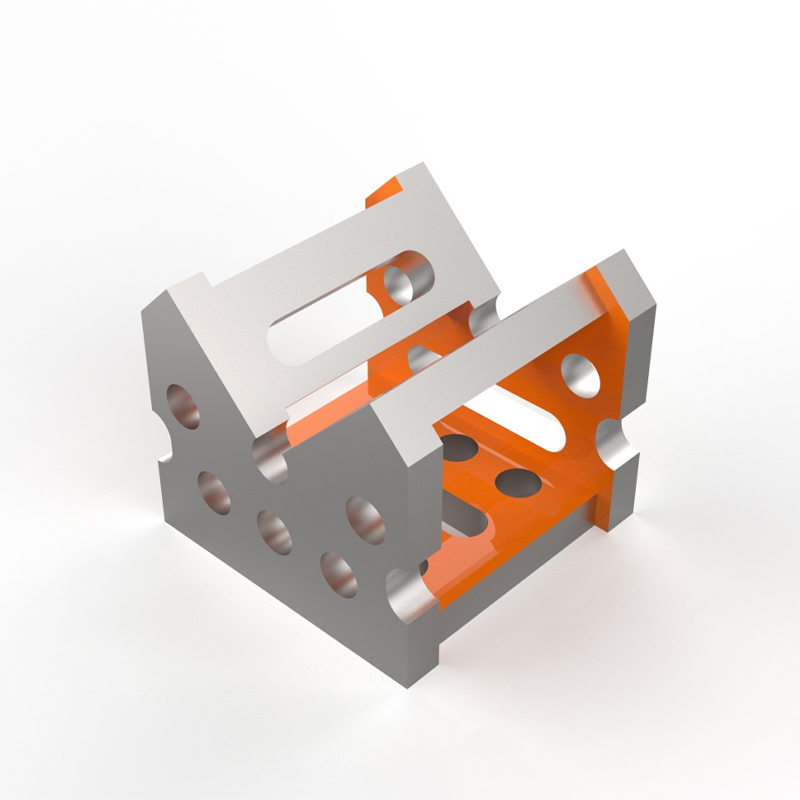
A 3D welding fixture isn’t defined by its number of axes. It’s defined by how it resolves real-world constraints: compound angles in chassis brackets, nested flanges on hydraulic manifolds, or multi-material assemblies where thermal expansion varies between aluminum and stainless steel. We’ve seen customers scrap 12% of first-run batches because legacy fixtures couldn’t maintain perpendicularity between a bent mounting ear and a laser-cut mounting surface. The fix wasn’t tighter clamps—it was a coordinate-based layout that locked datum points in X, Y, *and* Z simultaneously.
True 3D capability means three things in practice:
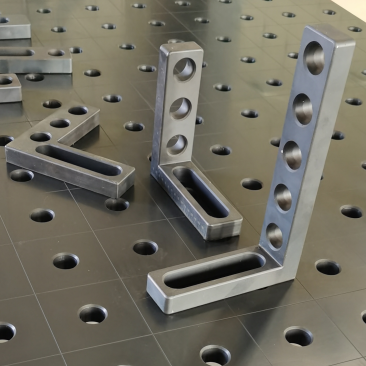
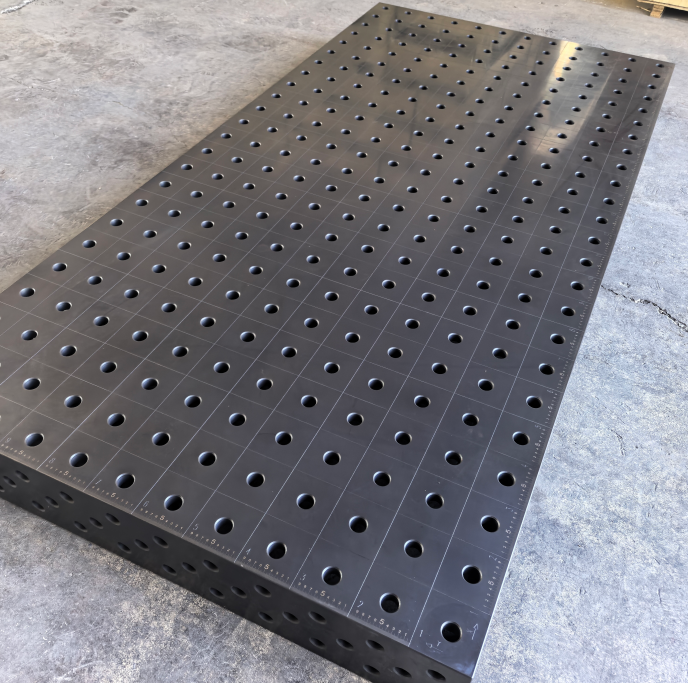
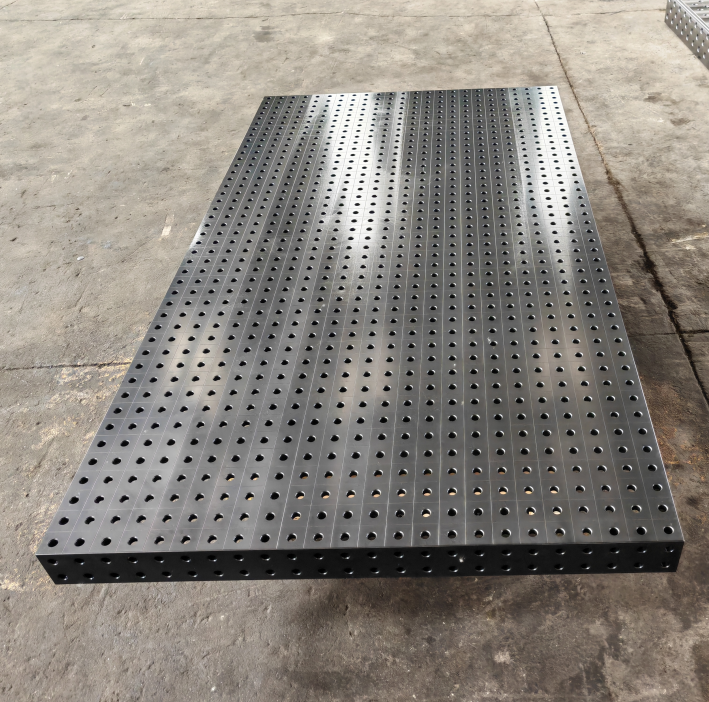
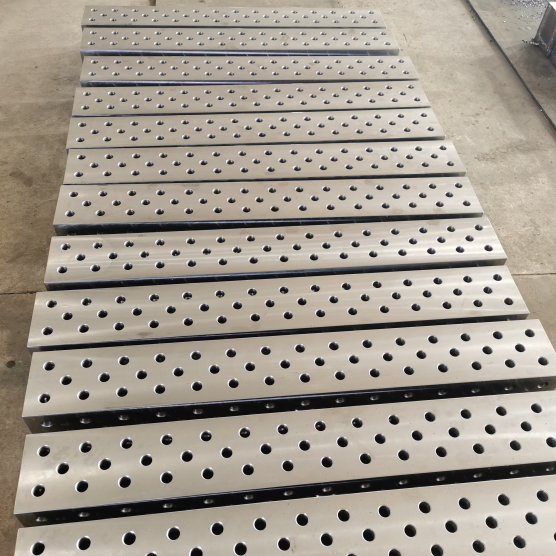
Modular base plates with precision-ground T-slots and repeatable dowel pin locations (±0.01 mm) Interchangeable locators—not just pins and stops, but height-adjustable supports, angular nest blocks, and quick-change clamping arms with calibrated torque retention Integrated reference geometry, so every part nests against the same primary datum plane, not against another part’s inconsistent edge This isn’t theoretical. In one agricultural equipment project, switching from 2D tooling to a custom 3D fixture cut weld distortion by 63% and reduced post-weld correction time from 18 minutes to under 90 seconds per subassembly.
What Makes a Fixture Fit—Not Just Hold
Some manufacturers treat fixtures as static templates. We treat them as dynamic process enablers. A fixture must survive 5,000+ cycles without losing locator integrity. It must allow access for MIG torches, robotic welding heads, and post-weld inspection—without requiring disassembly. And it must scale: same base plate, different locators, for prototype runs of 15 units and production batches of 3,000.
We’ve found three non-negotiables during actual deployment:
Material stability: No cast iron bases that warp after repeated thermal cycling. We use stress-relieved 42CrMo4 alloy steel or anodized 7075-T6 aluminum—tested for dimensional drift at 80°C over 72 hours Clamp force consistency: Spring-loaded clamps lose grip; pneumatic ones need air lines. Our standard uses hardened steel toggle clamps with positive mechanical lock—verified at 12 kN holding force, repeatable within ±3% Serviceability: Locators wear. Pins get nicked. So every 3D welding fixture includes replaceable hardened inserts—not machined-in features—and a full BOM with lead times under 72 hours One North American Tier-1 automotive supplier rejected our initial proposal because their robot path planner required exact TCP offsets. We embedded those offsets directly into the fixture CAD model—delivered as STEP files with GD&T callouts aligned to their robot controller’s coordinate system. They ran first-piece validation in 4.2 hours.
How Precision Starts Before the First Weld
A 3D welding fixture doesn’t compensate for poor design—it exposes it. We’ve reviewed over 200 customer drawings where weld seams crossed bend lines, causing micro-cracking in high-stress zones. Or where tolerance stacks made final assembly impossible—even though each part passed individual inspection.
That’s why our engineering support begins *before* fixture fabrication:
DFM-driven weld seam placement: We simulate heat input distribution and suggest seam relocation to minimize distortion—documented with thermal contour maps Datum strategy review: Does your primary datum align with machining centers? With casting parting lines? With downstream CMM inspection points? We map all three Fixture-to-process handoff: We supply not just the fixture, but weld parameter sheets validated on identical material thicknesses, filler wire types, and joint geometries No “one-size-fits-all” kits. Every 3D welding fixture we build starts with your part’s functional requirements—not our catalog numbers.
Real Results, Not Benchmarks
At Botou Haijun Metal Products Co., Ltd., we test fixtures under load—not just static weight, but simulated production rhythm. A fixture rated for 3 mm mild steel must hold true through 100 consecutive cycles at 120°C ambient temperature, with 3-second clamp actuation, and 15-second weld dwell—all logged via embedded strain gauges and thermal imaging.
Our clients report consistent outcomes:
92% reduction in first-article fit-up adjustments Weld cycle time compression of 18–27%, verified by time-motion studies Scrap rate drop from 4.7% to 0.3% on complex assemblies with ≥7 weld joints We don’t sell fixtures. We deliver repeatability—measured in microns, tracked in minutes, guaranteed in writing. Because when your product moves, lifts, or carries load, the weld isn’t just a joint. It’s the foundation.