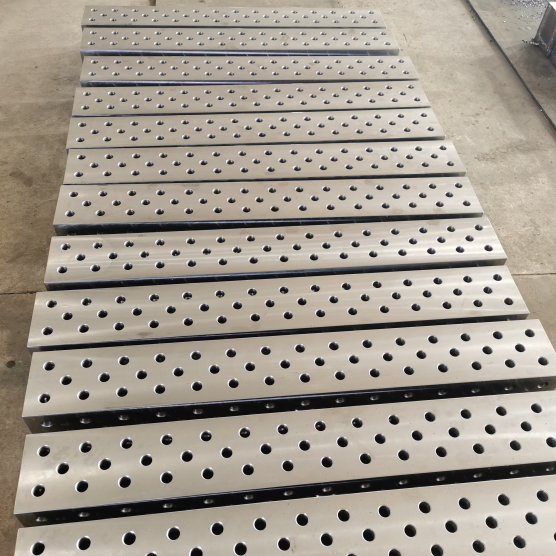
Gearbox aluminum castings are precision-engineered structural components manufactured through high-pressure die casting or gravity casting processes, specifically designed to house gears, bearings, and shafts in power transmission systems. As a specialized manufacturer based in China, we deliver lightweight, thermally efficient, and dimensionally stable aluminum housings that meet rigorous international standards such as ISO 9001 and IATF 16949. These castings replace heavier iron or steel alternatives, offering significant weight reduction for electric vehicles (EVs), industrial automation robots, and renewable energy gearboxes without compromising structural integrity or torque capacity.
Why Choose Aluminum Castings for Gearbox Housings?
The shift from traditional ferrous materials to aluminum alloy castings in gearbox manufacturing is driven by three critical engineering requirements: weight reduction, thermal management, and manufacturing efficiency. In modern mechanical design, the housing is not merely a protective shell; it is an integral part of the system’s dynamic performance.
Weight Reduction and Energy Efficiency
Aluminum alloys, particularly the Al-Si (Aluminum-Silicon) series like A380 and A356, offer a density approximately one-third that of steel or cast iron. For mobile applications such as electric vehicles and aerospace actuators, reducing the mass of the gearbox directly correlates to extended range and improved payload capacity. In stationary industrial applications, lighter housings simplify installation and reduce the load on supporting structures.
- High Strength-to-Weight Ratio: Modern aluminum alloys provide sufficient tensile strength to withstand operational stresses while minimizing overall unit weight.
- Inertia Reduction: Lower rotating and static mass allows for faster acceleration and deceleration cycles in robotic joints and servo systems.
- Fuel and Energy Savings: In automotive applications, every kilogram saved in the drivetrain contributes to lower energy consumption.
Superior Thermal Conductivity
Gearboxes generate significant heat due to friction between meshing gears and churning lubricants. Aluminum possesses excellent thermal conductivity—approximately three times higher than cast iron. This property allows the gearbox housing to act as a passive heat sink, dissipating heat more effectively into the surrounding environment.
Effective heat dissipation prevents lubricant degradation, reduces thermal expansion mismatches between gears and bearings, and extends the maintenance intervals of the transmission system. In high-speed applications, this thermal advantage is often the deciding factor in material selection.
Design Flexibility and Complex Geometries
Die casting enables the production of complex, near-net-shape geometries that are difficult or impossible to achieve with machining or sand casting. Internal cooling channels, mounting bosses, cable routing paths, and reinforcement ribs can be integrated directly into the casting mold. This integration reduces the need for secondary machining operations, lowers assembly costs, and minimizes potential leak paths by reducing the number of joint faces.
Manufacturing Processes for High-Precision Gearbox Castings
As a leading China gearbox aluminum castings manufacturer, we utilize advanced casting technologies tailored to the specific volume, complexity, and performance requirements of each project. The choice of process significantly impacts the microstructure, porosity levels, and mechanical properties of the final component.
High-Pressure Die Casting (HPDC)
High-Pressure Die Casting is the dominant process for mass-producing gearbox housings, especially in the automotive and consumer electronics sectors. Molten aluminum is injected into a steel mold at high pressure and speed.
- Advantages: Extremely high production rates, excellent surface finish, and tight dimensional tolerances (typically ±0.1mm).
- Material Suitability: Ideal for A380 and ADC12 alloys, which offer good fluidity and castability.
- Application: Best suited for thin-walled, complex components requiring high volume output.
However, standard HPDC can trap air, leading to porosity. For gearbox housings that require pressure tightness or vacuum sealing, we employ Vacuum-Assisted High-Pressure Die Casting. This technique removes air from the mold cavity before injection, significantly reducing porosity and improving the mechanical integrity of the casting.
Gravity Die Casting (Permanent Mold)
Gravity die casting involves pouring molten aluminum into a reusable metal mold under the force of gravity. This process produces castings with superior mechanical properties compared to HPDC due to slower cooling rates and reduced turbulence.
- Microstructure: Finer grain structure results in higher ductility and fatigue resistance.
- Porosity Control: Lower risk of gas entrapment makes it suitable for components requiring subsequent heat treatment or welding.
- Application: Ideal for medium-volume production of larger, thicker-walled gearbox housings used in industrial machinery and wind turbines.
Sand Casting for Large-Scale Units
For very large gearbox housings, such as those used in mining equipment or marine propulsion, sand casting remains the most viable option. While it offers lower dimensional accuracy and surface finish than die casting, it allows for the production of massive, single-piece structures without the size limitations of steel dies.
Key Aluminum Alloys for Gearbox Applications
Selecting the correct aluminum alloy is critical for balancing castability, mechanical strength, and post-processing requirements. Not all aluminum alloys are suitable for high-load transmission components.
| Alloy Series | Common Designations | Key Characteristics | Typical Gearbox Application |
| Al-Si-Cu (3xx.x) | A380, ADC12, A383 | Excellent fluidity, good strength, moderate corrosion resistance. Prone to hot cracking if not managed. | Automotive transmission cases, small industrial gear reducers, high-volume HPDC parts. |
| Al-Si-Mg (3xx.x/4xx.x) | A356, A357, ZL101A | Heat-treatable (T6), high ductility, excellent corrosion resistance, good weldability. | High-performance EV drivetrains, aerospace actuators, components requiring T6 heat treatment. |
| Al-Si (4xx.x) | A413, A410 | Superior fluidity and pressure tightness, lower strength than A356. | Complex thin-walled housings where leak prevention is prioritized over extreme structural load. |
The Role of Heat Treatment (T5 and T6)
For critical gearbox applications, raw casting properties are often insufficient. Heat treatment enhances the mechanical performance of aluminum alloys:
- T5 Treatment: Artificial aging only. Used to relieve internal stresses and stabilize dimensions after casting. Common for HPDC parts that cannot undergo solution heat treatment due to blistering risks.
- T6 Treatment: Solution heat treatment, quenching, and artificial aging. This process significantly increases yield strength and hardness. It is typically applied to gravity cast or low-porosity vacuum die-cast parts made from A356 or A357 alloys.
Our engineering team assists clients in selecting the appropriate alloy and temper condition based on the specific torque loads, shock resistance requirements, and operating temperatures of their gearbox design.
Critical Quality Control Standards for Gearbox Castings
Gearbox housings must maintain precise geometric relationships between bearing bores and mounting surfaces. Any deviation can lead to premature bearing failure, gear misalignment, noise, and vibration. Our quality control framework adheres to strict international standards to ensure consistency and reliability.
Dimensional Accuracy and CMM Inspection
We utilize Coordinate Measuring Machines (CMM) to verify critical dimensions, including:
- Bore Coaxiality: Ensuring input and output shaft bores are perfectly aligned to prevent binding.
- Flatness of Mounting Faces: Critical for preventing lubricant leaks when mating with covers or motors.
- Positional Tolerance: Accurate location of bolt holes and dowel pins for seamless assembly.
Standard die casting tolerances follow ISO 8062-3 or VDG P201 standards. For high-precision interfaces, we incorporate CNC machining steps to achieve tighter tolerances where casting alone is insufficient.
Porosity and Leak Testing
Internal porosity is the primary defect concern in aluminum castings. For gearboxes containing lubricants or operating in vacuum environments, leak tightness is non-negotiable.
- X-Ray Inspection: Non-destructive testing to detect internal voids, shrinkage, or inclusions in critical structural areas.
- Dye Penetrant Testing: Surface inspection to identify micro-cracks or open pores.
- Air Decay Leak Testing: Pressurizing the sealed housing and monitoring pressure drop to ensure no air escapes, verifying the integrity of the casting wall.
Surface Finish and Cosmetic Standards
While internal functionality is paramount, surface quality affects coating adhesion and aesthetic perception. We control surface defects such as flow marks, cold shuts, and soldering. Standard surface finishes include shot blasting to remove parting line flash and improve surface texture for powder coating or painting.
Design for Manufacturing (DFM) Optimization
Collaborating with a manufacturer early in the design phase yields significant cost and performance benefits. Our DFM services focus on optimizing the gearbox housing design for the casting process.
Wall Thickness Uniformity
Sudden changes in wall thickness cause uneven cooling, leading to shrinkage porosity and warpage. We recommend maintaining uniform wall thickness wherever possible and using gradual transitions or ribs to reinforce thick sections. Typical wall thicknesses for aluminum gearbox housings range from 2.5mm to 5mm, depending on the size and load requirements.
Draft Angles and Undercuts
Adequate draft angles (typically 1° to 3°) are essential for ejecting the part from the die without damage. Undercuts should be minimized or designed with collapsible cores to avoid complex and expensive tooling mechanisms. Our engineers review 3D CAD files to suggest modifications that enhance mold life and cycle time.
Parting Line Placement
The parting line determines where the two halves of the mold meet. Strategic placement ensures that critical sealing surfaces are free from parting line flash, which could compromise leak tightness. We optimize parting lines to simplify trimming and reduce secondary machining costs.
Applications of Aluminum Gearbox Castings Across Industries
The versatility of aluminum castings has expanded their use beyond traditional automotive sectors into diverse high-tech and industrial fields.
Electric Vehicles (EVs) and Hybrid Powertrains
EVs demand high power density and minimal weight. Aluminum gearbox housings for electric drive units (EDUs) integrate the motor, inverter, and transmission into a single compact module. The thermal conductivity of aluminum helps manage heat generated by both the gears and the electric motor, enabling higher continuous power output.
Industrial Robotics and Automation
Robotic arms require precise motion control and low inertia. Aluminum housings for harmonic drives and planetary gearboxes reduce the weight of the robot’s end-effectors and joints, allowing for faster movement and lower energy consumption. The rigidity of the casting ensures positional accuracy during high-speed operations.
Renewable Energy: Wind and Solar Tracking
Wind turbine pitch and yaw systems rely on robust gearboxes to adjust blade angles and nacelle orientation. Aluminum castings offer a balance of strength and corrosion resistance, crucial for offshore and harsh environmental conditions. Similarly, solar tracking systems use lightweight aluminum gearboxes to maximize panel exposure to sunlight with minimal structural support.
Aerospace and Defense
In aerospace, weight savings are directly linked to fuel efficiency and payload capacity. High-grade aluminum alloys, often subjected to rigorous T6 heat treatment and X-ray inspection, are used in actuation systems and auxiliary power units. The materials must meet strict aerospace standards for fatigue resistance and reliability.
Comparative Analysis: Aluminum vs. Cast Iron Gearbox Housings
Choosing between aluminum and cast iron depends on the specific application constraints. Below is a detailed comparison to guide decision-making.
| Feature | Aluminum Alloy Castings | Cast Iron (Grey/Ductile) |
| Density | ~2.7 g/cm³ (Lightweight) | ~7.2 g/cm³ (Heavy) |
| Thermal Conductivity | High (Excellent heat dissipation) | Low (Retains heat) |
| Damping Capacity | Moderate (May transmit more noise) | High (Excellent vibration damping) |
| Corrosion Resistance | Good (Natural oxide layer) | Poor (Requires painting/coating) |
| Manufacturing Cost | Higher material cost, lower machining cost | Lower material cost, higher machining cost |
| Strength-to-Weight | Superior | Inferior |
| Typical Use Case | EVs, Aerospace, Portable Equipment | Heavy Industrial Machinery, Stationary Gearboxes |
While cast iron offers better vibration damping, aluminum’s advantages in weight and thermal management make it the preferred choice for modern, high-efficiency, and mobile applications. Noise issues in aluminum housings can be mitigated through strategic ribbing design and the use of acoustic dampening coatings.
Common Challenges and Solutions in Aluminum Gearbox Casting
Understanding potential pitfalls in aluminum casting helps in designing more reliable products. Here are common issues and our engineered solutions.
Issue 1: Porosity and Air Entrapment
Cause: Turbulent flow during filling or inadequate venting in the mold.
Solution: Implement vacuum-assisted die casting, optimize gate and runner systems using flow simulation software (MagmaSoft or Flow-3D), and ensure proper venting channels are maintained in the tooling.
Issue 2: Dimensional Warpage
Cause: Uneven cooling or residual stress from ejection.
Solution: Design uniform wall thicknesses, use conformal cooling channels in the mold, and apply stress-relief heat treatment (T5) immediately after casting.
Issue 3: Leakage at Mating Surfaces
Cause: Surface irregularities or porosity near bolt holes.
Solution: Specify CNC machining for all sealing faces, implement impregnation processes (vacuum sealing with resin) to close microscopic pores, and conduct 100% leak testing for critical batches.
FAQ: Frequently Asked Questions About Gearbox Aluminum Castings
What is the typical lead time for custom gearbox aluminum castings?
Lead times vary based on complexity and volume. Prototype samples via soft tooling can be delivered in 2-3 weeks. Production hard tooling typically takes 4-6 weeks, followed by mass production cycles depending on order quantity. We prioritize rapid prototyping to accelerate your time-to-market.
Can aluminum gearbox housings be welded for repairs or modifications?
Yes, but with caution. Alloys like A356 and A380 have varying weldability. A356 is more weldable than A380 due to lower copper content. Welding requires skilled TIG or MIG techniques and may necessitate re-heat treatment to restore mechanical properties in the heat-affected zone. Designing for modularity is often preferred over welding.
How do you ensure the longevity of aluminum gearboxes in corrosive environments?
Aluminum naturally forms a protective oxide layer. For harsh environments (e.g., marine or chemical processing), we apply additional surface treatments such as chromate conversion coating, powder coating, or anodizing. These layers provide a robust barrier against saltwater and chemical attack.
What is the maximum size of gearbox housing you can manufacture?
Our facility supports die casting machines ranging from 280T to 1250T, allowing us to produce housings up to approximately 800mm x 600mm x 400mm. For larger units, we utilize gravity casting or sand casting capabilities, accommodating structures over 1 meter in length for industrial applications.
Do you provide secondary machining services?
Yes, we offer comprehensive secondary services including CNC milling, drilling, tapping, and boring. This “one-stop-shop” approach ensures that critical bearing seats and mounting interfaces meet precise tolerances, reducing the logistical burden on our clients.
Steps to Order Custom Gearbox Aluminum Castings
Partnering with us involves a streamlined, transparent process designed to minimize risk and maximize quality.
- Consultation and DFM Review: Share your 3D CAD files (STEP or IGES format). Our engineers analyze the design for castability, suggesting optimizations for wall thickness, draft angles, and parting lines.
- Quotation and Tooling Design: We provide a detailed quote covering tooling costs, unit price, and lead times. Upon approval, our tooling department designs the mold using high-grade steel (e.g., H13) for durability.
- Sample Production and Validation: Initial samples (T1 trials) are produced and inspected. We provide CMM reports, X-ray images, and material certificates for your approval.
- Mass Production and QC: Once samples are approved, we commence full-scale production. Rigorous in-process quality checks ensure consistent adherence to specifications.
- Surface Treatment and Assembly: Parts undergo specified surface treatments (shot blast, paint, etc.) and optional assembly services before secure packaging and shipment.
Why Partner with Botou Haijun Metal Products Co., Ltd.?
In 2026, the landscape of global manufacturing demands more than just competitive pricing. It requires technical partnership, supply chain resilience, and unwavering quality commitment. At Botou Haijun Metal Products Co., Ltd., we combine our core expertise in high-precision manufacturing with our capabilities in aluminum casting to serve as a comprehensive partner for your mechanical needs.
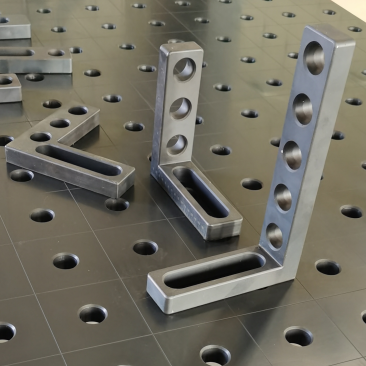
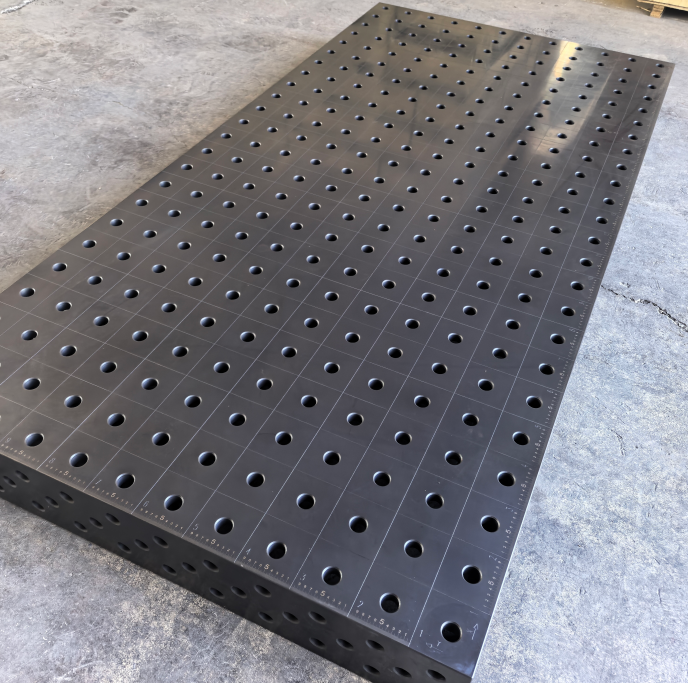
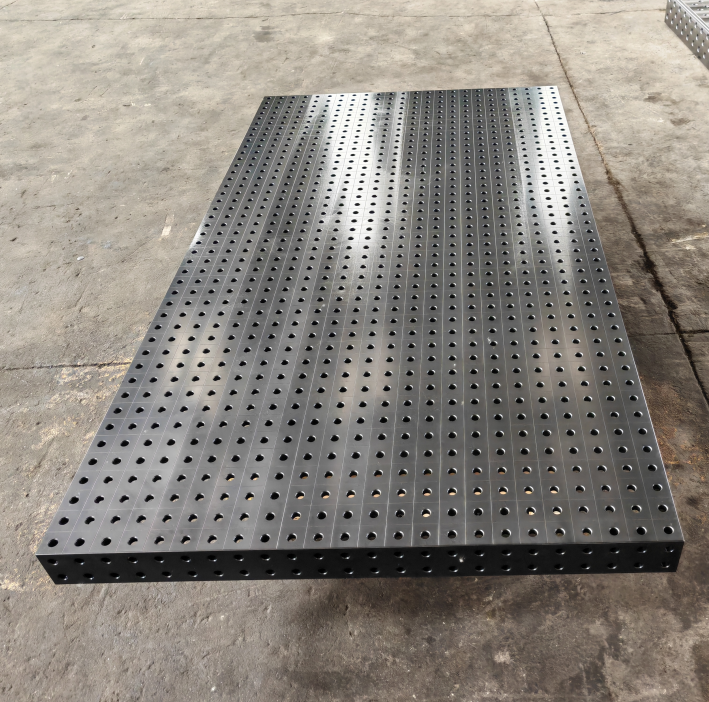
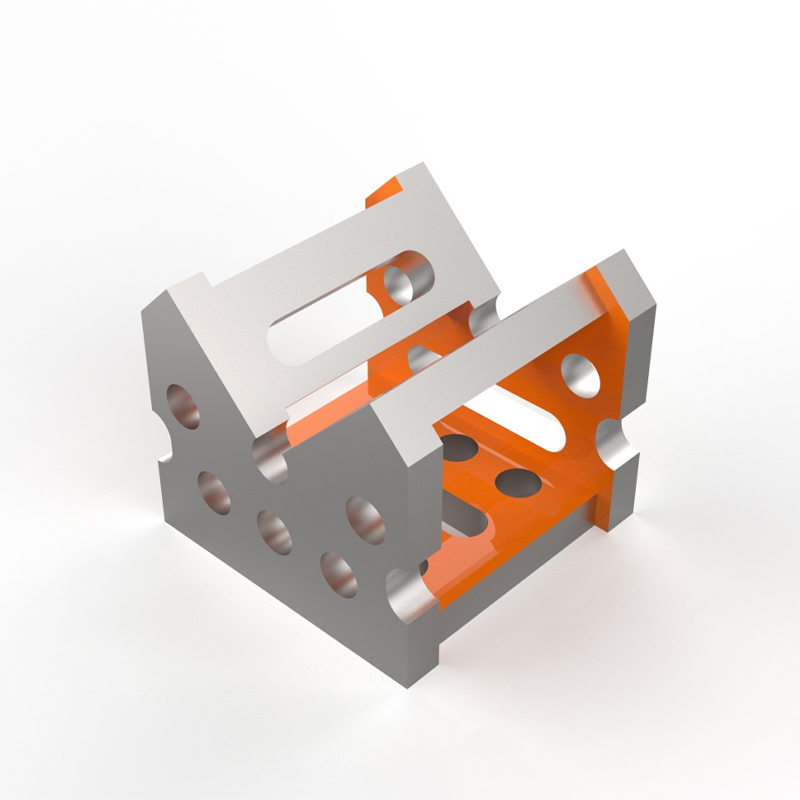
While we are widely recognized for our research, development, and production of high-precision flexible modular fixtures and metalworking tools—providing efficient welding and positioning solutions for the machining, automotive, and aerospace industries—our manufacturing infrastructure supports a broader range of precision metal components. Our experience in producing durable cast iron 3D welding platforms and angle connection blocks has honed our understanding of material stability, durability, and precision tolerances. This deep-rooted expertise in metallurgy and precision tooling translates directly into the superior quality of our aluminum gearbox castings.
- Technical Expertise: Our team comprises experienced metallurgists and process engineers who understand the nuances of aluminum alloy behavior under dynamic loads, backed by years of experience in producing trusted tools and gauges for international markets.
- Advanced Infrastructure: We invest in state-of-the-art die casting machines, automated trimming cells, and multi-axis CNC centers. Our familiarity with high-precision fixture manufacturing ensures that our casting processes meet the exacting standards required for complex gearbox geometries.
- Quality Certifications: Our facilities are ISO 9001 certified, and our automotive production lines comply with IATF 16949 standards, ensuring systematic quality management across all product lines, from flexible welding platforms to transmission housings.
- Supply Chain Stability: Located in a major industrial hub, we have direct access to raw material suppliers and logistics networks, ensuring timely delivery even during market fluctuations.
- Customer-Centric Approach: We view ourselves as an extension of your engineering team. Whether you need custom gearbox housings or complementary positioning solutions like our renowned 2D/3D flexible welding platforms, U-shaped square boxes, and universal angle gauges, we provide proactive feedback and solutions throughout the product lifecycle.
Conclusion: Elevate Your Gearbox Performance with Precision Aluminum Castings
Gearbox aluminum castings represent the intersection of lightweight design, thermal efficiency, and manufacturing precision. Whether you are developing next-generation electric vehicle drivetrains, high-speed industrial robots, or durable renewable energy systems, the quality of your housing directly impacts the performance and longevity of the entire assembly.
By choosing a specialized manufacturer with deep expertise in aluminum die casting, DFM optimization, and rigorous quality control, you mitigate risk and accelerate your path to market. Our commitment to EEAT principles—demonstrating real-world experience, technical expertise, industry authority, and trustworthiness—ensures that every casting we deliver meets the highest engineering standards.
Ready to optimize your gearbox design?
Contact our engineering team today for a free DFM review and quotation. Let us help you select the right alloy, process, and finishing options for your specific application needs.
Explore Our Gearbox Casting Solutions and Request a Quote