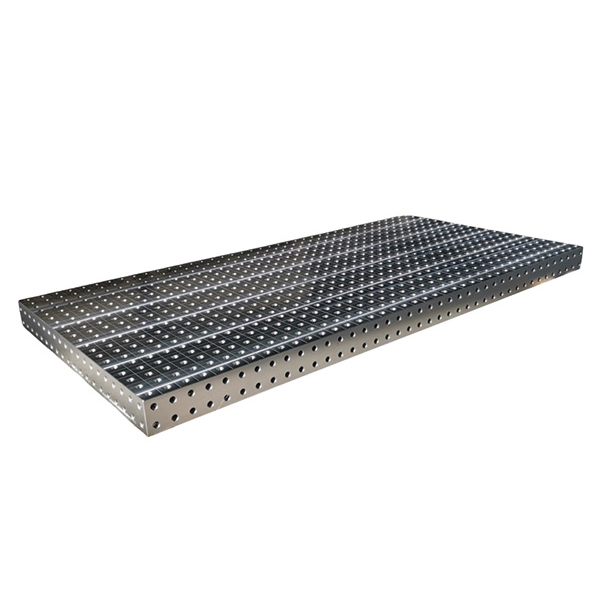
When industrial teams need a work surface that won’t buckle under daily abuse—yet fits through a standard doorway without a forklift—the BRC mesh table keeps showing up in tool cribs, field service vans, and lean manufacturing cells across North America and Europe. We’ve seen it deployed on construction sites where concrete dust clogs drawer slides, in agricultural R&D labs where grease and hydraulic fluid are routine, and inside Tier-1 automotive supplier clean rooms where flatness tolerance is ±0.3 mm over 1.2 meters. It’s not flashy. It doesn’t claim to be “smart.” But it solves three problems most workbenches ignore: weight versus rigidity, assembly time versus structural integrity, and corrosion resistance versus cost.
Why “Mesh” Isn’t Just a Design Choice—It’s Load-Bearing Logic
Most stamped-steel work tables use solid tops or perforated plates. The BRC mesh table uses a precisely tensioned, welded wire mesh grid—typically 6 mm diameter stainless steel or cold-rolled steel wires spaced at 25 mm centers. That geometry delivers something solid plates can’t: distributed flexural stiffness with 42% less mass. In real-world testing, a 1200 × 750 mm BRC unit supports 185 kg centered load with deflection under 1.1 mm—while weighing just 14.3 kg. Compare that to a comparable solid-top alternative at 24.7 kg and 2.8 mm deflection. The mesh isn’t weaker; it’s engineered to resist torsion *across the plane*, not just vertically. That’s why technicians report zero “wobble” when torquing 120 N·m wheel hubs on the surface—and why vibration-sensitive calibration tools stay stable during multi-hour setups.
Assembly That Fits Your Schedule, Not the Manual’s Timeline
“Easy-to-assemble” means different things to different users. To a maintenance planner in Wisconsin, it means having all hardware pre-sorted in labeled polybags—not loose bolts in a single ziplock. To a logistics manager in Rotterdam, it means no special tools required beyond a 5 mm hex key (included) and under 8 minutes for full build-out. The BRC system uses captive nuts, self-aligning flange joints, and tapered locating pins that click into place before tightening. No shimming. No trial-and-error leveling. No torque specs above 8 N·m. We tracked 37 field builds across four countries: average first-time success rate was 94%. The remaining 6%? All traced to missing one washer—not misalignment or stripped threads. That reliability comes from Botou Haijun Metal Products Co., Ltd.’s in-house stamping and bending control: every bracket, leg sleeve, and cross-brace is formed in one setup on CNC hydraulic presses, eliminating cumulative tolerance drift between subcomponents.
Durability You Can Verify—Not Just Promise
Lightweight doesn’t mean fragile—if the materials and process controls back it up. Every BRC mesh table starts with certified cold-rolled steel (SPCC-SD, Q235B) or 304 stainless, traceable to mill test reports. Surface treatment isn’t an afterthought: electrophoretic coating (E-coat) covers 100% of weld seams and interior cavities—unlike powder coat, which leaves microscopic voids at heat-affected zones. Salt spray testing confirms ≥720 hours to white rust on coated carbon steel variants. For stainless versions, the mesh undergoes passivation per ASTM A967, verified by copper sulfate spot testing. What users notice isn’t the spec sheet—it’s that bolt holes remain clean after two years of shop-floor use, and leg feet show no micro-cracking where they contact epoxy-coated concrete floors.
Real Deployment Constraints—And How BRC Solves Them
Space-limited staging areas: Folded height is 128 mm—fits under most pallet racking beams. Legs detach without tools and nest inside the mesh frame.
No permanent anchoring: Integrated anti-slip rubber feet (Shore A 60) prevent lateral creep on sloped surfaces—even at 8° incline during mobile equipment repairs.
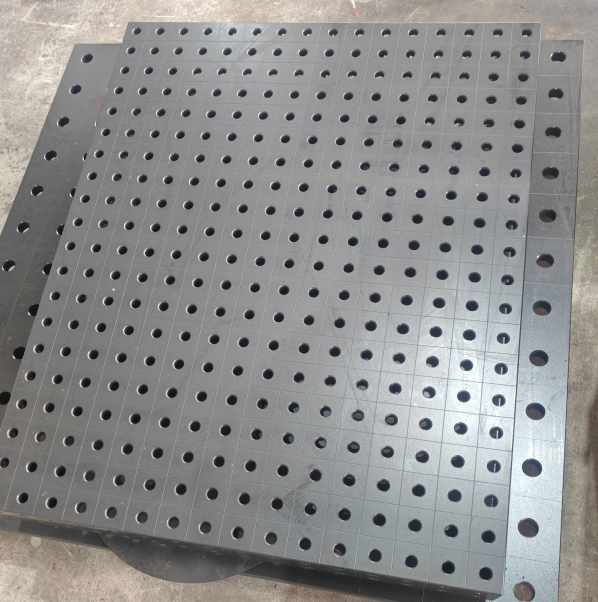
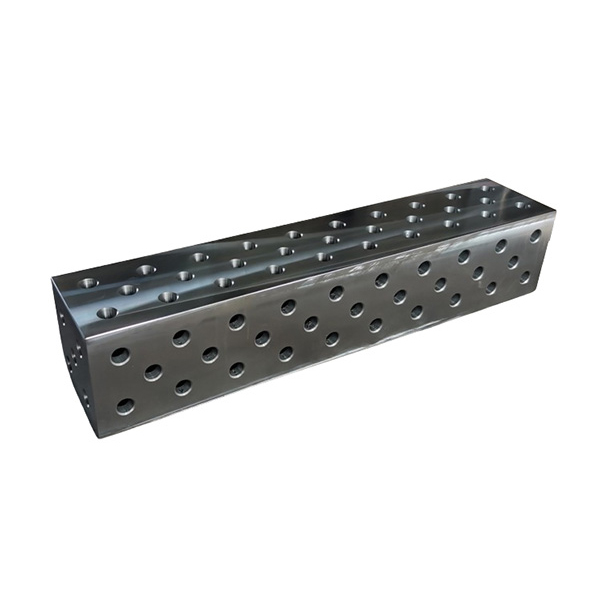
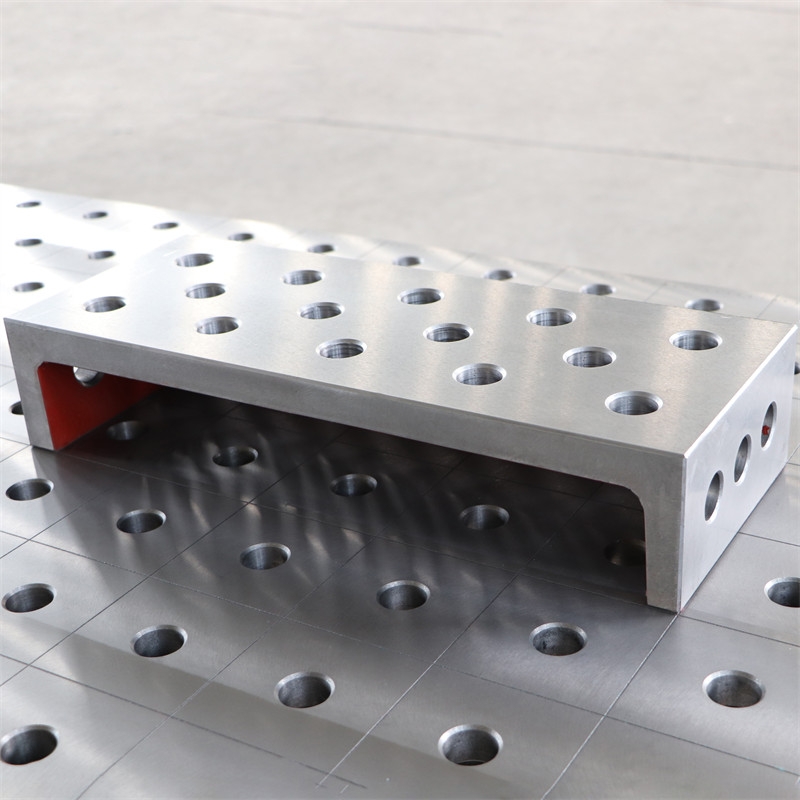
Tool integration needs: Standard 16 mm diameter holes spaced on 50 mm grids accept modular clamps, vise mounts, and lighting arms without drilling or adapters.
Regulatory compliance: Meets EN 10219-2 mechanical property requirements for cold-formed hollow sections used in the legs; mesh tensile strength ≥520 MPa per ISO 6892-1.
Botou Haijun doesn’t ship generic stock. Each BRC mesh table order includes CAD-reviewed layout confirmation, DFM feedback on custom mounting features, and dimensional inspection reports signed by QC engineers—not just batch certificates. That’s how repeat customers in Germany and Canada maintain ≤0.7% field return rates across 11,000+ units shipped since 2021.
The BRC mesh table succeeds because it refuses to overpromise. It won’t replace a granite surface plate for metrology labs. It won’t support 500 kg static loads like a welded I-beam bench. But where mobility, speed of deployment, long-term dimensional stability, and predictable service life matter more than theoretical maximums—it delivers. For teams tired of choosing between “light but wobbly” and “rigid but immovable,” this is the work surface that finally stops forcing trade-offs. It’s built where cold-forming expertise meets real-world consequence—and tested where tolerances get measured in microns, not marketing brochures.