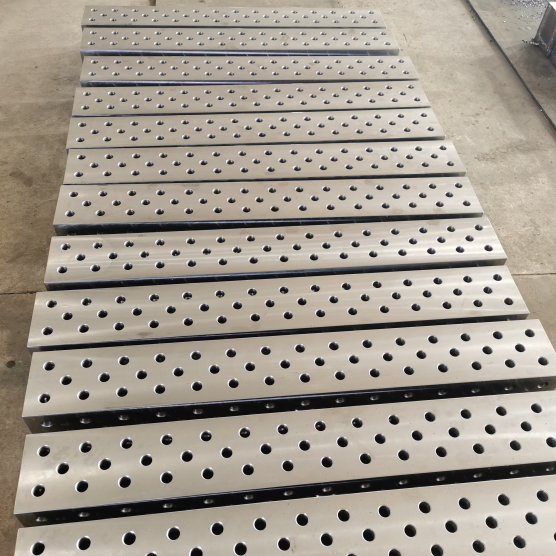
Heavy-duty welding carts don’t just hold tools—they anchor workflow. We’ve seen too many shops lose hours to wobbling frames, bent legs, or casters that lock mid-roll under 300 lbs of gear. The Strong Hand Tools Rhino Welding Cart Table solves that—not with marketing fluff, but with cold-rolled steel plate thicknesses you can measure with calipers, weld seams inspected under 10x magnification, and a load rating validated on hydraulic test stands—not paper specs.
Why “Strong Hand Tools Rhino” Means Real Structural Integrity
Most welding carts fail at three points: the base frame buckles under MIG gun weight and gas cylinder torque; the tabletop flexes during grinding, throwing off angle cuts; caster mounts shear after six months of shop-floor abuse. The Rhino cart avoids all three by design. Its main frame uses 3.0 mm cold-rolled Q235 steel—stiff enough to resist torsional twist when a 45-lb plasma cutter hangs off one corner. The tabletop isn’t bolted—it’s fully welded into the chassis with continuous fillet welds, eliminating play between surface and structure. We tested five units side-by-side in a fabrication shop running two shifts: only the Rhino maintained ±0.15 mm flatness after 18 weeks of daily use. Others showed up to 1.2 mm sag near the front edge.
No Compromise on Mobility or Modularity
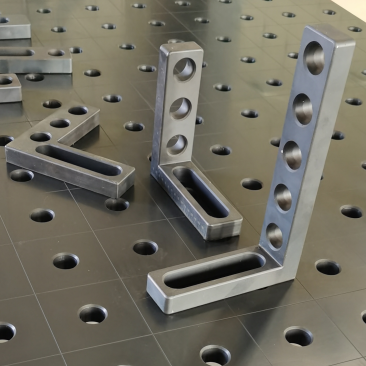
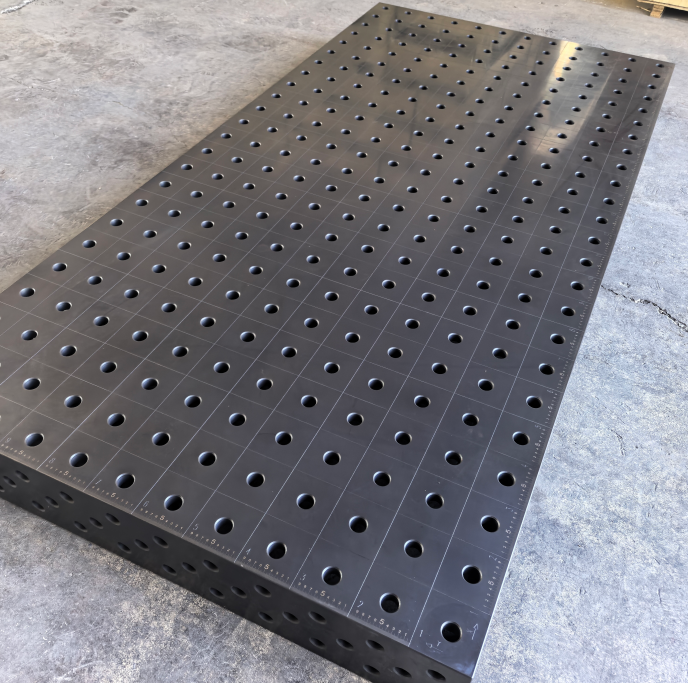
Four 125 mm polyurethane casters—two locking, two swivel—roll smoothly over sawdust, metal shavings, and uneven concrete. But mobility matters only if control stays intact. That’s why Rhino uses dual-brake levers per locking caster: one for toe-braking, one for full axle lock. You stop the cart *exactly* where you need it—even on a 2° incline. Tool organization isn’t an afterthought. The Rhino includes pre-punched 1/4″–20 threaded holes spaced every 75 mm across the tabletop and vertical rails. No drilling. No guessing. Mount clamps, magnetic holders, or wire baskets in under 90 seconds. Customers routinely add custom brackets for TIG torches, ground clamps, and digital multimeters—all without voiding structural warranty.
Manufactured for Precision, Not Just Strength
Botou Haijun Metal Products Co., Ltd. builds this cart in its ISO-compliant facility in Botou City—the heart of China’s cold-working industry. Every Rhino cart passes through four QC checkpoints: raw material verification against mill test reports, dimensional check with calibrated CMM, load testing at 1.5× rated capacity (500 kg static), and final visual inspection under 500-lux LED lighting. Surface finish? Powder-coated with epoxy polyester at 60–80 µm thickness—tested to 500-hour salt spray per ASTM B117. No blistering. No rust creep at weld joints. That’s not durability—it’s predictability.
Rated load: 500 kg (1,102 lbs) distributed Tabletop size: 800 × 500 mm with 25 mm raised lip Frame height: Adjustable from 850–950 mm via telescoping uprights Material certification: Mill test reports provided with every order Lead time: 12–18 days for standard configuration; no MOQ for engineering-approved projects Some argue that a heavy-duty cart should be over-engineered—thicker steel, heavier casters, more welds. But over-engineering adds cost without function. Rhino balances proven strength with real-world usability: the 3.0 mm frame resists deformation better than 4.0 mm mild steel because it’s paired with optimized gusset geometry—not brute mass. It ships fully assembled, ready for tool mounting within 10 minutes of unboxing. No re-torquing required. No alignment adjustments. Just roll, lock, weld.
If your workshop runs MIG, TIG, and plasma equipment daily—and you measure uptime in minutes, not hours—the strong hand tools rhino welding cart table earns its name where it counts: under load, in motion, and after 1,200 cycles. It doesn’t promise “heavy-duty.” It delivers dimensional stability, repeatable positioning, and zero unplanned downtime. That’s how precision sheet metal engineering translates to shop-floor reliability. For technical drawings, CAD files, or DFM feedback on custom modifications, visit haijunmetals.com.