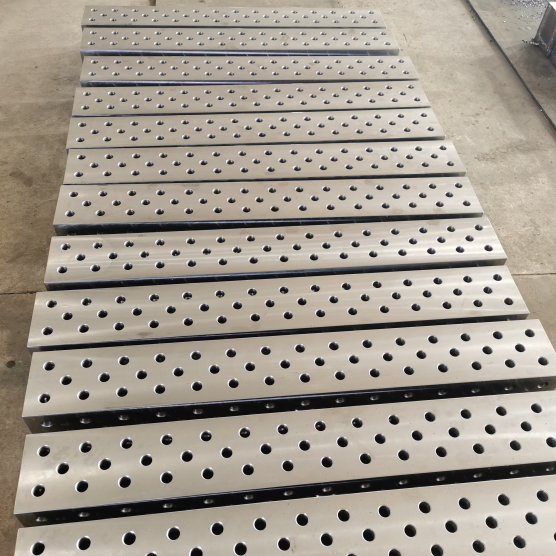
Our aluminum casting service delivers high-precision, custom-manufactured components for global B2B industries. As a direct manufacturer, we specialize in die casting, sand casting, and investment casting processes to produce complex geometries with tight tolerances. We support prototyping to mass production, ensuring ISO-certified quality, rapid lead times, and cost-effective solutions for automotive, aerospace, and industrial equipment sectors. Request a quote today for your custom aluminum parts.
Comprehensive Aluminum Casting Services for Custom Manufacturing
Aluminum casting is a foundational manufacturing process where molten aluminum is poured into a mold to create specific shapes. For engineering teams and procurement specialists, selecting the right casting method is critical to balancing performance, cost, and timeline. Our facility integrates advanced molding technologies with rigorous quality control to serve as a reliable extension of your supply chain.
We do not just pour metal; we engineer solutions. From initial design for manufacturability (DFM) analysis to final surface finishing, our aluminum casting service covers the entire product lifecycle. This holistic approach minimizes defects, reduces material waste, and ensures that every component meets exact functional requirements.
Whether you need high-volume die-cast housings for consumer electronics or large-scale sand-cast structures for heavy machinery, our technical team provides the expertise required to navigate complex metallurgical challenges. We understand that consistency is key in industrial applications, which is why our processes are standardized yet adaptable to unique project specifications.
Why Choose Professional Aluminum Casting?
Aluminum offers an exceptional strength-to-weight ratio, corrosion resistance, and thermal conductivity. However, realizing these benefits requires precise control over the casting process. Professional casting services provide:
- Design Freedom: Ability to create complex internal channels and thin walls that are impossible with machining alone.
- Cost Efficiency: Reduced material waste and lower per-unit costs in high-volume production runs.
- Material Versatility: Access to various aluminum alloys tailored for strength, ductility, or heat resistance.
- Surface Quality: Superior finish options that reduce post-processing time and assembly costs.
Core Casting Processes: Technical Comparison
Understanding the differences between casting methods is essential for optimizing your product design. Each process has distinct advantages regarding tolerance, surface finish, production speed, and part size. Below, we detail the primary methods available through our aluminum casting service.
1. Aluminum Die Casting
Die casting involves forcing molten aluminum under high pressure into reusable steel molds, known as dies. This method is ideal for high-volume production of parts with complex shapes and fine details.
Key Characteristics:
- High Precision: Tight tolerances typically ranging from ±0.1mm to ±0.5mm.
- Smooth Surface Finish: Requires minimal secondary machining.
- Fast Cycle Times: Suitable for mass production scenarios.
- Thin Walls: Capable of producing walls as thin as 0.5mm.
This process is predominantly used in the automotive and consumer electronics industries where consistency and speed are paramount. Common alloys include A380 and ADC12, which offer excellent fluidity and mechanical properties.
2. Aluminum Sand Casting
Sand casting uses expendable sand molds to form metal parts. It is one of the oldest and most versatile casting methods, suitable for both low and high-volume production. Unlike die casting, sand casting can accommodate much larger parts and heavier sections.
Key Characteristics:
- Large Part Capability: No practical limit on part size or weight.
- Complex Internal Geometries: Use of sand cores allows for intricate internal passages.
- Lower Tooling Cost: Patterns are cheaper and faster to produce than steel dies.
- Alloy Flexibility: Compatible with a wider range of aluminum alloys, including high-temperature variants.
Sand casting is often the preferred choice for industrial machinery, pump housings, and automotive engine blocks where structural integrity and size outweigh the need for ultra-smooth surfaces.
3. Investment Casting (Lost Wax)
Investment casting, also known as lost-wax casting, involves creating a wax pattern, coating it with ceramic, melting out the wax, and pouring aluminum into the resulting cavity. This process yields extremely high precision and excellent surface finishes.
Key Characteristics:
- Exceptional Accuracy: Ideal for near-net-shape parts requiring minimal machining.
- Complex Details: Can reproduce fine details and undercuts effectively.
- Superior Surface Finish: Often eliminates the need for grinding or polishing.
- Material Integrity: Produces parts with consistent mechanical properties.
While generally more expensive and time-consuming than sand or die casting, investment casting is invaluable for aerospace components, medical devices, and high-performance automotive parts where precision is non-negotiable.
Process Comparison Table
To help you decide which method suits your project, we have compiled a comparative overview of the three primary casting techniques.
| Feature | Die Casting | Sand Casting | Investment Casting |
| Production Volume | High (10,000+ units) | Low to High | Low to Medium |
| Tolerance Level | Very High (±0.1mm) | Moderate (±0.5mm – 1.0mm) | High (±0.1mm – 0.3mm) |
| Surface Finish | Smooth (Ra 1.6-3.2) | Rough (Ra 6.3-12.5) | Very Smooth (Ra 1.6-3.2) |
| Part Size Limit | Limited by machine tonnage | Virtually Unlimited | Limited by flask size |
| Tooling Cost | High | Low | Medium |
| Lead Time | Longer tooling, fast production | Short tooling, moderate production | Moderate tooling, slow production |
| Best For | Electronics, Auto Parts | Heavy Machinery, Pipes | Aerospace, Medical, Turbines |
Material Selection: Aluminum Alloys for Casting
The performance of your cast component depends heavily on the alloy selected. Different aluminum alloys offer varying levels of strength, corrosion resistance, castability, and machinability. Our engineers assist in selecting the optimal alloy based on your application’s environmental and mechanical demands.
Common Casting Alloys
- A380 (AlSi9Cu3): The most widely used die-casting alloy. It offers excellent fluidity, pressure tightness, and resistance to hot cracking. Ideal for general-purpose applications like gearbox housings and electronic enclosures.
- A360 (AlSi10Mg): Known for superior corrosion resistance and strength. It is harder to cast than A380 due to lower fluidity but is preferred for marine environments and chemical processing equipment.
- A356 (AlSi7Mg): A premium alloy used in sand and investment casting. It responds well to heat treatment (T6), providing high strength and ductility. Commonly used in automotive wheels and aerospace structural components.
- A413 (AlSi12): Offers the highest fluidity and pressure tightness. It is used for complex, thin-walled parts where leakage prevention is critical, such as pump bodies and valve components.
Heat Treatment and Tempers
Post-casting heat treatment can significantly enhance the mechanical properties of aluminum parts. Common tempers include:
- T5: Cooled from an elevated temperature shaping process and artificially aged. Improves strength and hardness.
- T6: Solution heat-treated and artificially aged. Provides the maximum combination of strength and ductility.
- T7: Solution heat-treated and stabilized. Improves dimensional stability and resistance to stress corrosion cracking.
Our aluminum casting service includes in-house heat treatment capabilities, ensuring that your parts meet the specified temper requirements without outsourcing delays.
Step-by-Step Manufacturing Workflow
Transparency in our manufacturing process builds trust and ensures alignment with your project goals. Here is how we execute your order from concept to delivery.
Step 1: Design Review and DFM Analysis
Upon receiving your CAD files (STEP, IGES, or STL), our engineering team conducts a Design for Manufacturability (DFM) analysis. We identify potential issues such as uniform wall thickness, draft angles, and undercuts that could affect casting quality. We provide feedback to optimize your design for cost and performance before tooling begins.
Step 2: Tooling and Mold Creation
Based on the approved design, we fabricate the necessary molds. For die casting, this involves machining high-grade steel dies. For sand casting, we create patterns and core boxes. For investment casting, we produce master patterns for wax injection. Tooling quality directly impacts part consistency, so we use precision CNC machining for mold creation.
Step 3: Prototype Sampling
Before mass production, we produce initial samples. These prototypes undergo dimensional inspection and visual checks. We may perform basic mechanical tests to verify material integrity. You review these samples to ensure they meet your expectations. Adjustments to the mold or process are made if necessary.
Step 4: Mass Production
Once samples are approved, we commence full-scale production. Our automated casting lines ensure consistent cycle times and temperature control. Real-time monitoring systems detect anomalies in pressure, temperature, and fill rates, allowing for immediate corrective actions.
Step 5: Quality Control and Inspection
Every batch undergoes rigorous quality control. We employ multiple inspection methods:
- CMM (Coordinate Measuring Machine): For precise dimensional verification against CAD models.
- X-Ray Inspection: To detect internal voids, porosity, or inclusions.
- Visual Inspection: To check for surface defects like cold shuts or flow marks.
- Spectrometry: To verify chemical composition of the alloy.
Step 6: Surface Finishing and Assembly
Cast parts often require secondary operations. We offer a range of finishing services including shot blasting, tumbling, CNC machining, powder coating, anodizing, and plating. If required, we can also assemble sub-components, delivering a ready-to-install product.
Step 7: Packaging and Logistics
We package parts using protective materials to prevent damage during transit. Custom crating is available for large or sensitive components. We coordinate logistics to ensure timely delivery to your facility, anywhere in the world.
Industries Served by Our Aluminum Casting Service
Our capabilities span diverse sectors, each with unique requirements for precision, durability, and compliance. Understanding these industry-specific needs allows us to tailor our services effectively.
Automotive and Electric Vehicles (EV)
The shift towards electric vehicles has increased demand for lightweight aluminum components to extend battery range. We produce motor housings, battery trays, transmission cases, and structural brackets. Our die-casting capabilities support the high-volume needs of automotive OEMs while maintaining the tight tolerances required for safety-critical parts.
Aerospace and Defense
Aerospace components demand exceptional reliability and traceability. We utilize investment and sand casting to produce turbine blades, structural frames, and avionics housings. Our processes comply with strict aerospace standards, ensuring material integrity and performance under extreme conditions.
Industrial Machinery and Robotics
Heavy-duty machinery requires robust components that can withstand vibration and load. Our sand-cast parts, such as pump housings, valve bodies, and robot arms, provide the necessary strength and durability. We also produce precision gears and linkage components for automated systems.
Consumer Electronics and Telecommunications
Heat dissipation and aesthetic finish are crucial in electronics. We manufacture heat sinks, enclosure boxes, and connector housings with smooth surfaces and tight tolerances. Our die-casting process allows for thin walls and complex geometries, enabling sleek, compact device designs.
Medical Equipment
Medical devices require biocompatible materials and high precision. We produce housing for diagnostic equipment, surgical tool handles, and implant components using certified alloys. Our clean-room compatible finishing options ensure hygiene and safety standards are met.
Quality Assurance and Certifications
Trust is built on consistent quality. Our facility adheres to international quality management standards to ensure every part meets your specifications. We maintain a comprehensive Quality Management System (QMS) that covers every stage of production.
Key Certifications
- ISO 9001:2015: Demonstrates our commitment to consistent quality and customer satisfaction.
- IATF 16949: Specific to the automotive industry, ensuring rigorous process control and defect prevention.
- ISO 14001: Reflects our dedication to environmental responsibility and sustainable manufacturing practices.
Advanced Inspection Equipment
We invest in state-of-the-art inspection technology to guarantee accuracy:
- 3D Scanners: For rapid full-surface deviation analysis.
- Leak Testing Machines: To ensure pressure tightness for fluid-handling components.
- Hardness Testers: To verify heat treatment effectiveness.
- Tensile Testing Machines: To validate mechanical strength and elongation properties.
Our quality team documents all inspection results, providing detailed reports with each shipment. This transparency allows you to verify compliance without additional third-party testing.
Design Guidelines for Optimal Casting Results
To maximize the efficiency and quality of your aluminum casting service project, consider these engineering best practices during the design phase.
Wall Thickness
Maintain uniform wall thickness wherever possible. Variations in thickness can lead to differential cooling rates, causing shrinkage, warping, or internal stresses. If thickness changes are necessary, use gradual transitions to minimize stress concentration.
Draft Angles
Incorporate adequate draft angles on vertical surfaces to facilitate easy ejection from the mold. Typical draft angles range from 1° to 3° for die casting and slightly higher for sand casting. Insufficient draft can cause surface drag and damage to the part or mold.
Radii and Fillets
Use generous radii at corners and intersections. Sharp corners act as stress concentrators and can hinder metal flow, leading to cracks or incomplete fills. Fillets improve material flow and enhance the structural integrity of the casting.
Undercuts
Minimize undercuts, as they require complex mold mechanisms (such as slides or lifters) that increase tooling cost and maintenance. If undercuts are necessary, ensure they are designed to allow for efficient mold operation.
Parting Lines
Position parting lines in non-critical areas to minimize visual impact and simplify finishing. Discuss parting line locations with our engineers early in the design process to optimize aesthetics and functionality.
Common Defects and How We Prevent Them
Even with advanced technology, casting defects can occur if processes are not strictly controlled. Understanding these defects helps in designing better parts and setting realistic expectations.
Porosity
Porosity refers to small voids or air pockets trapped within the metal. It can weaken the part and cause leaks. We prevent porosity by optimizing gating systems, controlling pouring temperatures, and using vacuum-assisted casting techniques where necessary.
Cold Shuts
Cold shuts occur when two streams of molten metal meet but fail to fuse properly, often due to low temperature or slow filling. We mitigate this by ensuring proper mold heating and optimizing injection speed and pressure.
Shrinkage Cracks
As aluminum cools, it shrinks. If this shrinkage is restricted, cracks can form. We address this by designing effective risers and cooling channels to control solidification patterns and relieve internal stresses.
Inclusions
Inclusions are non-metallic particles trapped in the casting, often from oxide formation or mold erosion. We use high-quality filters in the gating system and maintain strict mold maintenance schedules to minimize inclusions.
Frequently Asked Questions (FAQ)
Here are answers to common questions regarding our aluminum casting service. If you have specific technical queries, our engineering team is available for direct consultation.
What is the minimum order quantity (MOQ) for aluminum casting?
Our MOQ varies depending on the casting method. For die casting, due to higher tooling costs, we typically recommend volumes of 1,000 units or more to amortize tooling expenses. However, we can accommodate lower volumes for prototyping. For sand casting and investment casting, we offer lower MOQs, starting from 50-100 units, making them ideal for small batches and custom projects.
How long does it take to produce aluminum cast parts?
Lead times depend on complexity and volume. Tooling fabrication usually takes 2-4 weeks. Once tools are ready, prototype samples can be produced within 1-2 weeks. Mass production lead times vary from 2-6 weeks depending on order size and current capacity. We prioritize urgent projects and provide realistic timelines during the quoting phase.
Can you handle post-casting machining?
Yes, we offer integrated CNC machining services. This allows us to achieve tight tolerances on critical features that cannot be held by casting alone. By handling both casting and machining in-house, we reduce handling time, ensure better alignment, and lower overall costs.
What file formats do you accept for quotes?
We accept 3D CAD files in STEP, IGES, X_T, and STL formats. 2D drawings in PDF or DWG format are also helpful for specifying tolerances, thread sizes, and critical dimensions. Providing complete data ensures accurate and timely quotations.
Do you provide material certificates?
Yes, we provide material certification (Mill Test Reports) for every batch, confirming the chemical composition and mechanical properties of the aluminum alloy used. This documentation is essential for industries with strict regulatory requirements, such as automotive and aerospace.
What surface finishes are available?
We offer a wide range of surface finishes, including:
- Mechanical: Shot blasting, tumbling, grinding, polishing.
- Coating: Powder coating, wet painting, e-coating.
- Chemical: Anodizing (clear, black, colored), chromating, passivation.
- Plating: Nickel plating, chrome plating (for specific applications).
About Botou Haijun Metal Products Co., Ltd.
While our core competency lies in precision aluminum casting, our parent company, Botou Haijun Metal Products Co., Ltd., brings decades of specialized experience in the research, development, and production of high-precision flexible modular fixtures and metalworking tools. This deep-rooted expertise in metallurgy and precision engineering directly enhances our casting capabilities.
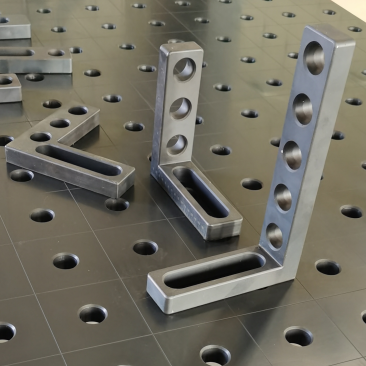
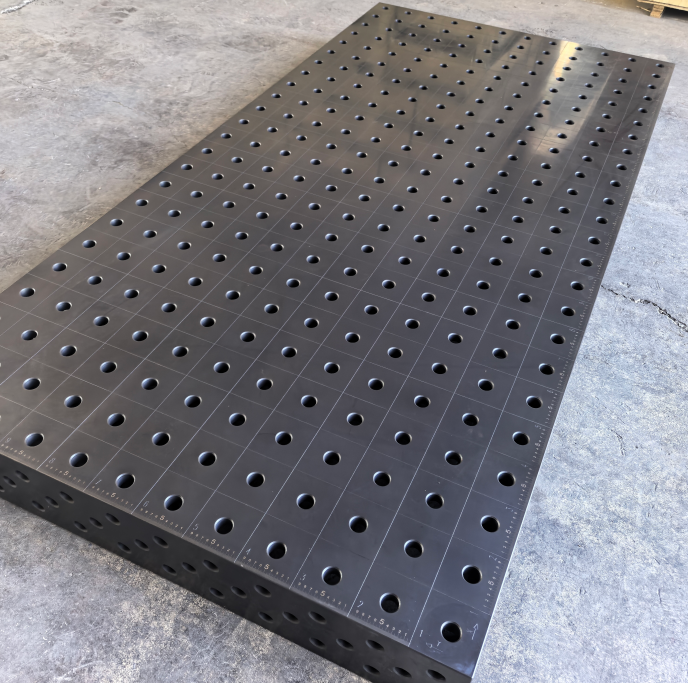
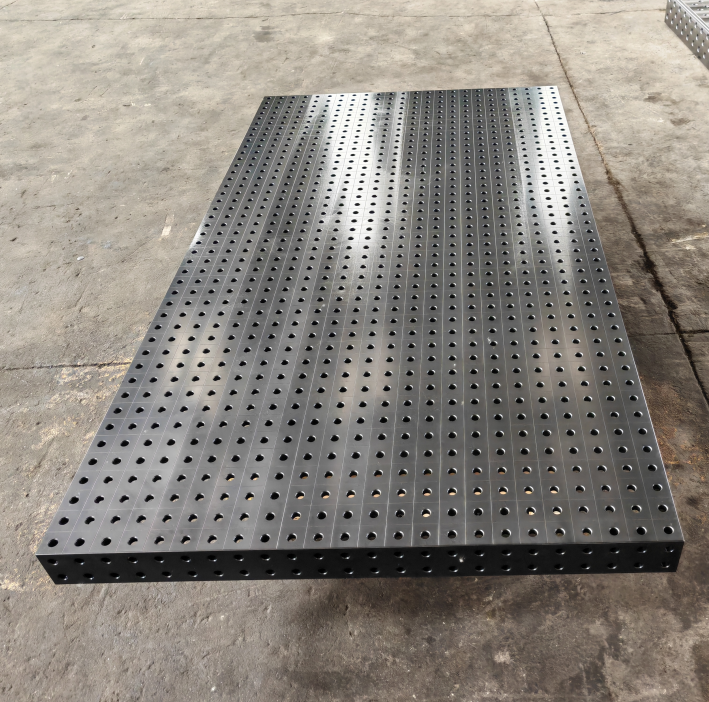
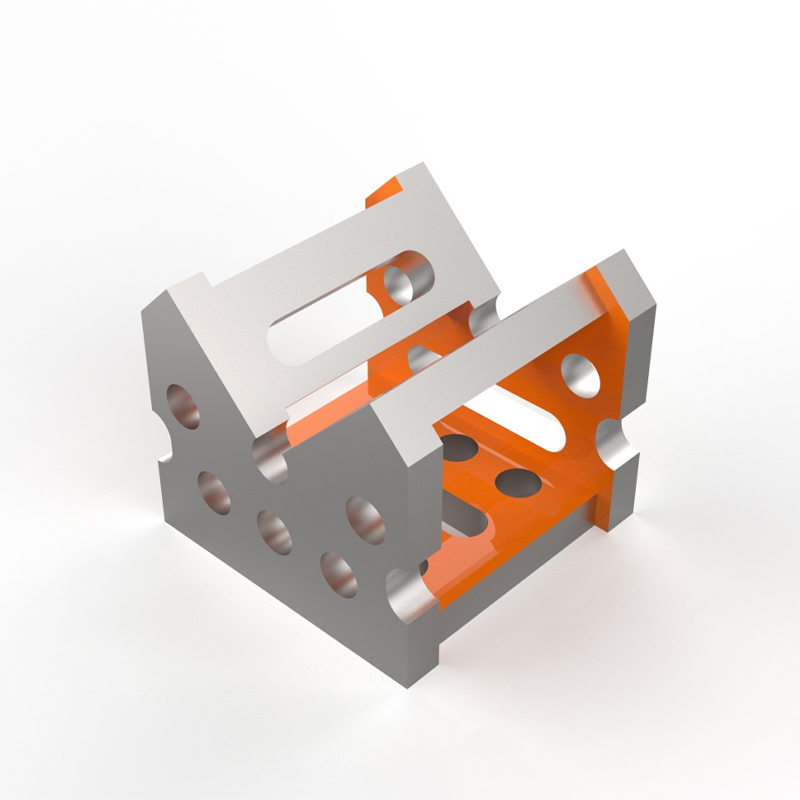
Haijun Metal is renowned for providing efficient and flexible welding and positioning solutions to the modern manufacturing industry, particularly in the machining, automotive, and aerospace sectors—the same industries we serve with our casting services. Our background in manufacturing 2D and 3D flexible welding platforms, cast iron 3D welding platforms, and complementary components like universal angle gauges and support angle irons, has instilled a culture of exceptional durability, stability, and precision in everything we produce.
This unique synergy means that when you partner with us for aluminum casting, you benefit not only from our foundry capabilities but also from a broader understanding of how cast components integrate into complex assembly and fixturing systems. We understand the end-use application of your parts, ensuring that our casting tolerances and surface finishes align perfectly with downstream machining and assembly requirements.
Why Partner With Us for Your Aluminum Casting Needs?
Choosing the right manufacturing partner is a strategic decision. Here is why leading companies trust our aluminum casting service:
- Engineering Expertise: Our team includes experienced metallurgists and design engineers who proactively solve problems before they arise.
- Vertical Integration: From tooling to finishing, we control every step of the process, ensuring quality and speed.
- Scalability: Whether you need 100 prototypes or 100,000 production units, our flexible facilities scale to meet your demand.
- Global Compliance: Our certifications and quality systems meet international standards, facilitating seamless integration into global supply chains.
- Customer-Centric Approach: We communicate transparently, provide regular updates, and prioritize your project’s success.
Conclusion: Elevate Your Product with Precision Casting
Aluminum casting is more than just a manufacturing process; it is a strategic advantage for products requiring light weight, strength, and complex geometry. By partnering with a specialized manufacturer, you gain access to advanced technology, material science expertise, and rigorous quality control.
Our aluminum casting service is designed to support your innovation, from initial concept to final production. We help you reduce costs, improve performance, and accelerate time-to-market. Whether you are developing next-generation EV components, robust industrial machinery, or precision medical devices, we have the capabilities to deliver.
Ready to start your project?
Contact our engineering team today for a free DFM analysis and competitive quote. Let us help you transform your design into a high-quality, market-ready product.
Get a Custom Quote / View Technical Solutions