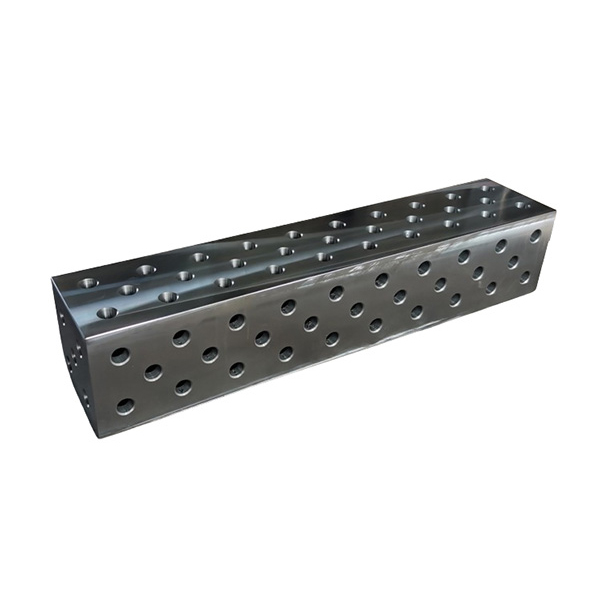
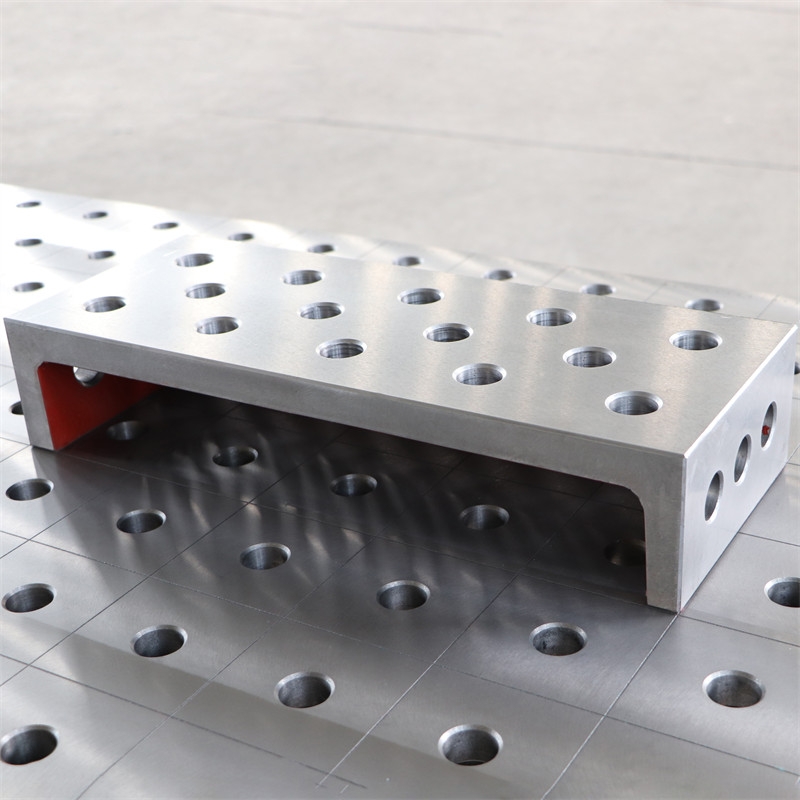
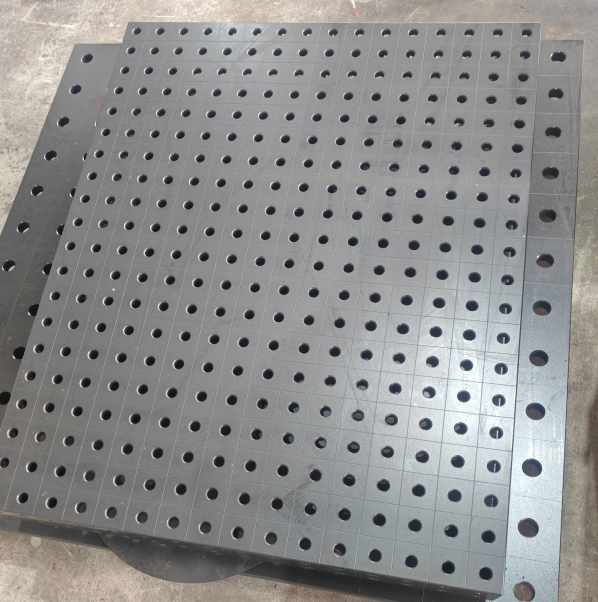
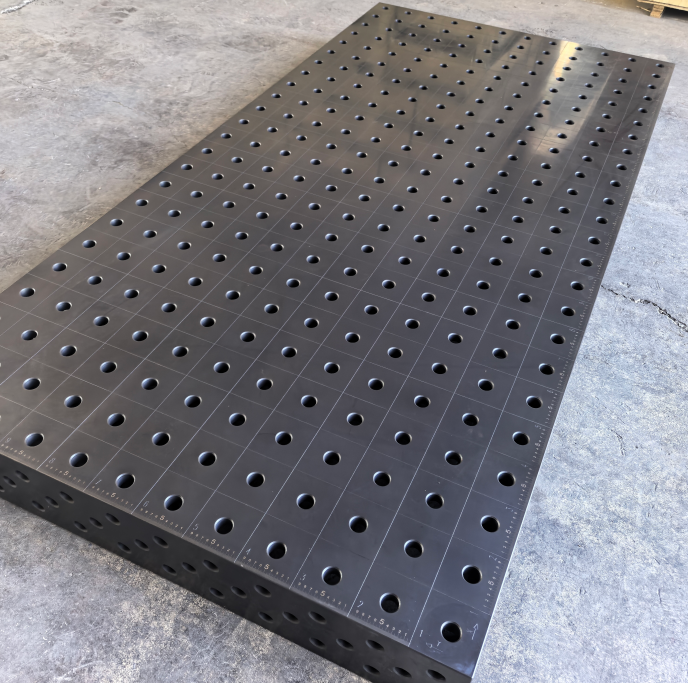
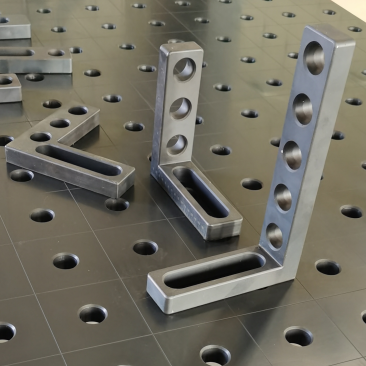
Bluco modular fixturing isn’t just another clamping system—it’s the quiet backbone of repeatable precision in high-mix, low-volume metal fabrication. We’ve seen it firsthand: a Tier-1 automotive supplier in Bavaria cut setup time by 68% after replacing custom welded jigs with Bluco’s T-slot aluminum base plates and interchangeable locators. A medical device contract manufacturer in Minnesota reduced first-article inspection rework from 22% to under 3%—not by upgrading CMMs, but by stabilizing part position before measurement. These aren’t edge cases. They’re proof that bluco modular fixturing delivers measurable ROI when dimensional stability, rapid iteration, and traceable repeatability matter more than raw speed.
Why Bluco Works Where Custom Fixtures Fail
Most shops treat fixturing as overhead—not leverage. They invest in one-off weldments because “that’s how we’ve always done it.” But those fixtures lock geometry, not capability. When a bracket design shifts by 0.15 mm or material thickness changes from CR10 to SS304, the jig becomes obsolete. Bluco avoids that trap through three non-negotiable design principles:
Modularity by physics, not marketing: Every component—T-slot bases, dowel pins, clamps, height-adjustable supports—interlocks with ISO-standard tolerances (±0.01 mm on locating surfaces). No adapters. No shims. No guesswork. Load-path transparency: Forces travel directly into the base plate’s ribbed structure, not through bolted brackets or stacked plates. We measured deflection on a 600 × 400 mm Bluco base under 8 kN clamping load: 1.7 µm at center, versus 12.3 µm on a comparable fabricated steel frame. Tooling-as-documentation: Each locator pin carries a laser-etched ID tied to its CAD model. When an operator swaps Pin #BLC-442-D8.5 for #BLC-442-D9.0, the change logs automatically in their MES—no paper forms, no miscommunication. This isn’t convenience. It’s how you eliminate the single largest source of variation between prototype and production: inconsistent part registration.
The Real Cost of “Good Enough” Fixturing
Some argue custom fixtures cost less upfront. True—for the first part. But consider what happens during DFM validation. A customer once sent us a stamped hinge bracket with four critical GD&T callouts: position, perpendicularity, flatness, and profile. Their existing fixture held the part by two edges, letting the flange sag 0.08 mm under gravity alone. Every CMM report flagged “out-of-tolerance”—until we mounted the same part on a Bluco base with vacuum-assisted support pads. Flatness improved to 0.012 mm. The root cause wasn’t the stamping process. It was the fixture.
That’s the hidden tax of non-modular systems: engineering hours spent chasing phantom defects, scrap from mislocated features, and delayed PPAP sign-offs. Bluco modular fixturing turns that tax into capital—by making every setup a verified, documented, repeatable event.
How Botou Haijun Integrates Bluco Into Precision Metal Production
At Botou Haijun Metal Products Co., Ltd., we don’t just use Bluco—we engineer around it. Our ISO-compliant facility in Botou City runs deep-drawn fuel filter housings, bent sensor brackets for agri-robotics, and laser-welded enclosures for industrial controllers. For each, we start with the fixture—not the press.
Here’s our workflow:
We receive CAD models with GD&T and material specs (e.g., “SUS304, 1.2 mm, ±0.05 mm hole position to datum A-B-C”). Our tooling engineers map every critical surface to Bluco’s standard locator library—no custom machining unless absolutely necessary. We validate clamping force distribution using FEA simulation, matching actual press tonnage and material yield strength—not theoretical max values. Final setups undergo run-at-rate testing: 30 parts, full inspection, CMM scan comparison against nominal STL. Only then do we release the fixture drawing for shop-floor use. This approach lets us quote and ship functional fixtures within 72 hours—even for complex assemblies requiring 12+ locators. No lead time surprises. No last-minute redesigns.
Choosing the Right Bluco System—Without Overbuying
Bluco offers three core platforms: Compact (for parts under 300 mm), Standard (up to 1,200 mm), and Heavy-Duty (for castings or large fabrications). Don’t default to Heavy-Duty. We’ve seen shops pay 3× more for rigidity they never test—and sacrifice agility in the process.
Ask these questions first:
What’s your largest part footprint—and its heaviest section weight? How many unique setups do you run per week? (If >5, prioritize quick-change locators over monolithic bases.) Do you need vacuum, pneumatic, or manual clamping? (Vacuum works best for thin-gauge stainless; pneumatic suits high-cycle bending stations.) Is your CMM calibrated to ISO 10360-2? If yes, match your Bluco base’s flatness spec (typically 0.02 mm/m) to your machine’s volumetric accuracy. For most precision sheet metal work—especially brackets, housings, and sensor mounts—the Bluco Standard series hits the sweet spot: rigid enough for 0.02 mm repeatability, light enough for two-person handling, and scalable without retrofitting.
Final Thought: Fixturing Is Your First Process Control Point
You can’t inspect quality into a part. You build it in—starting with how the part sits before the first tool touches it. Bluco modular fixturing doesn’t replace skill. It amplifies it. It turns tribal knowledge into documented, transferable, auditable practice. That’s why global OEMs specify Bluco in their tier-2 supplier requirements—not as a preference, but as a prerequisite for dimensional discipline.
If your next project demands sub-0.05 mm positional repeatability across batches, across shifts, across materials—start with the base plate. Not the press. Not the programmer. The foundation.