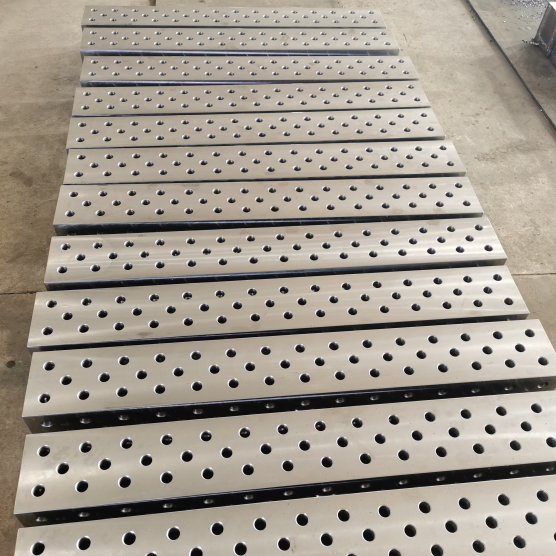
Finding the best welding table clamps for 2026 requires balancing precision, durability, and cost-effectiveness. Top picks currently feature hardened steel construction, quick-release mechanisms, and compatibility with standard 16mm or 28mm fixture holes. Whether you need heavy-duty hold-downs for structural work or delicate positioning clamps for fine fabrication, the market offers specialized solutions to improve workflow efficiency and weld accuracy.
Why High-Quality Welding Table Clamps Matter in 2026
The evolution of modular welding tables has transformed fabrication shops globally. In 2026, the reliance on welding table clamps is higher than ever due to the shift towards lean manufacturing and precision assembly. These tools are not merely accessories; they are critical components that ensure dimensional accuracy and repeatability in every project.
Using inferior clamping systems can lead to part movement during cooling, resulting in distorted frames and wasted material. Professional fabricators understand that investing in robust welding table clamps reduces setup time significantly. Modern designs focus on ergonomics, allowing operators to secure workpieces with one hand while maintaining alignment.
Furthermore, the versatility of contemporary clamping systems supports a wide range of materials, from thin-gauge sheet metal to thick structural beams. The ability to quickly reconfigure your workspace allows for faster turnaround times on custom jobs. This adaptability is essential for shops handling diverse client requirements throughout the year.
As automation integrates more into small shops, manual clamping remains vital for fixturing parts before robotic welding begins. High-quality welding table clamps provide the stability needed for these hybrid workflows. Ensuring your toolkit is up-to-date with the latest 2026 models guarantees competitive advantage and operational safety.
Top Types of Welding Table Clamps for Every Application
Selecting the right clamp depends heavily on the specific geometry of your workpiece and the nature of the weld. The market in 2026 categorizes welding table clamps into several distinct functional groups. Understanding these categories helps in building a comprehensive toolkit.
Hold-Down Clamps and Toggle Clamps
Hold-down clamps are the workhorses of any welding station. They apply vertical pressure to keep flat plates or assemblies firmly against the table surface. Toggle clamps, specifically, offer rapid engagement and release, making them ideal for production runs where speed is critical.
- Vertical Hold-Downs: Perfect for pressing down on corners or edges to prevent lifting during tacking.
- Horizontal Toggle Clamps: Used to push components against a stop or fence for consistent positioning.
- Push-Pull Clamps: Versatile tools that can either pull a piece tight or push it away, offering flexible fixturing options.
These clamps typically mount directly into the perforated holes of the welding table. The locking mechanism must be robust enough to withstand vibration and thermal expansion without slipping. In 2026, many models feature over-center locking actions for enhanced security.
Positioning Clamps and Edge Clamps
Positioning clamps are designed to align two or more pieces at precise angles before welding. Edge clamps grip the side of a workpiece, pulling it flush against the table or another component. These are indispensable for creating square frames and boxes.
- C-Clamps with Swivel Pads: Allow for angular adjustments to accommodate uneven surfaces.
- F-Style Clamps: Provide deep throat depth for reaching into the center of large assemblies.
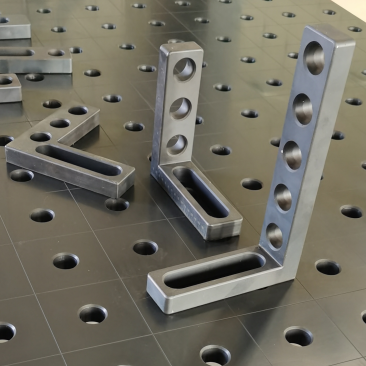
- Corner Clamps: Specifically engineered to hold two pieces at a perfect 90-degree angle.
The precision of the jaw faces is crucial here. Hardened and ground jaws prevent marring of the workpiece while ensuring a tight grip. For 2026, look for clamps with replaceable pads to extend tool life and protect sensitive finishes.
Quick-Release and Pneumatic Clamps
For high-volume environments, quick-release clamps minimize downtime between cycles. These mechanisms allow the operator to open the clamp fully with a single lever action, insert the part, and lock it instantly. Pneumatic variants take this further by using air pressure for consistent clamping force.
While pneumatic systems require an air supply, they offer unmatched consistency and reduce operator fatigue. In 2026, hybrid manual-pneumatic clamps are gaining popularity, offering the reliability of manual locking with the speed of air actuation. These are ideal for repetitive tasks in automotive or furniture fabrication.
Comprehensive Comparison: Best Welding Table Clamps 2026
To help you make an informed decision, we have analyzed the top performers in the current market. This comparison focuses on build quality, versatility, price point, and user feedback relevant to 2026 standards.
| Clamp Type |
Best Use Case |
Key Feature |
Price Range |
Durability Rating |
| Heavy-Duty Hold-Down |
Structural Steel & Plates |
High tonnage pressure |
$$$ |
Excellent |
| Quick-Release Toggle |
Production Runs |
One-hand operation |
$$ |
Very Good |
| Precision Edge Clamp |
Fine Fabrication |
Micro-adjustment screw |
$$$ |
Excellent |
| Universal C-Clamp |
General Purpose |
Swivel pad versatility |
$ |
Good |
| Pneumatic Flat Clamp |
High Volume Automation |
Consistent air pressure |
$$$$ |
Superior |
The Heavy-Duty Hold-Down remains the choice for serious structural work where movement cannot be tolerated. Conversely, the Quick-Release Toggle offers the best balance of speed and cost for general shop use. For intricate projects requiring micron-level accuracy, the Precision Edge Clamp is unmatched despite its higher price tag.
Budget-conscious buyers might opt for the Universal C-Clamp, which provides decent performance for occasional use. However, for professional shops operating daily, investing in higher-tier welding table clamps pays off through reduced rework and faster cycle times. The Pneumatic Flat Clamp represents the future of high-speed manufacturing but requires infrastructure investment.
Industry Leaders Driving Innovation in Fixturing
As the demand for precision grows, manufacturers like Botou Haijun Metal Products Co., Ltd. are leading the charge in developing high-precision flexible modular fixtures. Specializing in research, development, and production, Haijun Metal is committed to providing efficient and flexible welding solutions tailored for the modern manufacturing industry, including machining, automotive, and aerospace sectors.
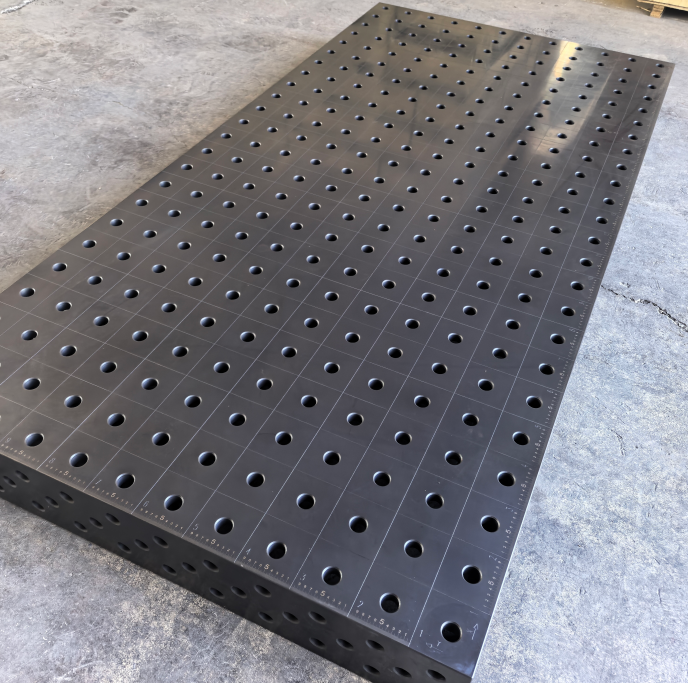
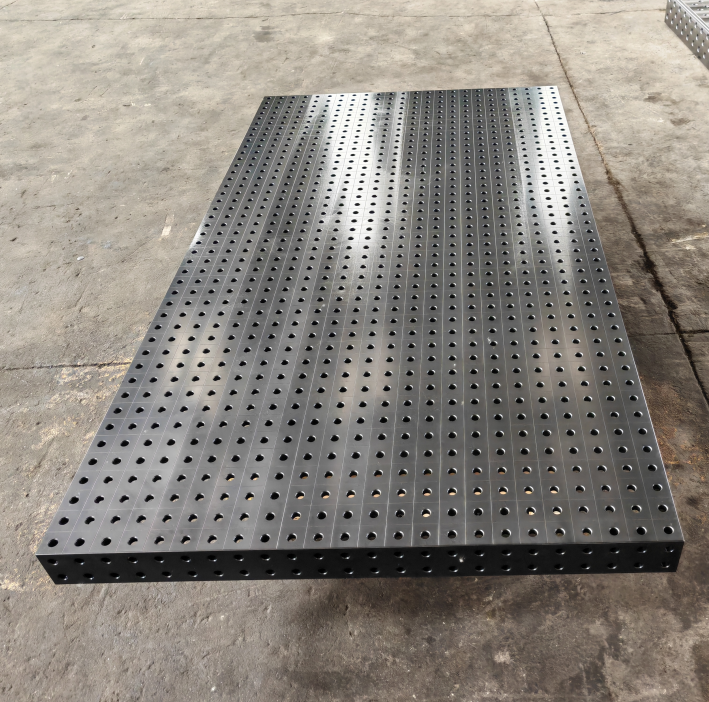
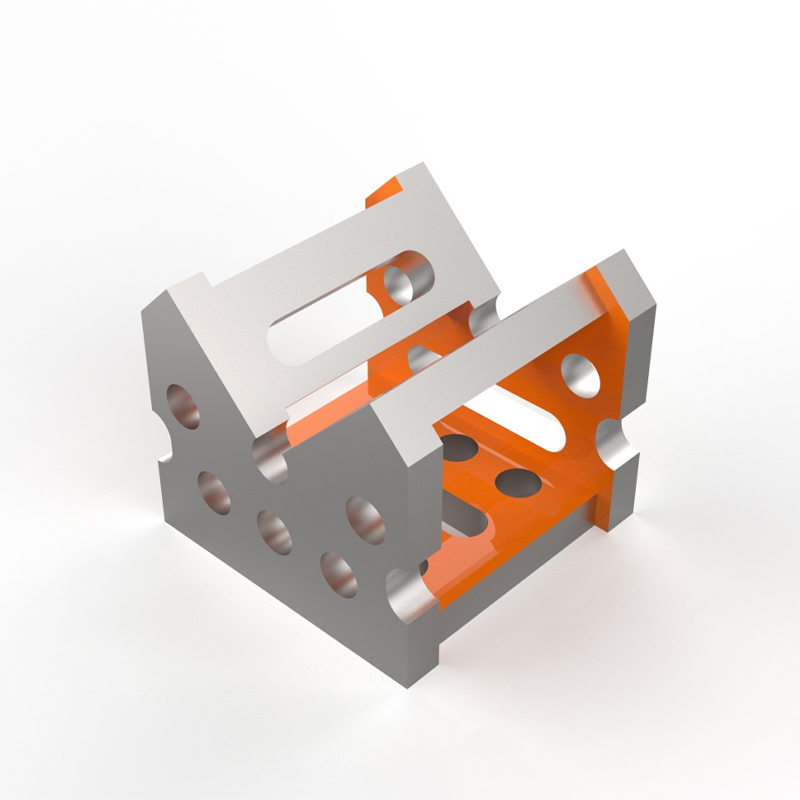
Their core product line features renowned 2D and 3D flexible welding platforms known for exceptional versatility. To complement these platforms, they offer a comprehensive range of accessories such as U-shaped and L-shaped multi-purpose square boxes, 200-series support angle irons, and 0-225° universal angle gauges. These components integrate seamlessly to enable rapid workpiece positioning. Additionally, their professional cast iron 3D welding platforms and angle connection blocks ensure every setup delivers superior durability and stability. With years of experience, Haijun Metal has become a trusted global supplier, continuously enhancing production machinery tool series to meet evolving 2026 standards.
Key Features to Look for When Buying Clamps
Navigating the sea of available products can be daunting. Focusing on specific technical features ensures you purchase welding table clamps that will last and perform reliably. Do not compromise on these critical aspects.
Material Composition and Heat Resistance
The primary material should be high-grade alloy steel, often heat-treated to increase hardness. Welding generates intense heat and sparks; therefore, clamps must resist deformation under thermal stress. Avoid clamps made from cast iron for heavy-duty applications as they can be brittle.
Look for coatings such as black oxide or nitride treatments. These finishes provide corrosion resistance and reduce friction during adjustment. In 2026, ceramic-coated components are emerging, offering superior heat deflection properties for extreme environments.
Compatibility with Table Hole Patterns
Modular welding tables come with standardized hole patterns, typically 16mm (5/8″) or 28mm (1-1/8″). Ensure your chosen welding table clamps match your table’s specifications. Adapters are available, but direct compatibility ensures maximum rigidity and stability.
Check the base design of the clamp. A wider base distributes force better and prevents tipping under load. Some advanced clamps feature self-centering pins that automatically align with the table holes, speeding up the setup process significantly.
Ergonomics and Ease of Use
Fabricators spend hours adjusting fixtures. Ergonomic handles with comfortable grips reduce hand fatigue. Levers should require reasonable force to engage; if a clamp is too hard to close, it slows down workflow. If it is too loose, it compromises safety.
Consider the clearance height. Low-profile clamps allow access to tight spaces, while tall spindles accommodate thicker materials. Versatility in adjustability is a hallmark of top-tier welding table clamps in the current market.
Step-by-Step Guide: How to Properly Use Welding Table Clamps
Proper usage extends the life of your tools and ensures the safety of your operations. Follow these steps to maximize the effectiveness of your welding table clamps.
- Step 1: Clean the Surface: Remove all slag, spatter, and debris from the welding table holes and the base of the clamp. Dirt can prevent proper seating and cause instability.
- Step 2: Select the Right Clamp: Choose a clamp with sufficient holding power for the weight and shape of your workpiece. Over-clamping can distort thin materials, while under-clamping risks movement.
- Step 3: Position the Base: Insert the clamp pin into the desired table hole. Ensure it drops fully and seats correctly. For sliding bases, loosen the locking bolt, position, and retighten securely.
- Step 4: Align the Workpiece: Place your material against the stops or fences. Adjust the clamp jaw until it lightly touches the workpiece without moving it out of alignment.
- Step 5: Apply Clamping Force: Engage the locking mechanism firmly. For toggle clamps, push past the center point until it locks. For screw clamps, tighten until snug but avoid stripping threads.
- Step 6: Verify Stability: Gently tap the workpiece to ensure it does not shift. Check that the clamp itself is not lifting off the table surface under tension.
- Step 7: Weld and Cool: Perform your welding operations. Allow the assembly to cool slightly before releasing the clamps to minimize distortion from thermal contraction.
Following this routine ensures repeatable results. Regularly inspect your clamps for wear, especially the contact points and locking mechanisms. Replacing worn parts promptly maintains the integrity of your fixturing system.
Pros and Cons of Different Clamping Systems
Every clamping solution has trade-offs. Understanding these helps in selecting the right mix for your specific workshop needs in 2026.
Manual Screw Clamps
Pros: Extremely high holding force, precise adjustment, no reliance on external power sources, generally lower cost.
Cons: Slower to operate, prone to operator fatigue, threads can get clogged with spatter.
These are ideal for one-off custom jobs where setup time is less critical than absolute rigidity. They remain a staple in almost every welding shop due to their reliability.
Toggle Action Clamps
Pros: Very fast engagement and release, consistent clamping force, easy one-handed operation.
Cons: Limited adjustment range, fixed opening width, mechanical linkages can wear over time.
Best suited for repetitive tasks where the workpiece dimensions remain constant. They excel in production environments where seconds count.
Pneumatic Clamps
Pros: Fastest operation, uniform pressure across multiple clamps, reduces physical strain on operators.
Cons: High initial cost, requires air compressor and plumbing, potential for leaks, less portable.
These are the choice for automated cells and high-volume manufacturing lines. The integration with PLCs allows for complex sequencing in modern smart factories.
Real-World Applications and Industry Trends
The application of welding table clamps spans various industries, each with unique demands. In 2026, trends show a move towards modularity and flexibility in fixturing.
Automotive and Motorsports
In chassis fabrication, precision is paramount. Racers and restorers use precision edge clamps to ensure frame rails are perfectly parallel. The trend here is towards lightweight yet strong aluminum clamps for portability, combined with steel jaws for durability.
Architectural Metalwork
Artists and architects creating staircases and railings rely on versatile hold-downs. Since designs vary wildly, adjustable welding table clamps with swivel heads are preferred. The aesthetic finish of the clamp also matters here to prevent marking visible surfaces.
Heavy Equipment Repair
Repairing buckets and booms requires massive holding power. Heavy-duty hydraulic or large screw clamps are standard. The trend is towards reinforced bodies that can withstand the shock of hammering parts into place during fit-up.
Across all sectors, the demand for “smart” clamping is rising. While fully digital clamps are niche, indicators that show clamping pressure are becoming more common to ensure quality control standards are met consistently.
Maintenance Tips for Long-Lasting Performance
To get the most out of your investment, regular maintenance is non-negotiable. Welding environments are harsh, and welding table clamps take a beating.
First, clean spatter immediately. Use anti-spatter spray on the jaws and threads before welding. If spatter builds up, it can jam mechanisms or scratch workpieces. A wire brush and chisel are essential tools for daily cleanup.
Lubricate moving parts regularly. Threads and pivot points need light oil or grease to function smoothly. Avoid heavy greases that attract dust and grit. In 2026, dry lubricants are popular as they do not trap abrasive particles.
Inspect for damage frequently. Check for bent spindles, cracked handles, or worn jaw faces. A damaged clamp can fail catastrophically under load, posing a safety risk. Replace worn components immediately rather than trying to repair them temporarily.
Store clamps properly when not in use. Hanging them on organized racks prevents rust and makes inventory checks easy. Keeping them off the floor protects them from moisture and accidental damage from heavy equipment.
Frequently Asked Questions About Welding Table Clamps
What size clamp do I need for my welding table?
The size depends on your table’s hole pattern. Measure the diameter of the holes; standard sizes are 16mm (5/8 inch) and 28mm (1-1/8 inch). Ensure the clamp pin matches this exactly for a secure fit. Also, consider the throat depth needed for your typical workpiece thickness.
Can I use regular C-clamps on a modular welding table?
While possible with adapters, it is not recommended. Regular C-clamps lack the specific mounting pins required for modular tables, leading to instability. Dedicated welding table clamps are designed to lock into the grid, providing superior rigidity and alignment capabilities.
How do I prevent clamps from sticking due to heat?
Use ceramic shields or fire-resistant blankets to protect clamps from direct arc exposure. Apply anti-spatter gel to the threads and jaws. If a clamp gets hot, let it cool naturally; quenching it in water can temper the steel and weaken it.
Are expensive clamps worth the extra cost?
For professional use, yes. Higher-priced welding table clamps usually feature better metallurgy, tighter tolerances, and ergonomic designs. They last longer, hold tighter, and save time, which translates to higher profitability over time compared to cheaper alternatives that may fail or distort.
What is the difference between a hold-down and a positioning clamp?
A hold-down clamp applies vertical force to press a piece flat against the table. A positioning clamp applies horizontal or angular force to align pieces relative to each other or to a stop. Most workshops need a combination of both for complete fixturing flexibility.
Final Verdict: Choosing the Right Clamps for Your Shop
Selecting the best welding table clamps in 2026 is about matching tools to your specific workflow demands. There is no single “best” clamp; rather, a well-curated collection yields the best results. Prioritize durability and compatibility with your existing table system.
For hobbyists, a set of versatile manual screw clamps and a few toggle clamps will suffice. Professional fabricators should invest in a comprehensive system including heavy-duty hold-downs, precision edge clamps, and potentially pneumatic options for high-volume tasks. Focus on brands that offer replacement parts and warranties, such as established industry leaders known for their robust modular solutions.
Remember that your clamping system is the foundation of your welding accuracy. Poor fixturing leads to poor welds. By choosing high-quality welding table clamps and maintaining them properly, you ensure that every project meets the highest standards of quality and precision. Evaluate your current needs, anticipate future projects, and build a toolkit that grows with your business.