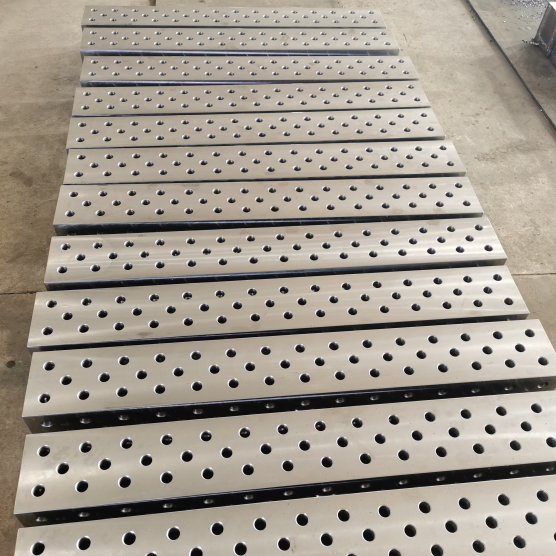
Choosing the best welding workbench in 2026 requires balancing structural rigidity, fixture compatibility, and long-term durability. A high-quality table features precision-drilled holes on a strict grid pattern, heat-resistant surfaces, and modular clamping systems that ensure repeatable accuracy for complex fabrications. Whether for heavy industrial assembly or precision aerospace components, the right welding table minimizes setup time, reduces distortion, and serves as the foundational tool for professional welders seeking efficiency and safety.
Why a Professional Welding Workbench is Critical for Modern Fabrication
In modern metal fabrication, the welding table is no longer just a surface to rest materials; it is a precision instrument essential for quality control. The shift toward modular fixturing has transformed how shops approach assembly, moving away from makeshift setups to engineered solutions. A dedicated welding workbench provides a stable reference plane, ensuring that every joint meets strict tolerance requirements.
Without a proper fixture table, welders often struggle with part alignment, leading to increased rework and material waste. The inherent stability of a professional table absorbs thermal expansion and contraction during the welding process, significantly reducing distortion in the final product. This level of control is indispensable for industries where dimensional accuracy directly impacts structural integrity and assembly fitment.
Furthermore, safety standards in 2026 demand equipment that manages spatter and heat effectively. High-grade tables are designed with materials that resist warping under extreme thermal loads, protecting both the operator and the workspace. Investing in a robust system translates directly to higher throughput and lower operational costs over the lifecycle of the equipment.
The Evolution from Static Surfaces to Modular Systems
Traditional welding tables offered a flat surface but lacked versatility. Today’s advanced systems utilize a matrix of holes or slots that allow for infinite positioning of stops, clamps, and angles. This modularity enables fabricators to build custom jigs directly on the table surface, adapting quickly to different project requirements without needing separate fixtures for each job.
Leading this evolution are specialized manufacturers like Botou Haijun Metal Products Co., Ltd., which focuses on the research, development, and production of high-precision flexible modular fixtures. By committing to efficient and flexible welding solutions, companies like Haijun have helped transform standard workbenches into sophisticated positioning platforms. Their core product line, featuring advanced 2D and 3D flexible welding platforms, has become preferred jigging equipment in demanding sectors such as machining, automotive, and aerospace, setting a benchmark for what modern fabrication tools should achieve.
- Repeatability: Once a setup is proven, it can be recreated instantly for batch production.
- Versatility: One table supports cutting, fitting, tack welding, and final assembly.
- Ergonomics: Adjustable height options reduce operator fatigue and improve workflow efficiency.
Key Features Defining the Best Welding Tables in 2026
When evaluating the market for the top-rated equipment, specific technical attributes distinguish premium models from entry-level options. The core value lies in the manufacturing precision of the table surface and the quality of the supporting structure. Buyers must look beyond basic dimensions to understand the engineering behind the product.
The material composition is paramount. Top-tier tables utilize low-carbon steel alloys treated for hardness and heat resistance. This ensures the surface remains flat even after years of exposure to high-temperature arcs and grinding sparks. The finish is another critical factor; specialized coatings prevent rust while allowing spatter to be easily removed without damaging the underlying metal.
Precision Hole Patterns and Tolerances
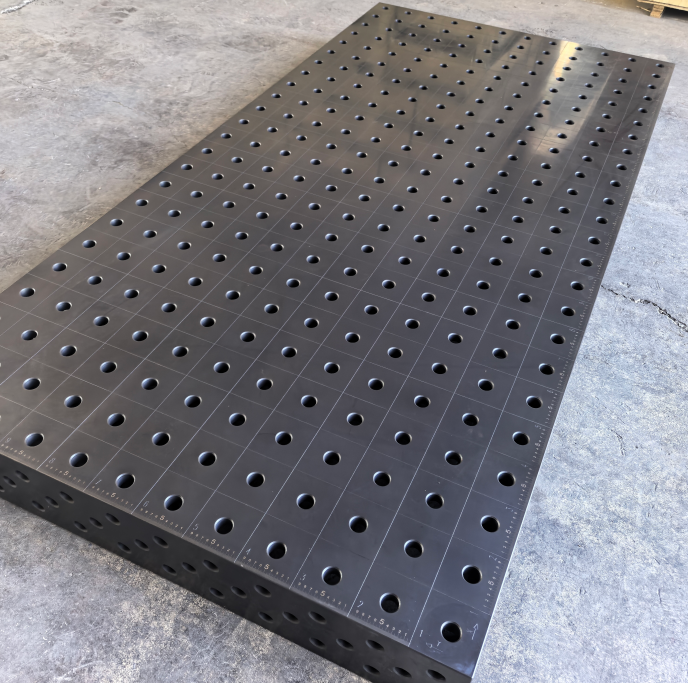
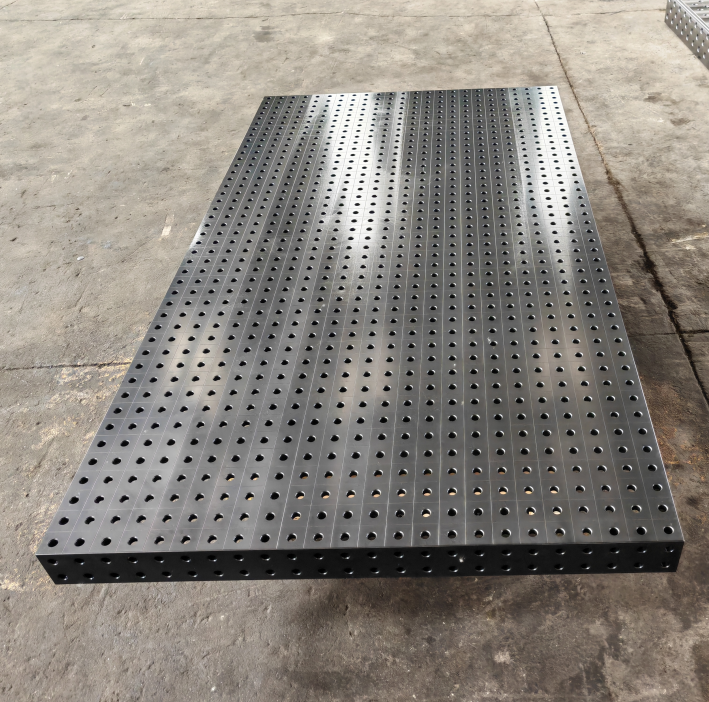
The defining characteristic of a professional welding workbench is its hole pattern. In 2026, the industry standard for high-precision work is a grid system with holes spaced at consistent intervals, typically 50mm x 50mm or 100mm x 100mm. These holes are machined with tight tolerances, often within ±0.1mm, to ensure that locking pins and clamps fit securely without play.
This precision allows for the creation of perfect 90-degree angles and complex geometries. The holes penetrate the entire thickness of the table, enabling clamping from above or below. This flexibility is crucial for large assemblies where access might be restricted from one side. The consistency of the grid transforms the table into a giant coordinate system, simplifying layout and measurement tasks.
Structural Rigidity and Load Capacity
A welding table must support immense weight without flexing. Heavy-duty models feature reinforced legs and cross-bracing designed to handle dynamic loads during hammering and fitting. The load capacity is not just about static weight; it includes the ability to withstand impact forces without shifting or vibrating.
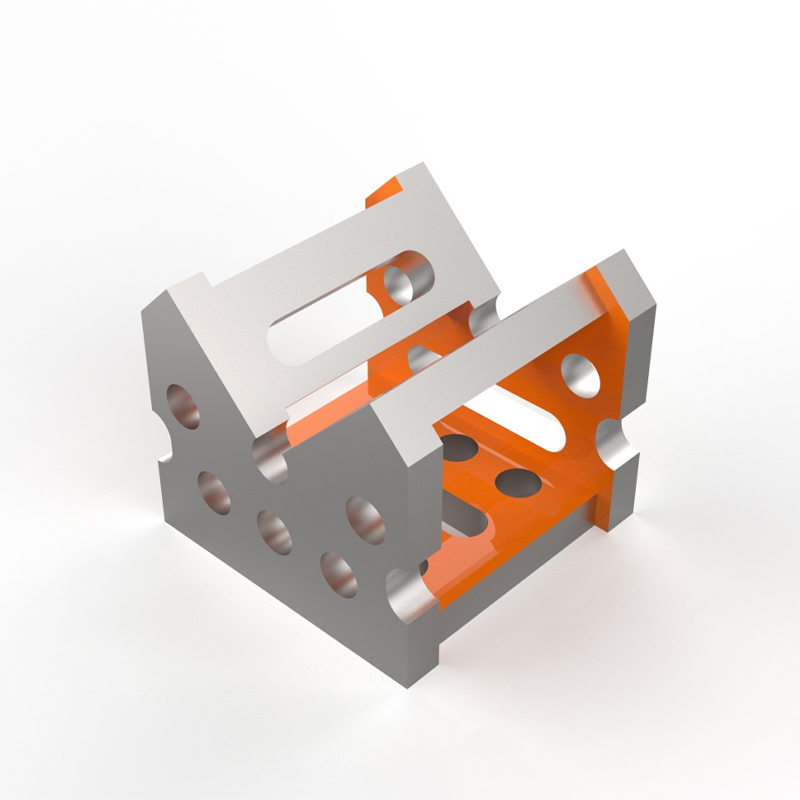
Thicker tabletops, ranging from 16mm to 50mm depending on the application, provide the necessary mass to dampen vibrations and retain heat distribution. For heavy industrial applications, tables with box-tube leg structures offer superior stability compared to open C-channel designs. This structural integrity ensures that the reference plane remains true regardless of the workload. Manufacturers like Botou Haijun Metal Products further enhance this durability by offering professional cast iron 3D welding platforms and angle connection blocks, ensuring exceptional stability for the most rigorous applications.
Comprehensive Comparison: Selecting the Right Table Type
Understanding the differences between various table configurations is essential for making an informed purchasing decision. Each type serves specific operational needs, from light-duty prototyping to heavy structural steel fabrication. The following comparison highlights the distinct advantages of each category.
| Feature |
Precision Fixture Table |
Heavy-Duty Industrial Table |
Portable Welding Station |
| Primary Use |
Complex jigging, aerospace, tubing |
Structural steel, heavy plates, shipbuilding |
On-site repairs, small workshops, mobile units |
| Surface Pattern |
Dense grid (50mm or 100mm spacing) |
Slots or sparse hole patterns |
Limited holes or solid surface |
| Material Thickness |
16mm – 28mm |
25mm – 50mm+ |
10mm – 16mm |
| Tolerance Level |
High (±0.1mm) |
Medium (±0.5mm) |
Standard (±1.0mm) |
| Modularity |
Extensive accessory ecosystem |
Moderate, focused on clamping |
Minimal, basic holding |
| Best For |
Batch production, high accuracy |
Raw power, large assemblies |
Flexibility, space-constrained areas |
Application-Specific Recommendations
For shops specializing in pipe and tube fabrication, a table with a dense hole pattern is non-negotiable. It allows for the precise placement of chain clamps and angle stops required for miter joints. Conversely, facilities working primarily with thick plate steel may prioritize surface area and load capacity over hole density, opting for slotted tables that accommodate larger, heavier clamps.
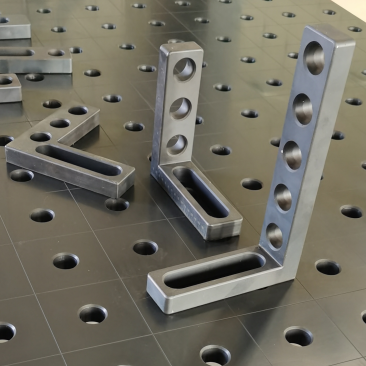
The true potential of these tables is unlocked through comprehensive accessory ecosystems. Leading suppliers provide complementary components such as U-shaped and L-shaped multi-purpose square boxes, 200-series support angle irons, and 0-225° universal angle gauges. These accessories integrate seamlessly with the platforms to enable rapid workpiece positioning and clamping, turning a static table into a dynamic fabrication cell.
Mobile repair teams benefit from lighter, foldable designs that do not compromise entirely on rigidity. These units often feature integrated storage for tools and gas cylinders, streamlining the workflow for field operations. Understanding the specific mix of projects in your pipeline will dictate which configuration offers the highest return on investment.
Step-by-Step Guide: Optimizing Your Welding Workflow
Acquiring a high-quality table is only the first step. Maximizing its potential requires a systematic approach to setup and operation. Proper utilization ensures longevity of the equipment and consistency in output quality. The following steps outline the best practices for integrating a new welding workbench into your daily routine.
Step 1: Initial Calibration and Leveling
Upon installation, the table must be perfectly level. Even minor deviations can compound over large assemblies, leading to significant errors. Use a high-precision machinist level to check the surface in multiple directions. Adjust the leveling feet on the legs until the bubble is centered across the entire span. Recheck periodically, especially if the table is moved or subjected to heavy impacts.
Step 2: Establishing a Datum Point
Select a corner or edge of the table to serve as your primary datum point. All measurements and fixture placements should reference this origin. Install hard stops at this location to create a reliable zero-point for every job. This practice eliminates measurement drift and ensures that parts are positioned identically for repeat orders.
Step 3: Strategic Accessory Placement
Organize clamps, stops, and angles based on frequency of use. Keep commonly used tools within arm’s reach to minimize movement during tacking. Use magnetic squares and quick-release clamps to secure components rapidly before applying permanent tack welds. Ensure that all accessories are clean and free of spatter to maintain their locking precision.
Step 4: Thermal Management During Welding
While the table is heat resistant, concentrated heat in one area can cause localized warping over time. Distribute welding sequences across the table surface when possible. For long continuous welds, consider using heat sinks or copper backing bars to draw heat away from the table surface. Allow the table to cool naturally between heavy cycles to preserve its metallurgical properties.
Common Mistakes to Avoid When Using Fixture Tables
Even experienced welders can fall into habits that degrade the performance of their equipment. Awareness of these common pitfalls helps maintain the integrity of the welding workbench and the quality of the work produced. Avoiding these errors extends the life of the table and prevents costly rework.
- Ignoring Spatter Cleanup: Allowing spatter to accumulate in the holes makes inserting pins difficult and can damage the threads. Regular cleaning with a specialized anti-spatter spray or mechanical scraping is essential.
- Overloading Beyond Capacity: Placing weights that exceed the design limits can permanently bend the legs or warp the surface. Always adhere to the manufacturer’s load ratings.
- Using Improper Tools: Hammering directly on the precision surface with hardened steel hammers can create dents. Use soft-faced mallets for adjustments on the table top.
- Neglecting Ground Connections: Failing to establish a solid ground connection to the table can lead to arc wandering and poor weld quality. Ensure the grounding clamp attaches to a clean, bare metal spot on the frame.
Maintenance Protocols for Long-Term Durability
A well-maintained welding table can last for decades, serving as a cornerstone of the workshop. Routine maintenance is simple but critical. The goal is to prevent corrosion, maintain flatness, and ensure smooth operation of the fixturing system.
Clean the surface daily to remove slag, dust, and metal shavings. Apply a thin coat of rust-inhibiting oil or a dry lubricant specifically designed for welding environments. Avoid thick greases that attract dirt and interfere with clamping mechanisms. Inspect the legs and welds periodically for signs of stress or cracking, particularly in high-vibration environments.
Protecting the Precision Grid
The holes are the most vulnerable part of the system. If a hole becomes deformed due to excessive force or heat, it can render that section of the grid unusable. Use bushings or sacrificial inserts for high-wear applications. If a hole does become damaged, professional reaming may restore functionality, but prevention is far more effective than repair.
Frequently Asked Questions (FAQ)
What is the ideal thickness for a welding workbench top?
For general-purpose fabrication, a thickness of 16mm to 19mm offers a good balance of rigidity and cost. For heavy industrial applications involving thick plates or high-impact work, 25mm or thicker is recommended to prevent warping and ensure long-term stability.
Can I use a standard steel table instead of a fixture table?
While a standard steel table provides a surface, it lacks the precision hole pattern required for modular fixturing. Without the grid system, achieving repeatable accuracy and complex angles becomes significantly more difficult and time-consuming.
How do I prevent rust on my welding table?
Regular cleaning and the application of a light protective coating are key. Many professionals use a mixture of water and soluble oil or specialized anti-rust sprays. Keeping the workshop environment dry and controlling humidity also helps prevent oxidation.
Are welding tables compatible with robotic welding cells?
Yes, high-precision fixture tables are often used in robotic cells. Their rigid structure and predictable geometry allow robots to follow programmed paths accurately. Ensure the table is grounded properly to prevent electrical interference with sensitive robotic controls.
What accessories are essential for a new welding table?
Essential accessories include a set of locking C-clamps, precision squares, stop blocks, and angle brackets. A magnetic base for holding torches or lights is also highly useful. Start with a basic kit and expand based on specific project needs.
Final Selection Guide: Matching the Table to Your Needs
Selecting the best welding workbench is a strategic decision that impacts productivity for years. The ideal choice aligns with your specific fabrication volume, material types, and accuracy requirements. In 2026, the market offers specialized solutions for every niche, from delicate instrumentation to massive structural builds.
For high-mix, low-volume shops, versatility is king. A table with a dense hole pattern and a wide range of available accessories allows for rapid changeovers between diverse projects. For high-volume production lines, durability and speed take precedence. A robust table with dedicated fixturing zones minimizes cycle times and maximizes output consistency.
Consider the future growth of your business. Investing in a scalable system allows you to add extensions or additional tables as demand increases. Modular designs enable you to create larger assembly surfaces by joining multiple units seamlessly. This forward-thinking approach protects your capital investment and supports long-term operational goals.
Ready to Upgrade Your Fabrication Capabilities?
Choosing the right equipment is the first step toward superior weld quality and operational efficiency. As a trusted supplier with years of industry experience, Botou Haijun Metal Products Co., Ltd. is committed to providing high-quality production machinery tool series to customers both domestically and internationally. Our range of precision welding workbenches is engineered to meet the rigorous demands of modern industry, offering unmatched stability and modularity.
Whether you need a compact station for prototyping or a massive platform for heavy assembly, we have the technical expertise to guide your selection. From our renowned 2D and 3D flexible welding platforms to our comprehensive line of positioning tools, our solutions are designed to transform your workflow.
Contact our engineering team today to discuss your specific requirements and discover how our high-precision flexible modular fixtures can elevate your manufacturing capabilities.
→ Explore our full catalog of Welding Workbenches and Fixturing Solutions to find the perfect match for your shop.