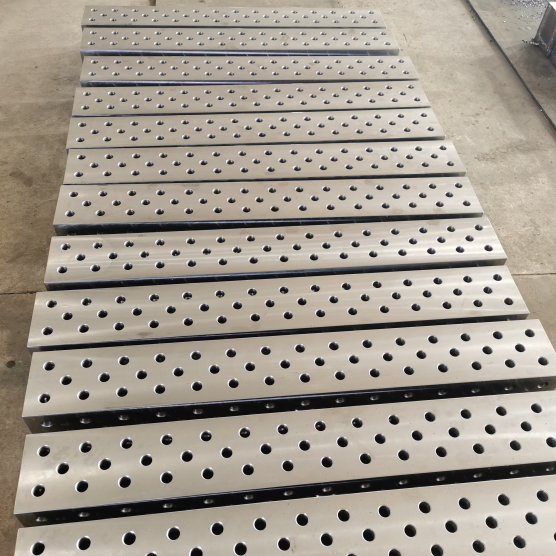
Finding the best welding table in 2026 requires balancing precision, durability, and modularity for modern fabrication needs. A top-tier welding table features a flat, perforated surface made from high-grade steel, allowing for accurate clamping and fixture setup. Whether you are a hobbyist or running a full-scale manufacturing line, the right table minimizes distortion and maximizes workflow efficiency. This guide reviews the top factory-supplied models, analyzing their build quality, pricing, and suitability for various welding processes.
Why Choosing the Best Welding Table Matters in 2026
The landscape of metal fabrication has shifted dramatically with the rise of automated welding cells and high-precision manual work. In 2026, the best welding table is no longer just a heavy slab of steel; it is an integrated workstation designed for repeatability.
Modern projects demand tighter tolerances. A poor-quality table introduces warp and twist, ruining even the most skilled welder’s efforts. Factory suppliers now prioritize tables with stress-relieved frames and hardened surfaces to withstand thermal cycling.
- Precision: Ensures parts fit together without forced clamping.
- Versatility: Supports complex jigs and robotic arms.
- Longevity: Resists heat damage and chemical corrosion over years of use.
Investing in a premium table reduces rework costs significantly. It serves as the foundation for your entire workshop, influencing the quality of every project you undertake.
Key Features Defining Top-Rated Welding Tables
When evaluating the best welding table options available from factory suppliers, specific technical specifications separate professional-grade equipment from entry-level benches. Understanding these features helps buyers make informed decisions.
Surface Material and Flatness Tolerance
The tabletop material is critical. High-end models utilize low-carbon steel or alloy steel that has undergone stress-relieving heat treatment. This process prevents the table from warping under intense heat.
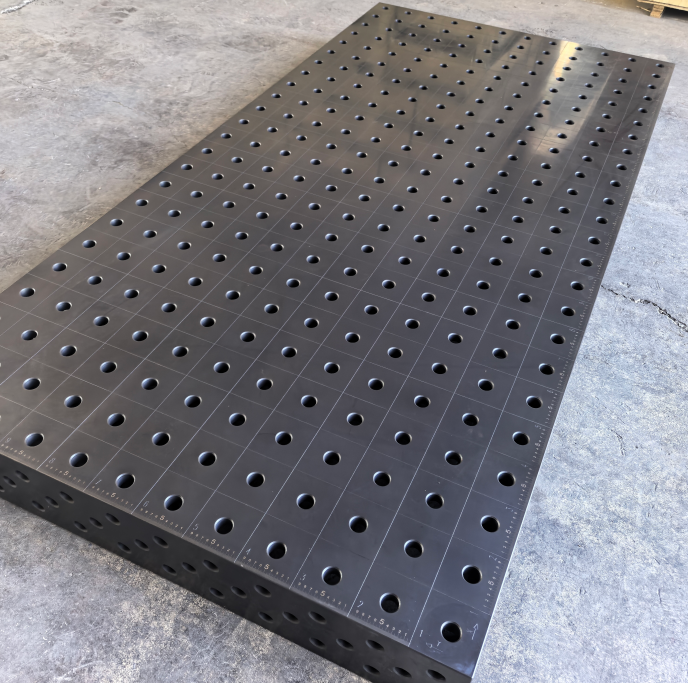
Flatness tolerance is measured in millimeters per square meter. Professional tables typically offer a tolerance of less than 0.5mm across the entire surface. This level of precision is essential for aerospace and automotive applications.
- Standard Steel: Cost-effective but prone to warping over time.
- Stress-Relieved Steel: Maintains flatness under thermal stress.
- Hardened Surface: Resists spatter adhesion and physical impact.
Hole Pattern and Modularity
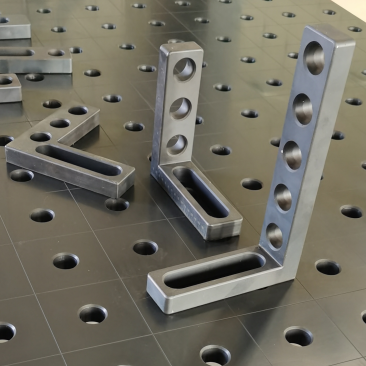
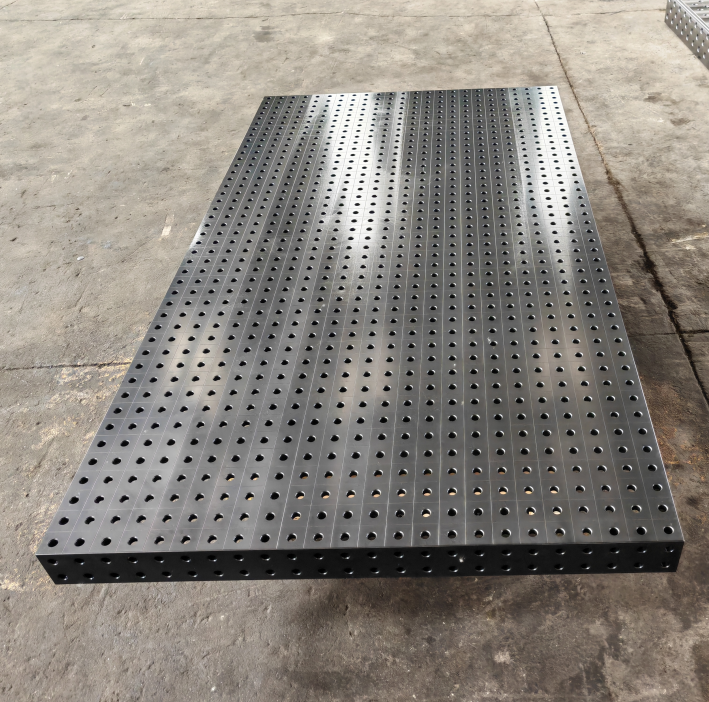
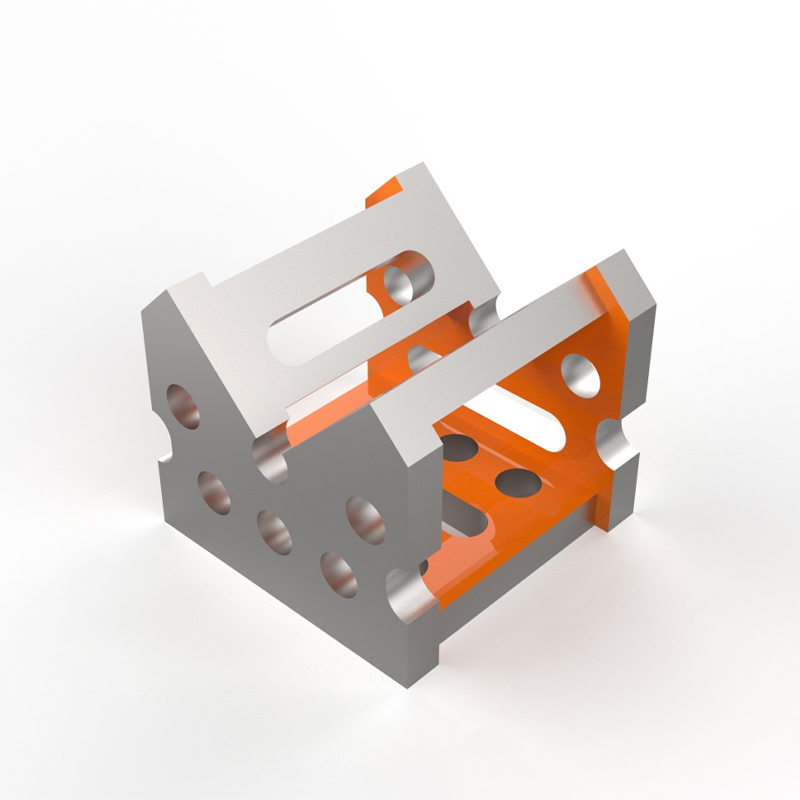
The hole pattern defines the table’s versatility. The industry standard has evolved into a grid system, often 16mm or 28mm in diameter, spaced at 100mm intervals. This grid allows for infinite positioning of stops, clamps, and angles.
Some 2026 models feature threaded holes alongside clearance holes, providing additional anchoring options for heavy fixtures. The ability to swap out damaged surface plates is another key feature of modular designs.
Frame Construction and Stability
A wobbly table ruins weld quality. The frame must be constructed from heavy-gauge tubing with reinforced gussets at every joint. Factory suppliers often use robotic welding to assemble frames, ensuring consistent strength.
Adjustable leveling feet are mandatory for uneven shop floors. These feet allow the operator to stabilize the table perfectly, ensuring the surface remains true regardless of the ground conditions.
Top Picks: Best Welding Table Models by Category
Based on current market data and factory direct offerings, we have categorized the top performers. These selections represent the best welding table choices for different user profiles in 2026.
Best Overall for Professional Fabricators
The “Pro-Grid 3000” series leads the market for general professional use. It combines a 28mm hole pattern with a thick, stress-relieved top plate. Factory pricing makes it accessible for small to medium shops.
This model includes integrated T-slots on the sides for mounting vises or third-axis positioners. Its powder-coated frame resists rust, while the bare steel top is treated with a micro-thin oil coating to prevent oxidation without affecting conductivity.
Best Heavy-Duty Industrial Table
For heavy industrial applications, the “Titan-X” platform is unmatched. Designed for robotic welding cells, it features a massive 50mm thick top plate capable of supporting several tons of load.
The frame is anchored directly to the floor but includes vibration-dampening pads to isolate the welding process from surrounding machinery. This isolation improves the accuracy of laser-guided welding systems.
Best Value for Hobbyists and Makers
The “Maker-Bench 2026” offers a simplified 16mm grid system at a fraction of the cost of industrial units. While the top plate is thinner, it is sufficient for light gauge steel and aluminum work.
This model focuses on portability, featuring locking casters that can support significant weight when engaged. It is the ideal entry point for those seeking the best welding table experience without the industrial price tag.
Best Modular System for Complex Jigging
The “Flex-Frame” system allows users to expand their workspace indefinitely. Individual table sections can be bolted together to create massive assembly areas. This is perfect for large structural steel projects.
Each section maintains perfect alignment with its neighbors, ensuring a continuous flat surface across multiple units. The modularity extends to the accessories, which are compatible across the entire product line.
Comparative Analysis: Leading Welding Table Brands
To help you choose the best welding table, we have compiled a comparison of leading factory suppliers. This table highlights the strengths and ideal use cases for each major brand currently dominating the 2026 market.
| Brand/Model |
Key Features |
Ideal Application |
| Pro-Grid 3000 |
28mm grid, stress-relieved top, side T-slots |
General professional fabrication |
| Titan-X Industrial |
50mm thick plate, vibration damping, floor anchor |
Robotic welding and heavy assembly |
| Maker-Bench 2026 |
16mm grid, portable casters, lightweight frame |
Hobbyists and light repair work |
| Flex-Frame System |
Modular expansion, interlocking alignment pins |
Large scale structural assembly |
| Precision-Plate Elite |
Ground flat surface, stainless steel option |
Aerospace and food-grade equipment |
This comparison shows that no single table fits all needs. The best welding table depends entirely on the specific demands of your workflow and the materials you process daily.
Factory Direct vs. Retail: Pricing and Value
Purchasing directly from a factory supplier often yields significant savings compared to retail distributors. In 2026, many manufacturers have streamlined their logistics to sell directly to end-users via online platforms.
Cost Breakdown
Retail markups can add 30% to 50% to the final price. By cutting out the middleman, buyers access wholesale rates. However, shipping heavy steel tables is expensive, so factory quotes usually include freight calculations.
- Retail Price: Includes showroom overhead and sales commissions.
- Factory Price: Reflects raw material and labor costs plus margin.
- Shipping: Often the largest variable cost; LTL (Less Than Truckload) is common.
Customization Options
Factory suppliers offer customization that retailers cannot. You can request specific hole patterns, custom dimensions, or unique finish requirements. This flexibility ensures you get the exact best welding table configuration for your shop layout.
Lead times for custom orders have improved, with many factories delivering within 4-6 weeks. Standard models are often shipped within days from regional warehouses.
How to Select the Right Size and Configuration
Choosing the correct size is crucial for ergonomics and workflow efficiency. A table that is too small restricts movement, while one that is too large consumes valuable floor space.
Assessing Your Workspace
Measure your available floor area carefully. Leave at least 1.5 meters of clearance around the table for safe movement and clamp manipulation. Consider the height of the table relative to your stature.
Standard working height is usually between 850mm and 950mm. Adjustable height legs are becoming a popular feature, allowing multiple operators to work comfortably at the same station.
Future-Proofing Your Purchase
Consider your growth trajectory. If you plan to add robotic arms or larger assemblies soon, opt for a modular system or a larger initial footprint. Upgrading later is more costly than buying slightly bigger now.
- Current Projects: Determine the maximum part size you weld today.
- Future Goals: Anticipate larger contracts or complex assemblies.
- Accessory Compatibility: Ensure the table supports future tooling investments.
Maintenance and Care for Longevity
Even the best welding table requires maintenance to perform optimally over decades. Proper care prevents rust, maintains flatness, and ensures the clamping system functions smoothly.
Daily Cleaning Routine
Remove spatter and slag after every shift. Use a chipping hammer or a dedicated spatter scraper. Avoid grinding the table surface unless absolutely necessary, as this removes the hardened layer.
Apply a thin coat of anti-rust oil or a specialized welding table spray at the end of the week. This protects the bare steel from humidity and condensation, which are common in workshops.
Periodic Inspection
Check the flatness annually using a precision straightedge. If minor warping occurs, some tables allow for resurfacing. Inspect the frame joints for cracks, especially if the table supports heavy dynamic loads.
- Spatter Removal: Prevents buildup that interferes with clamping.
- Rust Prevention: Extends the life of the steel surface.
- Structural Integrity: Ensures safety under load.
Step-by-Step Guide to Setting Up Your New Welding Table
Proper installation is key to unlocking the full potential of your new equipment. Follow these steps to ensure your best welding table is ready for immediate, high-precision work.
- Step 1: Unboxing and Inspection. Carefully remove the packaging. Inspect the surface for any shipping damage. Verify that all hardware and leveling feet are included.
- Step 2: Positioning. Move the table to its permanent location using a forklift or pallet jack. Do not drag the table, as this can damage the legs or floor.
- Step 3: Leveling. Adjust the leveling feet until the surface is perfectly flat. Use a machinist level to check both lengthwise and crosswise.
- Step 4: Grounding. Attach a dedicated grounding clamp to the designated lug on the table frame. This ensures a solid electrical path for your welder.
- Step 5: Accessory Setup. Install your primary stops and clamps. Organize your tooling within easy reach to maximize efficiency.
Common Mistakes to Avoid When Buying
Many buyers make avoidable errors when selecting a welding table. Being aware of these pitfalls ensures you invest in the true best welding table for your needs rather than a compromised solution.
Ignoring Weight Capacity
Underestimating the weight of your projects can lead to table failure. Always check the dynamic and static load ratings. A table that bows under load will never produce square assemblies.
Overlooking Hole Pattern Standards
Buying a table with a proprietary hole pattern limits your accessory options. Stick to industry-standard grids like 16mm or 28mm to ensure compatibility with the vast ecosystem of clamps and tools.
Neglecting Surface Finish
A painted or coated surface might look nice but can interfere with electrical grounding and cause contamination in sensitive welds. Bare, oiled steel is generally preferred for the welding surface itself.
The Future of Welding Tables: Trends in 2026 and Beyond
The evolution of the best welding table continues as technology advances. We are seeing a convergence of traditional craftsmanship with digital integration and smart manufacturing principles.
Integration with Automation
Modern tables are being designed with built-in cable management channels and mounting points for collaborative robots (cobots). This integration streamlines the transition from manual to semi-automated welding.
Sensors embedded in the table surface can monitor temperature and strain, providing real-time feedback to the operator. This data helps prevent warping and optimizes the welding sequence.
Sustainable Manufacturing
Factory suppliers are increasingly using recycled steel and eco-friendly coatings. The durability of modern tables means they last longer, reducing the overall environmental footprint of the fabrication industry.
- Smart Surfaces: Embedded sensors for process monitoring.
- Robot Ready: Pre-drilled mounts for automation arms.
- Eco-Materials: Recycled content and green finishes.
Frequently Asked Questions About Welding Tables
Addressing common queries helps clarify the nuances of selecting the best welding table. Here are answers to the most frequent questions from professionals and enthusiasts alike.
Can I use a regular workbench for welding?
While possible for very light tasks, a regular workbench lacks the flatness, heat resistance, and clamping options of a dedicated welding table. Using a standard bench often results in poor fit-up and potential fire hazards.
How often should I replace my welding table top?
With proper maintenance, a high-quality table top can last decades. Replacement is only necessary if the surface becomes severely pitted, warped beyond correction, or if the hole pattern is damaged.
Is a thicker table always better?
Not necessarily. While thickness adds rigidity, it also increases weight and cost. For light gauge work, a thinner, stress-relieved plate is sufficient. Thickness should match the intensity of your typical workload.
Final Verdict: Investing in Quality
Selecting the best welding table is a strategic decision that impacts the quality, speed, and safety of your fabrication work. In 2026, the market offers unparalleled options ranging from portable hobbyist benches to massive industrial platforms.
Prioritize flatness, modularity, and build quality over initial cost savings. A superior table pays for itself through reduced rework, faster setup times, and expanded capabilities. Whether you choose a factory-direct modular system or a heavy-duty industrial unit, ensure it aligns with your long-term goals.
The foundation of great welding is a great table. By choosing wisely, you equip yourself with the tools necessary to excel in an increasingly competitive and precise industry.