Aluminum casting with CNC machining is a hybrid manufacturing process that combines the design flexibility of casting with the high precision of computer numerical control (CNC) milling and turning. This method allows manufacturers to produce complex, near-net-shape aluminum components with tight tolerances, superior surface finishes, and enhanced mechanical properties. By integrating these two technologies, engineers can achieve geometries that are impossible to create with casting or machining alone, ensuring optimal performance for automotive, aerospace, and industrial applications.
What Is Aluminum Casting with CNC Machining?
Aluminum casting involves pouring molten aluminum alloy into a mold to create a specific shape. While this process is excellent for producing complex geometries and reducing material waste, as-cast parts often have surface imperfections, dimensional variations, and limited tolerance capabilities. CNC machining subtracts material from the cast part using rotating cutting tools to achieve precise dimensions and smooth surfaces.
When combined, aluminum casting with CNC machining offers a balanced solution. The casting phase establishes the basic form, including internal cavities and complex external features, while the CNC phase refines critical interfaces, such as mounting holes, sealing surfaces, and mating faces. This synergy reduces overall production costs compared to full machining from solid billet, while maintaining the quality standards required for high-performance engineering components.
The Hybrid Manufacturing Workflow
The production workflow typically follows a sequential logic to ensure quality and efficiency. First, a mold is designed based on the final part geometry, accounting for shrinkage and machining allowances. Molten aluminum is then injected or poured into the mold. After cooling and solidification, the raw casting is ejected and undergoes initial cleanup, such as trimming gates and risers.
The semi-finished casting is then fixtured in a CNC machine. Here, multi-axis milling operations remove excess material from critical areas. This step ensures that the final part meets strict geometric dimensioning and tolerancing (GD&T) requirements. The result is a component that leverages the cost-effectiveness of casting for bulk material removal and the precision of CNC for functional accuracy.
Why Combine Aluminum Casting with CNC Machining?
Manufacturers choose this hybrid approach to overcome the limitations of using either process in isolation. Pure casting may not meet the tight tolerances required for assembly, while pure CNC machining from solid block can be prohibitively expensive and time-consuming for large or complex parts. Integrating both processes maximizes value through several key advantages.
- Cost Efficiency: Casting removes the majority of the material volume quickly. Machining only the critical features reduces cycle time and tool wear compared to machining a solid block.
- Complex Geometry Capability: Casting allows for internal channels, undercuts, and organic shapes that are difficult or impossible to machine. CNC adds precision to these complex forms.
- Improved Surface Finish: As-cast surfaces often have a rough texture. CNC machining provides a smooth, uniform finish essential for sealing, aesthetics, or friction reduction.
- Tight Tolerance Achievement: Casting tolerances typically range from ±0.5mm to ±1.0mm. CNC machining can achieve tolerances as tight as ±0.01mm, ensuring perfect fitment in assemblies.
- Material Integrity: Modern casting techniques produce dense, strong aluminum structures. CNC machining does not compromise this integrity but rather reveals the precise functional surfaces.
Addressing Common Casting Defects
One critical aspect of this combination is the ability to mitigate common casting defects. Porosity, shrinkage, and surface oxidation are inherent risks in casting. By leaving extra material allowance (stock) on critical surfaces during the casting phase, CNC machining can remove the outer layer containing these defects. This ensures that the final functional surface is free from porosity and has consistent mechanical properties.
Primary Aluminum Casting Processes Compatible with CNC
Not all casting methods are suitable for subsequent CNC machining. The choice of casting process depends on the part complexity, volume, and required material properties. The three most common methods used in conjunction with CNC machining are Die Casting, Sand Casting, and Investment Casting.
High-Pressure Die Casting (HPDC)
Die casting is ideal for high-volume production of thin-walled components. Molten aluminum is forced into a steel mold under high pressure. This results in excellent surface finish and dimensional consistency right out of the mold. However, die-cast parts may contain trapped air pockets (porosity). CNC machining is used to open up threaded holes, flatten mounting surfaces, and remove any surface porosity. This process is widely used in automotive engine blocks and transmission cases.
Sand Casting
Sand casting uses silica sand molds and is suitable for larger, heavier parts with lower production volumes. The surface finish is rougher than die casting, and tolerances are wider. Therefore, sand-cast aluminum parts almost always require significant CNC machining to achieve functional accuracy. This method is preferred for large industrial housings, pump bodies, and marine components where size limits other casting methods.
Investment Casting (Lost Wax)
Investment casting offers the highest precision among casting methods. It uses a ceramic mold created from a wax pattern. This process produces parts with excellent surface detail and minimal draft angles. While closer to the final net shape, investment-cast aluminum parts still benefit from CNC machining for critical fits and threads. It is commonly used for aerospace brackets and intricate mechanical components.
| Casting Method | Typical Tolerance | Surface Finish | Best For | CNC Requirement |
| Die Casting | ±0.1 – 0.5 mm | Smooth (Ra 3.2-6.3) | High volume, thin walls | Low to Medium (Critical features only) |
| Sand Casting | ±0.5 – 2.0 mm | Rough (Ra 6.3-12.5) | Large parts, low volume | High (Most surfaces machined) |
| Investment Casting | ±0.1 – 0.3 mm | Very Smooth (Ra 1.6-3.2) | Complex, intricate shapes | Medium (Precision fits and threads) |
Key Aluminum Alloys for Casting and Machining
Selecting the right aluminum alloy is crucial for successful casting and subsequent CNC machining. The alloy must flow well into the mold during casting and chip cleanly during machining. Not all alloys perform equally in both stages.
A380 Aluminum Alloy
A380 is the most widely used aluminum die-casting alloy. It offers an excellent combination of castability, mechanical properties, and dimensional stability. It contains silicon, which improves fluidity and reduces shrinkage. A380 machines well, producing small, broken chips that do not clog cutting tools. It is ideal for automotive and electronic housing applications.
A356 Aluminum Alloy
A356 is a premium casting alloy known for its high strength-to-weight ratio and excellent corrosion resistance. It is often used in sand casting and investment casting for structural components. A356 responds well to heat treatment (T6 temper), which significantly enhances its hardness. While slightly tougher to machine than A380 due to its higher strength, it produces high-quality surface finishes when proper cutting parameters are used.
6061 Aluminum Alloy (Billet vs. Cast)
While 6061 is primarily a wrought alloy used for CNC machining from billet, it can also be cast in certain specialized processes. However, for standard casting applications, A380 and A356 are preferred. If a project requires the specific mechanical properties of 6061, manufacturers may opt for machining from extruded stock rather than casting. Understanding this distinction helps in selecting the most cost-effective manufacturing route.
Design Guidelines for Cast-and-Machined Parts
Designing for aluminum casting with CNC machining requires a different mindset than designing for single-process manufacturing. Engineers must account for both the constraints of the mold and the access limitations of CNC tools.
Machining Allowances and Stock
Designers must include extra material, known as machining allowance, on surfaces that will be CNC machined. This allowance ensures there is enough material to remove surface defects and achieve the final dimension. Typical allowances range from 1.0mm to 3.0mm, depending on the casting method and part size. Insufficient allowance can lead to incomplete machining or exposure of subsurface porosity.
Draft Angles and Undercuts
Casting requires draft angles to allow the part to be ejected from the mold. However, CNC machining can create vertical walls and undercuts. Designers should apply draft angles only to non-machined surfaces. For surfaces that will be machined, vertical walls can be specified, as the CNC tool will create the final geometry. This approach simplifies the mold design and reduces tooling costs.
Fixturing and Datum Features
CNC machining requires the part to be securely held in a fixture. Designers should incorporate dedicated datum features, such as flat pads or locating holes, into the cast design. These features allow the CNC machine to establish a consistent coordinate system. Without proper datums, positioning errors can occur, leading to out-of-tolerance parts. Early collaboration between casting and machining engineers is essential to define these features.
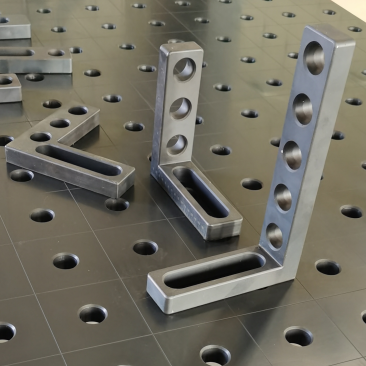
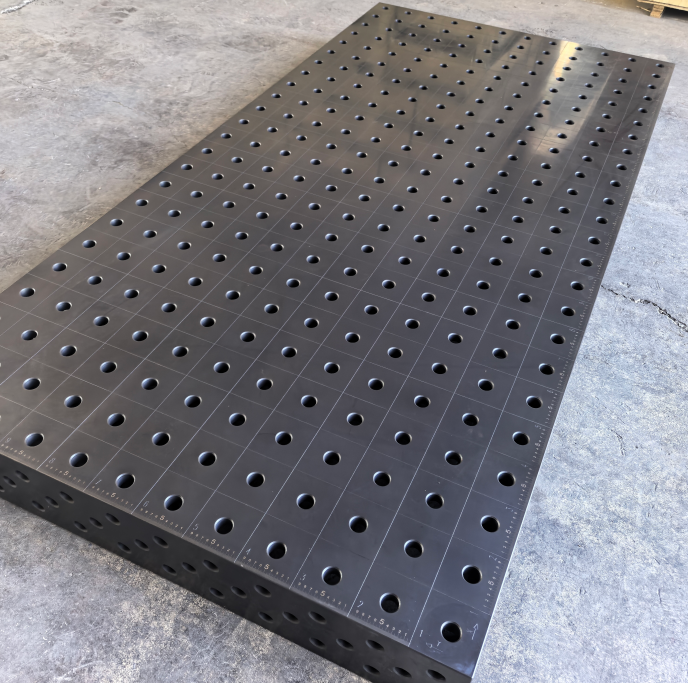
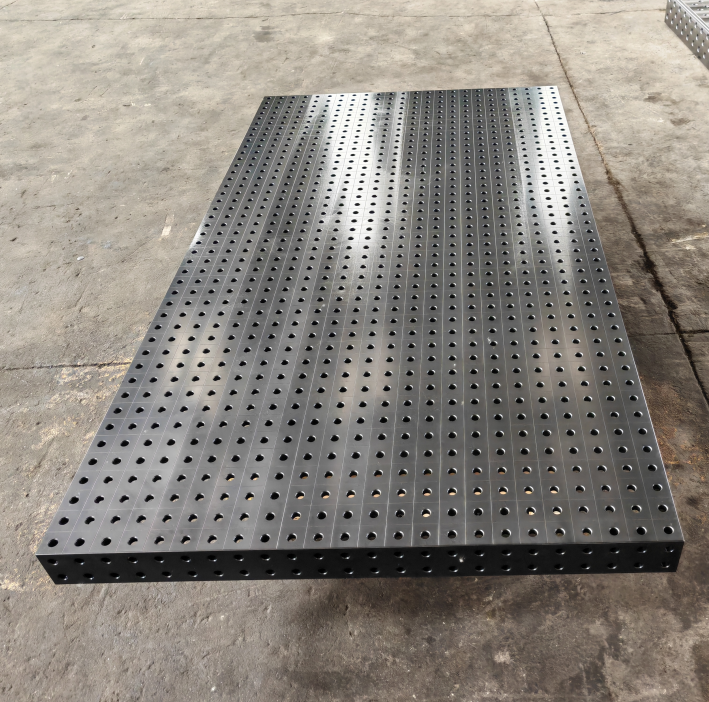
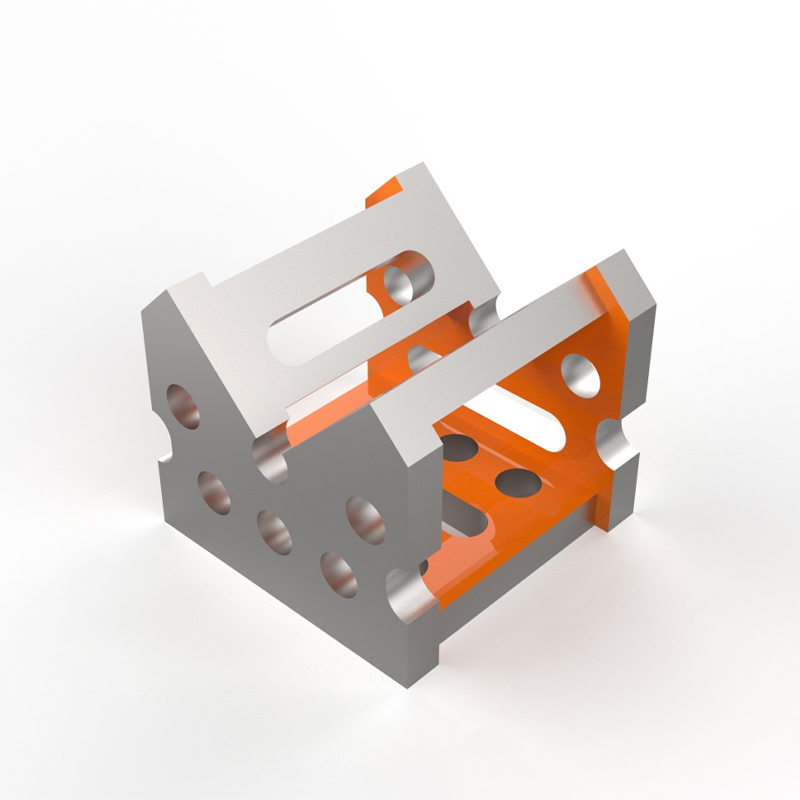
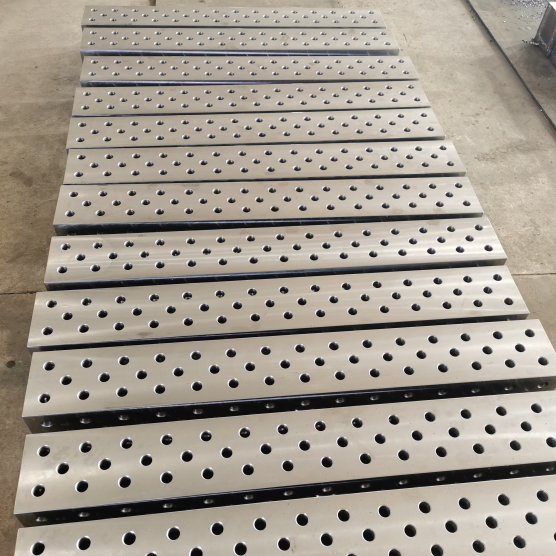
This is where specialized tooling plays a pivotal role. Companies like Botou Haijun Metal Products Co., Ltd. specialize in the research, development, and production of high-precision flexible modular fixtures that address these exact challenges. Their core product line, including 2D and 3D flexible welding platforms, provides the versatility needed to hold irregular cast shapes securely. Renowned for exceptional precision, these platforms have become preferred jigging equipment in the machining, automotive, and aerospace industries. By utilizing complementary components such as U-shaped and L-shaped multi-purpose square boxes, 200-series support angle irons, and universal angle gauges, manufacturers can enable rapid workpiece positioning and clamping. This ensures that every cast-and-machined part maintains stability during processing, delivering the durability and accuracy required for high-end applications.
Wall Thickness Uniformity
Uniform wall thickness in the casting phase prevents warping and shrinkage defects. Warped castings are difficult to fixture in CNC machines, leading to increased setup time and potential errors. By optimizing the cast geometry for uniform cooling, manufacturers ensure that the part remains stable during the machining process.
Step-by-Step Manufacturing Process
Understanding the detailed workflow helps buyers and engineers anticipate lead times and quality checkpoints. The following steps outline the typical production journey for a cast and machined aluminum component.
- DFM Analysis: Engineers review the 3D CAD model to identify potential casting and machining issues. Recommendations are made for draft angles, wall thickness, and machining allowances.
- Tooling Fabrication: Steel molds (for die casting) or patterns (for sand/investment casting) are manufactured. This is the longest lead-time item in the process.
- Prototype Casting: Initial samples are cast to verify mold functionality and part geometry. These samples undergo dimensional inspection.
- CNC Program Development: CAM programmers create toolpaths for machining the critical features. Fixtures are designed to hold the irregular cast shapes.
- Production Casting: Full-scale casting begins. Parts are cooled, trimmed, and cleaned.
- Heat Treatment (Optional): If required, parts undergo T5 or T6 heat treatment to enhance mechanical properties. This occurs before final machining to prevent distortion after precision cuts.
- CNC Machining: Parts are loaded into CNC mills or lathes. Roughing passes remove bulk material, followed by finishing passes for tight tolerances.
- Quality Inspection: Finished parts are measured using CMM (Coordinate Measuring Machine) to verify compliance with drawings.
- Surface Finishing: Final treatments such as anodizing, powder coating, or bead blasting are applied.
Common Challenges and Solutions
Even with advanced technology, challenges can arise in the hybrid manufacturing process. Identifying these early allows for proactive mitigation.
Porosity Exposure
Internal gas pockets or shrinkage voids can be exposed during CNC machining, resulting in surface pits. Solution: Use X-ray inspection on critical castings before machining. Adjust machining parameters to avoid cutting through known porous zones, or increase machining allowance to ensure clean material removal.
Part Distortion
Removing material from a cast part can release internal stresses, causing the part to warp. Solution: Implement stress-relief heat treatment before machining. Use symmetrical machining strategies to remove material evenly from both sides of the part.
Tool Wear and Chip Evacuation
Cast aluminum can be abrasive due to silicon content, leading to rapid tool wear. Solution: Use carbide or polycrystalline diamond (PCD) tooling. Optimize coolant flow to ensure efficient chip evacuation, preventing re-cutting of chips which damages surface finish.
Fixture Stability
Irregular cast shapes can be difficult to clamp securely without causing deformation. Solution: Design custom fixtures that conform to the cast geometry. Use soft jaws or hydraulic clamping to distribute pressure evenly.
Applications of Aluminum Casting with CNC Machining
This hybrid manufacturing method is prevalent in industries requiring high performance, complex shapes, and reliable precision.
Automotive Industry
Modern vehicles rely heavily on lightweight aluminum components to improve fuel efficiency and electric vehicle range. Engine blocks, cylinder heads, transmission cases, and suspension brackets are typically die-cast and then CNC machined for bearing bores, gasket surfaces, and mounting points. The combination ensures durability under high thermal and mechanical loads.
Aerospace and Defense
Aerospace components demand high strength-to-weight ratios and strict adherence to safety standards. Structural brackets, avionics housings, and landing gear components are often investment cast and precision machined. The ability to create complex internal ribbing for stiffness while maintaining precise external interfaces is critical in this sector.
Industrial Machinery
Pump housings, valve bodies, and motor enclosures require complex internal passages for fluid flow. Sand casting or die casting creates these passages, while CNC machining ensures that flange faces are flat for leak-proof sealing and that shaft bores are concentric for smooth rotation.
Consumer Electronics
High-end laptops, smartphones, and cameras use aluminum unibodies for aesthetics and heat dissipation. These parts are often die-cast to achieve the basic shape and then CNC machined for button cutouts, ports, and seamless joints. The result is a premium feel with precise assembly fit.
How to Choose a Manufacturer for Aluminum Casting and CNC Machining
Selecting the right partner is critical for project success. A capable manufacturer must possess expertise in both casting and machining, as well as the ability to integrate these processes seamlessly.
Evaluate In-House Capabilities
Prefer manufacturers who handle both casting and machining in-house. This reduces communication gaps, shortens lead times, and simplifies quality accountability. If casting and machining are outsourced to different vendors, alignment issues can lead to delays and quality disputes.
Check Quality Certifications
Look for ISO 9001 certification as a baseline. For automotive projects, IATF 16949 is essential. Aerospace projects may require AS9100 certification. These standards ensure that the manufacturer has robust quality management systems in place.
Assess Engineering Support
A strong manufacturer offers Design for Manufacturability (DFM) feedback early in the process. They should be able to suggest optimizations that reduce cost without compromising function. Ask for examples of how they have solved complex manufacturing challenges for previous clients.
Review Equipment and Technology
Verify that the facility has modern CNC machines (3-axis, 4-axis, or 5-axis) suitable for your part complexity. Check if they use automated inspection equipment like CMMs and optical scanners. Advanced tooling simulation software is also a sign of technical proficiency.
FAQ: Aluminum Casting with CNC Machining
Is aluminum casting with CNC machining more expensive than pure CNC machining?
For simple parts, pure CNC machining from billet may be cheaper due to lower tooling costs. However, for complex parts or high volumes, casting with CNC machining is significantly more cost-effective. Casting reduces material waste and machining time, offsetting the initial mold cost over larger production runs.
What tolerances can be achieved with this process?
While casting alone typically holds ±0.5mm, the addition of CNC machining allows for tolerances as tight as ±0.01mm on critical features. The overall part accuracy depends on the stability of the casting and the precision of the CNC setup.
Can you machine threads into cast aluminum?
Yes, CNC tapping or thread milling is commonly used to create precise threads in cast aluminum. It is generally recommended to machine threads rather than cast them, as machined threads offer better strength, accuracy, and reliability for assembly.
How does heat treatment affect the machining process?
Heat treatment (such as T6) increases the hardness and strength of the aluminum. It is usually performed before final CNC machining. Machining hardened material requires slower feed rates and more robust tooling, but it ensures the final part meets mechanical specifications.
What is the minimum order quantity (MOQ) for this process?
MOQ depends on the casting method. Die casting has high tooling costs, so MOQs are typically higher (e.g., 500-1000 units) to amortize the mold cost. Sand casting and investment casting have lower tooling costs, allowing for lower MOQs (e.g., 50-100 units).
Conclusion
Aluminum casting with CNC machining represents a strategic balance between design freedom, material efficiency, and precision engineering. By leveraging the strengths of both processes, manufacturers can produce high-quality, complex components that meet the rigorous demands of modern industries. This hybrid approach reduces overall production costs for medium to high-volume runs while ensuring the tight tolerances and surface finishes required for optimal performance.
For businesses seeking reliable supply chain partners, choosing a manufacturer with integrated casting and machining capabilities is key. It ensures seamless communication, consistent quality, and faster time-to-market. Whether for automotive innovations, aerospace advancements, or industrial machinery, this manufacturing method provides a robust solution for complex aluminum components.
If you are looking for a trusted partner to bring your aluminum designs to life, consider our comprehensive manufacturing services. We offer end-to-end solutions from DFM analysis to final inspection, ensuring your parts meet the highest standards of quality and precision.
Explore our Aluminum Casting and CNC Machining Solutions to request a quote or discuss your project requirements with our engineering team today.