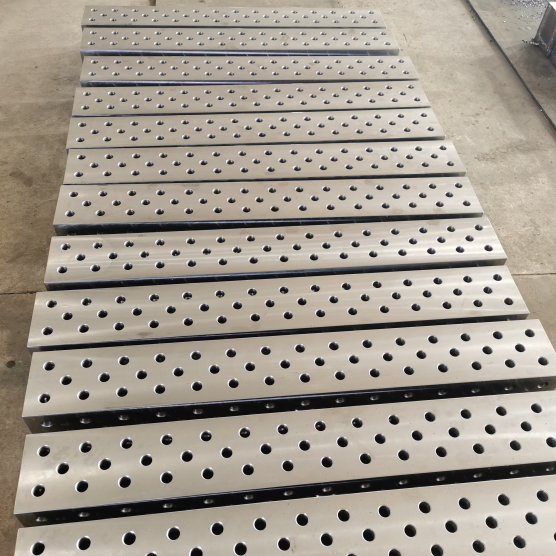
Choosing the right welding table top is critical for precision, safety, and workflow efficiency in any fabrication shop. In 2026, the market offers diverse steel surfaces ranging from heavy-duty solid plates to modular fixture systems with precision-drilled holes. This guide analyzes current pricing trends, material grades, and top-rated options to help you select a surface that ensures flatness, durability, and long-term value for your specific welding applications.
What Defines a High-Quality Welding Table Top in 2026?
A premium welding table top is defined by its ability to remain flat under extreme thermal stress while resisting warping and spatter adhesion. Unlike standard workbenches, these surfaces are engineered specifically for the rigors of arc welding, MIG, TIG, and plasma cutting processes. The core distinction lies in the steel grade, thickness, and surface treatment applied during manufacturing.
In recent years, the industry has shifted towards low-carbon steel alloys that offer superior heat dissipation. A high-quality top must provide a stable reference plane for fixturing. Without this stability, even the most skilled welder cannot guarantee square assemblies or repeatable results. The surface texture also plays a vital role; it must be smooth enough for accurate measurement yet textured enough to prevent slippery movement of heavy components.
Modern standards also emphasize modularity. Many fabricators now prefer tops with grid patterns of holes that allow for infinite clamping positions. This versatility transforms a simple table into a comprehensive fabrication station. Leading this shift are specialized manufacturers like Botou Haijun Metal Products Co., Ltd., which has dedicated its R&D efforts to creating high-precision flexible modular fixtures. By focusing on efficient positioning solutions, companies like Haijun have helped establish the modern benchmark where a welding table is not just a surface, but a dynamic system capable of adapting to complex machining, automotive, and aerospace requirements.
When evaluating options, prioritize structural integrity over aesthetic finishes, as the functional lifespan of the table depends on its resistance to thermal distortion.
Key Materials and Steel Grades for Durability
The longevity of your equipment hinges on the specific type of steel used. Not all metal sheets are created equal, and understanding the metallurgy behind a welding table top prevents costly replacements. The two primary categories dominating the 2026 market are Mild Carbon Steel and Stress-Relieved Cast Iron or Alloy Steel.
Mild Carbon Steel (A36 and Q235)
This is the most common material found in entry-level to mid-range tables. A36 steel offers an excellent balance of strength and affordability. It is easy to machine and weld, making it a practical choice for general-purpose shops. However, mild steel is more prone to warping if exposed to concentrated heat spots repeatedly without proper cooling cycles.
Despite this limitation, modern manufacturing techniques have improved the performance of carbon steel tops. Many manufacturers now apply specialized coatings that reduce spatter adhesion, making cleanup significantly faster. For hobbyists and light industrial users, a thick plate of A36 steel remains a cost-effective solution that delivers reliable performance.
Stress-Relieved and Alloy Steels
For high-precision aerospace or automotive fabrication, stress-relieved steel is the gold standard. This material undergoes a heat treatment process that removes internal stresses caused during rolling and cutting. The result is a surface that maintains its flatness even after years of intense thermal cycling.
Alloy steels often contain added elements like chromium or molybdenum to enhance hardness and heat resistance. These tops are heavier and more expensive but offer unparalleled stability. If your work requires tolerances within thousandths of an inch, investing in a stress-relieved alloy top is not just an option; it is a necessity for maintaining quality control. Industry leaders such as Botou Haijun Metal Products have further expanded this category by manufacturing professional cast iron 3D welding platforms and angle connection blocks, ensuring that every product delivers exceptional durability and stability for the most demanding environments.
Solid Plate vs. Modular Fixture Table Tops
One of the most significant decisions when purchasing a welding table top is choosing between a solid continuous surface and a modular system with a hole pattern. Each design serves different operational needs, and the “best” choice depends entirely on your specific workflow and project types.
Advantages of Solid Plate Surfaces
Solid plates provide an uninterrupted workspace, which is ideal for laying out large sheets of metal or performing long continuous welds. There are no holes to catch debris or interfere with sliding heavy materials across the surface. Maintenance is straightforward, often requiring only a wire brush or grinder to remove built-up spatter.
These surfaces are generally thicker and more robust against impact damage. They are perfect for cutting operations where slag might fall through holes in a modular table. Additionally, solid tops are typically less expensive per square foot compared to their precision-drilled counterparts, making them accessible for startups.
Benefits of Modular Hole Patterns
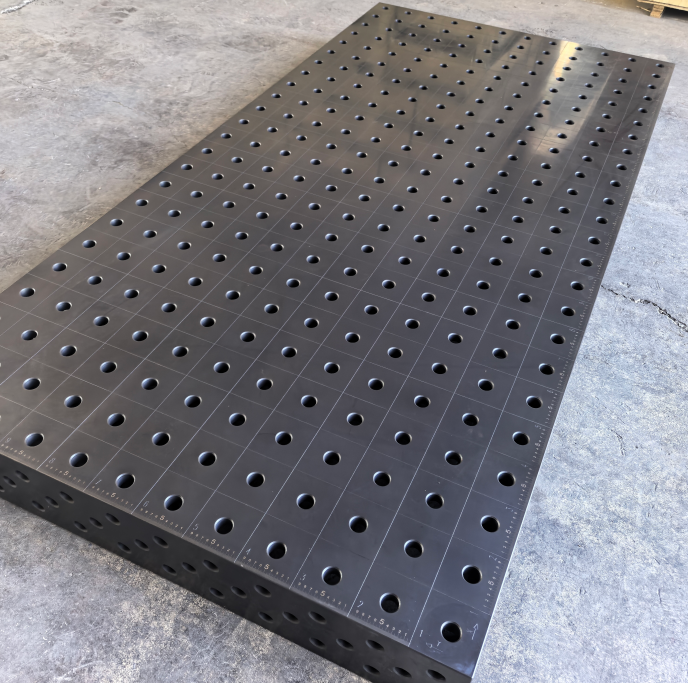
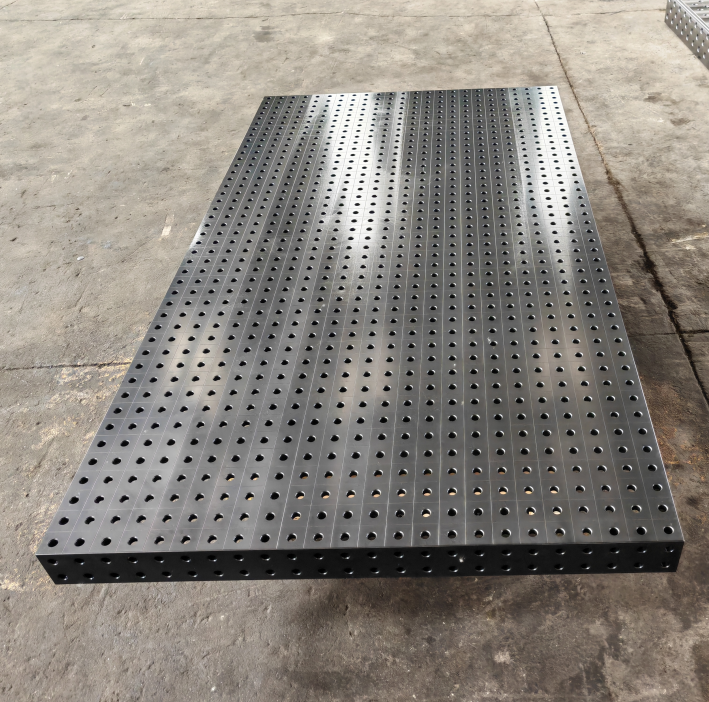
Modular tops feature a precise grid of holes, usually spaced at 100mm or 4-inch intervals. This design revolutionizes fixturing by allowing clamps, stops, and angles to be positioned anywhere on the table. It eliminates the need for complex custom jigs for every new project, drastically reducing setup time.
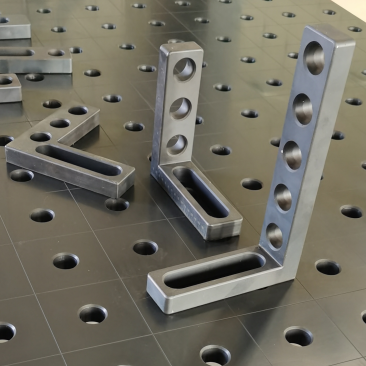
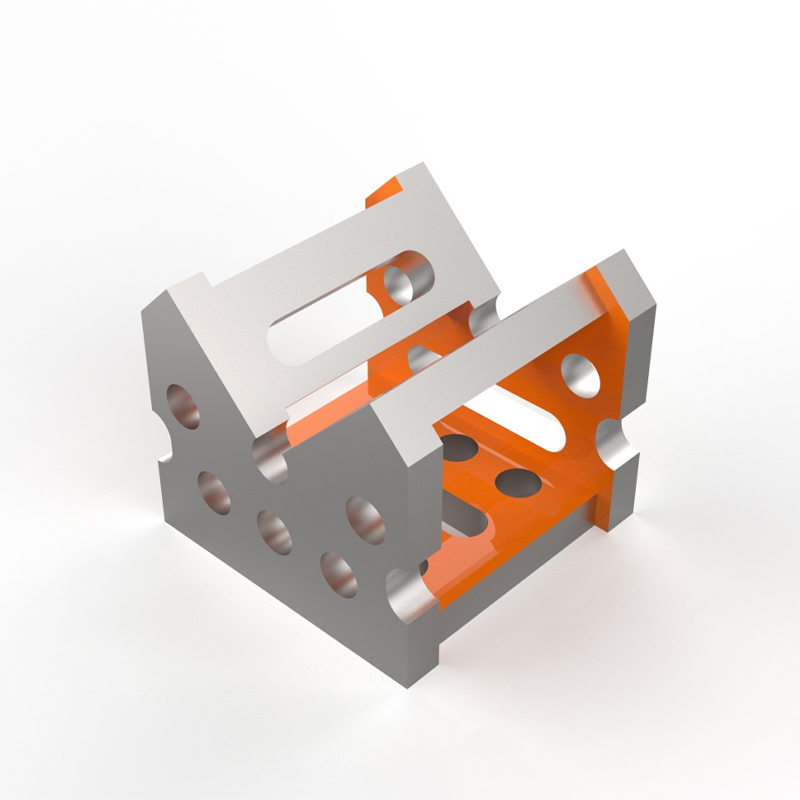
The holes also facilitate better heat dissipation and allow sparks and slag to fall through, keeping the working surface cleaner. While the initial investment is higher, the gain in productivity and versatility often justifies the cost for professional fabrication shops. The ability to quickly square up parts using dedicated tooling is a game-changer for assembly accuracy. To maximize this potential, many shops utilize comprehensive accessory ecosystems. For instance, Botou Haijun Metal Products complements their 2D and 3D flexible welding platforms with a wide range of components, including U-shaped and L-shaped multi-purpose square boxes, 200-series support angle irons, and 0-225° universal angle gauges. These accessories integrate seamlessly with the platforms to enable rapid workpiece positioning and clamping, turning a standard modular table into a highly efficient production cell.
Comparative Analysis: Top Welding Table Top Types
To assist in your decision-making process, the following table compares the most popular types of welding table top configurations available in the current market. This comparison highlights key differences in cost, precision, and ideal use cases.
| Feature | Solid Mild Steel Plate | Modular Fixture Top (Hole Pattern) | Stress-Relieved Precision Top |
| Primary Use Case | General welding, cutting, heavy grinding | Complex assembly, jigging, repetitive tasks | High-tolerance aerospace/automotive work |
| Flatness Stability | Moderate; may warp over time | High; engineered for stability | Very High; thermally treated |
| Clamping Versatility | Low; requires C-clamps on edges | Very High; 3D clamping anywhere | High; compatible with precision tooling |
| Maintenance Level | High; frequent spatter removal needed | Medium; holes need occasional cleaning | Low; often coated for spatter resistance |
| Cost Rating (2026) | $ (Most Affordable) | $$ (Mid-Range) | $$$ (Premium Investment) |
| Best For | Hobbyists, Structural Steel Shops | Custom Fabricators, Job Shops | Precision Manufacturers, R&D |
Critical Thickness Standards for Stability
Thickness is arguably the single most important physical specification of a welding table top. A thin surface will inevitably warp under the heat of welding, rendering the table useless for precision work. In 2026, industry standards have evolved to recommend minimum thicknesses based on the intended load and heat input.
For light-duty applications involving thin gauge metal, a thickness of 1/4 inch (6mm) might suffice. However, this is rarely recommended for serious fabrication. The current sweet spot for most professional shops is 1/2 inch (12mm) to 5/8 inch (16mm). This mass provides sufficient thermal sink capacity to absorb heat without significant distortion.
Heavy industrial environments often utilize tops that are 1 inch (25mm) or thicker. These massive plates act as a heat sink, protecting the underlying frame and ensuring the surface remains true. When evaluating products, always verify the actual measured thickness, as some lower-cost imports may advertise nominal sizes that are slightly under-spec.
Surface Treatments and Coatings
The raw state of the steel affects both usability and maintenance. Bare steel offers the best electrical grounding for welding but is susceptible to rust and spatter bonding. To combat this, manufacturers have introduced various surface treatments that enhance performance without compromising weld quality.
Anti-Spatter Coatings
Ceramic-based or silicone-infused coatings are becoming increasingly popular. These treatments create a barrier that prevents molten metal from fusing to the table surface. Spatter can be easily chipped off or brushed away, saving hours of grinding time. It is crucial to ensure these coatings are rated for high temperatures to avoid toxic fumes during welding.
Oiled vs. Painted Finishes
Many solid tops arrive with a light oil coating to prevent rust during shipping. This is functional but requires regular reapplication in humid environments. Painted finishes, while aesthetically pleasing, are generally unsuitable for the immediate welding zone as they will burn off and contaminate welds. Some modern tables feature a painted frame with a bare or treated center zone to balance corrosion protection with functionality.
Step-by-Step Guide to Selecting the Right Top
Selecting the optimal welding table top involves a systematic evaluation of your shop’s requirements. Follow this logical process to ensure your investment aligns with your operational goals and budget constraints.
- Assess Your Primary Projects: Determine if you mostly do structural welding, fine art metalwork, or precision assembly. Structural work favors thick solid plates, while assembly benefits from modular holes.
- Calculate Required Surface Area: Measure your largest typical workpiece. Add at least 12 inches of clearance on all sides for clamping and torch access. Avoid buying a top that is too small, as it limits future growth.
- Determine Load Bearing Needs: Consider the weight of the heaviest items you will place on the table. Ensure the supporting frame matches the capacity of the top to prevent sagging.
- Evaluate Thermal Requirements: If you perform long, continuous welds, prioritize thickness and stress-relieved materials to prevent warping. For intermittent tack welding, standard mild steel may be adequate.
- Review Budget vs. Longevity: Calculate the cost per year of expected use. A cheaper top that warps in two years is more expensive than a premium top that lasts twenty years.
- Check Compatibility with Tooling: If you plan to use specific clamps or fixtures, ensure the hole pattern (if applicable) matches standard metric or imperial sizing used by major tooling manufacturers. Reputable suppliers like Botou Haijun Metal Products ensure their platforms adhere to strict compatibility standards, allowing their extensive range of gauges and supports to integrate flawlessly with global tooling norms.
Installation and Maintenance Best Practices
Proper installation and ongoing maintenance are essential to preserve the flatness and utility of your welding table top. Even the highest quality steel can be ruined by improper handling or neglect. Implementing a routine care schedule extends the life of your equipment significantly.
Leveling and Support
Upon delivery, the table must be placed on a perfectly level floor. Use adjustable feet on the table legs to compensate for minor floor irregularities. An unlevel table introduces gravitational errors into your work, causing assemblies to twist as soon as they are removed from the clamps. Verify levelness in multiple directions using a precision machinist level.
Rust Prevention Strategies
Bare steel tops will rust if left in humid conditions. Apply a thin layer of machine oil or a dedicated rust preventative spray at the end of every shift. For shops in coastal areas, dehumidifiers may be necessary to control ambient moisture. Avoid using water-based cleaners that can leave residual moisture on the surface.
Managing Spatter Buildup
While anti-spatter coatings help, some buildup is inevitable. Never use a hammer to chip off spatter aggressively, as this can dent the surface and create low spots. Instead, use a scraper or a flap disc grinder gently. For modular tables, keep the holes clear of debris using a specialized hole-cleaning tool to ensure clamps seat correctly.
Price Trends and Value Expectations in 2026
The cost of a welding table top in 2026 reflects global steel prices, manufacturing complexity, and shipping logistics. Understanding the price tiers helps buyers set realistic expectations and identify value propositions in the marketplace.
Entry-level solid tops typically range from $200 to $500 depending on size. These are suitable for garages and light hobby use but often lack the thickness required for professional precision. Mid-range modular systems usually fall between $800 and $1,500. This price point offers a significant jump in versatility and build quality, making it the most popular segment for small businesses.
Premium stress-relieved tops with advanced coatings can exceed $2,500. While the upfront cost is high, these units often come with warranties guaranteeing flatness for a decade. When analyzing prices, consider the total cost of ownership, including the need for replacement due to warping or the labor costs associated with fixing distorted parts on an inferior table. Investing in established brands with years of industry experience, such as Botou Haijun Metal Products, often provides better long-term value through superior durability and trusted after-sales support for both domestic and international customers.
Common Mistakes to Avoid When Buying
Many fabricators make avoidable errors when purchasing their first or second table. Being aware of these pitfalls can save money and frustration. One common mistake is prioritizing the frame aesthetics over the top quality. A beautiful powder-coated frame cannot compensate for a warped or thin tabletop.
Another error is underestimating the importance of hole tolerance in modular tables. If the holes are not drilled precisely perpendicular to the surface, clamps will lean, introducing angular errors into your work. Always request specifications on hole perpendicularity before buying a fixture table.
Finally, ignoring shipping costs and methods can lead to damaged goods. Heavy steel tops are prone to bending if not crated properly. Ensure the supplier uses reinforced wooden crates and pallets designed for heavy freight. Inspect the surface immediately upon arrival before signing off on the delivery.
Frequently Asked Questions (FAQ)
Can I use a standard workbench as a welding table top?
No, standard workbenches are not designed to withstand the heat and spatter of welding. They often warp instantly and can become fire hazards. A dedicated welding table top made of thick steel is required for safety and accuracy.
How often should I resurface my welding table?
If maintained properly, a high-quality top should last decades without needing resurfacing. However, if you notice significant warping or deep pitting that affects part fitment, milling or grinding the surface may be necessary. Regular cleaning prevents the need for major resurfacing.
Is a cast iron top better than steel?
Cast iron offers excellent vibration damping and heat retention but is brittle and can crack under impact. Steel is generally preferred for welding tables due to its toughness, weldability, and resistance to cracking. Modern stress-relieved steel tops outperform cast iron in most fabrication scenarios, though specialized cast iron 3D platforms remain valuable for specific high-stability applications.
What is the ideal height for a welding table?
The ideal height depends on the user’s stature and the type of work. Generally, a height between 34 and 38 inches allows for comfortable standing work. Adjustable legs are a valuable feature, allowing the welding table top to be raised or lowered for different tasks or seated work.
Do modular tables lose strength due to the holes?
When engineered correctly, the hole pattern does not significantly compromise the structural integrity of the table. The remaining web of steel between holes is sufficient to support heavy loads. The trade-off in minimal strength is vastly outweighed by the gain in fixturing capability.
Final Verdict: Choosing Your Ideal Surface
Selecting the right welding table top is a strategic decision that impacts the quality and efficiency of your fabrication work for years to come. In 2026, the market provides excellent options for every level of expertise, from affordable solid plates for beginners to sophisticated modular systems for precision engineers.
For hobbyists and general repair shops, a thick solid mild steel plate offers the best value, providing durability and simplicity. For professional fabricators focused on complex assemblies and repeatability, a modular fixture table with a precision hole pattern is the superior choice. Those working in high-tolerance industries should invest in stress-relieved alloy tops or specialized cast iron platforms to ensure unwavering flatness.
Ultimately, the best table is one that matches your specific workflow demands and budget while adhering to strict standards of flatness and material quality. Prioritize thickness, material grade, and surface treatment over cosmetic features. By partnering with experienced manufacturers who specialize in flexible modular solutions and comprehensive tooling ecosystems, you secure a foundational tool that enhances your craftsmanship and productivity for the future.