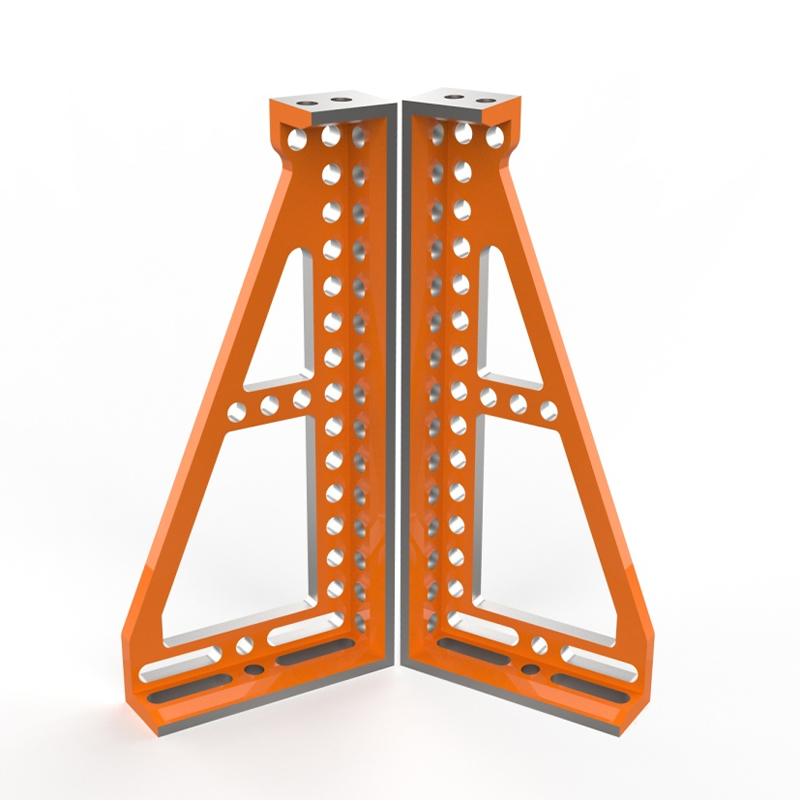
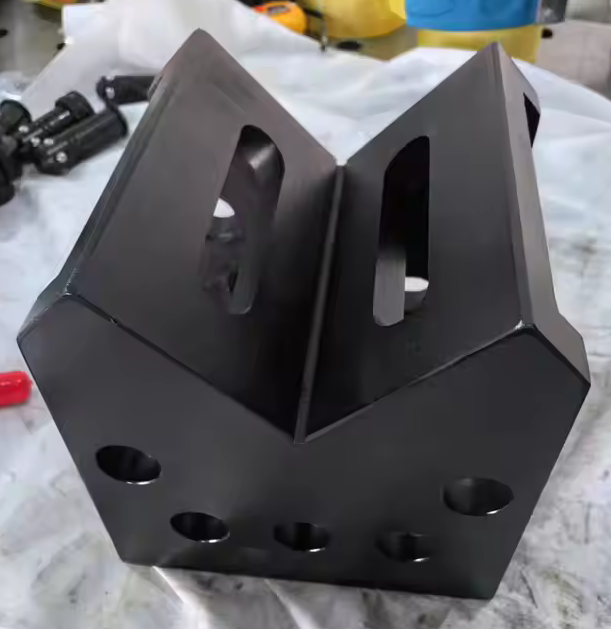
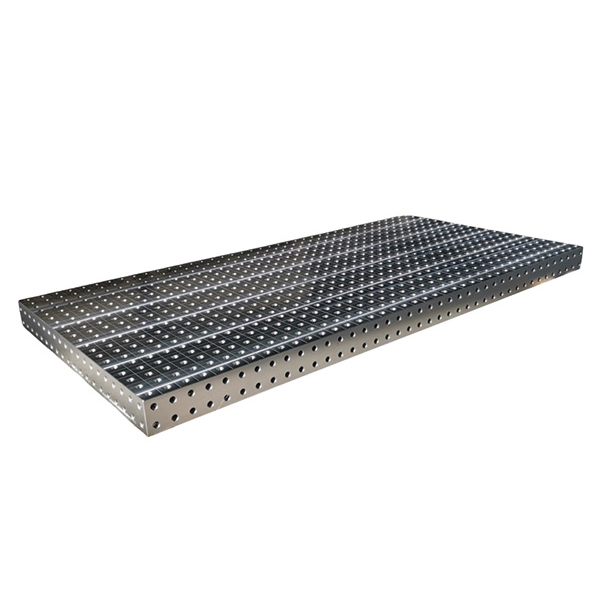
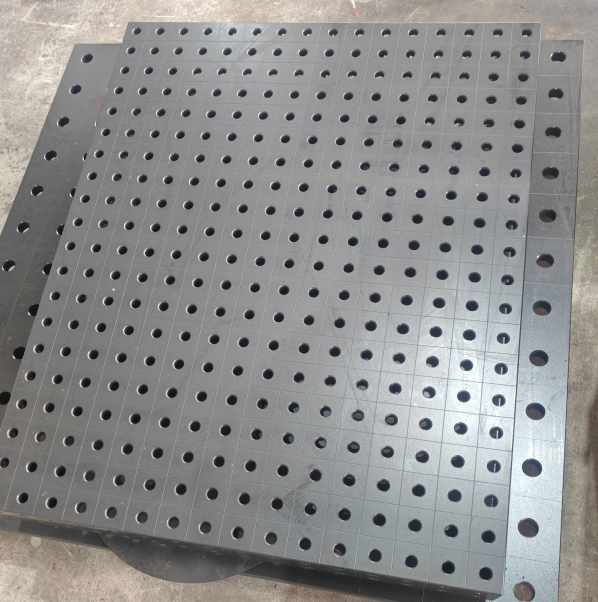
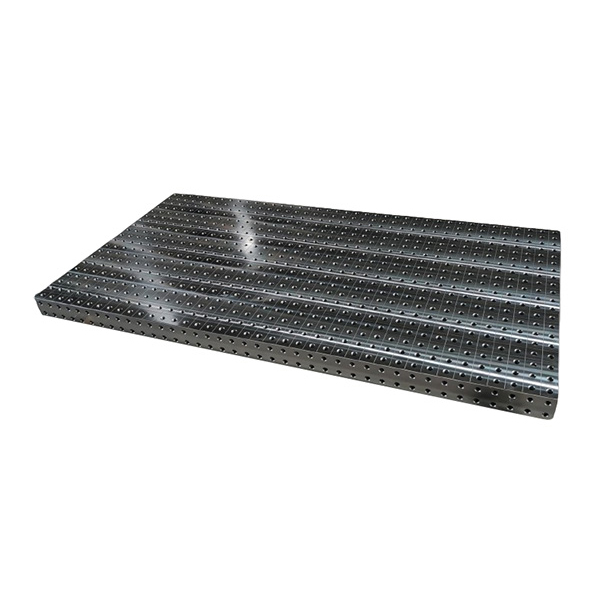
Welding jig table clamps aren’t accessories. They’re the silent foundation of repeatability—what separates a one-off weld from a production-ready assembly. We’ve seen too many shops lose 12–18 minutes per setup because their clamps slip under 3,000 psi clamping force, or fail to hold ±0.15 mm tolerance across a 600 mm aluminum chassis. Precision starts not with the torch—but with how firmly and predictably the part stays put.
Why “Stable” Isn’t Enough—What Real Welding Jig Table Clamps Must Deliver
Most buyers search for “strong” or “heavy-duty.” That’s a trap. Strength without repeatability is wasted metal. A clamp that delivers 8,000 N clamping force means nothing if its pivot wears after 400 cycles—or if its base plate warps under thermal cycling. At Botou Haijun Metal Products Co., Ltd., we test every welding jig table clamp against three non-negotiable benchmarks: positional retention, thermal stability, and interface integrity.
Positional retention means the clamp holds the same location—within 0.05 mm—after 1,200 actuations. Thermal stability requires no measurable deflection when exposed to 120°C ambient spikes during multi-pass welding. Interface integrity ensures the clamp-to-table connection (T-slot, dovetail, or bolt pattern) doesn’t loosen after repeated torque cycles—even at 18 N·m on M8 fasteners.
We built our first generation of modular clamps in 2017 after a Tier-1 agricultural machinery client rejected three supplier prototypes. All failed the same test: holding a 12-gauge stainless steel hinge bracket while welding two 4-mm fillets back-to-back. The distortion? 0.42 mm. Their spec allowed 0.10 mm. That failure reshaped our design philosophy—clamps must constrain *motion*, not just resist *load*.
Four Design Decisions That Prevent Real-World Failure
1. Hardened steel jaws with replaceable tungsten-carbide inserts: Standard hardened steel wears fast on abrasive aluminum alloys. Our inserts last 3.2× longer than monolithic jaws—and cost less than 15% of a full jaw replacement.
2. Zero-backlash toggle mechanism with dual-spring preloading: Most toggle clamps use single-spring return. Under vibration, they creep open. Ours use opposing springs—one compresses as the other extends—eliminating play even after 5,000+ cycles.
3. Integrated ground-plane reference surfaces: Every clamp base includes machined, ground datum faces aligned to ±0.005 mm flatness. No shimming. No guesswork. Just drop it into a T-slot and verify squareness with a dial indicator.
4. Material-matched thermal expansion coefficients: Clamp bodies are cold-forged 4140 alloy; mounting plates are 304 stainless. Why? Because when your weld cell hits 95°C, mismatched expansion cracks epoxy-bonded bases. We avoid adhesives entirely—every joint is mechanical, calibrated, and serviceable.
Setup Time Is a Cost—Not a Feature
“Easy setup” sounds vague until you’re reconfiguring a 12-clamp fixture for a new tractor subframe. One customer tracked actual labor: average setup time dropped from 22.6 minutes to 6.3 minutes after switching to our quick-release cam-lock system. Key enablers? First, standardized M6 mounting holes spaced at 25 mm intervals—no drilling required on existing jig tables. Second, color-coded actuation levers (red = clamp down, blue = release, yellow = lock position). Third, tactile feedback: a distinct double-click confirms full engagement—no visual verification needed.
We don’t offer “universal” clamps. Universal means compromise. Instead, we group by application: high-force vertical clamps for structural beams (up to 12,500 N), low-profile lateral clamps for sheet-metal nests (0.8 mm minimum clearance), and angular clamps with ±5° micro-adjustment for misaligned flanges. Each family shares the same mounting interface—so shops scale capability without retraining staff or redesigning tables.
Trust Starts With Traceability—Not Certificates
ISO 9001 certification matters—but only if it’s visible in the product. Every welding jig table clamp from Botou Haijun carries a laser-etched serial number linked to its full inspection history: raw material mill test report, hardness verification (HRC 48–52), CMM scan of critical datum surfaces, and functional load test data. Customers access this via QR code on the packaging—no login, no portal, no waiting.
We ship clamps with calibrated torque wrenches—not generic tools. Why? Because our M8 fasteners require exactly 16.5 ± 0.3 N·m. Too little: loosening under vibration. Too much: thread galling in aluminum tables. We include a traceable calibration certificate—valid for 12 months—with every order over 10 units.
Botou Haijun Metal Products Co., Ltd. builds welding jig table clamps for engineers who measure success in microns, not marketing slogans. We manufacture in Botou City—the heart of China’s cold-working industry—where tolerances are enforced by decades of collective experience, not just machines. Our facility runs ISO-compliant processes, but what customers remember is how a clamp held true through 14,000 welds on a harvest-season production line in Kansas—and still shipped replacement parts within 48 hours when one was damaged by forklift impact.
If your next weld fixture demands precision, stability, and truly easy setup—start where repeatability begins. Start with the clamp.