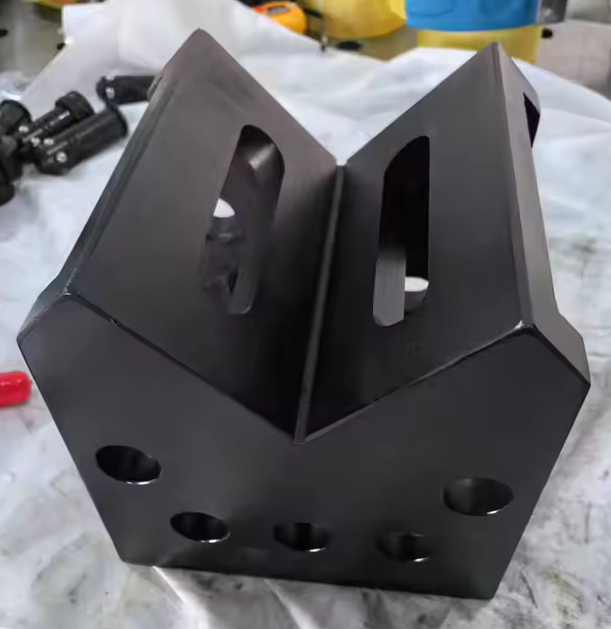
Welding fixture design is the engineering process of creating specialized tools to hold workpieces in precise positions during welding operations. The key principles for accuracy include rigid structural stability, precise 3D locating points, effective thermal distortion management, and rapid clamping mechanisms. By adhering to these principles, manufacturers ensure dimensional tolerance within ±0.5mm, reduce rework rates, and significantly improve production efficiency in high-volume manufacturing environments.
The Critical Role of Precision in Welding Fixture Design
In modern manufacturing, particularly within the automotive, aerospace, and heavy machinery sectors, the integrity of a welded assembly depends entirely on the quality of its fixturing. A welding fixture is not merely a holder; it is a precision instrument that dictates the final geometry of the product. Poorly designed fixtures lead to cumulative errors, resulting in assemblies that fail to meet blueprint specifications.
Accuracy in welding fixture design serves three primary functions:
- Positional Accuracy: Ensuring components are located exactly where the CAD model specifies, preventing gaps or misalignments before the arc is struck.
- Distortion Control: Counteracting the thermal expansion and contraction inherent in the welding process, which can pull metal out of alignment as it cools.
- Repeatability: Guaranteeing that the thousandth part produced is identical to the first, a requirement for automated production lines and Just-In-Time (JIT) manufacturing.
When engineers prioritize these factors, they mitigate the risk of costly post-weld machining or manual straightening. This is where the expertise of specialized manufacturers becomes vital. Companies like Botou Haijun Metal Products Co., Ltd. have built their reputation on understanding these nuances, developing high-precision flexible modular fixtures that address the dynamic needs of modern production lines.
Core Principles for Achieving High Accuracy
To achieve consistent accuracy, fixture design must follow established engineering laws. Deviating from these core principles often results in “fighting the weld,” where the fixture fights against the natural movement of the metal, leading to residual stress and eventual failure.
1. The 3-2-1 Locating Principle
The foundation of any accurate fixture is the 3-2-1 locating principle, derived from kinematic constraints. This method ensures a workpiece is fully constrained in all six degrees of freedom (three translational and three rotational) without over-constraining it, which can cause distortion.
- Primary Datum (3 Points): Establishes the main plane, restricting movement in one translation and two rotations. These points should be spread as far apart as possible to maximize stability.
- Secondary Datum (2 Points): Establishes a perpendicular plane, restricting one translation and one rotation.
- Tertiary Datum (1 Point): Establishes the final perpendicular plane, restricting the last remaining translation.
In practice, this means using precision-ground stop blocks or pins. For flexible systems, such as the 2D and 3D flexible welding platforms offered by Haijun Metal, these locating points are adjustable. This allows engineers to reconfigure the 3-2-1 setup for different parts without fabricating new hard tooling, maintaining accuracy across multiple product variants.
2. Rigidity and Structural Stability
Welding introduces significant heat and mechanical force. If the fixture frame lacks rigidity, it will flex under load, causing positional drift. Accuracy demands a robust base structure capable of absorbing vibrational energy and thermal shock.
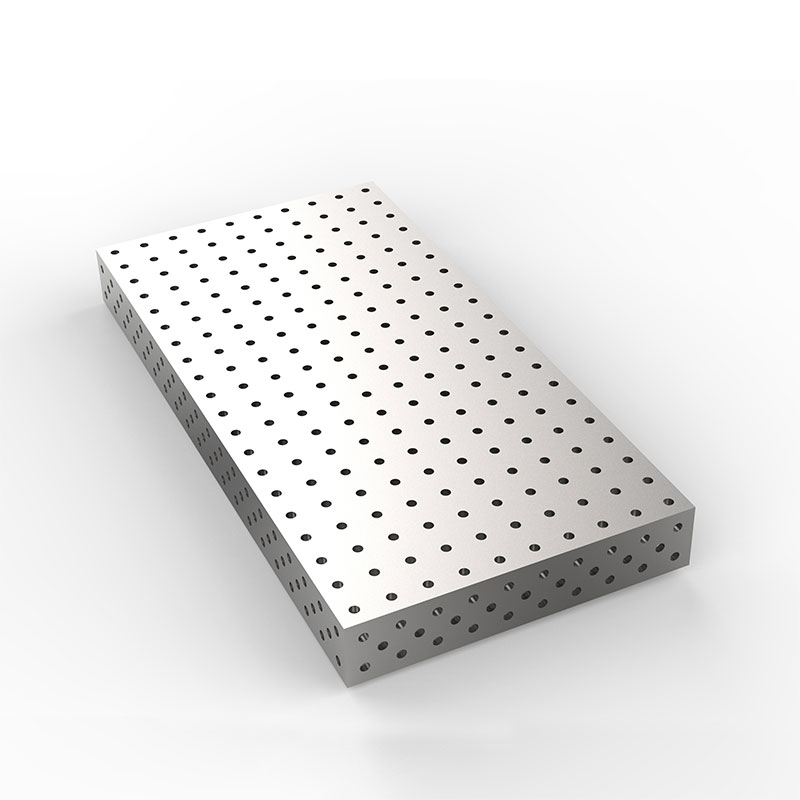
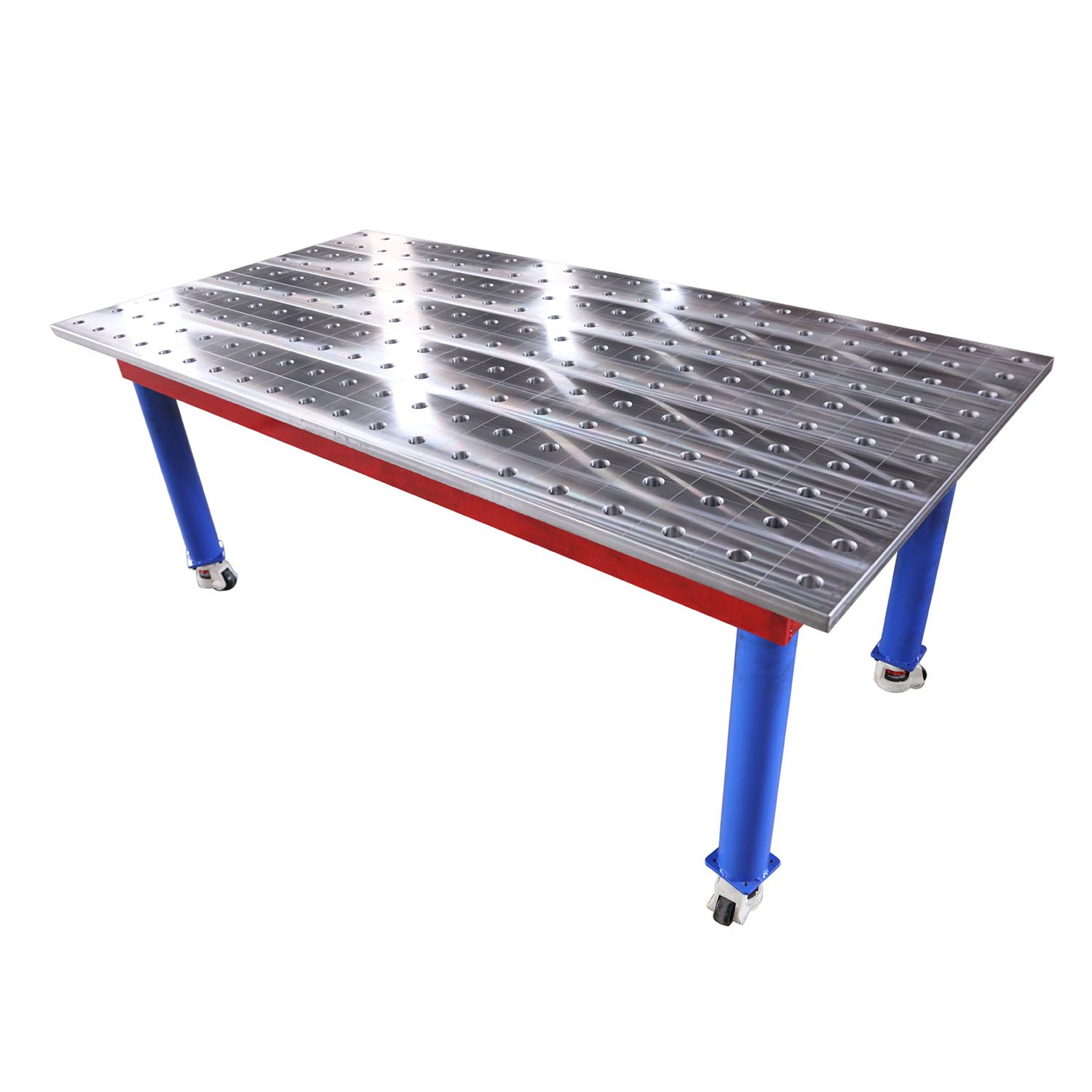
Cast iron platforms are often preferred for high-precision applications due to their excellent damping properties and resistance to deformation. Haijun Metal’s professional cast iron 3D welding platforms exemplify this approach, providing a stable foundation that maintains flatness even under heavy clamping loads. Alternatively, heavy-gauge steel frames with cross-bracing can be used, but they require careful stress-relief annealing to prevent long-term warping.
3. Thermal Distortion Management
Heat is the enemy of accuracy. As weld pools solidify, they shrink, pulling adjacent metal inward. A well-designed fixture anticipates this movement. There are two main strategies:
- Restraint: Using strong clamps to physically prevent movement. This is effective for thin sheets but can induce high residual stresses in thicker materials.
- Pre-setting: Intentionally positioning parts slightly out of alignment so that when they shrink, they pull into the correct position. This requires deep experience and simulation data.
Flexible fixtures allow for a hybrid approach. By using adjustable clamps and supports, operators can fine-tune the restraint level based on real-time observations of weld behavior, a flexibility that hard-tooled fixtures cannot offer.
Designing for Repeatability and Ease of Use
An accurate fixture is useless if it is difficult to load or if it wears out quickly. Design for Manufacturability (DFM) principles apply to fixture design as well. The goal is to minimize operator error and maintenance downtime.
Rapid Clamping and Positioning
Time spent loading a part is non-value-added time. However, rushing the loading process often leads to misalignment. The solution lies in intuitive, self-centering, or fool-proof (Poka-Yoke) clamping mechanisms.
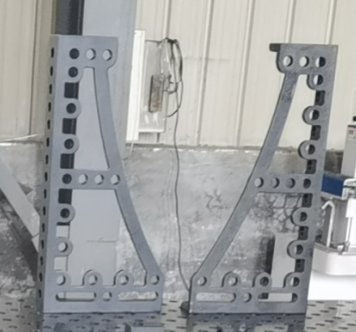
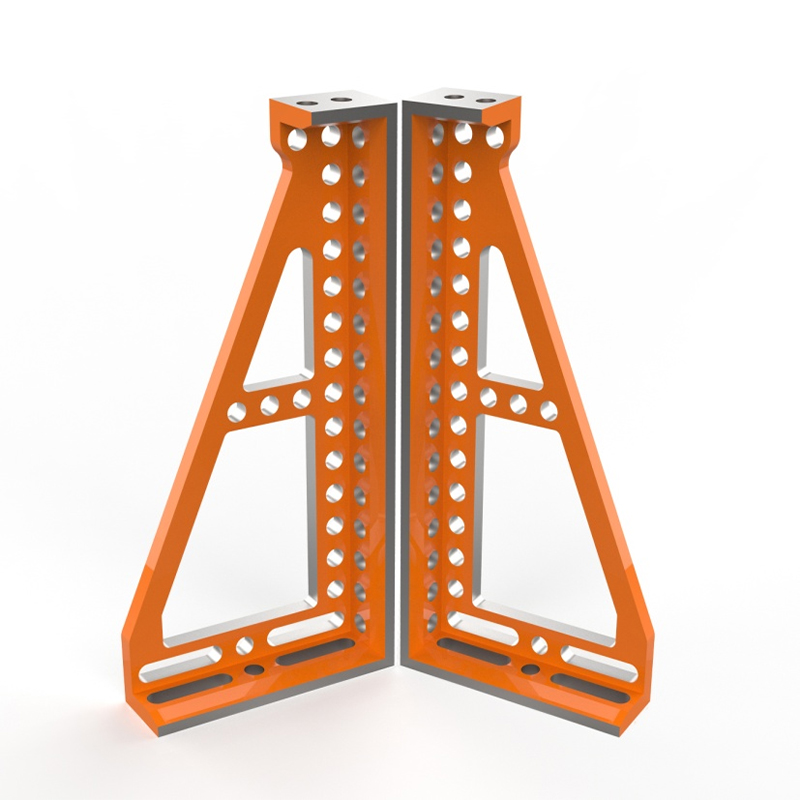
Components such as U-shaped and L-shaped multi-purpose square boxes and 200-series support angle irons play a crucial role here. These accessories integrate seamlessly with modular platforms, allowing for quick setup. For instance, a U-square box can serve as both a locator and a clamp base, reducing the number of separate components needed. This integration ensures that the part seats correctly every time, reducing the cognitive load on the operator and enhancing consistency.
Accessibility for Welding Guns
A common design flaw is obstructing the welding torch. If the welder cannot reach the joint at the correct angle, weld quality suffers, regardless of how accurately the part is held. Designers must simulate the welding path during the fixture design phase.
Modular systems excel in this area. Because components like angle connection blocks and supports can be moved or removed, engineers can create “windows” in the fixture specifically for torch access. This adaptability ensures that the fixture supports the part without interfering with the process, a balance that is difficult to achieve with static, welded-hard fixtures.
Comparison: Hard Fixtures vs. Flexible Modular Systems
Choosing the right type of fixture is a strategic decision. Below is a comparison to help engineers decide which approach best suits their accuracy and production needs.
| Feature | Hard (Dedicated) Fixtures | Flexible Modular Fixtures |
| Initial Cost | High (Custom fabrication) | Moderate (Standard components) |
| Lead Time | Long (Weeks to months) | Short (Days to weeks) |
| Accuracy | Very High (for single part) | High (depends on setup skill) |
| Versatility | Low (Single part only) | High (Multiple parts) |
| Storage | Requires large space | Compact storage |
| Best For | Mass production, unchanged designs | High-mix, low-volume, R&D |
For industries like automotive prototyping or aerospace component manufacturing, where designs change frequently, flexible modular fixtures are the superior choice. They provide the necessary accuracy without the prohibitive cost and lead time of custom hard tooling. Haijun Metal’s product line, including their 0-225° universal angle gauges, supports this versatility, allowing for precise angular positioning that adapts to complex geometries.
Common Mistakes in Welding Fixture Design
Even experienced engineers can fall into traps that compromise accuracy. Avoiding these common pitfalls is essential for successful fixture implementation.
Over-Constraining the Workpiece
Adding too many clamps or locators can restrict the natural thermal expansion of the part. When the part heats up, it has nowhere to go, leading to buckling or excessive residual stress. Always allow for thermal growth in the direction away from the primary datum.
Ignoring Weld Spatter Protection
Weld spatter can accumulate on locating pins and surfaces, gradually shifting the part’s position over time. This leads to a slow drift in accuracy. Designers should incorporate spatter shields, use anti-spatter coatings, or design locators that are easy to clean. Modular components made from hardened steel, such as those in Haijun’s accessory range, offer better resistance to spatter adhesion and wear.
Poor Material Selection
Using mild steel for locating pins that undergo frequent friction will lead to rapid wear. Locating surfaces should be hardened or made from wear-resistant materials. Similarly, the base platform must be stable; lightweight aluminum frames may vibrate excessively during robotic welding, compromising accuracy.
Step-by-Step Guide to Designing an Accurate Fixture
Follow this logical workflow to ensure your welding fixture meets precision requirements.
- Analyze the Part Geometry: Identify the critical dimensions and tolerances from the CAD model. Determine the primary, secondary, and tertiary datums.
- Select the Base Platform: Choose a platform size and material that supports the part’s weight and size. For high precision, consider a cast iron 3D table with a grid of holes for modular attachment.
- Apply the 3-2-1 Rule: Place primary locators on the largest surface. Add secondary and tertiary locators to constrain remaining degrees of freedom. Ensure locators are accessible for cleaning.
- Design Clamping Strategy: Position clamps close to the weld zones to minimize distortion, but ensure they do not obstruct the torch. Use toggle clamps or pneumatic clamps for speed and consistency.
- Simulate and Verify: Use software to check for collisions between the torch, the fixture, and the part. If possible, perform a dry run with physical components.
- Iterate with Modular Components: Utilize standard accessories like support angle irons and square boxes to refine the setup. This allows for quick adjustments if the initial design does not yield the desired accuracy.
Enhancing Accuracy with Advanced Accessories
The accuracy of a fixture is only as good as its weakest component. Integrating high-quality accessories is paramount. Botou Haijun Metal Products Co., Ltd. provides a comprehensive ecosystem of tools that enhance the precision of their flexible platforms.
For example, the 0-225° universal angle gauge allows for precise angular positioning of complex parts, eliminating the need for custom-machined wedges. This level of adjustability ensures that even irregularly shaped components can be held securely and accurately. Furthermore, the 200-series support angle irons provide robust vertical support, preventing sagging in long or thin workpieces.
These components are designed to work in harmony. The standardized hole patterns and tight tolerances mean that once a setup is proven, it can be replicated with confidence. This modularity not only speeds up the design process but also ensures that the accuracy achieved in the design phase is maintained in production.
Frequently Asked Questions (FAQ)
What is the acceptable tolerance for welding fixtures?
Generally, welding fixtures should be built to a tolerance of ±0.1mm to ±0.2mm, which is tighter than the typical weldment tolerance of ±0.5mm to ±1.0mm. This ensures that the fixture error does not consume the entire allowable tolerance budget of the final product.
How often should welding fixtures be calibrated?
Calibration frequency depends on usage intensity. For high-volume production, monthly checks are recommended. For low-volume or flexible setups, calibration should occur after every major reconfiguration or if quality issues arise. Regular maintenance of locating pins and clamps is essential.
Can flexible fixtures achieve the same accuracy as hard fixtures?
Yes, modern high-precision flexible fixtures, such as those using cast iron bases and hardened modular components, can achieve accuracies comparable to hard fixtures. The key is proper setup technique and the use of high-quality, repeatable components.
Why is cast iron preferred for high-precision welding tables?
Cast iron has superior vibration damping characteristics compared to steel. It absorbs the energy from welding arcs and robotic movements, preventing resonance that can affect weld quality. It is also less prone to warping over time, ensuring long-term flatness and accuracy.
Conclusion: Investing in Precision for Long-Term Efficiency
Accurate welding fixture design is not just about holding parts together; it is about controlling the physics of welding to produce consistent, high-quality assemblies. By adhering to the 3-2-1 locating principle, managing thermal distortion, and utilizing rigid, well-designed structures, manufacturers can significantly reduce scrap rates and improve throughput.
The shift towards flexible modular systems offers a compelling advantage for modern manufacturing. It combines the precision required for critical applications with the agility needed for diverse product mixes. Botou Haijun Metal Products Co., Ltd. stands at the forefront of this transition, offering robust solutions like 2D/3D flexible platforms and precision accessories that empower engineers to design faster, produce better, and adapt quicker.
Whether you are in the automotive, aerospace, or general machining industry, the right fixturing strategy is a competitive advantage. Evaluate your current processes, consider the benefits of modularity, and ensure your tools are up to the task.
Ready to optimize your welding production? Explore our range of high-precision flexible welding platforms and accessories to find the perfect fit for your manufacturing needs.
View Our Welding Fixture Solutions