Motorcycle aluminum castings are precision-engineered structural and aesthetic components manufactured through high-pressure die casting (HPDC), gravity casting, or low-pressure casting processes. These parts replace heavier steel or iron equivalents to reduce overall vehicle weight, improve fuel efficiency, and enhance handling dynamics. As a specialized manufacturer, we produce critical components including engine crankcases, cylinder heads, wheel hubs, swingarms, and brake caliper bodies using advanced A380, ADC12, and AlSi12 alloys. Our production integrates CNC machining, T4/T6 heat treatment, and rigorous quality control to meet ISO 9001 and IATF 16949 automotive standards, ensuring dimensional accuracy, thermal stability, and durability for modern two-wheeled vehicles.
Why Aluminum Castings Are Critical for Modern Motorcycle Engineering
The shift toward lightweight mobility has made motorcycle aluminum castings a cornerstone of contemporary bike design. In 2026, the demand for high-performance motorcycles, electric scooters, and off-road bikes drives manufacturers to seek materials that offer an optimal strength-to-weight ratio. Aluminum alloys provide this balance, allowing engineers to design complex geometries that would be impossible or prohibitively expensive with stamped steel or forged iron.
Weight Reduction and Performance Dynamics
Reducing unsprung mass is a primary goal in motorcycle suspension design. Aluminum castings for wheels, swingarms, and brake components significantly lower the rotational inertia. This results in:
- Faster Acceleration: Less energy is required to rotate the wheels, improving throttle response.
- Improved Handling: Lighter front-end components allow for quicker steering inputs and better maneuverability in corners.
- Enhanced Braking: Reduced mass means less kinetic energy to dissipate, reducing stopping distances and brake fade.
For electric motorcycles, weight reduction is even more critical. Every kilogram saved in the chassis or motor housing extends the battery range, addressing one of the primary consumer concerns in the EV sector. Aluminum castings enable the integration of cooling channels directly into motor housings, improving thermal management without adding external bulk.
Thermal Management in Engine Components
Aluminum possesses excellent thermal conductivity, approximately three times that of cast iron. This property is vital for engine components such as cylinder heads and crankcases. Efficient heat dissipation prevents overheating, maintains optimal operating temperatures, and ensures consistent performance under heavy loads. Modern high-revving engines rely on precisely cast aluminum water jackets and oil galleries to manage thermal stress, preventing warping and extending engine life.
Design Flexibility and Aerodynamics
Die casting allows for the creation of complex, organic shapes that enhance both aesthetics and aerodynamics. Unlike machining from solid blocks, which generates significant waste, casting forms near-net-shape parts. This capability enables designers to integrate mounting points, cable guides, and structural ribs directly into the component, reducing assembly time and part count. The smooth surface finish achievable with modern mold technologies also reduces the need for extensive post-processing, supporting streamlined production workflows.
Core Manufacturing Processes for Motorcycle Aluminum Parts
Selecting the right casting method is essential for achieving the desired mechanical properties and surface quality. We utilize three primary techniques tailored to specific motorcycle component requirements.
High-Pressure Die Casting (HPDC)
HPDC is the dominant process for producing high-volume, complex motorcycle parts. Molten aluminum is injected into a steel mold at high pressure and speed. This method is ideal for:
- Thin-walled structures: Such as engine covers and transmission cases.
- High dimensional accuracy: Reducing the need for secondary machining.
- Smooth surface finishes: Essential for visible parts like footpeg brackets or handlebar clamps.
Our HPDC lines utilize vacuum-assisted systems to minimize porosity, a common defect in traditional die casting. By removing air from the mold cavity before injection, we achieve denser, stronger castings suitable for structural applications.
Gravity and Low-Pressure Casting
For components requiring higher mechanical integrity and ductility, such as wheels and swingarms, gravity or low-pressure casting is preferred. These processes involve slower filling speeds, which reduce turbulence and gas entrapment. The resulting microstructure is more uniform, offering better fatigue resistance. This is crucial for parts subjected to cyclic loading and vibration during operation.
Squeeze Casting and Semi-Solid Molding
Advanced applications may employ squeeze casting, where pressure is applied during solidification. This further refines the grain structure and eliminates shrinkage cavities. While more expensive, this method produces parts with mechanical properties approaching those of forgings, making it suitable for high-stress areas like triple clamps or rearset mounts in performance bikes.
Key Aluminum Alloys Used in Motorcycle Casting
The choice of alloy determines the performance characteristics of the final part. We primarily work with Al-Si (Aluminum-Silicon) and Al-Si-Cu (Aluminum-Silicon-Copper) series alloys, selected for their castability and mechanical strength.
| Alloy Grade | Key Characteristics | Typical Applications |
| A380 (ADC12) | Excellent fluidity, good strength, moderate corrosion resistance. Most common die-casting alloy. | Engine crankcases, transmission housings, clutch covers, general brackets. |
| A356 (AlSi7Mg) | High ductility, excellent fatigue resistance, suitable for T6 heat treatment. | Wheels, swingarms, triple clamps, structural frame nodes. |
| AlSi12CuNiMg | High thermal stability, retains strength at elevated temperatures. | Cylinder heads, piston skirts, high-performance engine blocks. |
| ADC10 | Better mechanical properties than ADC12, slightly lower fluidity. | Brake caliper bodies, shock absorber housings. |
Importance of Heat Treatment
Raw castings often undergo heat treatment to enhance their mechanical properties. The T5 and T6 tempers are most common in the motorcycle industry:
- T5 Temper: Cooled from an elevated temperature shaping process and artificially aged. Provides increased strength and hardness.
- T6 Temper: Solution heat-treated and artificially aged. Offers the highest combination of tensile strength and yield strength, essential for safety-critical components like wheels and suspension links.
Proper heat treatment relieves internal stresses generated during casting and machining, ensuring dimensional stability over the lifecycle of the motorcycle.
Common Motorcycle Components Produced via Aluminum Casting
Our manufacturing capabilities cover a wide range of motorcycle systems. Each component requires specific engineering considerations regarding load paths, thermal exposure, and aesthetic finish.
Engine and Powertrain Components
The engine is the heart of the motorcycle, and aluminum castings play a pivotal role in its construction.
- Crankcases: These house the crankshaft and transmission gears. They must withstand significant torsional forces and vibration. Precision bearing bores are machined post-casting to ensure smooth rotation.
- Cylinder Heads: Complex internal passages for coolant and oil require high-precision core printing during casting. Thermal conductivity is critical here to prevent detonation.
- Clutch and Magneto Covers: While less structurally critical, these parts require tight tolerances for sealing and often feature intricate cosmetic details.
Chassis and Suspension Parts
Structural integrity is paramount in chassis components. Failure here can lead to catastrophic accidents.
- Swingarms: Typically made from A356 alloy via gravity casting. They connect the rear wheel to the frame and must resist bending and twisting forces during acceleration and braking.
- Triple Clamps (Yokes): These hold the front forks and connect to the steering head. Rigidity is essential for precise steering feedback. CNC machining after casting ensures perfect alignment of fork tubes.
- Wheel Hubs: The central part of the wheel that houses the bearings. Must be perfectly balanced and strong enough to support radial and axial loads.
Braking and Control Systems
Safety components demand high reliability and consistent performance.
- Brake Caliper Bodies: Must resist expansion under high hydraulic pressure. Stiffness ensures efficient transfer of force to the brake pads.
- Master Cylinder Bodies: Require smooth internal bores for piston movement. Leak-proof integrity is non-negotiable.
- Handlebar Controls: Levers, perches, and clamp assemblies are often die-cast for ergonomic shaping and durability.
Quality Control and Industry Standards
In the motorcycle industry, component failure is not an option. Our quality assurance protocol adheres to strict international standards, ensuring every casting meets specifications.
IATF 16949 and ISO 9001 Compliance
We operate under the IATF 16949 automotive quality management system. This standard emphasizes defect prevention and reduction of variation in the supply chain. Key elements include:
- Advanced Product Quality Planning (APQP): Structured method to define and establish steps necessary to ensure a product satisfies the customer.
- Production Part Approval Process (PPAP): Evidence that all customer engineering design record and specification requirements are properly understood and fulfilled.
- Failure Mode and Effects Analysis (FMEA): Proactive identification of potential failure modes and their causes.
Non-Destructive Testing (NDT)
To detect internal defects without damaging the part, we employ several NDT methods:
- X-Ray Inspection: Reveals internal porosity, shrinkage, and inclusions. Critical for safety parts like wheels and brake components.
- Dye Penetrant Testing: Identifies surface-breaking cracks and leaks. Essential for pressure-tight components like engine cases.
- Leak Testing: Air or water pressure tests ensure that fluid-containing parts (e.g., coolant passages) are sealed.
Dimensional Verification with CMM
Coordinate Measuring Machines (CMM) verify critical dimensions against CAD models. This ensures that mating parts fit correctly during assembly. First-article inspection (FAI) is conducted for every new mold, and statistical process control (SPC) monitors production runs to detect drifts in tolerance.
Surface Finishing Options for Aluminum Castings
Raw aluminum castings have a matte, slightly rough surface. For motorcycle applications, finishing serves both protective and aesthetic purposes.
Powder Coating
Powder coating provides a durable, scratch-resistant layer available in various colors and textures. It offers excellent corrosion resistance and is commonly used for engine cases, swingarms, and wheel hubs. The process involves electrostatic application of dry powder followed by curing in an oven.
Anodizing
Anodizing is an electrochemical process that thickens the natural oxide layer on the aluminum surface. Type II anodizing provides moderate corrosion resistance and allows for dyeing in vibrant colors (red, blue, gold), popular for custom motorcycle parts. Type III (Hard Anodizing) offers superior wear resistance, suitable for moving parts like shift levers or brake pedals.
Shot Blasting and Polishing
Shot blasting cleans the surface and creates a uniform matte texture, hiding minor casting marks. For high-end custom bikes, polished aluminum provides a mirror-like finish. This requires extensive manual labor or automated polishing wheels to remove tool marks and achieve a reflective surface, often protected by a clear coat to prevent oxidation.
E-Coating (Electrophoretic Deposition)
E-coating is often used as a primer before painting. It provides excellent coverage, even in recessed areas and complex geometries, ensuring comprehensive corrosion protection. This is particularly useful for internal engine components or hidden chassis parts.
How to Choose the Right Manufacturer for Motorcycle Aluminum Castings
Selecting a supplier involves evaluating technical capability, quality systems, and communication efficiency. Here are key factors to consider when partnering with a casting manufacturer.
Technical Expertise and Tooling Capability
Does the manufacturer have in-house mold design and fabrication capabilities? High-quality molds are the foundation of good castings. Look for suppliers who use simulation software (like MAGMA or Flow-3D) to predict filling patterns and potential defects before cutting steel. This reduces trial-and-error cycles and accelerates time-to-market.
Material Traceability
Ensure the supplier provides material certificates for every batch. Traceability allows you to verify the chemical composition of the aluminum alloy. In case of field failures, being able to trace the material back to its source is crucial for root cause analysis.
Production Capacity and Lead Times
Assess whether the supplier can handle your volume requirements. For prototype phases, quick-turnaround sampling is vital. For mass production, consistent cycle times and inventory management capabilities are necessary to prevent supply chain disruptions. Ask about their contingency plans for machine downtime or raw material shortages.
Communication and Engineering Support
A good supplier acts as a partner, not just a vendor. They should offer Design for Manufacturability (DFM) feedback early in the development process. Suggestions to modify wall thicknesses, add draft angles, or relocate gates can significantly reduce costs and improve quality. Responsive communication channels and transparent project management are indicators of a reliable partnership.
Common Challenges in Aluminum Casting and Solutions
Understanding potential issues helps in setting realistic expectations and collaborating effectively on solutions.
Porosity
Issue: Small voids or holes within the casting caused by trapped gas or shrinkage.
Solution: Optimize gating system design, use vacuum assistance in die casting, and control melting parameters to reduce hydrogen absorption. X-ray inspection helps identify affected parts.
Hot Tearing
Issue: Cracks formed during solidification due to thermal stress.
Solution: Modify part geometry to ensure uniform cooling, adjust alloy composition for better hot strength, and optimize ejection timing.
Dimensional Instability
Issue: Parts warping or changing size after machining or over time.
Solution: Implement proper stress-relief heat treatment, ensure adequate aging time, and use stable fixturing during machining operations.
Surface Defects
Issue: Flow marks, cold shuts, or blistering.
Solution: Adjust injection speed and pressure, maintain mold temperature within specified ranges, and ensure proper lubrication release agents are used.
FAQ: Frequently Asked Questions About Motorcycle Aluminum Castings
What is the difference between die-cast and forged aluminum motorcycle parts?
Die-cast parts are formed by injecting molten aluminum into a mold, allowing for complex shapes and lower costs at high volumes. Forged parts are shaped by compressing solid aluminum billet, resulting in superior grain structure and strength. Forging is typically used for high-stress components like premium wheels or connecting rods, while die casting is standard for engine cases and brackets.
Can aluminum castings be welded if they crack?
Yes, but it depends on the alloy and the location of the crack. A356 and A380 alloys are weldable using TIG or MIG processes with appropriate filler wires. However, welding can alter the heat treatment temper and create weak points. For structural safety parts like frames or swingarms, replacement is often recommended over repair.
How long do aluminum motorcycle castings last?
With proper maintenance and protection against corrosion, aluminum castings can last the lifetime of the motorcycle. Aluminum naturally forms a protective oxide layer. However, exposure to road salt and harsh chemicals can accelerate corrosion if the surface finish is compromised. Regular cleaning and inspection are advised.
Is aluminum casting environmentally friendly?
Aluminum is highly recyclable, requiring only 5% of the energy needed to produce primary aluminum. Scrap from casting processes and end-of-life parts can be melted down and reused indefinitely without loss of quality. This makes aluminum castings a sustainable choice for modern manufacturing.
What is the typical lead time for new motorcycle casting molds?
Mold design and fabrication typically take 4 to 8 weeks, depending on complexity. Sample production and validation may add another 2 to 4 weeks. Once approved, mass production cycles are fast, with high-pressure die casting capable of producing thousands of parts per day.
Comparison: Aluminum Castings vs. Alternative Materials
| Feature | Aluminum Casting | Magnesium Casting | Steel Stamping/Welding |
| Weight | Light (2.7 g/cm³) | Very Light (1.74 g/cm³) | Heavy (7.85 g/cm³) |
| Strength | High | Moderate | Very High |
| Cost | Moderate | High | Low to Moderate |
| Corrosion Resistance | Good | Poor (requires coating) | Poor (requires coating) |
| Design Complexity | High | High | Low |
| Thermal Conductivity | Excellent | Good | Poor |
While magnesium offers further weight savings, it is more expensive and prone to corrosion. Steel remains cost-effective for simple structural frames but lacks the design flexibility and thermal benefits of aluminum. Aluminum casting strikes the best balance for most motorcycle applications.
Future Trends in Motorcycle Aluminum Casting Technology
As we move further into 2026, several trends are shaping the future of motorcycle component manufacturing.
Integration of Electric Vehicle Requirements
Electric motorcycles require unique casting solutions. Motor housings now integrate cooling fins and mounting points for inverters and batteries. Single-piece large castings (Giga-casting concept adapted for bikes) are emerging to reduce assembly complexity and weight in electric platforms.
Advanced Simulation and AI Optimization
Artificial Intelligence is being used to optimize mold designs and process parameters. Machine learning algorithms analyze historical casting data to predict defects and suggest real-time adjustments to pressure and temperature settings, improving yield rates and consistency.
Sustainable Manufacturing Practices
Manufacturers are increasingly focusing on carbon footprint reduction. This includes using renewable energy for melting furnaces, optimizing logistics to reduce transportation emissions, and developing closed-loop recycling systems within the factory to minimize waste.
About Botou Haijun Metal Products Co., Ltd.
At Botou Haijun Metal Products Co., Ltd., our expertise extends beyond casting to encompass the critical realm of precision manufacturing tooling. Specializing in the research, development, and production of high-precision flexible modular fixtures and metalworking tools, we are committed to providing efficient and flexible welding and positioning solutions for the modern manufacturing industry.
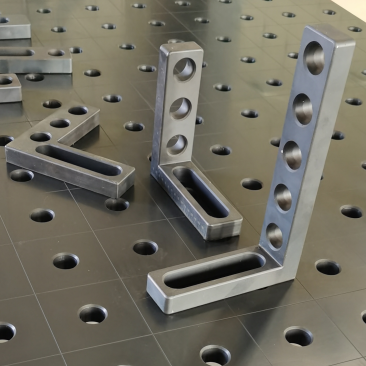
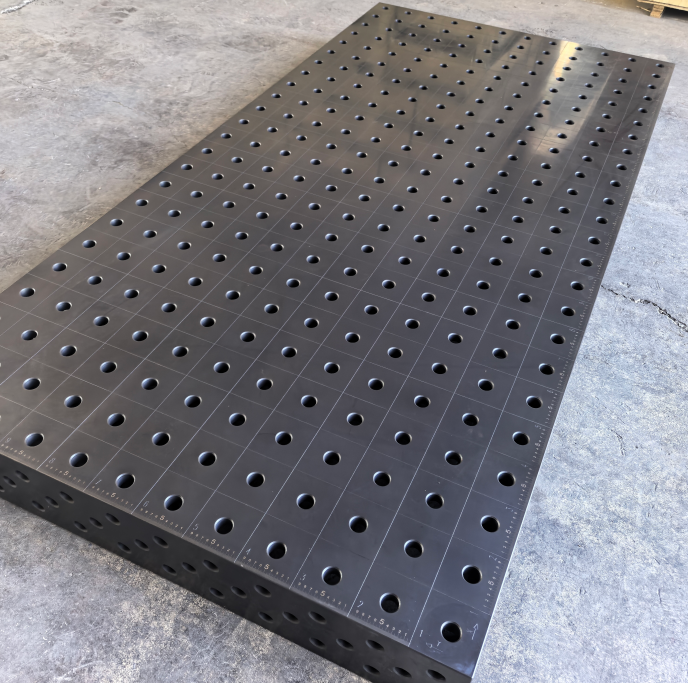
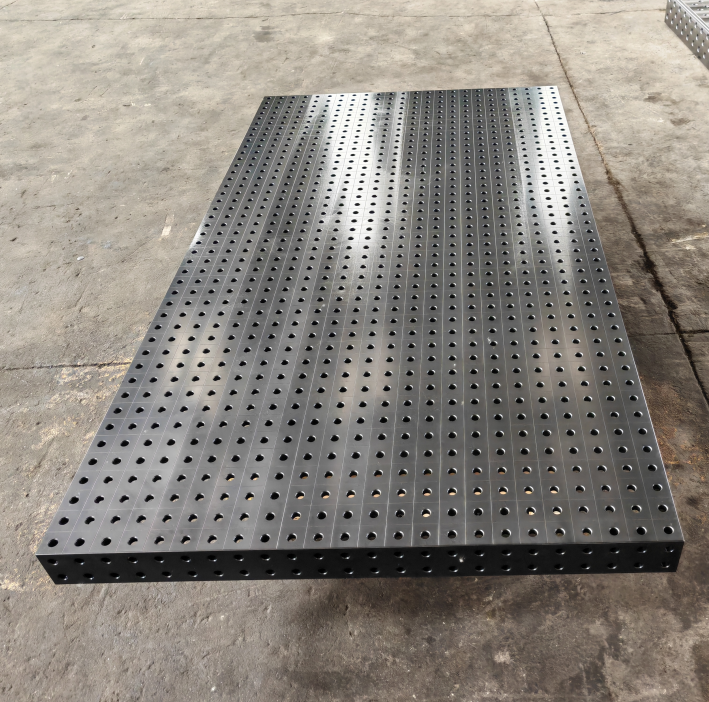
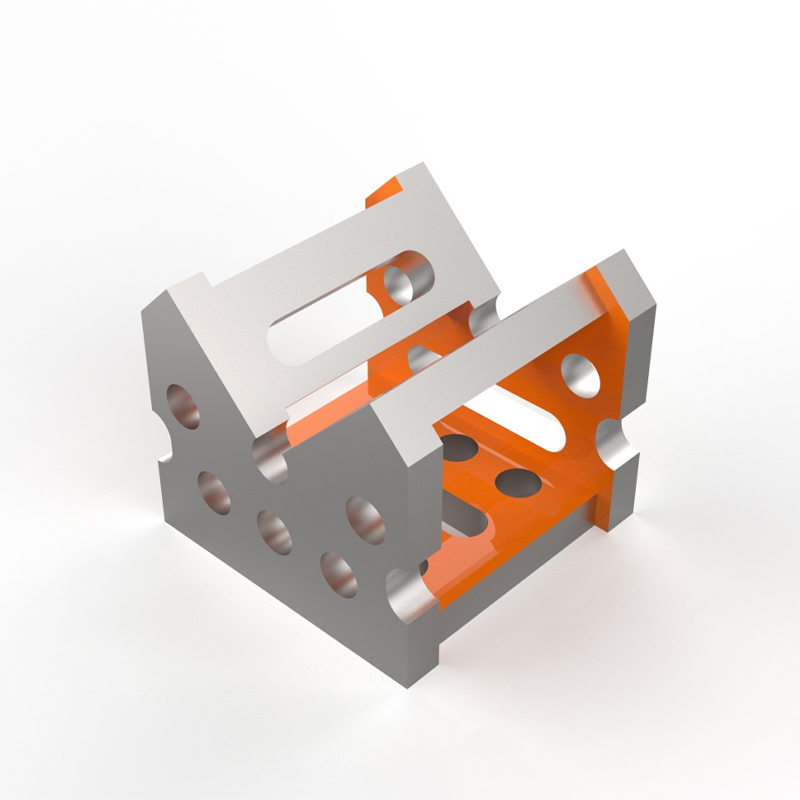
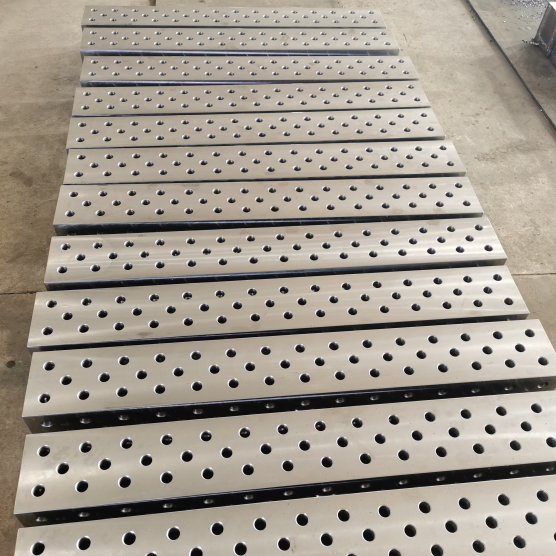
Our core product line features renowned 2D and 3D flexible welding platforms, which have become the preferred jigging equipment in the machining, automotive, and aerospace industries due to their exceptional versatility and precision. To complement these platforms, we offer a comprehensive range of accessories, including U-shaped and L-shaped multi-purpose square boxes, 200-series support angle irons, and 0-225° universal angle gauges. These components integrate seamlessly to enable rapid workpiece positioning and clamping. Additionally, we manufacture professional cast iron 3D welding platforms and angle connection blocks, ensuring that every product delivers exceptional durability and stability. With years of industry experience, Haijun Metal has become a trusted supplier of tools and gauges to customers both domestically and internationally, continuously providing high-quality production machinery tool series that support the rigorous demands of automotive and motorcycle component manufacturing.
Conclusion: Partnering for Precision and Performance
Choosing the right motorcycle aluminum castings manufacturer is a strategic decision that impacts product quality, performance, and brand reputation. Our commitment to advanced manufacturing technologies, rigorous quality control, and engineering expertise ensures that every component meets the demanding standards of the modern motorcycle industry. Whether you are developing high-performance sportbikes, rugged off-road machines, or efficient electric scooters, our casting solutions provide the lightweight strength and precision required for success.
We understand the nuances of alloy selection, mold design, and surface finishing that differentiate a good part from a great one. By leveraging our experience and capabilities, you can accelerate your product development cycle and deliver superior value to your customers.
Ready to optimize your motorcycle components?
Contact our engineering team today to discuss your specific project requirements. We offer comprehensive DFM analysis, rapid prototyping, and scalable mass production services tailored to your needs.
Explore our full range of motorcycle casting solutions and request a quote