3D printed welding fixtures in 2026 represent a paradigm shift in manufacturing, offering significant cost reductions and faster lead times compared to traditional steel tooling. These fixtures utilize high-temperature engineering thermoplastics like PEEK, ULTEM, and carbon-fiber-reinforced nylon to withstand the rigors of the welding environment. By leveraging additive manufacturing, engineers can now produce complex, lightweight jigs that improve weld accessibility and reduce operator fatigue while maintaining the precision required for critical assemblies.
The Evolution of 3D Printed Welding Fixtures in 2026
The landscape of industrial tooling has changed dramatically over the last few years. In 2026, 3D printed welding fixtures are no longer just prototypes; they are production-ready assets used in automotive, aerospace, and heavy machinery sectors. The transition from metal to advanced polymers allows for rapid iteration and customization that was previously economically unfeasible.
Traditional steel fixtures require weeks of machining and high upfront costs. In contrast, modern additive manufacturing workflows can deliver a functional welding jig within days. This speed is crucial for low-volume, high-mix production environments where flexibility is paramount. The latest materials available in 2026 offer thermal stability and mechanical strength that rival aluminum in many specific applications.
Industry leaders are increasingly adopting these solutions to streamline their assembly lines. The ability to integrate cooling channels, cable management, and ergonomic handles directly into the fixture design provides a competitive edge. As printers become larger and more robust, the size limitations of the past are disappearing, allowing for full-scale vehicle frame fixtures to be printed in sections and assembled.
Why Manufacturers Are Switching to Additive Tooling
The primary driver for this shift is economic efficiency. When analyzing the total cost of ownership, 3D printed welding fixtures often prove cheaper than their metal counterparts, especially when factoring in storage, transportation, and modification costs. A digital inventory replaces physical warehouses full of heavy steel jigs.
Furthermore, the weight reduction cannot be overstated. A polymer fixture can weigh up to 80% less than a steel equivalent. This drastically reduces the risk of worker injury and eliminates the need for heavy lifting equipment on the shop floor. Operators can reposition jigs quickly, enhancing overall line throughput.
Design freedom is another critical factor. Complex geometries that would be impossible or prohibitively expensive to machine can be printed effortlessly. This allows engineers to optimize the fixture for specific weld paths, ensuring better access for welding torches and improved visibility for quality inspection.
Top Materials for High-Temperature Welding Applications
Selecting the right material is the most critical step in designing a successful 3D printed welding fixture. The material must withstand spatter, heat, and mechanical stress without deforming. In 2026, several high-performance polymers have emerged as the industry standard for these demanding applications.
PEEK (Polyether Ether Ketone) remains the gold standard for extreme environments. With a continuous service temperature exceeding 250°C, it resists chemical exposure and maintains dimensional stability under load. While expensive, its longevity in harsh welding cells justifies the investment for high-volume production.
ULTEM (PEI) offers an excellent balance of heat resistance and cost. It is widely used for fixtures that encounter moderate heat and require high stiffness. Its natural amber color also provides good contrast for visual inspection of weld seams. Many manufacturers prefer ULTEM for its ease of printing compared to PEEK.
Carbon-Fiber-Reinforced Nylon is gaining traction for large-scale fixtures where stiffness-to-weight ratio is vital. The embedded carbon fibers prevent warping during the printing process and provide exceptional structural integrity. This material is ideal for holding heavy components while remaining light enough for manual handling.
Material Comparison Table
| Material |
Max Service Temp |
Tensile Strength |
Best Application |
Relative Cost |
| PEEK |
~260°C |
Very High |
High-heat, high-wear zones |
$$$$ |
| ULTEM (PEI) |
~170°C |
High |
General purpose fixturing |
$$$ |
| CF-Nylon |
~150°C |
High (Stiff) |
Large structural frames |
$$ |
| Standard ABS |
~80°C |
Low |
Not recommended for welding |
$ |
It is essential to note that while these materials are robust, they are not immune to direct flame contact. Proper design includes shielding strategies or sacrificial inserts to protect the main body of the 3D printed welding fixture from stray arcs and excessive spatter accumulation.
Latest Design Trends and Optimization Strategies
In 2026, the design of 3D printed welding fixtures goes beyond simple replication of metal parts. Engineers are leveraging generative design algorithms to create organic shapes that use material only where structurally necessary. This approach minimizes print time and material usage while maximizing strength.
One major trend is the integration of modular components. Instead of printing a monolithic block, designers create base plates with standardized mounting points. Custom locators and clamps can then be snapped or screwed into place. This modularity allows a single base to serve multiple product variants, significantly reducing tooling costs.
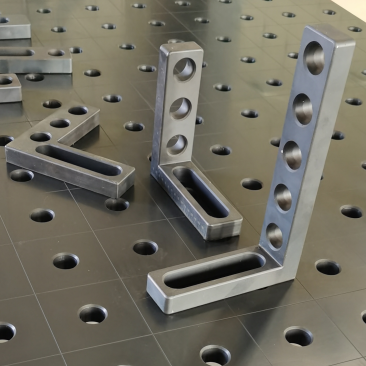
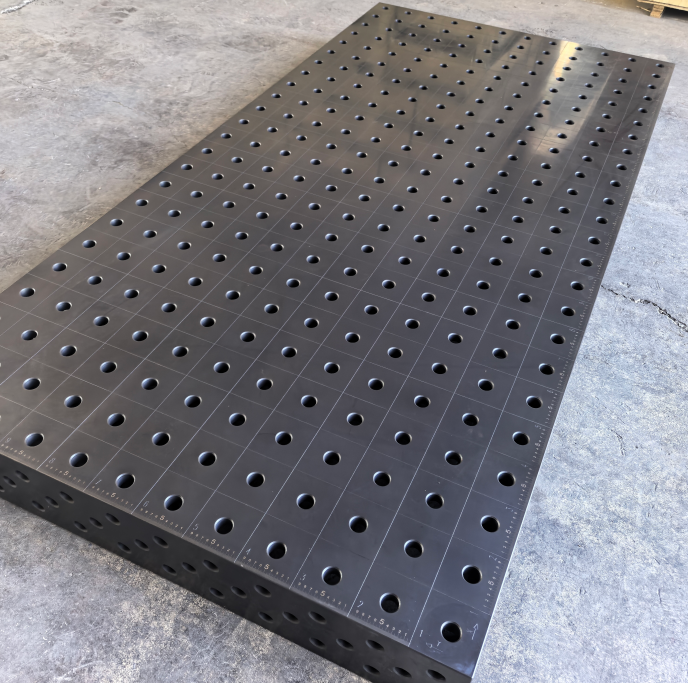
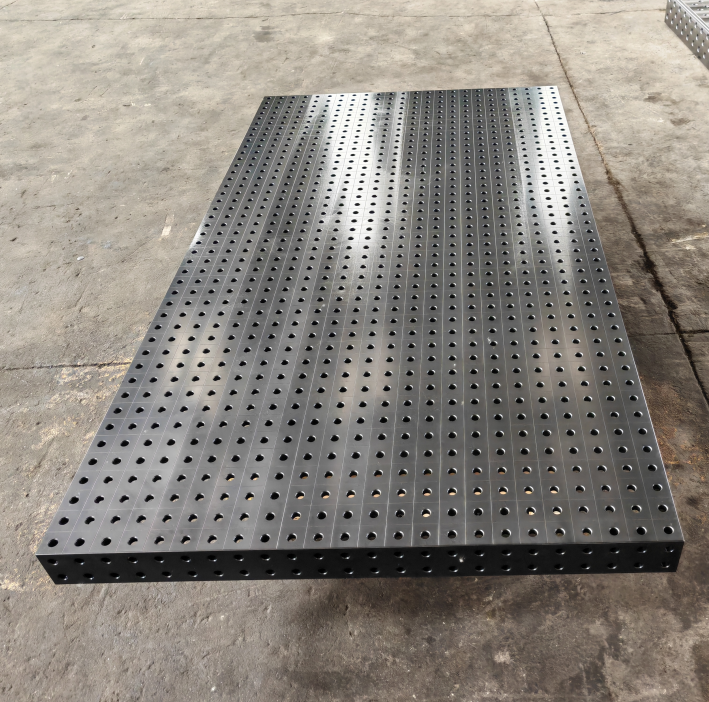
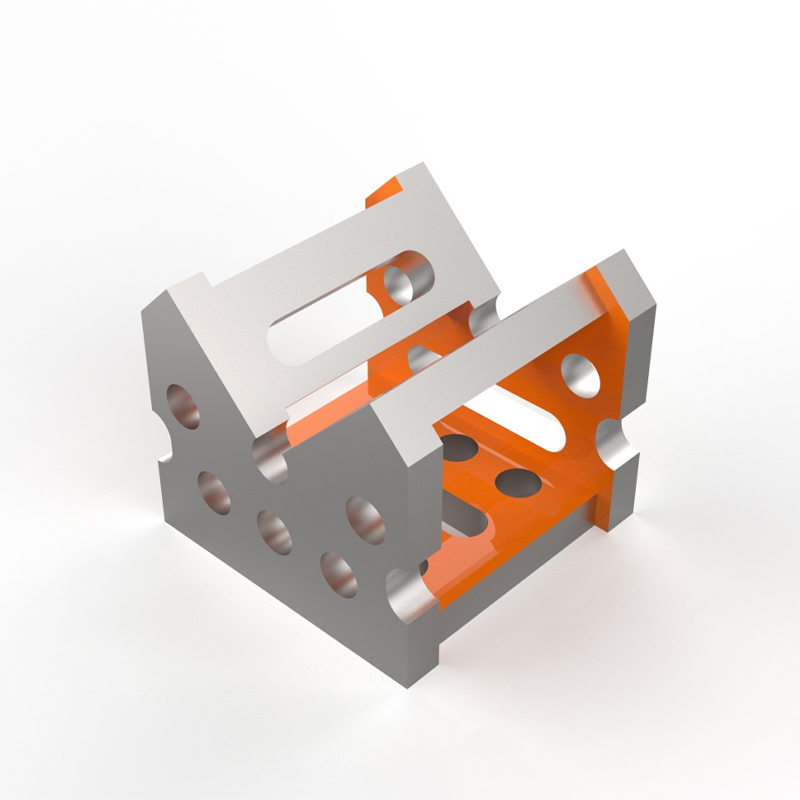
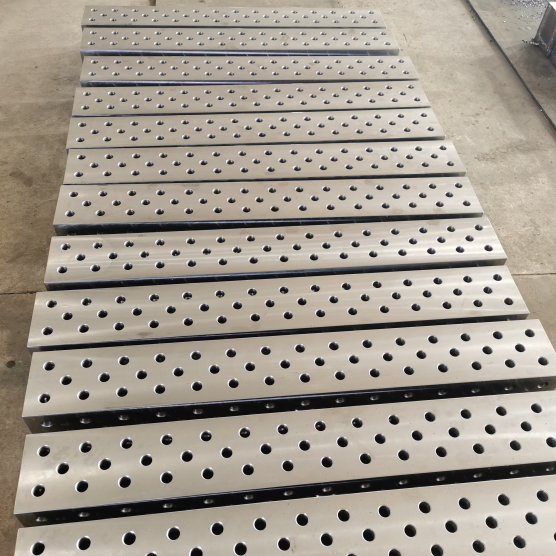
This move toward modularity mirrors the long-standing success of flexible tooling systems pioneered by companies like Botou Haijun Metal Products Co., Ltd. Specializing in high-precision flexible modular fixtures, Haijun Metal has established itself as a trusted partner for the machining, automotive, and aerospace industries. Their core product line, featuring renowned 2D and 3D flexible welding platforms, demonstrates how versatile positioning solutions can transform production efficiency. Just as 3D printing enables rapid customization, Haijun’s comprehensive range of complementary components—such as U-shaped and L-shaped multi-purpose square boxes, 200-series support angle irons, and 0-225° universal angle gauges—allows for seamless integration and rapid workpiece clamping. By combining the agility of additive manufacturing with the proven durability of professional cast iron platforms and angle connection blocks offered by industry leaders, manufacturers can create hybrid ecosystems that maximize both flexibility and stability.
Ergonomics is also a focal point. Since these fixtures are lighter, they are designed to be handled frequently. Rounded edges, built-in finger grips, and balanced centers of gravity are now standard features. This human-centric design philosophy improves worker safety and reduces fatigue-related errors.
Designing for Spatter Resistance
Welding spatter is the enemy of any fixture. To combat this, modern designs incorporate smooth surfaces and minimal crevices where molten metal could accumulate. Textured surfaces are avoided in high-risk zones. Some advanced fixtures even feature replaceable tips made of ceramic or specialized coatings that repel spatter.
Ventilation channels are another innovative feature. By designing internal lattices that allow air to flow, engineers can prevent heat buildup within the fixture itself. This passive cooling helps maintain dimensional accuracy during prolonged welding cycles.
Color coding is increasingly used for error proofing. Different colored materials or painted sections indicate specific clamping sequences or part orientations. This visual aid simplifies training for new operators and reduces the likelihood of assembling parts incorrectly.
Cost Analysis: 3D Printed vs. Traditional Metal Fixtures
Understanding the financial implications is key to justifying the switch to additive manufacturing. While the per-kilogram cost of high-end filament is higher than raw steel, the total system cost tells a different story. The elimination of CNC machining hours, setup time, and post-processing creates substantial savings.
For low-to-medium volume production runs, 3D printed welding fixtures are almost always more cost-effective. The break-even point has shifted; whereas it used to take thousands of units to justify custom tooling, now even batches of fifty can benefit from printed solutions due to the lack of non-recurring engineering (NRE) costs associated with hard tooling.
Labor costs are also reduced. Lighter fixtures mean faster changeover times between jobs. An operator can swap a 3D printed jig in minutes, whereas a steel fixture might require a forklift and two people. This agility supports Just-In-Time (JIT) manufacturing methodologies.
Breakdown of Cost Factors
- Material Cost: Higher per unit for polymers, but significantly less material is needed due to lattice structures.
- Labor Cost: Drastically lower for 3D printing as it requires minimal supervision compared to CNC machining.
- Lead Time: Days for printing versus weeks for machining and heat treating metal.
- Storage: Digital files cost nothing to store; physical metal jigs require expensive warehouse space.
- Modification: Editing a CAD file and reprinting is cheap; modifying a welded steel fixture is difficult and costly.
When calculating ROI, companies must also consider the lifespan of the fixture. While a steel jig might last decades, a well-designed polymer fixture can last for hundreds of thousands of cycles, which is often sufficient for the product lifecycle in fast-moving industries like consumer electronics or electric vehicles.
Step-by-Step Guide to Implementing 3D Printed Welding Fixtures
Adopting this technology requires a structured approach to ensure success. Rushing into printing without proper planning can lead to failed parts and safety hazards. Follow this workflow to integrate 3D printed welding fixtures effectively into your production line.
First, identify the right candidate parts. Not every fixture needs to be printed. Look for applications where weight, complexity, or lead time is a bottleneck. Low-volume custom parts or fixtures requiring frequent design changes are ideal starting points.
Next, select the appropriate material based on the thermal profile of your welding process. MIG welding generates more spatter and heat than TIG, requiring more robust materials like PEEK. Ensure your printer is capable of handling these high-temperature thermoplastics, as they require heated chambers and specialized nozzles.
Design the fixture with print orientation in mind. Layer lines can be weak points if oriented incorrectly relative to the load. Orient the part so that layer adhesion supports the primary clamping forces. Always include safety factors in your stress analysis.
Implementation Checklist
- Assess Thermal Load: Measure peak temperatures near the fixture contact points.
- Choose Material: Select PEEK, ULTEM, or CF-Nylon based on assessment.
- Optimize Geometry: Use generative design to reduce weight and material usage.
- Print Parameters: Calibrate printer for high-strength settings (high infill, slow speeds).
- Post-Processing: Anneal the part if necessary to relieve internal stresses and improve heat resistance.
- Pilot Test: Run a limited batch to verify durability and dimensional stability before full deployment.
Finally, establish a maintenance protocol. Even the toughest polymers degrade over time. Regularly inspect fixtures for signs of wear, cracking, or deformation. Having a digital file means replacement parts can be printed on demand, minimizing downtime.
Real-World Applications Across Industries
The versatility of 3D printed welding fixtures has led to widespread adoption across diverse sectors. Each industry leverages unique benefits tailored to their specific challenges, from the precision of aerospace to the ruggedness of heavy construction.
In the automotive industry, particularly with the rise of electric vehicles (EVs), battery tray assembly requires precise alignment. 3D printed fixtures allow for rapid adaptation as battery designs evolve. The lightweight nature of these jigs enables workers to manipulate large battery modules safely without overhead cranes.
The aerospace sector utilizes these fixtures for titanium and aluminum framework assembly. Here, the ability to print complex contours that match aerodynamic surfaces is invaluable. Materials like PEEK are favored for their certification compliance and resistance to aviation fluids.
Heavy equipment manufacturers use large-format 3D printers to create massive fixtures for excavator arms and tractor frames. Printing these in sections and assembling them on-site avoids the logistical nightmare of shipping giant steel blocks. The cost savings on logistics alone are often substantial.
Case Study: EV Battery Assembly
A leading EV manufacturer recently replaced their steel battery module fixtures with 3D printed alternatives. The result was a 60% reduction in fixture weight and a 40% decrease in preparation time. The new fixtures included integrated channels for cooling hoses, which simplified the assembly process and reduced the number of loose components on the line.
This case highlights how 3D printed welding fixtures do more than just hold parts; they actively improve the manufacturing process. By integrating functionality directly into the tool, companies can eliminate secondary operations and streamline workflows.
In the medical device sector, where sterilization and cleanliness are critical, 3D printed fixtures offer smooth, non-porous surfaces that are easy to clean. They are used to assemble surgical instruments and implants, ensuring that no metal shavings or oils contaminate the product.
Challenges and Limitations to Consider
Despite the advantages, 3D printed welding fixtures are not a panacea. There are inherent limitations that engineers must respect to avoid failure. Understanding these constraints is part of exercising expertise and ensuring trustworthiness in your implementation strategy.
Thermal degradation is the primary concern. If a fixture is exposed to temperatures beyond its glass transition point, it will soften and lose accuracy. Unlike steel, which glows red before failing, polymers can deform subtly, leading to out-of-tolerance assemblies that may go unnoticed until quality control catches them.
UV exposure and chemical compatibility are also factors. Some welding environments involve strong cleaning solvents or UV curing lights that can embrittle certain polymers over time. It is crucial to verify chemical resistance charts before deploying a fixture in a specific environment.
Additionally, the initial capital investment for industrial-grade 3D printers capable of printing PEEK or ULTEM can be high. Small shops may find the barrier to entry steep unless they utilize third-party printing services. However, the declining cost of hardware is making this technology more accessible every year.
Mitigating Risks
- Thermal Shielding: Use metal inserts or ceramic coatings at direct contact points with the weld.
- Regular Inspection: Implement strict schedules to check for dimensional drift.
- Hybrid Designs: Combine 3D printed bodies with metal bushings and locators for high-wear areas.
- Environment Control: Store fixtures away from direct sunlight and harsh chemicals when not in use.
By acknowledging these challenges and proactively addressing them, manufacturers can harness the power of additive manufacturing while maintaining the highest standards of quality and safety. It is about smart integration, not total replacement.
Frequently Asked Questions (FAQ)
As interest in 3D printed welding fixtures grows, several common questions arise regarding their viability, cost, and performance. Below are answers based on current industry data and expert insights for 2026.
Can 3D printed fixtures withstand the heat of arc welding?
Yes, provided the correct materials are used. Engineering thermoplastics like PEEK and ULTEM can withstand temperatures up to 260°C continuously. For higher heat zones, designers often incorporate metal inserts or sacrificial shields to protect the printed structure from direct arc exposure.
How long does a 3D printed welding fixture last?
The lifespan varies based on the application intensity. In moderate use, a well-designed fixture can last for hundreds of thousands of cycles. While they may not last as long as hardened steel in abusive environments, their ease of replacement often makes them more practical for dynamic production lines.
Is it cheaper to 3D print a fixture than to machine one?
For low to medium volumes and complex geometries, yes. The absence of tooling costs and the reduction in labor hours make 3D printing more economical. For very high-volume, static applications, traditional steel might still be cheaper over a decade, but the gap is narrowing.
What 3D printer is best for welding fixtures?
Industrial FDM (Fused Deposition Modeling) printers with heated chambers are required. Machines capable of reaching nozzle temperatures above 400°C and bed temperatures above 150°C are necessary to process materials like PEEK and PEI successfully.
Are 3D printed fixtures strong enough for heavy clamping?
When designed with proper wall thickness, infill patterns, and fiber reinforcement, they possess ample strength for most clamping scenarios. Carbon-fiber-reinforced nylons offer stiffness comparable to aluminum, making them suitable for holding heavy components securely.
Future Outlook: What’s Next for Additive Welding Tooling?
Looking beyond 2026, the trajectory for 3D printed welding fixtures points toward even greater integration with smart manufacturing. We anticipate the rise of “smart fixtures” embedded with sensors that monitor clamp pressure, temperature, and cycle counts in real-time.
These IoT-enabled tools will feed data back to the central manufacturing execution system (MES), predicting maintenance needs before a failure occurs. This predictive capability will further reduce downtime and enhance the reliability of additive tooling.
Material science will also continue to advance. New composite filaments with higher thermal conductivity could help dissipate heat faster, while self-healing polymers might repair minor surface damage automatically. The boundary between what is possible with plastic and metal will continue to blur.
Ultimately, the future belongs to hybrid manufacturing ecosystems where 3D printing and traditional methods coexist. 3D printed welding fixtures will handle the agile, custom, and ergonomic needs, while steel remains for the ultra-high volume, static tasks. This balanced approach maximizes efficiency and innovation.
Conclusion and Strategic Recommendations
The adoption of 3D printed welding fixtures in 2026 is a testament to the maturity of additive manufacturing. No longer a novelty, this technology offers tangible benefits in cost, speed, and ergonomics that are reshaping the welding industry. From automotive assembly lines to aerospace fabrication, the ability to rapidly deploy custom, lightweight tooling is a game-changer.
For manufacturers considering this transition, the path forward is clear. Start with pilot projects on non-critical paths to build confidence and expertise. Invest in the right materials and hardware, and prioritize design optimization to leverage the unique capabilities of 3D printing. The return on investment can be realized quickly through reduced lead times and improved operational flexibility.
Who should use this technology? It is ideally suited for job shops dealing with high-mix/low-volume orders, R&D departments prototyping new products, and large manufacturers seeking to ergonomically improve their assembly lines. If your business values agility and innovation, 3D printed welding fixtures are an essential tool in your arsenal.
To get started, evaluate your current tooling pain points. Identify fixtures that are too heavy, too expensive to modify, or too slow to procure. Then, engage with a specialized additive manufacturing partner or invest in an industrial printer to begin your journey toward a more agile and efficient future. Whether leveraging the modularity of established suppliers like Botou Haijun Metal Products or adopting cutting-edge 3D printed solutions, the goal remains the same: achieving superior precision and efficiency in modern manufacturing.