Looking for the best 90 degree welding fixture in 2026? These essential tools ensure precise right-angle joints, drastically reducing setup time and improving weld accuracy. Whether you need a heavy-duty magnetic clamp for structural steel or a versatile adjustable jig for custom fabrication, selecting the right model depends on load capacity, material compatibility, and ease of use. This guide reviews top-rated models, compares features, and provides expert advice to help you find the best price and performance for your workshop.
What Is a 90 Degree Welding Fixture?
A 90 degree welding fixture is a specialized clamping device designed to hold two metal workpieces at a perfect right angle during the welding process. Unlike standard C-clamps or vices, these fixtures are engineered specifically to maintain geometric integrity while withstanding the intense heat and thermal expansion associated with welding.
These tools are critical for fabricators who require repeatable accuracy. By locking components in place, they prevent warping and misalignment caused by heat distortion. Modern fixtures often incorporate high-strength magnets or mechanical screw mechanisms to secure parts without obstructing the weld zone.
In 2026, the market offers a diverse range of options, from portable magnetic squares for on-site repairs to massive, floor-mounted tables for industrial production. Understanding the specific type you need is the first step toward optimizing your workflow and ensuring structural soundness in your final products.
Core Functions and Benefits
The primary function of any 90-degree fixture is alignment. However, the benefits extend far beyond simple positioning. Using these tools consistently leads to higher quality outputs and reduced rework.
- Precision Alignment: Guarantees exact 90-degree angles every time, eliminating the need for constant measurement adjustments.
- Heat Resistance: Constructed from materials that withstand high temperatures without losing clamping force or structural integrity.
- One-Handed Operation: Many modern designs allow welders to position and clamp parts single-handedly, increasing efficiency.
- Versatility: Suitable for various joint types, including T-joints, corner joints, and frame assemblies.
Top Types of 90 Degree Welding Fixtures in 2026
The welding industry has evolved, and so have the tools available. In 2026, three main categories dominate the market: magnetic holders, mechanical clamps, and modular positioning systems. Each serves different needs based on the scale of the project and the type of metal being worked on.
Magnetic Welding Squares
Magnetic fixtures are among the most popular choices for general fabrication. They utilize powerful rare-earth magnets to hold ferrous metals securely in place. Their sleek, low-profile design allows welders to get close to the joint without obstruction.
These units are ideal for quick setups and light-to-medium duty tasks. They are particularly useful when working on pipes or irregular shapes where traditional clamps might slip. However, users must be aware that strong magnetic fields can interfere with certain welding arcs, specifically MIG processes, if placed too close to the arc path.
Recent advancements in 2026 have introduced switches that allow users to toggle the magnetic field on and off instantly, making removal effortless even after the metal has cooled and expanded against the magnet.
Mechanical Screw Clamps
For applications requiring immense holding power or where magnetism is a concern, mechanical screw clamps remain the gold standard. These fixtures use a threaded screw mechanism to apply physical pressure, locking the workpiece firmly against a hardened steel body.
Unlike magnetic versions, mechanical clamps work on non-ferrous metals like aluminum and stainless steel (provided the fixture itself is compatible). They are bulkier but offer superior stability for heavy structural beams or thick plates that might overpower a magnetic hold.
The downside is setup speed. Adjusting the screw takes more time than flipping a magnetic switch, and the bulky body can sometimes limit access to tight corners. Nevertheless, for critical structural welds, the reliability of a mechanical lock is unmatched.
Modular Positioning Systems
At the high end of the spectrum are modular positioning systems. These are not single clamps but comprehensive frameworks that allow for complex multi-axis positioning. They are commonly found in automated welding cells and high-volume manufacturing facilities.
These systems offer infinite adjustability. Users can configure stops, clamps, and supports to create custom 90-degree jigs for specific recurring parts. While the initial investment is significantly higher, the return on investment comes through drastic reductions in cycle time and near-zero defect rates in mass production environments.
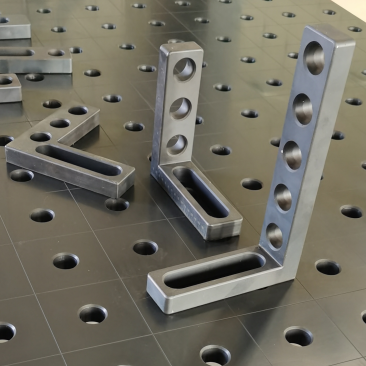
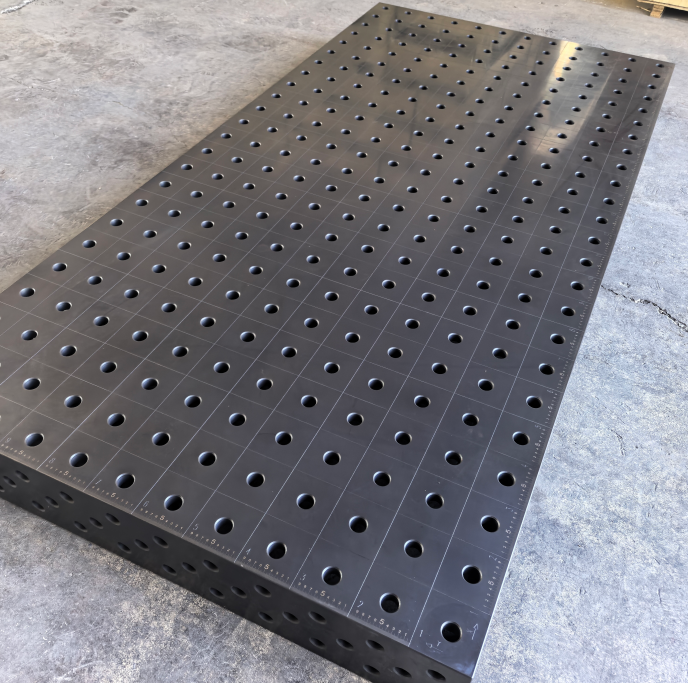
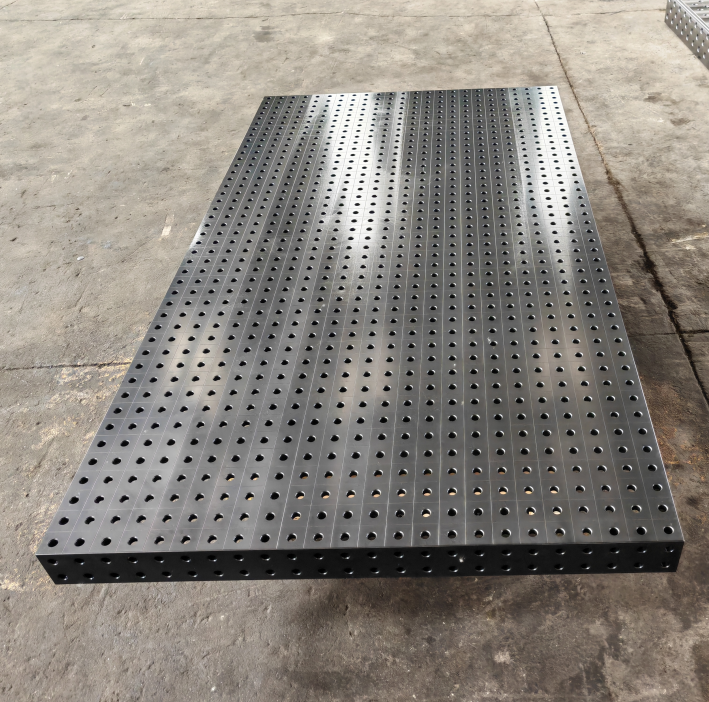
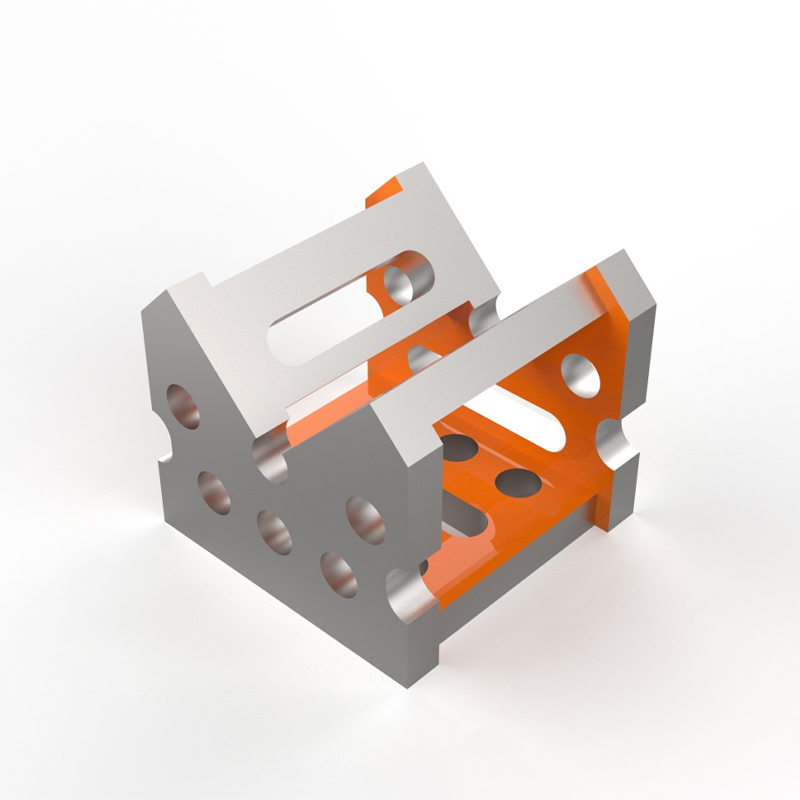
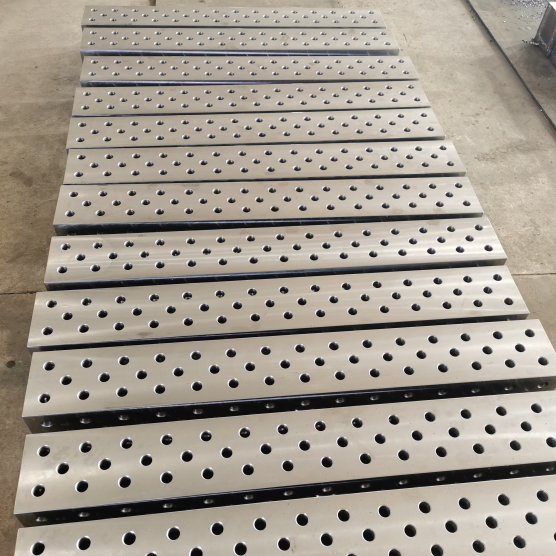
Leading this innovation in flexible tooling is Botou Haijun Metal Products Co., Ltd., a company specializing in the research, development, and production of high-precision flexible modular fixtures. Recognized globally for their exceptional versatility, Haijun’s core product line includes advanced 2D and 3D flexible welding platforms that have become the preferred jigging equipment in the machining, automotive, and aerospace industries. To complement these platforms, they offer a comprehensive range of accessories such as U-shaped and L-shaped multi-purpose square boxes, 200-series support angle irons, and 0-225° universal angle gauges. Additionally, their professional cast iron 3D welding platforms and angle connection blocks ensure that every setup delivers the durability and stability required for modern manufacturing.
Comparison of Top 90 Degree Welding Fixture Models
Selecting the right tool requires comparing key specifications. The following table analyzes the leading types of fixtures available in 2026, highlighting their strengths, limitations, and ideal use cases to help you determine the best value for your budget.
| Fixture Type |
Holding Power |
Best For |
Material Compatibility |
Price Range |
| Magnetic Square |
Medium to High |
Quick setup, pipe fitting, light frames |
Ferrous metals only (Steel, Iron) |
$ – $$ |
| Mechanical Screw Clamp |
Very High |
Heavy structural beams, thick plates |
All metals (Steel, Aluminum, Stainless) |
$$ – $$$ |
| Adjustable Angle Jig |
High |
Custom angles, versatile prototyping |
Most metals (depends on clamp face) |
$$ – $$$ |
| Modular System |
Extreme |
Mass production, robotic welding |
All industrial metals |
$$$$+ |
When evaluating the best price, consider the total cost of ownership. A cheaper magnetic clamp might save money upfront but could fail under heavy loads, leading to scrapped parts. Conversely, a high-end mechanical clamp or a modular system from a trusted supplier like Haijun Metal may last a lifetime, offering better long-term value despite the higher initial tag.
Key Features to Consider When Buying
Navigating the marketplace in 2026 reveals a plethora of options claiming to be the “best.” To make an informed decision, focus on specific technical attributes that directly impact performance and durability. Ignoring these factors can lead to purchasing tools that fail under real-world shop conditions.
Load Capacity and Holding Force
The most critical specification is holding force. For magnetic fixtures, this is measured in pounds or kilograms of pull force. Ensure the rating exceeds the weight of your heaviest typical workpiece. Remember that thermal expansion during welding can exert significant lateral force, potentially shifting a marginally held piece.
For mechanical clamps, look at the throat depth and the maximum opening width. A fixture with a high clamping force but insufficient reach will be useless for wider frames. Always choose a model with a safety margin above your average requirements.
Heat Resistance and Durability
Welding generates extreme heat. Spatter can accumulate on fixtures, and direct radiant heat can demagnetize inferior magnets or warp soft metals. High-quality 2026 models feature heat-resistant coatings or are made from alloys that retain their properties at elevated temperatures.
Check if the fixture includes replaceable pads or shields. These sacrificial components protect the main body from spatter damage and can be swapped out when worn, extending the life of the expensive core unit.
Ease of Cleaning and Maintenance
Welding shops are dirty environments. Fixtures with complex crevices trap spatter and slag, making them difficult to clean. Designs with smooth surfaces and minimal nooks are preferable. Magnetic switches should be shielded from spatter to prevent jamming.
Additionally, consider the weight. While heavy fixtures provide stability, portability is key for job site work. Lightweight yet robust composites are becoming more common in 2026, offering a balance between sturdiness and maneuverability.
How to Use a 90 Degree Welding Fixture Effectively
Owning a high-quality fixture is only half the battle; using it correctly ensures safety and precision. Improper usage can lead to inaccurate welds or even injury if the workpiece shifts unexpectedly. Follow these steps to maximize the potential of your equipment.
Step-by-Step Usage Guide
Proper technique involves preparation, positioning, and verification. Rushing any of these stages compromises the final joint quality.
- Step 1: Surface Preparation: Clean both the workpiece and the fixture contact points. Rust, paint, or oil can reduce magnetic grip or cause mechanical slippage.
- Step 2: Initial Placement: Position the fixture on the base material first. Ensure it sits flat and stable before introducing the second piece.
- Step 3: Workpiece Insertion: Place the second metal piece into the fixture. Apply firm pressure to seat it fully against the stopping surface.
- Step 4: Engagement: Activate the clamp. For magnets, flip the switch to the “on” position. For screws, tighten until snug but avoid over-torquing which might distort thin materials.
- Step 5: Verification: Before striking an arc, double-check the angle with a separate square if the application is critical. This confirms the fixture hasn’t shifted during placement.
- Step 6: Tack Welding: Apply small tack welds to hold the joint. Allow the metal to cool slightly before removing the fixture to prevent immediate warping.
Safety Precautions
Safety is paramount when using clamping devices. Pinch points are common in mechanical clamps, so always keep fingers clear of moving parts. With magnetic fixtures, be cautious of loose ferrous debris (like grinding dust) which can become dangerous projectiles if attracted suddenly to the magnet.
Furthermore, never rely solely on a fixture for supporting extremely heavy loads overhead. Always use secondary supports or chains to secure the assembly, treating the fixture as a positioning aid rather than a primary lifting device.
Common Applications in Fabrication
The versatility of the 90 degree welding fixture makes it indispensable across various sectors of the metalworking industry. From small hobbyist garages to large-scale shipyards, these tools solve fundamental geometric challenges.
Structural Steel Framing
In construction and building fabrication, creating square frames for doors, windows, and structural supports is routine. Magnetic squares allow workers to assemble these frames rapidly on the floor or table, tacking them quickly before moving to the next station. The speed gained here translates directly to lower labor costs.
Pipe and Tube Fitting
Piping systems often require precise 90-degree turns. Specialized fixtures with curved faces or V-grooves accommodate round stock, ensuring that tee-joints and elbow connections are perfectly aligned. This is crucial for fluid dynamics and pressure integrity in plumbing and hydraulic systems.
Furniture and Artistic Metalwork
Custom furniture makers and artists rely on these fixtures to create clean, professional-looking joints. Since aesthetic appeal is often as important as structural strength in these fields, the ability to maintain a perfect corner without visible clamp marks is vital. Low-profile magnetic fixtures are particularly favored here.
Pros and Cons of Modern Welding Fixtures
To provide a balanced view for buyers in 2026, it is essential to weigh the advantages against the limitations. No single tool is perfect for every scenario, and understanding these trade-offs helps in setting realistic expectations.
Advantages
- Increased Productivity: Drastically reduces the time spent measuring and adjusting parts manually.
- Consistency: Ensures every piece in a batch is identical, crucial for assembly line workflows.
- Reduced Skill Barrier: Allows less experienced welders to produce square, professional-grade joints easily.
- Hands-Free Operation: Frees up the welder’s hands to manipulate the torch or filler rod more effectively.
Disadvantages
- Initial Cost: High-quality, durable fixtures represent a significant upfront investment compared to makeshift solutions.
- Weight and Bulk: Industrial-grade models can be heavy and cumbersome to transport to remote job sites.
- Magnetic Interference: Strong magnets can disrupt welding arcs or damage nearby electronic equipment if not managed carefully.
- Limited Flexibility: Fixed 90-degree fixtures cannot accommodate odd angles without purchasing additional specialized tools.
Maintenance Tips for Longevity
Investing in a premium 90 degree welding fixture is wise, but maintaining it ensures that investment pays off over years of service. Neglect can lead to premature failure, loss of accuracy, or safety hazards.
Regularly inspect the contact surfaces for buildup. Grind away any accumulated spatter gently to avoid damaging the precision mating surfaces. For magnetic units, keep the switching mechanism free of debris and lubricate moving parts sparingly with high-temperature grease if recommended by the manufacturer.
Store fixtures in a dry environment to prevent rust, especially on the clamping faces. Rust not only weakens the grip but can also transfer to your workpieces, causing contamination issues during welding. If you notice a drop in holding power, check for demagnetization or worn screw threads immediately.
Frequently Asked Questions (FAQ)
Addressing common queries helps clarify doubts and assists buyers in making confident decisions. Here are the most frequent questions regarding 90-degree welding fixtures in the current market.
Can magnetic welding fixtures be used on stainless steel?
Generally, no. Most stainless steel grades are non-magnetic or weakly magnetic. Magnetic fixtures rely on ferromagnetic properties to hold the workpiece. For stainless steel or aluminum, you must use mechanical screw clamps or specialized vacuum fixtures designed for non-ferrous metals.
Will the magnet affect my welding arc?
Yes, strong magnetic fields can cause “arc blow,” where the welding arc wanders or becomes unstable. To mitigate this, position the fixture as far from the arc path as possible while still maintaining hold. Some 2026 models feature shielded designs to minimize this interference.
What is the difference between a welding square and a welding clamp?
A welding square is primarily a positioning tool to establish a 90-degree angle, often using magnets. A welding clamp applies pressure to hold pieces together tightly, often using screws. Many modern tools combine both functions, acting as a square to set the angle and a clamp to secure it.
How do I remove a magnetic fixture if it gets stuck?
Most modern magnetic fixtures have an on/off lever. If the lever is difficult to move due to heat expansion or spatter, do not force it. Allow the metal to cool completely. If it remains stuck, gently tap the body with a hammer to break the seal before toggling the switch. Never pry it off with a screwdriver, as this can damage the casing.
Are expensive fixtures worth the extra cost?
For professional use, yes. Cheaper fixtures often use weaker magnets, softer metals that deform under pressure, and poor heat resistance. Premium models, such as those manufactured by established companies like Botou Haijun Metal Products, offer consistent holding power, durability against spatter, and precise machining that lasts for years, ultimately saving money on replacements and rework.
Conclusion and Buying Recommendations
Selecting the right 90 degree welding fixture in 2026 is about balancing precision, durability, and budget. For general-purpose steel fabrication, a high-quality magnetic square offers the best blend of speed and convenience. However, for heavy structural work or non-ferrous metals, investing in a robust mechanical clamp is non-negotiable.
This guide highlights that the “best price” isn’t always the lowest sticker cost. It represents the value derived from accuracy, time savings, and tool longevity. Prioritize models with strong holding forces, heat-resistant construction, and user-friendly features like easy-release switches.
Who should buy what? Hobbyists and light fabricators should start with a versatile magnetic set. Professional shops dealing with diverse materials need a mixed inventory of mechanical and magnetic options. Large-scale manufacturers should explore modular systems, such as the 2D and 3D flexible platforms offered by industry leaders, for maximum efficiency.
Ready to upgrade your workshop? Evaluate your current projects’ demands, check the load ratings of potential models, and invest in a fixture that guarantees square, strong, and professional welds every time. Your future self will thank you for the precision and peace of mind.