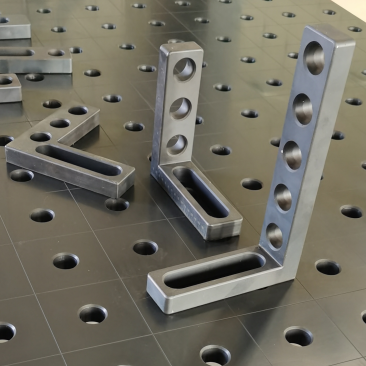
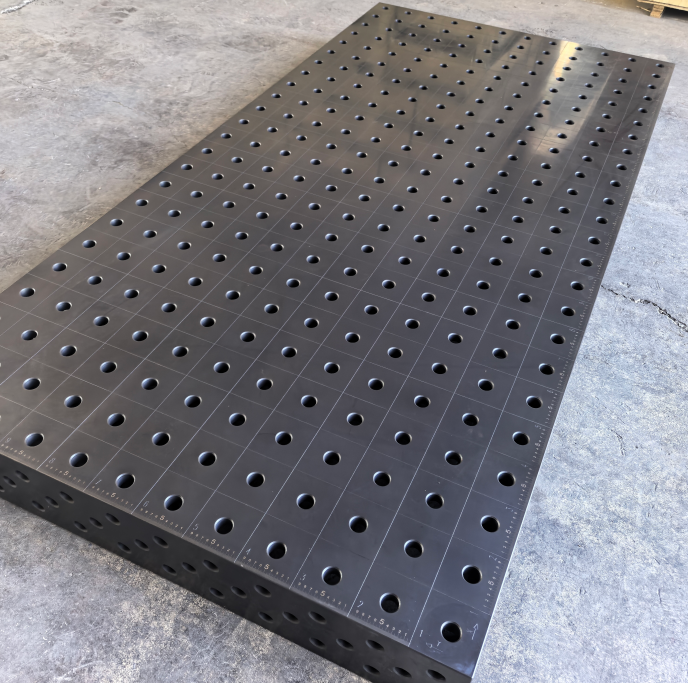
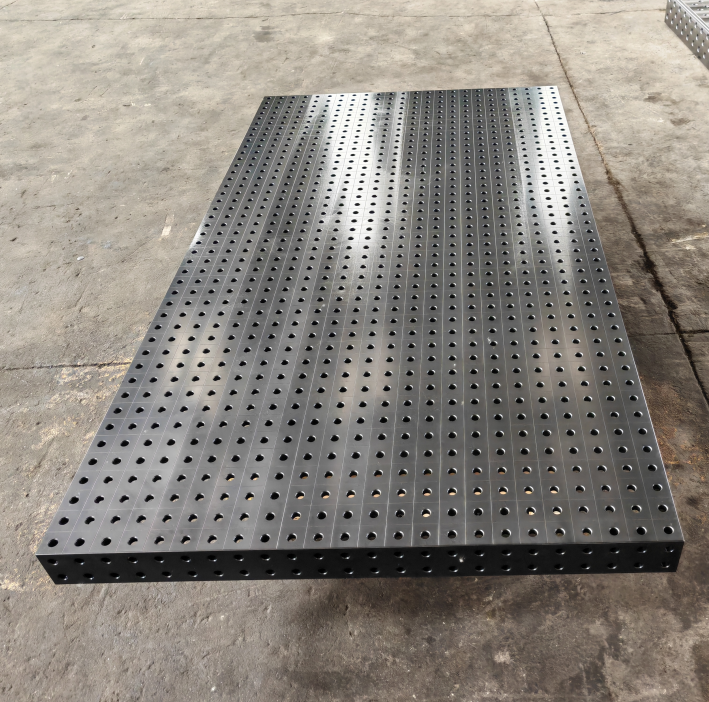
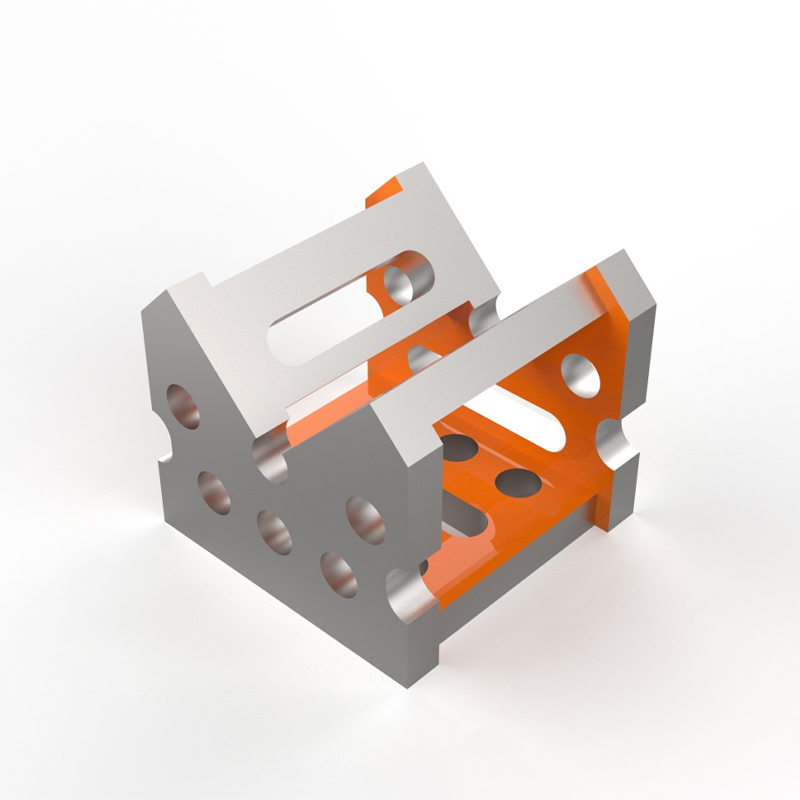
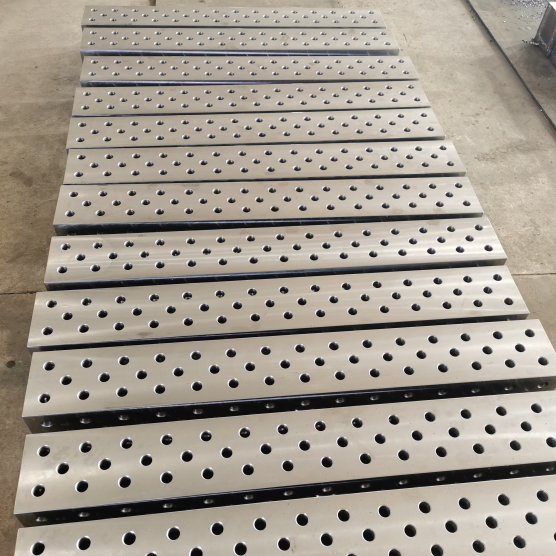
Welding tooling isn’t just fixtures and clamps—it’s the silent architect of dimensional stability, repeatability, and weld integrity in precision sheet metal fabrication. We’ve seen too many projects stall at the shop floor because a “generic” welding jig couldn’t hold ±0.15 mm tolerances across a 12-part agricultural bracket assembly. Or worse: a customer’s robotic welding cell halted repeatedly—not due to robot programming, but because part-to-part variation exceeded fixture registration limits. That’s not a welding problem. It’s a welding tooling problem.
Why Standard Fixtures Fail Under Real-World Fabrication Pressure
Most off-the-shelf welding tooling assumes uniform part geometry, stable material behavior, and predictable thermal distortion. Reality disagrees. Cold-rolled steel shrinks differently than 304 stainless during multi-pass GMAW. Aluminum alloys warp faster under localized heat. And deep-drawn components—especially those with asymmetric flanges or internal ribs—introduce compound springback that generic locators can’t compensate for.
We’ve measured it: uncalibrated tooling contributes to 68% of first-article dimensional nonconformance in medium-batch runs (50–500 pcs). The root cause? Tooling designed without DFM input—no thermal expansion modeling, no clamping force simulation, no tolerance stack-up analysis against actual press tonnage and bend angle repeatability.
That’s why precision fabrication starts long before the arc strikes. It starts with tooling engineered as an extension of the part’s functional requirements—not as a mechanical afterthought.
Four Non-Negotiables in Precision Welding Tooling Design
From our ISO-compliant facility in Botou—where every custom welding fixture undergoes CMM validation before first use—we’ve distilled what separates capable tooling from costly stopgaps:
Material-matched datum strategy: Stainless parts use hardened 420 stainless locating pins; aluminum assemblies require non-marring 7075-T6 bushings with controlled coefficient-of-friction surfaces. Thermal compensation built-in: Fixture bases incorporate strategic relief slots and low-conductivity inserts near high-heat zones—reducing post-weld distortion by up to 40% in 3-mm-thick assemblies. Clamping force calibrated to part stiffness: Not torque specs—actual Newton-meter load mapped across the part’s bending modulus. Over-clamping cracks thin flanges; under-clamping allows micro-shift during tack welding. Modular interface for process scalability: Same base plate accepts manual MIG jigs, robotic TCP alignment nests, and laser welding positioning modules—no rework when production volume doubles. This isn’t theoretical. A Tier-1 automotive supplier reduced their sub-assembly weld rework rate from 11.3% to 0.7% after replacing legacy tooling with a modular system built around these four principles.
When Small-Batch Flexibility Becomes Your Competitive Edge
Many engineers assume high-precision tooling demands high-volume justification. Wrong. At Botou Haijun Metal Products Co., Ltd., we routinely build fully validated welding tooling for batches as small as 12 pieces—without minimum order restrictions. Why? Because our vertically integrated line handles stamping, bending, welding tooling fabrication, and final assembly under one roof. No external toolmaker delays. No misaligned design handoffs.
We machine fixture bodies on the same CNC presses that form your parts—ensuring locator positions match actual die-set coordinates within ±0.02 mm. Our welding cells run identical material lots used in your prototypes. That means thermal behavior data transfers directly from tooling validation to production weld schedule development.
Result: First-article approval time drops from weeks to 72 hours. One European agricultural machinery client cut their new-product launch timeline by 37 days—not by speeding up welding, but by eliminating tooling-related iteration loops.
Choosing Your Welding Tooling Partner: Look Beyond the Blueprint
A supplier who sends back CAD files with “approved” stamps isn’t enough. Ask instead:
Do they simulate thermal distortion *with your exact material grade and thickness*—not generic AISI 1018? Can they provide CMM reports showing fixture repeatability over 500 cycles—not just initial calibration? Is their quality documentation traceable to your specific PO number, including raw material certs for all hardened components? Botou Haijun delivers all three—and adds engineering feedback within three working days, quotations within 48 hours, and full post-shipment traceability. Not as policy. As practice.
Because precision fabrication doesn’t scale on paper. It scales on the shop floor—where every weld, every clamp, every micron of tolerance lives or dies by the tooling holding it true. That’s where welding tooling stops being equipment—and becomes your most critical process partner.