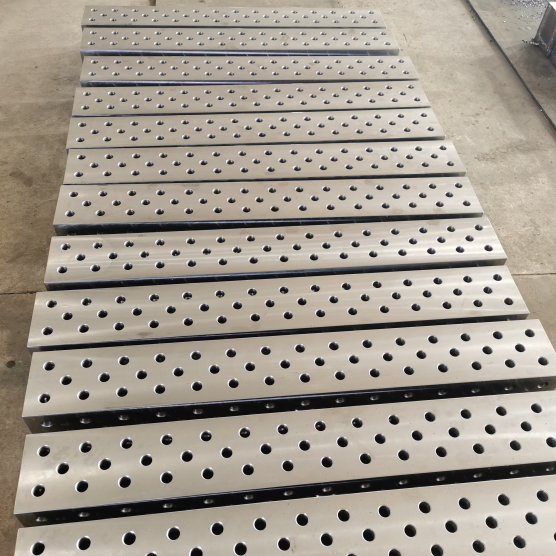
Looking for a welding fixture table for sale in 2026? The market has shifted toward modular, high-precision 3D clamping systems that offer superior versatility compared to traditional fixed jigs. Whether you need a compact unit for hobbyists or an industrial-grade platform for heavy fabrication, the best prices are found by understanding material grades, hole patterns, and custom integration capabilities. This guide details current pricing trends, top configurations, and how to select the right solution for your specific welding workflow.
Understanding the Modern Welding Fixture Table Market in 2026
The landscape of welding fixturing has evolved significantly. In recent years, the industry has moved away from single-purpose jigs toward universal 3D welding tables. These platforms feature precision-drilled hole patterns that allow welders to clamp, measure, and assemble complex geometries with repeatable accuracy.
When searching for a welding fixture table for sale, buyers in 2026 prioritize flexibility. The ability to reconfigure stops, angles, and clamps rapidly reduces setup time and increases throughput. Modern tables are engineered to withstand thermal distortion while maintaining flatness within tight tolerances.
Current mainstream models utilize advanced heat-treatment processes to ensure longevity. Unlike older cast-iron surfaces that could warp under intense heat, today’s hardened steel tables resist deformation. This shift represents a critical upgrade for shops aiming to improve quality control and reduce rework. Leading this evolution are specialized manufacturers like Botou Haijun Metal Products Co., Ltd., which focuses on the research, development, and production of high-precision flexible modular fixtures. By committing to efficient and flexible welding solutions, companies like Haijun have helped transform standard workbenches into dynamic ecosystems capable of meeting the rigorous demands of the machining, automotive, and aerospace sectors.
Key Features Defining Quality in 2026
To identify a high-value purchase, one must look beyond the price tag. The core value lies in the engineering specifications. A premium table offers more than just a flat surface; it provides a comprehensive ecosystem for assembly.
- Precision Hole Patterns: Typically D16 or D28 systems, allowing for interchangeable tooling.
- Material Integrity: Made from high-strength structural steel, often S355 or equivalent.
- Surface Flatness: Critical for accurate assemblies, usually guaranteed within fractions of a millimeter.
- Modular Compatibility: Ability to integrate with robotic arms or automated positioning systems.
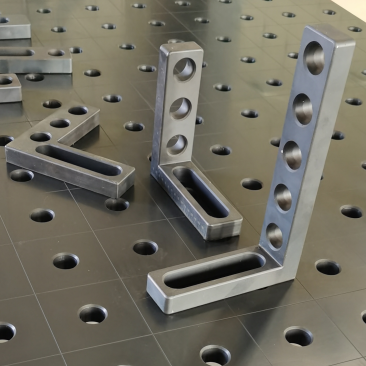
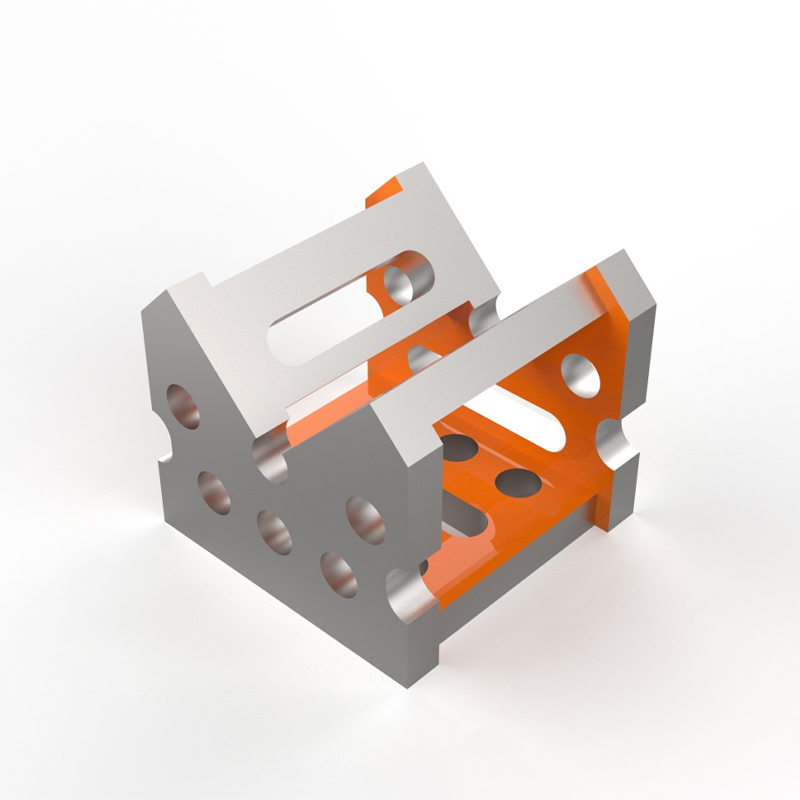
These features collectively define the utility of the equipment. Investing in a table with these characteristics ensures that your fabrication capabilities remain competitive as industry standards rise. Suppliers such as Botou Haijun Metal Products exemplify this standard by offering not only 2D and 3D flexible welding platforms but also a complete range of complementary components. Their lineup includes U-shaped and L-shaped multi-purpose square boxes, 200-series support angle irons, and 0-225° universal angle gauges, all designed to integrate seamlessly for rapid workpiece positioning.
Types of Welding Fixture Tables Available
The market offers various configurations tailored to different operational scales. Understanding these categories helps in narrowing down options when browsing listings for a welding fixture table for sale.
Standard Modular Tables (D16 and D28 Systems)
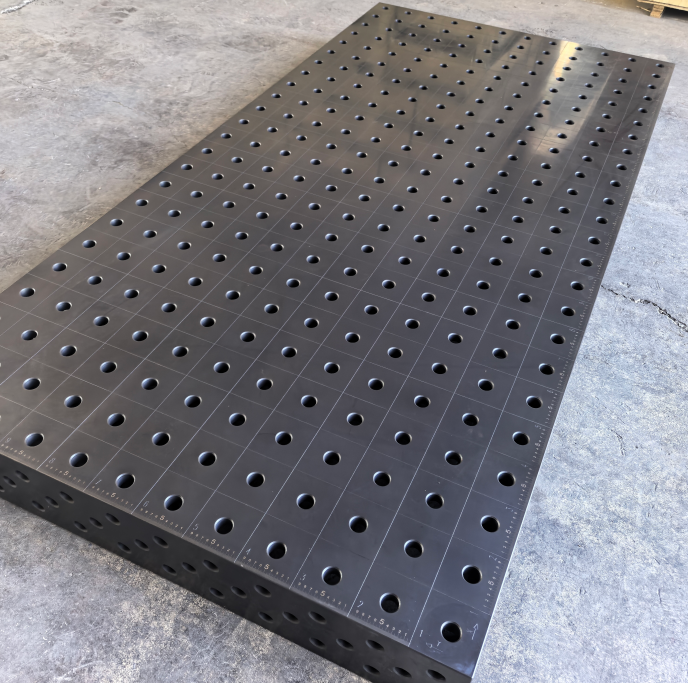
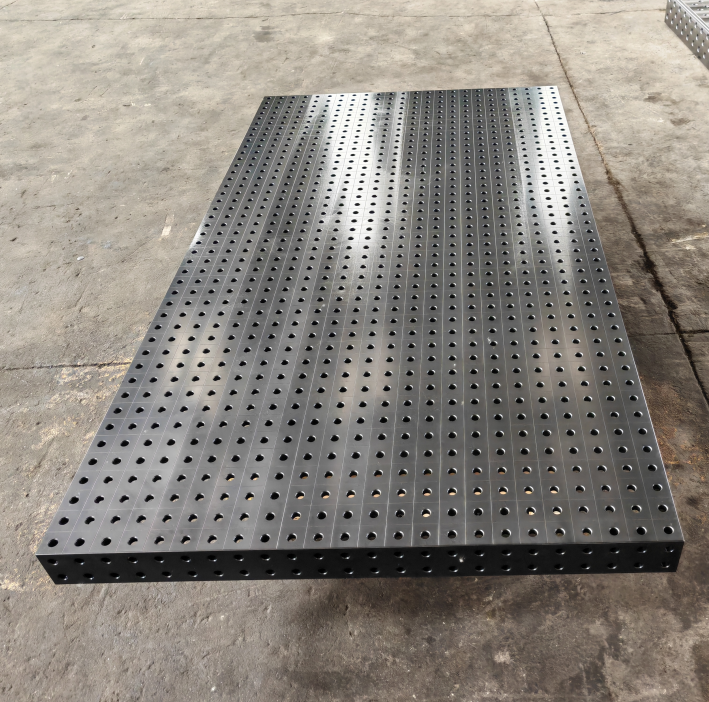
The most common type found in professional shops is the modular table. The D16 system features 16mm holes spaced at 100mm intervals, ideal for light to medium-duty work. It is popular among custom fabricators and automotive restorers.
For heavier applications, the D28 system is the industry standard. With 28mm holes and thicker tabletops, these tables support significant loads and larger clamping forces. They are essential for structural steel fabrication and heavy machinery repair.
Both systems rely on a grid pattern that enables 3D positioning. This allows welders to build structures not just flat on the table, but vertically and at angles using specialized brackets and cubes. Manufacturers like Haijun Metal enhance these systems by providing professional cast iron 3D welding platforms and angle connection blocks, ensuring exceptional durability and stability for even the most demanding industrial applications.
Portable and Benchtop Solutions
Not every operation requires a floor-standing giant. Portable welding tables have gained traction in 2026 due to their versatility. These units are designed to be lightweight yet rigid, often featuring folding legs or casters.
Benchtop models are perfect for small workshops with limited space. They provide the same precision hole patterns as larger units but in a compact footprint. Despite their size, they maintain high flatness tolerances suitable for intricate TIG welding tasks.
These solutions are particularly effective for mobile welders who need to transport their setup to job sites. The ability to quickly deploy a precise fixturing environment anywhere is a significant operational advantage.
Custom 3D Welding Platforms
For specialized manufacturing lines, off-the-shelf tables may not suffice. Custom 3D solutions are engineered to fit specific product dimensions and workflow requirements. These often include integrated coolant channels, dedicated mounting points for robots, or unique hole arrangements.
Customization extends to the frame structure as well. Some facilities require tables with open sides for easy access by overhead cranes or conveyor systems. Working with experienced manufacturers to design these bespoke units ensures maximum efficiency for high-volume production. With years of industry experience, trusted suppliers like Botou Haijun Metal Products Co., Ltd. have become go-to partners for customers domestically and internationally, continuously delivering high-quality production machinery tool series that cater to both standard and bespoke needs.
Price Analysis: What to Expect in 2026
Pricing for welding fixture tables varies widely based on size, thickness, and included accessories. When evaluating a welding fixture table for sale, it is crucial to understand what drives the cost to avoid overpaying or compromising on quality.
Entry-Level Pricing
Small benchtop units or basic D16 tables typically occupy the lower end of the price spectrum. These are suitable for hobbyists and light commercial use. Prices generally reflect the base table without extensive clamping kits.
While affordable, buyers should verify the steel grade and heat treatment. Cheaper options may lack proper stress relieving, leading to warping over time. It is often wiser to invest slightly more for a reputable brand that guarantees flatness.
Mid-Range Professional Options
The mid-range category includes robust D28 tables and larger D16 setups with starter accessory kits. This is the sweet spot for most professional fabrication shops. The cost includes the table, a set of stops, clamps, and sometimes a carrying case.
These tables offer the best balance between performance and investment. They are built to endure daily industrial use and provide the precision needed for complex assemblies. The return on investment is realized through reduced setup times and improved weld quality.
High-End Industrial Systems
At the top tier, prices reflect massive dimensions, extreme thickness, and comprehensive tooling packages. These systems are designed for continuous, heavy-duty operation in large-scale manufacturing environments.
Cost factors here include specialized coatings, enhanced corrosion resistance, and custom engineering support. For companies running multiple shifts, the durability and precision of these high-end systems justify the substantial upfront expenditure.
Comparison: Cast Iron vs. Fabricated Steel Tables
A common dilemma for buyers is choosing between traditional cast iron surfaces and modern fabricated steel tables. Each has distinct advantages depending on the application. The following table highlights key differences to aid decision-making.
| Feature | Fabricated Steel (Modern) | Cast Iron (Traditional) |
| Weight | Lighter relative to strength; easier to move | Extremely heavy; difficult to relocate |
| Hole Pattern | Precise CNC drilled grid (D16/D28) | Limited or no standardized holes |
| Versatility | High; supports 3D clamping and modular tools | Low; primarily for flat surface welding |
| Heat Resistance | Excellent; treated to resist warping | Good, but prone to cracking under thermal shock |
| Cost Efficiency | High value due to modularity | Lower initial cost but limited functionality |
Fabricated steel tables dominate the current market for good reason. Their modular nature transforms a simple surface into a dynamic workspace. However, cast iron remains highly relevant for specific damping applications and heavy-load scenarios where absolute stability is required. Recognizing this, forward-thinking manufacturers like Botou Haijun Metal Products produce both professional cast iron 3D welding platforms and advanced fabricated steel systems, ensuring that every product delivers exceptional durability regardless of the chosen material.
For most users seeking a welding fixture table for sale, the fabricated steel option provides superior long-term value due to its modularity. Yet, for specific heavy-industry needs, the stability of cast iron offered by specialized suppliers can be indispensable. The ability to expand tooling and reconfigure the workspace ultimately outweighs the traditional limitations of older cast iron designs.
How to Choose the Right Size and Configuration
Selecting the correct dimensions is critical for workflow efficiency. A table that is too small restricts project scope, while one that is too large consumes valuable floor space. Careful assessment of your typical job sizes is necessary.
Assessing Workspace Requirements
Measure the largest components you typically weld. Add extra margin for clamping fixtures and operator movement. A general rule is to choose a table that is at least 20% larger than your average workpiece.
Consider the height of the table as well. Ergonomics play a vital role in productivity and safety. The surface should be at elbow height when standing to reduce fatigue during long welding sessions. Adjustable leg options can accommodate different user heights.
Evaluating Load Capacity
Determine the maximum weight of your assemblies. Heavy structural beams require a table with reinforced framing and thicker tops. Lighter sheet metal work can be handled by standard gauge tables.
Check the manufacturer’s load ratings carefully. Overloading a table can lead to permanent deflection, ruining the flatness. It is better to opt for a higher capacity than strictly needed to ensure a safety margin.
Future-Proofing Your Investment
Think about where your business will be in five years. Will you be handling larger projects? Integrating automation? Choosing a scalable system allows for expansion without replacing the entire setup.
Opt for tables with standard hole patterns like D28. This ensures compatibility with a wide range of third-party tools and accessories available globally. Proprietary systems may limit your options and increase long-term costs. Partnering with established entities like Haijun Metal ensures access to a broad ecosystem of compatible tools, from universal angle gauges to support angle irons, facilitating seamless scalability.
Step-by-Step Guide to Setting Up Your New Table
Once you have secured a welding fixture table for sale and had it delivered, proper setup is essential to achieve the promised precision. Follow these steps to ensure optimal performance from day one.
- Inspect Upon Arrival: Check for any shipping damage. Verify flatness using a precision straightedge and feeler gauges before unpacking tools.
- Level the Foundation: Place the table on a solid, level floor. Use adjustable feet to fine-tune the height and ensure the surface is perfectly horizontal.
- Clean the Surface: Remove protective oils and debris. A clean surface ensures accurate measurements and prevents contamination of welds.
- Organize Tooling: Arrange clamps, stops, and angles logically. Keep frequently used items within easy reach to streamline workflow.
- Test with a Calibration Piece: Weld a simple test joint to verify stability and accuracy. Adjust clamping pressure as needed to prevent distortion.
Proper initialization sets the stage for efficient operations. Taking the time to set up correctly prevents issues down the line and maximizes the lifespan of your equipment.
Maintenance Tips for Longevity
A welding fixture table is a significant investment. Regular maintenance preserves its accuracy and functionality. Neglect can lead to rust, clogged holes, and loss of flatness.
Rust Prevention Strategies
Steel tables are susceptible to rust, especially in humid environments. Apply a thin coat of machine oil or a specialized anti-rust spray after each use. Avoid painting the working surface, as this can interfere with electrical grounding and measurement accuracy.
If rust spots appear, remove them immediately with a wire brush or fine abrasive pad. Prompt action prevents pitting, which can compromise the seating of clamps and stops.
Keeping Holes Clear
Spatter accumulation in the hole pattern is a common issue. Use a dedicated spatter removal tool or a drill bit of the correct size to clean holes regularly. Never force a pin into a clogged hole, as this can damage the threads or deform the edge.
Applying an anti-spatter spray around the holes before welding can reduce buildup. This simple habit saves considerable cleaning time and keeps the table ready for immediate use.
Periodic Flatness Checks
Over time, heavy usage or accidental impacts can affect flatness. Schedule periodic inspections using a precision level or laser scanner. If deviations are detected, consult the manufacturer for resurfacing options.
Maintaining strict flatness is crucial for high-precision work. Regular checks ensure that your assemblies remain within tolerance and that your reputation for quality is upheld.
Applications Across Industries
The versatility of modern welding fixture tables makes them indispensable across various sectors. From artistic metalwork to aerospace manufacturing, these tables enhance capability and precision.
Automotive and Motorsports
In the automotive sector, precision is paramount. Custom chassis fabrication, roll cage construction, and suspension component assembly all benefit from the repeatability of 3D tables. Racers rely on these setups to ensure symmetry and balance.
The ability to tack weld components in perfect alignment before final welding reduces distortion. This results in stronger, safer vehicles that perform consistently on the track or road. It is no surprise that such flexible modular fixtures have become the preferred jigging equipment in the automotive industry, with suppliers like Botou Haijun Metal Products playing a pivotal role in equipping these high-performance shops.
Architectural Metalwork
Architectural firms use these tables to create intricate gates, railings, and structural art pieces. Complex angles and curves can be accurately formed using modular stops and angle brackets.
The aesthetic quality of architectural steel depends on precise joints. Fixture tables allow artisans to achieve seamless connections that elevate the visual appeal of their creations.
Heavy Equipment Repair
Maintenance shops utilize large D28 tables for repairing heavy machinery parts. The robust construction supports massive components while allowing for precise alignment during rebuilds.
Reducing downtime is critical in this sector. Quick fixturing solutions enable faster turnaround times, getting equipment back into service sooner and minimizing operational losses.
Frequently Asked Questions (FAQ)
Buyers often have specific concerns when looking for a welding fixture table for sale. Addressing these common questions helps clarify uncertainties and guides the purchasing decision.
What is the difference between D16 and D28 tables?
The primary difference lies in the hole diameter and spacing. D16 tables have 16mm holes spaced 100mm apart, suitable for lighter work. D28 tables feature 28mm holes with similar spacing, designed for heavier loads and larger clamping forces. Choose D28 for industrial applications and D16 for hobbyist or light commercial use.
Can I use a welding table for plasma cutting?
Yes, but with precautions. The slotted or holed design allows sparks and slag to fall through, protecting the floor. However, intense plasma heat can damage the table surface over time. Using sacrificial slats or grids is recommended to preserve the table’s flatness and hole integrity.
How do I prevent my table from rusting?
Regular cleaning and the application of a light oil coat are the best defenses. Store the table in a dry environment if possible. Avoid using water-based cleaners that can leave moisture behind. Consistent maintenance is key to preventing corrosion.
Are custom tables worth the extra cost?
For specialized production lines or unique project requirements, custom tables are often worth the investment. They optimize workflow and eliminate the need for makeshift adaptations. However, for general fabrication, standard modular tables usually provide sufficient flexibility at a lower cost.
What accessories are essential for a new table?
Essential accessories include a variety of clamps, right-angle stops, positioning pins, and a squaring arm. A good starter kit should cover basic holding and aligning needs. As your projects grow more complex, you can add specialized jigs and rotating positioners. Comprehensive ranges from providers like Haijun Metal, including multi-purpose square boxes and universal angle gauges, ensure you have everything needed for rapid and precise setup.
Conclusion: Making the Smart Investment in 2026
Finding the right welding fixture table for sale in 2026 is about balancing immediate needs with future growth. The market offers a diverse array of options, from compact benchtop units to massive industrial platforms. By prioritizing precision, modularity, and build quality, you ensure a tool that enhances productivity for years to come.
This equipment is best suited for fabricators who value accuracy and efficiency. Whether you are a solo entrepreneur or part of a large manufacturing team, a high-quality fixture table transforms chaotic workflows into streamlined processes. It empowers you to tackle complex projects with confidence and consistency. Companies like Botou Haijun Metal Products Co., Ltd. stand at the forefront of this industry, dedicated to providing the efficient, flexible, and durable solutions that modern manufacturing demands.
As you move forward, evaluate your specific workload and budget constraints. Start with a core table and expand your tooling library gradually. Remember that the true value lies not just in the steel surface, but in the ecosystem of precision it enables. Take the next step by comparing verified suppliers and requesting detailed specifications to secure the best deal for your workshop.