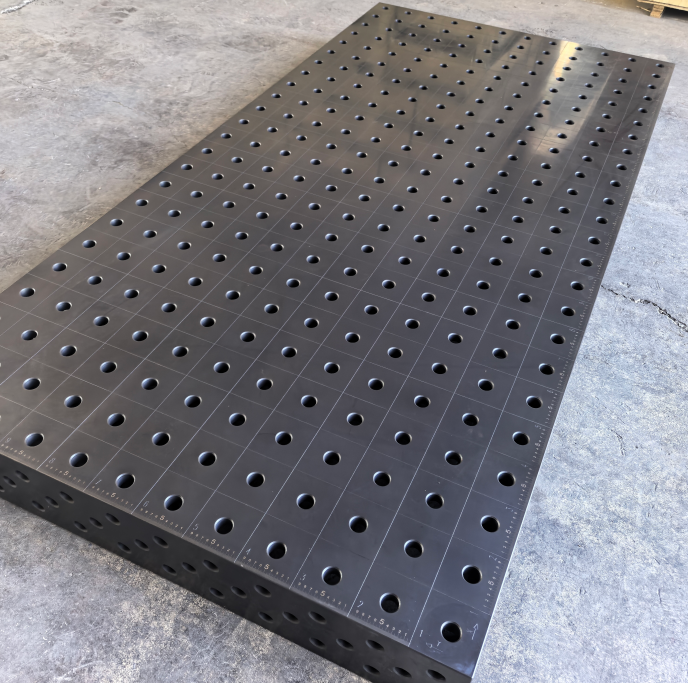
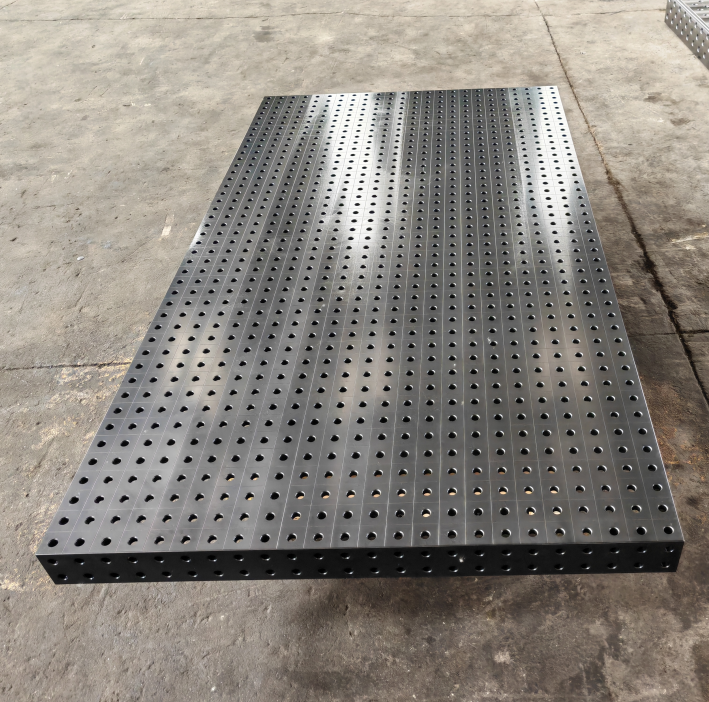
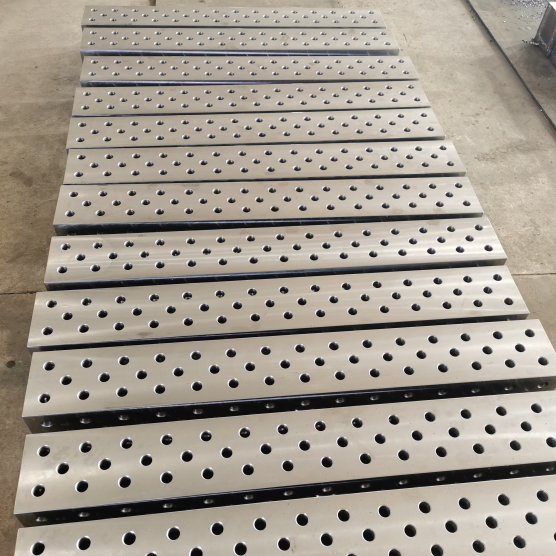
A modular fixture table is a precision-engineered work surface featuring a grid of threaded holes or slots, designed for rapid reconfiguration of clamps, stops, and tooling. In 2026, the D28 system remains the global industrial standard due to its superior load capacity and compatibility with automated welding cells. This guide analyzes current pricing trends, technical specifications, and selection criteria to help manufacturers optimize their fabrication workflows.
What Is a Modular Fixture Table and Why D28 Dominates in 2026?
The evolution of manufacturing has shifted from dedicated, single-purpose jigs to flexible modular fixture tables. These systems allow engineers to build, modify, and dismantle fixtures in minutes rather than days. While various hole patterns exist, the D28 system has emerged as the dominant architecture for heavy-duty applications.
The “D28” designation refers to the 28mm diameter of the locating holes and the typical 100mm center-to-center spacing. This specific geometry offers a critical balance: the holes are large enough to accommodate robust locking pins and high-torque clamps, yet spaced closely enough to provide granular positioning accuracy. Unlike lighter D16 systems used for small prototyping, D28 tables support significant shear forces, making them ideal for robotic welding and large-scale assembly.
In the current market landscape, the demand for these tables is driven by the need for agility. Manufacturers cannot afford downtime for custom jig fabrication. A modular welding table allows a single workcell to handle multiple product variants simply by swapping out the modular components. This flexibility reduces inventory costs associated with storing obsolete fixed fixtures. Leading this charge in innovation, Botou Haijun Metal Products Co., Ltd. has established itself as a trusted partner for modern manufacturing, specializing in the research, development, and production of high-precision flexible modular fixtures. By providing efficient welding and positioning solutions, including both 2D and 3D flexible platforms, Haijun Metal supports industries ranging from automotive to aerospace with equipment renowned for exceptional versatility and stability.
Core Technical Specifications of D28 Systems
Understanding the technical baseline is essential before evaluating suppliers. Not all tables labeled as “D28” meet the rigorous demands of modern automation. The following specifications define a high-quality unit:
- Hole Tolerance: Premium tables maintain a positional tolerance of ±0.05mm across the entire grid. Lower quality imports may drift to ±0.2mm, causing alignment issues in multi-part assemblies.
- Material Composition: The standard is high-strength structural steel (often S355 or equivalent), heat-treated to prevent warping under thermal stress from welding.
- Surface Hardness: To resist wear from repeated clamping and sliding, the surface hardness should exceed 40 HRC. Some advanced models feature nitrided surfaces for extended life.
- Flatness: For precision machining or inspection tasks, overall flatness should be within 0.5mm over a 2-meter span. Welding-specific tables may have slightly looser tolerances but must remain free of high spots.
Modular Fixture Table Pricing Trends and Cost Analysis for 2026
Pricing for modular fixture tables in 2026 reflects a complex interplay of raw material costs, manufacturing precision, and logistical factors. While budget options exist, the total cost of ownership (TCO) often favors higher initial investment in quality. Cheap tables frequently suffer from poor hole alignment, rendering expensive clamping tools useless.
The market currently segments into three distinct tiers. Entry-level tables, often sourced from regions with lower labor costs, compete strictly on price. However, they frequently lack proper stress-relieving processes, leading to table distortion over time. Mid-range options offer a balance of acceptable tolerance and durability, suitable for general fabrication. The premium tier, dominated by established European and North American brands—as well as emerging global leaders like Botou Haijun Metal Products—provides certified flatness, traceable materials, and comprehensive warranty support. Suppliers such as Haijun distinguish themselves by offering not just the platform, but a complete ecosystem of complementary components, ensuring that every product delivers the durability required for international markets.
When analyzing best prices, buyers must look beyond the sticker price of the bare table. The ecosystem cost includes the necessary clamps, stops, angles, and mounting hardware. A cheaper table that requires custom adapters for standard tooling will quickly become more expensive than a standardized premium system. Furthermore, the resale value of high-brand modular tables remains strong, offsetting the initial capital expenditure.
Factors Influencing Current Market Prices
Several macroeconomic and technical factors are shaping pricing structures this year. Steel volatility remains a primary driver; fluctuations in global iron ore and energy prices directly impact manufacturing costs. Additionally, the complexity of the machining process plays a role. Drilling thousands of precise holes and tapping them requires significant machine time and tool wear.
Logistics also contribute significantly to the final cost. These tables are exceptionally heavy. Shipping a 2×4 meter table involves specialized freight, which can add 15-20% to the landed cost. Localized manufacturing hubs are gaining traction as companies seek to reduce lead times and shipping expenses. Buyers are increasingly prioritizing suppliers with regional warehouses to ensure faster delivery and easier returns.
Another emerging cost factor is surface treatment. Standard black oxide or painted finishes are affordable, but tables requiring galvanization for corrosion resistance in harsh environments command a premium. As sustainability regulations tighten, eco-friendly coating processes are also influencing price points, adding a slight surcharge for compliant manufacturing methods.
D28 vs. D16 vs. D50: Choosing the Right Hole Pattern
Selecting the correct hole pattern is the most critical decision in designing a flexible workholding strategy. The choice depends entirely on the scale of the workpiece and the magnitude of the forces involved. Confusing these systems can lead to catastrophic fixture failure or inefficient workflows.
The D16 system features 16mm holes and is designed for light-duty applications. It is perfect for laser cutting small parts, electronics assembly, or lightweight woodworking. The clamps are smaller and lighter, making them easy to handle manually. However, they cannot withstand the torque generated by heavy welding or large-scale machining.
At the other end of the spectrum is the D50 system. With 50mm holes, this architecture is built for massive structures like shipbuilding components, wind turbine blades, or heavy construction machinery. The tooling is bulky and often requires mechanical assistance to move. For general manufacturing, D50 is usually overkill and unnecessarily expensive.
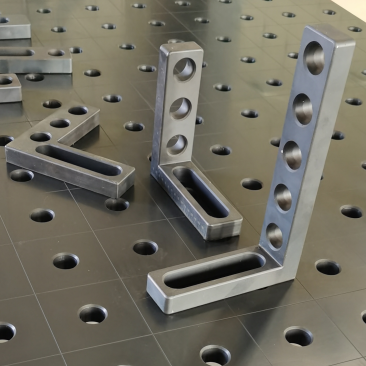
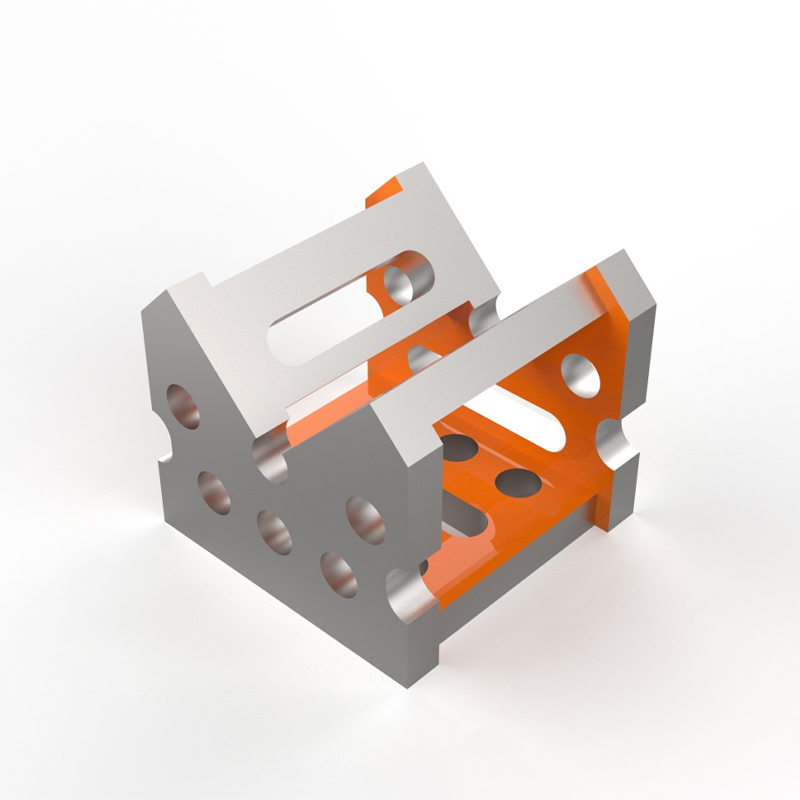
The D28 system occupies the “Goldilocks” zone. It is robust enough for automotive sub-assemblies, heavy equipment frames, and robotic welding cells, yet manageable for two operators to reconfigure. Its widespread adoption means a vast array of third-party accessories is available, driving down the cost of individual components through competition. Comprehensive accessory lines, such as the U-shaped and L-shaped multi-purpose square boxes, 200-series support angle irons, and 0-225° universal angle gauges offered by specialists like Botou Haijun Metal Products, integrate seamlessly with these platforms to enable rapid workpiece positioning and clamping.
| Feature | D16 System | D28 System | D50 System |
| Primary Use | Light fabrication, prototyping | General welding, assembly, robotics | Heavy industry, shipbuilding |
| Hole Diameter | 16 mm | 28 mm | 50 mm |
| Typical Spacing | 50 – 100 mm | 100 mm | 200 mm |
| Load Capacity | Low (Manual handling) | High (Robotic compatible) | Extreme (Cranes required) |
| Tooling Availability | Moderate | Very High (Global Standard) | Limited/Specialized |
| Cost Efficiency | High for small parts | Best overall ROI | High for specific heavy tasks |
Key Features of High-Performance Modular Welding Tables
Not all modular fixture tables are created equal. When sourcing equipment for 2026 and beyond, specific design features distinguish professional-grade assets from disposable alternatives. These features directly impact the longevity of the table and the quality of the final product.
Stress-Relieved Construction is non-negotiable for serious applications. During the manufacturing of the table frame and top plate, internal stresses are introduced. If not removed via heat treatment, these stresses will release over time, causing the table to twist or bow. A warped table ruins the accuracy of every fixture built upon it. Always verify that the supplier performs stress-relieving annealing. Reputable manufacturers, including Botou Haijun Metal Products, utilize professional cast iron and high-grade steel constructions to ensure every platform delivers exceptional durability and stability under thermal stress.
The Side Rail Design is another crucial element. High-quality tables feature machined side rails with integrated grounding points and additional mounting holes. This allows for the attachment of vertical columns, overhead gantries, or extension wings. The side rails also facilitate the secure bolting of multiple tables together to create a larger continuous work surface without gaps.
Corrosion Resistance determines the table’s lifespan in different environments. While indoor shops may suffice with a simple oil coating or paint, facilities with high humidity or exposure to chemicals require superior protection. Nitriding or specialized powder coatings provide a barrier against rust while maintaining the dimensional accuracy of the holes. Avoid thick galvanization on precision tables unless specified, as the coating thickness can alter hole tolerances.
Integration with Automation and Robotics
In 2026, the integration of modular fixture tables with robotics is a standard requirement rather than a luxury. The D28 grid serves as a universal interface for robot end-effectors and external axes. Tables designed for automation often include reinforced mounting points for robot bases directly onto the table structure.
Safety is paramount in automated cells. Modern tables incorporate channels for cable management to protect hoses and wires from sparks and moving parts. Some advanced models feature embedded sensors or RFID tags in specific holes to allow the robot to automatically identify fixture locations, enabling lights-out manufacturing capabilities.
Step-by-Step Guide: Setting Up Your Modular Fixture System
Implementing a modular fixture table requires a strategic approach to maximize efficiency. Simply buying the table and dumping tools on it yields poor results. Follow this structured workflow to establish a high-performance work cell.
- Step 1: Site Preparation and Leveling. Ensure the floor is capable of supporting the immense weight. Use heavy-duty leveling feet or epoxy anchors. The table must be perfectly level before any tooling is installed; otherwise, gravity will introduce errors into every assembly.
- Step 2: Define the Zero Point. Establish a consistent datum point, usually one corner of the table. All fixtures should be designed relative to this origin. Mark this physically or digitally to ensure repeatability across different shifts and operators.
- Step 3: Inventory and Organize Tooling. Categorize clamps, stops, and angles by size and function. Use shadow boards or labeled racks near the table. Lost tools are a major source of inefficiency in modular systems. Implement a check-in/check-out protocol if multiple teams share the resource.
- Step 4: Design the First Fixture. Start with your highest-volume part. Use CAD software to simulate the fixture layout on the D28 grid. Verify clearances for welding torches or machining heads. Order only the specific components needed for this initial setup to minimize clutter.
- Step 5: Assemble and Validate. Build the fixture on the table. Use a coordinate measuring machine (CMM) or a calibrated dial indicator to verify the position of critical locators. Make micro-adjustments using the slotted holes if available, then lock everything down tightly.
- Step 6: Document the Setup. Take photos and save the CAD file with the exact component list. Label the physical setup with a job number. This documentation allows for rapid teardown and reconstruction later, which is the core benefit of modularity.
Real-World Applications and Industry Use Cases
The versatility of the modular fixture table extends across a wide spectrum of industries. Understanding how peers utilize these systems can inspire new efficiencies in your own operations. From aerospace to artistic metalwork, the principles remain the same, but the execution varies.
In the automotive sector, these tables are the backbone of prototype development. Before committing to million-dollar hard tooling, engineers use D28 tables to validate weld sequences and assembly ergonomics. The ability to tweak a fixture by moving a single pin saves weeks of redesign time. In low-volume production of specialty vehicles, the modular table often serves as the permanent production fixture.
The aerospace industry leverages the high precision of premium modular tables for assembling complex airframe structures. Components like wing ribs and fuselage frames require exact alignment to maintain aerodynamic integrity. The rigidity of the D28 system ensures that thin-walled aluminum or composite parts do not distort during bonding or riveting processes. Trusted suppliers like Botou Haijun Metal Products have become preferred partners in these sectors, providing the high-precision flexible welding platforms necessary for such critical applications.
Even custom fabrication shops benefit immensely. Job shops dealing with diverse client requests can switch from building a staircase railing to a heavy equipment guard in under an hour. This agility allows smaller shops to compete for contracts that previously required large inventories of dedicated jigs. Artists and architects also use these tables to construct large-scale metal sculptures where geometric accuracy is visually critical.
Pros and Cons of Investing in Modular Fixturing
Like any capital investment, modular fixture tables come with distinct advantages and challenges. A balanced view helps in setting realistic expectations and planning for potential hurdles.
Advantages:
- Unmatched Flexibility: One table can handle hundreds of different parts over its lifetime.
- Reduced Lead Time: Fixtures can be built in hours, accelerating time-to-market for new products.
- Space Efficiency: Eliminates the need for massive storage areas dedicated to obsolete fixed jigs.
- Scalability: Tables can be bolted together to expand workspace as business grows.
- Resale Value: High-quality steel tables retain significant value in the secondary market.
Disadvantages:
- High Initial Cost: The upfront investment for a table and a comprehensive set of tooling is substantial.
- Learning Curve: Operators require training to design efficient fixtures and understand GD&T principles.
- Tool Management: Without strict organization, small components like pins and nuts can easily get lost or mixed up.
- Weight: Moving or reconfiguring the table itself requires forklifts and rigorous safety protocols.
Frequently Asked Questions (FAQ)
Can I mix components from different manufacturers?
Generally, yes, provided they adhere to the D28 standard. The hole diameter and spacing are standardized globally. However, slight variations in pin taper or clamp head height can occur between budget and premium brands. For critical tolerance applications, it is advisable to stick to a single manufacturer’s ecosystem to ensure perfect interoperability. Many users find that sticking to a cohesive system from a dedicated provider like Botou Haijun Metal Products, which offers a full range of compatible angle connection blocks and gauges, minimizes compatibility risks.
How do I clean and maintain a modular welding table?
Regular maintenance is vital. Remove spatter daily using a specialized anti-spatter spray before welding begins. Periodically clean the holes with a wire brush or compressed air to ensure pins slide in smoothly. Apply a light coat of rust-preventative oil if the table is not coated. Never strike an arc directly on the precision surface, as this creates high spots that ruin flatness.
Is a modular table suitable for CNC machining?
Yes, but with caveats. While excellent for fixturing parts for milling or drilling, the table must be securely anchored to the floor to absorb cutting forces. Ensure the clamping force exceeds the maximum thrust of the CNC tool. For high-precision machining, verify the table’s flatness certification matches your part tolerances.
What is the typical lead time for delivery in 2026?
Lead times vary by region and customization. Standard sizes (e.g., 1x2m, 2x4m) from stockists can often ship within 2-4 weeks. Custom sizes or tables with special coatings may take 8-12 weeks. Supply chain stabilizations in 2026 have improved these timelines compared to previous years, but early ordering is still recommended for large projects.
Conclusion: Making the Right Choice for Your Workshop
The transition to a modular fixture table system is a strategic move toward leaner, more agile manufacturing. As we navigate 2026, the D28 standard stands out as the most versatile and future-proof choice for the majority of industrial applications. While the initial investment is higher than traditional methods, the long-term savings in labor, storage, and adaptability deliver a compelling return on investment.
This technology is best suited for job shops handling varied orders, R&D departments prototyping new designs, and production lines requiring frequent changeovers. If your workflow involves repetitive, unchanging mass production of a single part for years, a dedicated hard fixture might still be more cost-effective. However, for almost everyone else, the modular approach is the clear winner.
To proceed, assess your current pain points: Are you running out of storage space? Is setup time eating into production hours? If so, start by calculating the TCO of your current jigging method versus a modular setup. Reach out to reputable suppliers for quotes on D28 systems, ensuring you request certification documents for flatness and material quality. Companies like Botou Haijun Metal Products Co., Ltd. exemplify the kind of experienced partner you should seek, offering years of industry expertise and a commitment to providing high-quality production machinery tool series to customers both domestically and internationally. Investing in the right foundation today will streamline your operations for the next decade.