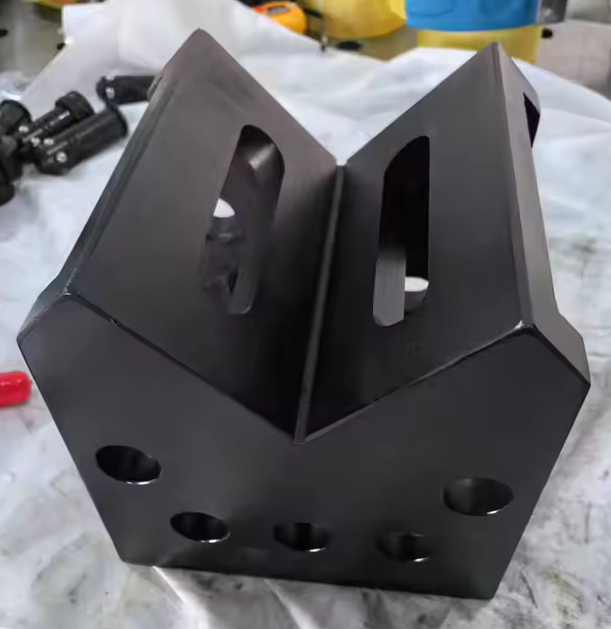
Precision machined aluminum castings represent the convergence of complex geometric freedom and high-tolerance mechanical accuracy. By integrating near-net-shape casting processes with secondary CNC machining, manufacturers achieve components that meet strict dimensional tolerances (often within ±0.025mm) while maintaining the lightweight and thermal properties of aluminum alloys. This hybrid manufacturing approach is essential for industries such as aerospace, automotive, and medical devices, where structural integrity, weight reduction, and surface finish quality are non-negotiable. For engineering teams sourcing these components, understanding the interplay between alloy selection, casting method, and machining strategy is critical to optimizing performance and cost-efficiency in 2026.
What Are Precision Machined Aluminum Castings?
Precision machined aluminum castings are metal components produced through a two-stage manufacturing workflow. First, molten aluminum is formed into a specific shape using a casting method such as die casting, sand casting, or investment casting. This initial stage creates the “near-net” shape, allowing for complex internal structures, thin walls, and integrated features that would be difficult or expensive to machine from a solid block.
The second stage involves precision CNC (Computer Numerical Control) machining. Here, critical surfaces, holes, threads, and mating interfaces are cut to exact specifications. This step removes the inherent inconsistencies of the casting process, such as parting lines, slight shrinkage variations, or surface roughness, ensuring the final part meets rigorous engineering standards.
The Hybrid Manufacturing Advantage
Traditional manufacturing often forces a choice between casting and machining. Casting offers design flexibility and material efficiency but lacks tight tolerances. Machining offers extreme precision but generates significant waste and struggles with complex internal geometries. Precision machined aluminum castings bridge this gap.
- Geometric Complexity: Castings allow for undercuts, internal channels, and organic shapes that are impossible to mill directly.
- Material Efficiency: Casting uses only the necessary amount of aluminum, reducing raw material costs compared to subtractive machining from billet.
- Tight Tolerances: Secondary machining ensures that critical fitment areas meet ISO 2768 or ASME Y14.5 standards.
- Surface Finish: Machined surfaces provide the smoothness required for sealing, bearing fits, or aesthetic applications.
Key Manufacturing Processes for High-Precision Results
Selecting the right casting method is the foundational decision in producing high-quality machined components. Each process offers distinct advantages regarding tolerance, surface finish, volume, and cost. In 2026, the industry standard for precision applications typically revolves around three primary methods: High-Pressure Die Casting (HPDC), Sand Casting, and Investment Casting.
High-Pressure Die Casting (HPDC)
HPDC is the dominant process for high-volume production of aluminum parts. Molten aluminum is injected into a steel mold at high pressure and speed. This results in excellent surface finish and thin wall capabilities.
Why it suits precision machining: HPDC parts have minimal draft angles and consistent dimensions, reducing the amount of material that needs to be removed during CNC machining. This consistency is vital for automated machining lines.
- Typical Tolerances: ±0.1mm to ±0.25mm (before machining).
- Best For: Automotive housings, consumer electronics enclosures, power tool bodies.
- Limitations: Higher initial tooling cost; not ideal for very low volumes.
Sand Casting (Green Sand and No-Bake)
Sand casting uses reusable patterns to create sand molds. It is highly versatile and suitable for larger parts or lower volumes where steel tooling for die casting is prohibitively expensive.
Why it suits precision machining: While the as-cast surface is rougher than die casting, sand casting allows for much thicker walls and larger overall dimensions. Heavy machining is often required to establish datum points and critical bores, making it ideal for large industrial components.
- Typical Tolerances: ±0.5mm to ±1.5mm (before machining).
- Best For: Large engine blocks, pump housings, valve bodies, industrial machinery frames.
- Limitations: Slower production rate; rougher surface finish requires more aggressive machining.
Investment Casting (Lost Wax)
Investment casting produces parts with exceptional detail and surface quality. A wax pattern is coated in ceramic slurry, melted out, and replaced with molten aluminum.
Why it suits precision machining: The near-net shape is extremely accurate, often requiring only light finishing passes on critical features. This minimizes machining time and preserves the integrity of complex geometries.
- Typical Tolerances: ±0.1mm to ±0.2mm (before machining).
- Best For: Aerospace brackets, medical device components, intricate hydraulic manifolds.
- Limitations: Longer lead times; higher per-unit cost than die casting for high volumes.
| Process | Volume Suitability | As-Cast Tolerance | Surface Finish (Ra) | Machining Requirement |
| High-Pressure Die Casting | High (10,000+) | ±0.1 – 0.25 mm | 0.8 – 1.6 µm | Low to Medium (Critical features only) |
| Sand Casting | Low to Medium | ±0.5 – 1.5 mm | 3.2 – 6.3 µm | High (Most surfaces require machining) |
| Investment Casting | Low to Medium | ±0.1 – 0.2 mm | 1.6 – 3.2 µm | Low (Finishing and threading) |
| Permanent Mold Casting | Medium | ±0.2 – 0.4 mm | 1.6 – 3.2 µm | Medium |
Aluminum Alloys for Precision Machining
Not all aluminum alloys are created equal. The choice of alloy significantly impacts both the casting feasibility and the machinability of the final part. In 2026, several alloys stand out for their balance of castability, strength, and machining characteristics.
A380: The Industry Workhorse
A380 is the most widely used aluminum die casting alloy. It offers an excellent combination of fluidity, pressure tightness, and resistance to hot cracking.
- Machinability: Good. It machines cleanly with standard carbide tools.
- Strength: Moderate tensile strength, suitable for most structural applications.
- Applications: Transmission cases, engine components, electronic housings.
A356: High Strength and Ductility
A356 is commonly used in sand and investment casting, as well as low-pressure die casting. It is heat-treatable (T6 temper), which significantly enhances its mechanical properties.
- Machinability: Excellent. The T6 temper provides a consistent chip formation, allowing for high-speed machining and superior surface finishes.
- Strength: High yield and tensile strength after heat treatment.
- Applications: Aerospace structural parts, automotive wheels, high-stress brackets.
AlSi12 (413): Superior Pressure Tightness
With a higher silicon content, AlSi12 offers better fluidity and pressure tightness than A380, making it ideal for hermetic seals.
- Machinability: Fair to Good. The high silicon content can be abrasive on cutting tools, requiring wear-resistant coatings.
- Strength: Lower ductility but excellent corrosion resistance and sealing properties.
- Applications: Hydraulic valves, pump housings, compressor bodies.
Alloy Comparison for Machining Performance
| Alloy | Primary Casting Method | Machinability Rating | Heat Treatable | Key Attribute |
| A380 | Die Casting | Good | No (Standard) | Cost-effective, high fluidity |
| A356 | Sand/Investment/LPDC | Excellent | Yes (T6) | High strength-to-weight ratio |
| AlSi12 | Die Casting | Fair | No | Pressure tightness, corrosion resistance |
| A360 | Die Casting | Good | No | High corrosion resistance, ductility |
Critical Design Considerations for Machinable Castings
Designing for precision machined aluminum castings requires a holistic approach. Engineers must account for how the part will be held, clamped, and cut during the secondary machining phase. Poor design can lead to fixture instability, vibration, and scrapped parts.
1. Datum Features and Fixturing
CNC machines rely on precise coordinate systems. Your casting design must include dedicated datum features—flat surfaces or holes—that serve as reference points for the CNC program.
- Primary Datum: A large, flat surface that stabilizes the part against the machine bed.
- Secondary Datum: A perpendicular surface or hole that locates the part in the X/Y axis.
- Recommendation: Avoid using rough cast surfaces as datums. Machine these reference faces first to ensure subsequent operations are accurate.
2. Wall Thickness and Rigidity
Thin walls are prone to vibration (chatter) during machining, which degrades surface finish and tool life. Conversely, excessively thick walls increase cooling time in casting and material removal time in machining.
- Optimal Range: Maintain uniform wall thickness between 2mm and 4mm for die castings, depending on size.
- Ribs and Gussets: Use ribs to add stiffness without increasing wall thickness. This improves both casting fill and machining stability.
3. Draft Angles and Undercuts
While machining can create vertical walls and undercuts, relying on machining for features that could be cast is inefficient. However, sufficient draft angles are necessary for ejection from the mold.
- Draft Angle: Typically 1° to 3° for external walls, 2° to 5° for internal cores.
- Machined Surfaces: If a vertical wall is critical, design it with a slight draft and specify it as a machined feature. Do not expect as-cast vertical walls to be perfectly perpendicular.
4. Allowance for Machining Stock
You must leave enough material (stock) on surfaces that will be machined. Insufficient stock leads to incomplete cleanup of the cast surface; excessive stock increases cycle time and cost.
- Standard Allowance: 0.5mm to 1.5mm per side is typical for die castings. Sand castings may require 2mm to 3mm due to greater dimensional variation.
- Consistency: Ensure stock allowance is uniform to prevent tool deflection and uneven cutting forces.
Quality Control and Inspection Standards
In high-precision industries, verification is as important as production. A robust Quality Assurance (QA) protocol ensures that every batch of machined castings meets specification. In 2026, advanced metrology tools are standard in top-tier manufacturing facilities.
First Article Inspection (FAI)
FAI is a comprehensive validation of the first part produced from a new mold or machining program. It verifies that the manufacturing process can consistently produce parts within tolerance.
- Documentation: Full dimensional report against CAD drawings.
- Material Certification: Spectrometry analysis to confirm alloy composition (e.g., verifying Silicon and Magnesium levels in A356).
- Process Validation: Confirmation of machining parameters and fixture setup.
Coordinate Measuring Machine (CMM)
CMMs are the gold standard for inspecting complex geometries. They use a probe to measure physical points on the part, comparing them directly to the 3D CAD model.
- Capability: Can measure true position, flatness, circularity, and profile tolerances with micron-level accuracy.
- Application: Essential for checking critical mating surfaces and bolt hole patterns.
X-Ray and Non-Destructive Testing (NDT)
Internal defects such as porosity or voids can compromise structural integrity. NDT methods detect these issues without damaging the part.
- X-Ray Inspection: Reveals internal voids, shrinkage, and inclusions. Critical for pressure-containing parts like valve bodies.
- Dye Penetrant Testing: Detects surface-breaking cracks or pores. Useful for safety-critical aerospace components.
Surface Finish Measurement
Surface roughness affects sealing, friction, and fatigue life. Profilometers measure the Ra (Roughness Average) value to ensure compliance with specifications.
- Standard Finishes: Ra 1.6 µm for general machining, Ra 0.8 µm for sealing surfaces, Ra 0.4 µm for bearing fits.
- Control: Regular monitoring of tool wear ensures consistent surface finish throughout production runs.
Common Defects and How to Mitigate Them
Even with advanced processes, defects can occur. Understanding their root causes helps engineers design more robust parts and select reliable manufacturing partners.
Porosity
Porosity refers to small voids or air pockets trapped within the metal. It is the most common defect in aluminum castings.
- Cause: Turbulent flow during filling, inadequate venting, or shrinkage during solidification.
- Impact: Reduces structural strength and can cause leaks in pressure applications. It also causes tool chatter during machining if the cutter hits a void.
- Mitigation: Optimize gate design, use vacuum-assisted die casting, and apply proper squeeze pressure. Impregnation can seal minor porosity for pressure tightness.
Shrinkage Cracks
Cracks that form as the metal cools and contracts.
- Cause: Uneven cooling rates, restricted contraction due to mold geometry, or improper alloy composition.
- Impact: Catastrophic failure under load. Often detected during machining or pressure testing.
- Mitigation: Uniform wall thickness, proper riser placement, and controlled cooling rates.
Machining Distortion
Parts that warp or change shape after machining.
- Cause: Residual stress from the casting process is released when material is removed. Thin-walled parts are particularly susceptible.
- Impact: Out-of-tolerance dimensions, assembly failures.
- Mitigation: Stress-relief heat treatment before machining. Symmetrical material removal strategies. Proper fixturing to support weak areas.
Applications of Precision Machined Aluminum Castings
The versatility of this manufacturing method makes it indispensable across multiple high-tech sectors. Each application leverages the unique benefits of aluminum: light weight, thermal conductivity, and corrosion resistance.
Automotive and Electric Vehicles (EV)
The shift toward electrification has increased demand for lightweight components to extend battery range. Precision machined castings are used for:
- Battery Housings: Large, complex enclosures that require tight sealing (IP67) and thermal management features.
- Motor Housings: Components with precise bearing bores and cooling jackets.
- Power Electronics: Heat sinks and inverter housings that require flat mounting surfaces for thermal interface materials.
Aerospace and Defense
Weight savings are critical in aerospace. Every gram reduced translates to fuel efficiency or payload capacity.
- Structural Brackets: Complex, topology-optimized shapes that minimize weight while maximizing strength.
- Avionics Enclosures: RFI-shielded boxes with precise EMI gasketing surfaces.
- Hydraulic Manifolds: Internal passages for fluid control, machined to ensure leak-free operation at high pressures.
Medical Devices
Medical equipment demands high precision, biocompatibility, and aesthetic quality.
- Imaging Equipment: Housings for MRI and CT scanners requiring non-magnetic materials and precise alignment.
- Surgical Tools: Ergonomic handles and mechanical components with smooth, cleanable surfaces.
- Diagnostic Analyzers: Fluidic paths and pump components with tight tolerances for accurate reagent delivery.
Industrial Automation and Robotics
Robotic arms and automated systems require components that are both light and rigid to ensure speed and accuracy.
- Robot Arms: Hollow structural members with machined mounting interfaces for motors and sensors.
- End-Effectors: Custom grippers and tools designed for specific payloads.
- Machine Frames: Lightweight frames that reduce inertia and energy consumption.
How to Choose a Precision Machined Aluminum Castings Manufacturer
Selecting the right partner is crucial for project success. Not all foundries have the capability to deliver high-precision machined components. Evaluate potential suppliers based on the following criteria.
1. Integrated Capabilities
Look for manufacturers who handle both casting and machining in-house. This reduces supply chain complexity, improves communication, and ensures accountability for the final part quality.
- Benefit: Faster feedback loops for design adjustments.
- Benefit: Reduced logistics costs and lead times.
2. Technical Expertise and Engineering Support
A superior manufacturer acts as an engineering partner, not just a job shop. They should offer Design for Manufacturability (DFM) analysis early in the process.
- Question to Ask: “Can you simulate the casting process to predict porosity and shrinkage?”
- Question to Ask: “Do you provide fixture design recommendations for machining?”
3. Quality Certifications
Ensure the supplier holds relevant industry certifications. These demonstrate a commitment to standardized processes and continuous improvement.
- IATF 16949: Essential for automotive suppliers.
- ISO 9001: General quality management standard.
- AS9100: Required for aerospace applications.
- ISO 13485: Specific to medical device manufacturing.
4. Advanced Metrology Equipment
Verify that the supplier has the inspection tools necessary to validate your part’s complexity. A simple caliper check is insufficient for precision machined castings.
- Requirement: Access to CMM, X-Ray, and spectral analysis.
- Requirement: Ability to provide detailed inspection reports with each shipment.
5. Fixture and Tooling Capability
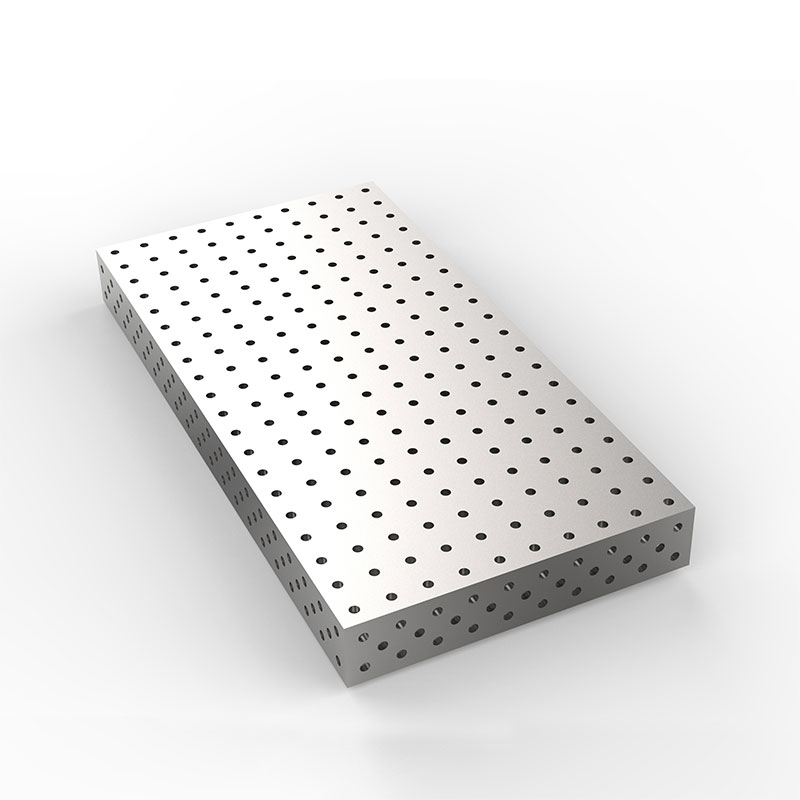
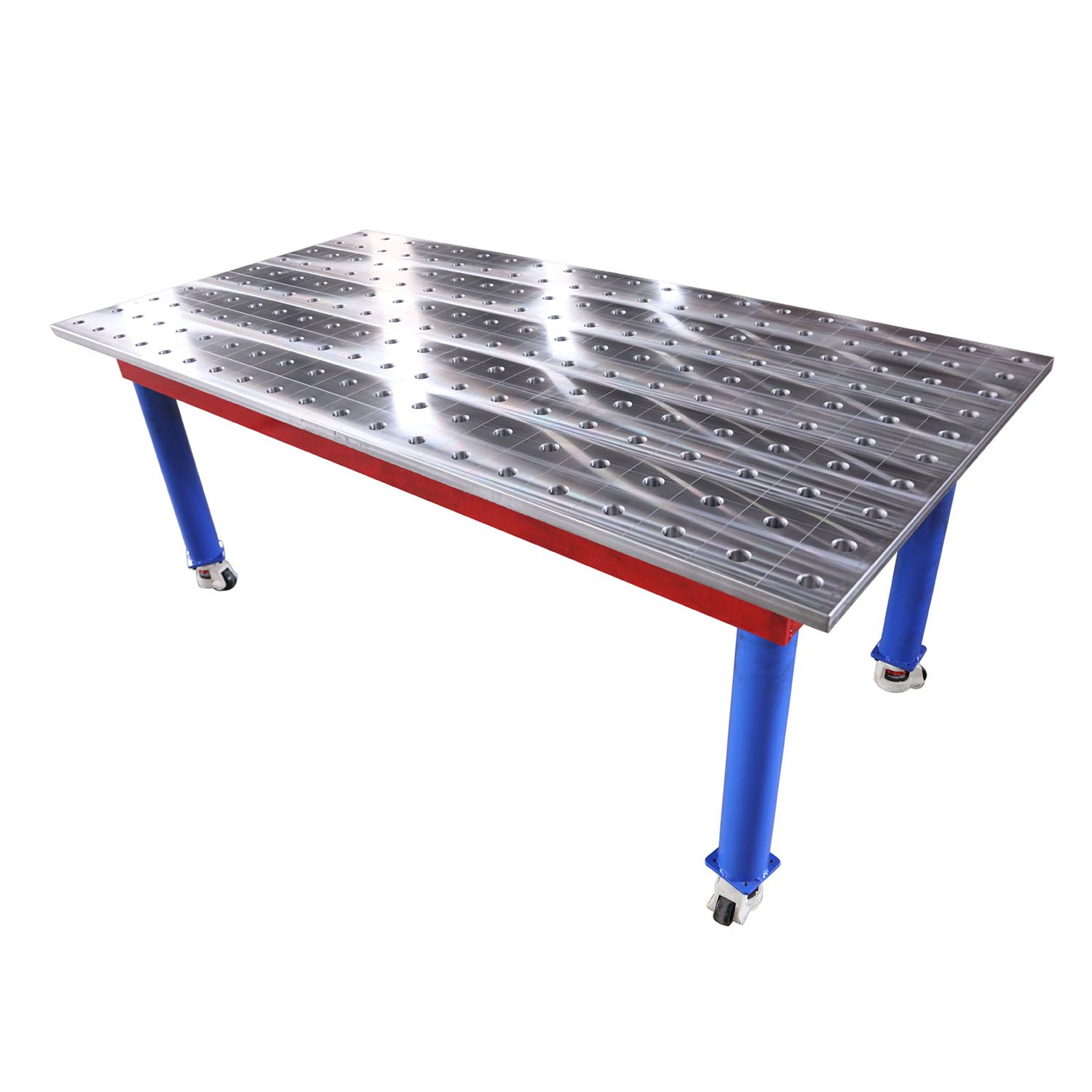
The precision of machined castings is heavily dependent on the stability and accuracy of the fixtures used during processing. This is where specialized expertise becomes a differentiator. Companies like Botou Haijun Metal Products Co., Ltd. exemplify the importance of high-quality tooling in the manufacturing ecosystem. Specializing in the research, development, and production of high-precision flexible modular fixtures and metalworking tools, Haijun Metal provides efficient welding and positioning solutions that are critical for modern manufacturing.
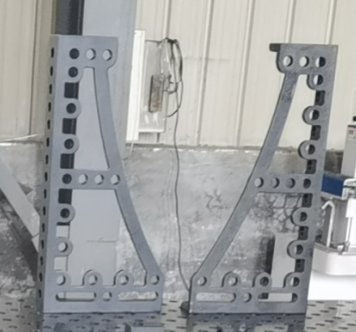
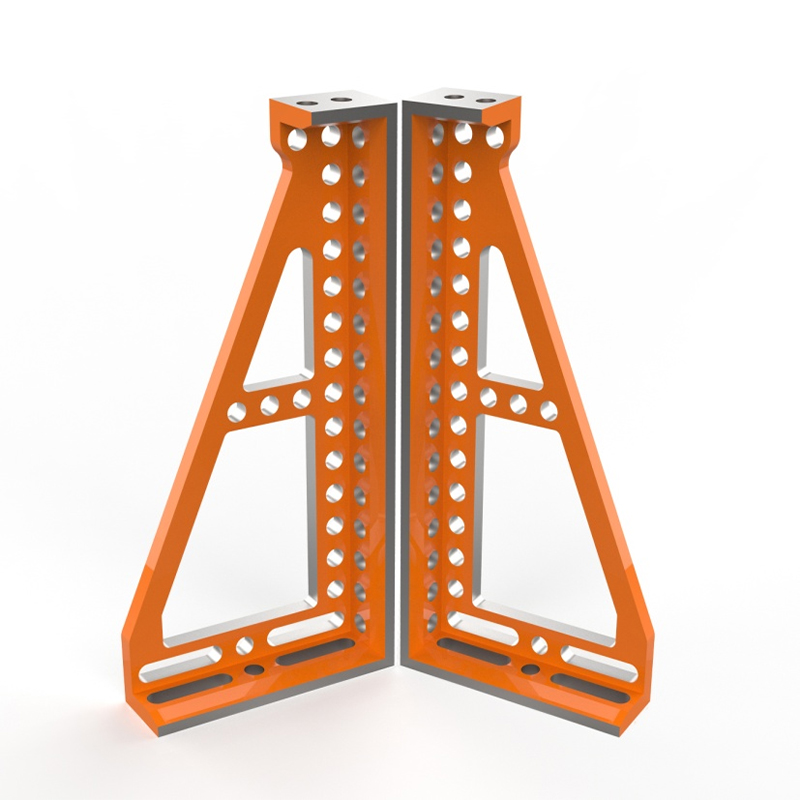
Their core product line, including 2D and 3D flexible welding platforms, has become preferred jigging equipment in the machining, automotive, and aerospace industries—sectors that heavily rely on precision aluminum castings. By utilizing complementary components such as U-shaped and L-shaped multi-purpose square boxes, 200-series support angle irons, and 0-225° universal angle gauges, manufacturers can achieve rapid workpiece positioning and clamping. This level of fixture precision ensures that the tight tolerances achieved in casting are maintained throughout the CNC machining process, minimizing distortion and maximizing repeatability. Partnering with suppliers who understand the symbiotic relationship between casting quality and fixture stability, such as Haijun Metal, ensures that every component meets exceptional durability and stability standards.
Frequently Asked Questions (FAQ)
What is the typical tolerance achievable with precision machined aluminum castings?
While as-cast tolerances vary by process, secondary CNC machining can achieve tolerances of ±0.025mm (±0.001 inches) or tighter for critical features. General non-critical features are typically held to ±0.1mm to ±0.2mm. The achievable tolerance depends on part size, geometry, and fixture stability.
Is it cheaper to machine from solid billet or use castings?
For complex parts, casting is almost always more cost-effective at medium to high volumes. Machining from solid billet generates significant material waste (buy-to-fly ratio) and requires longer machining times. Casting reduces material usage and machining time. However, for very low volumes (prototypes), machining from billet may be cheaper due to the absence of tooling costs.
Can aluminum castings be anodized after machining?
Yes, aluminum castings can be anodized. However, the high silicon content in some alloys (like A380) can result in a darker, less uniform anodic finish compared to wrought alloys (like 6061). A356 and A360 alloys anodize better. Pre-treatment processes such as acid etching or desmutting are critical to ensure a consistent appearance.
What is the minimum order quantity (MOQ) for precision machined castings?
MOQ depends on the casting method. Die casting requires expensive steel molds, so MOQs are typically higher (1,000+ units) to amortize tooling costs. Sand casting and investment casting have lower tooling costs, allowing for lower MOQs (50-100 units). Some manufacturers offer prototype services with soft tooling for even smaller quantities.
How do you prevent leakage in machined aluminum castings?
Leakage is usually caused by interconnected porosity. To prevent this:
1. Use vacuum-assisted die casting to reduce air entrapment.
2. Specify impregnation (sealing) for parts that must hold pressure.
3. Design walls with sufficient thickness to avoid shrinkage voids.
4. Perform 100% leak testing on critical components.
Conclusion: Optimizing Performance with Precision
Precision machined aluminum castings offer a strategic advantage for engineering teams seeking to balance complexity, weight, and cost. By leveraging the geometric freedom of casting and the accuracy of CNC machining, manufacturers can produce components that meet the demanding requirements of modern industries. Whether for electric vehicle battery housings, aerospace structural brackets, or medical device enclosures, this hybrid approach delivers superior value.
Success in sourcing these components relies on selecting the right alloy, optimizing design for manufacturability, and partnering with a manufacturer who possesses integrated casting and machining capabilities. As we move further into 2026, the emphasis on sustainability and efficiency makes this manufacturing route increasingly vital.
Ready to optimize your component design?
If you are looking for a reliable partner to produce high-quality precision machined aluminum castings, our team is equipped to handle your most challenging projects. From DFM analysis to final inspection, we ensure your parts meet exact specifications.
Explore our full range of manufacturing solutions and request a quote today.