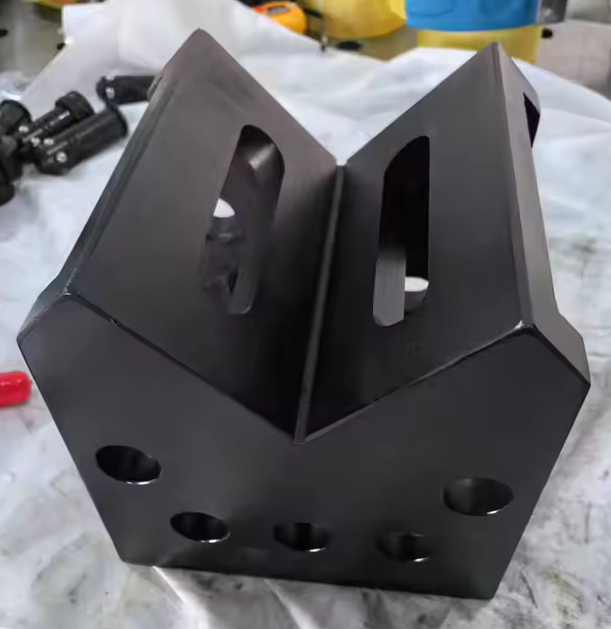
A Metal Fabrication Table for Industrial Workshops is a precision-engineered work surface designed to support welding, assembly, and machining operations with high dimensional accuracy. Unlike standard workbenches, these tables feature modular hole patterns or T-slots that allow for rapid clamping and positioning of workpieces using specialized fixtures. For industrial environments requiring repeatability and efficiency, flexible modular systems—such as the 2D and 3D platforms developed by Botou Haijun Metal Products Co., Ltd.—provide the optimal balance of rigidity, versatility, and speed.
What Defines a High-Performance Metal Fabrication Table?
In modern manufacturing, the fabrication table is not merely a surface; it is the foundational reference plane for all downstream processes. A high-performance table must maintain flatness under heavy thermal and mechanical loads while offering seamless integration with clamping tools.
The core definition revolves around three engineering pillars:
- Dimensional Stability: The ability to resist warping due to heat input during welding or heavy impacts during assembly.
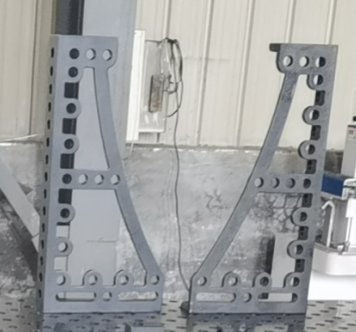
- Modular Flexibility: The capacity to adapt to various part geometries through interchangeable fixtures, such as square boxes and angle gauges.
- Surface Precision: Strict tolerance levels (often within ±0.05mm) that ensure assembled components meet final design specifications without extensive post-processing.
Industrial workshops increasingly move away from static, fixed tables toward flexible modular systems. This shift is driven by the need for quick changeovers in high-mix, low-volume production environments. By utilizing a standardized grid system, operators can set up complex jigs in minutes rather than hours.
Key Types of Fabrication Tables for Industrial Applications
Selecting the right table depends heavily on the specific workflow of the workshop. While traditional cast iron surfaces remain relevant for heavy machining, modular welding platforms dominate contemporary fabrication sectors.
1. Modular 2D Welding Platforms
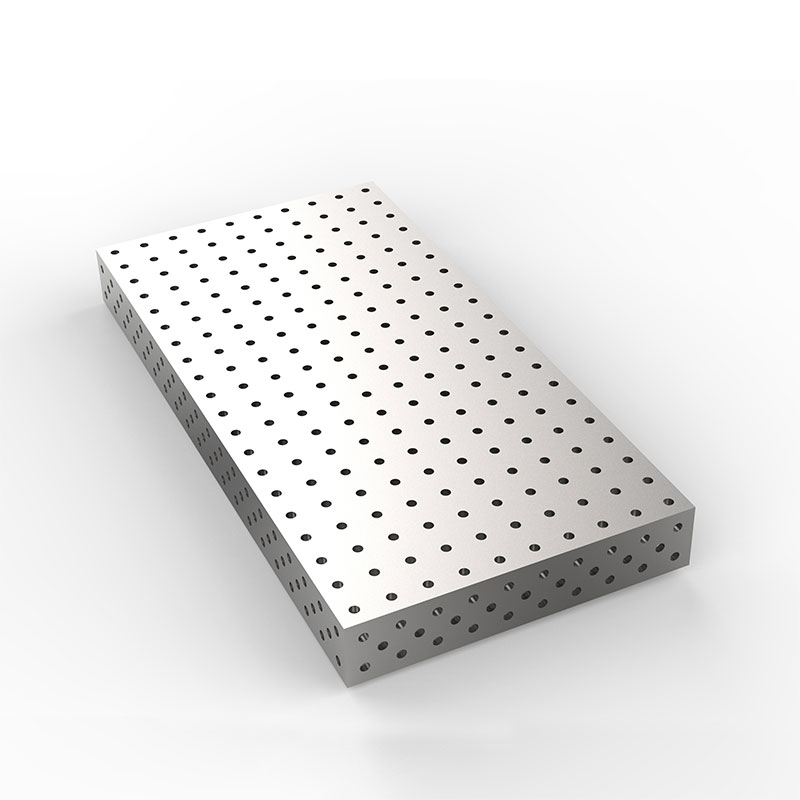
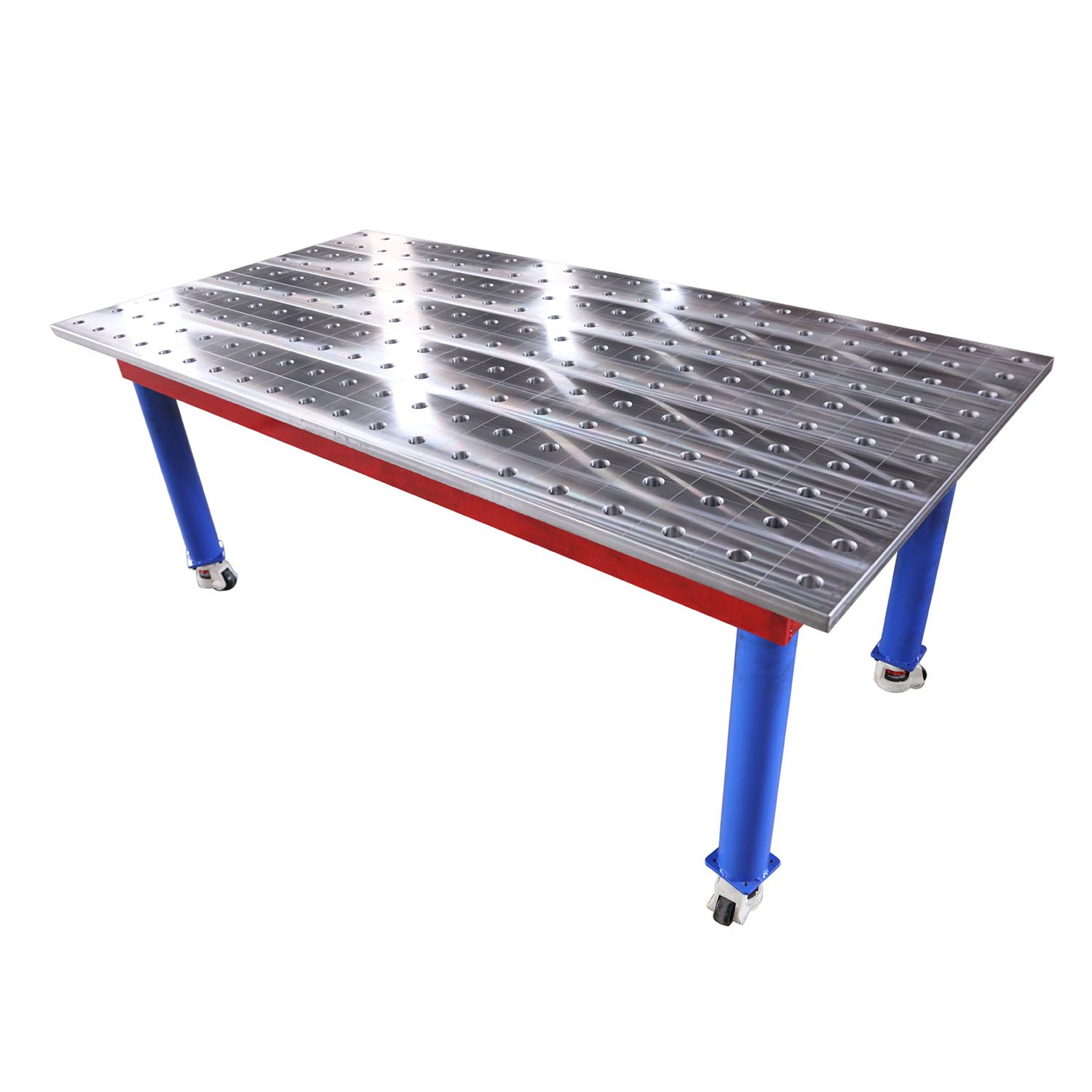
2D platforms are designed for flat-plane assembly. They feature a grid of holes on the top surface, allowing clamps and stops to be positioned anywhere along the X and Y axes. These are ideal for sheet metal work, frame assembly, and general structural welding.
The primary advantage lies in speed. Operators can use quick-action clamps and support blocks to secure parts instantly. Botou Haijun’s 2D flexible welding platforms exemplify this category, offering exceptional versatility for the machining and automotive industries where planar accuracy is critical.
2. 3D Flexible Welding Tables
For complex geometries involving multiple planes, 3D tables are essential. These systems utilize cube-shaped modules with holes on five sides, enabling clamping from vertical and horizontal angles simultaneously. This capability is crucial for aerospace components, robotic arms, and intricate structural frames.
3D tables eliminate the need for custom-built jigs for every unique part. Instead, universal components like angle connection blocks and multi-purpose square boxes create temporary, highly accurate fixtures. This modularity significantly reduces storage space and tooling costs.
3. Cast Iron Machining Tables
Traditional cast iron tables provide massive mass and vibration damping. They are best suited for heavy-duty machining, grinding, and inspection tasks where thermal stability and weight are more important than modular flexibility. However, they lack the rapid reconfiguration capabilities of modern modular systems.
Core Components and Accessories for Maximum Utility
A fabrication table’s value is multiplied by its ecosystem of accessories. Without proper clamping and positioning tools, even the most precise table cannot ensure accurate assembly. Understanding the synergy between the platform and its components is vital for operational efficiency.
| Component Type | Function | Application Scenario |
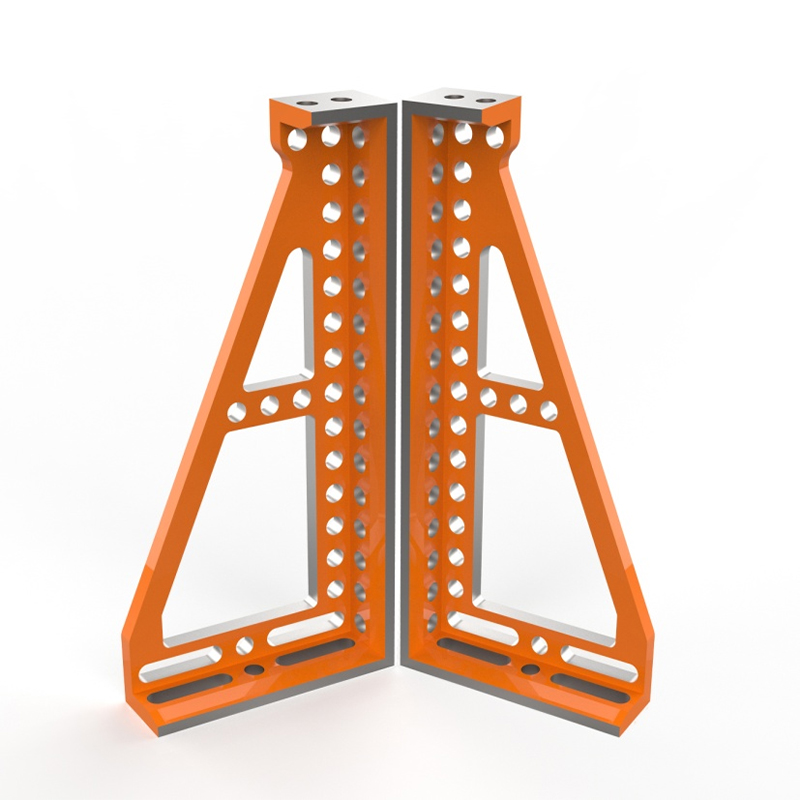
| U-Shaped & L-Shaped Square Boxes | Provides rigid 90-degree reference points and support. | Aligning perpendicular plates, framing, and box-section assembly. |
| 200-Series Support Angle Irons | Elevates workpieces and provides angled support. | Preventing weld burn-through on the table surface; supporting inclined cuts. |
| 0-225° Universal Angle Gauges | Allows precise angular positioning beyond 90 degrees. | Complex truss structures, pipe fittings, and non-orthogonal joints. |
| Angle Connection Blocks | Connects multiple modules or fixtures securely. | Building custom jig structures on 3D platforms. |
| Quick-Action Clamps | Secures workpieces rapidly with minimal effort. | High-volume production lines requiring fast cycle times. |
Botou Haijun Metal Products Co., Ltd. integrates these complementary components seamlessly with their platforms. For instance, their U-shaped and L-shaped multi-purpose square boxes are engineered to lock into the platform grid with zero play, ensuring that the reference angle remains true even under vigorous welding conditions. This integration enables rapid workpiece positioning and clamping, a key factor in reducing non-value-added time in industrial workshops.
Why Precision Matters: The Impact on Workflow Efficiency
Inaccurate fabrication tables lead to cumulative errors. A deviation of just 1mm at the base of a large structural frame can result in significant misalignment at the top, causing fitment issues during final assembly. This often necessitates costly rework, grinding, or even scrapping of parts.
Reducing Setup Time
Traditional methods involve measuring, marking, and tack-walking temporary stops for each new job. With a modular metal fabrication table, setup is reduced to placing pre-calibrated stops and clamps into the grid holes. This “plug-and-play” approach can reduce setup time by up to 70%, allowing shops to handle more jobs per shift.
Improving Weld Quality
Proper fixturing minimizes distortion. When parts are held rigidly in their correct geometric position, thermal expansion and contraction during welding are controlled. This results in straighter beams, flatter panels, and tighter tolerances, reducing the need for post-weld straightening.
Enhancing Worker Safety
Secure clamping prevents workpieces from shifting or tipping during handling and welding. This stability protects operators from unexpected movements of heavy metal parts, contributing to a safer workshop environment.
How to Choose the Right Metal Fabrication Table
Selecting the appropriate table requires analyzing several technical and operational factors. Buyers should avoid generic solutions and focus on specifications that match their production reality.
1. Assessing Load Requirements
Consider the maximum weight of the assemblies you will produce. Heavy structural steel requires a table with high load-bearing capacity and robust leg structures. Lighter sheet metal work may prioritize surface flatness and hole density over raw strength.
2. Determining Platform Size and Modularity
Workshop space dictates table dimensions. However, modularity offers a solution for limited spaces. Smaller tables can be linked together for larger projects. Botou Haijun’s flexible platforms allow for scalable setups, where additional modules can be added as production needs grow.
3. Evaluating Hole Pattern and Compatibility
Check the hole diameter and spacing. Standardization is key. Ensure that the table’s grid system is compatible with a wide range of commercially available clamps and fixtures. Proprietary systems can limit future expansion and increase long-term costs.
4. Material and Surface Treatment
High-quality steel or cast iron is preferred for durability. Surface treatments, such as anti-rust coatings or hardened finishes, extend the lifespan of the table in harsh industrial environments. Look for manufacturers who prioritize durability and stability in their material selection.
Common Mistakes in Fabrication Table Selection and Use
Even with high-quality equipment, improper usage can negate benefits. Awareness of common pitfalls helps maintain precision and longevity.
- Ignoring Leveling: A table must be perfectly level on a stable foundation. Failure to level the table correctly introduces gravitational errors into every assembly.
- Overloading Beyond Capacity: Placing weights exceeding the table’s rating can cause permanent deformation of the surface, ruining its flatness.
- Neglecting Maintenance: Spatter buildup in hole patterns prevents fixtures from seating fully. Regular cleaning is essential to maintain positional accuracy.
- Using Incompatible Clamps: Forcing non-standard clamps into the grid can damage the hole edges, leading to loose fits and reduced precision over time.
Maintenance Best Practices for Longevity
To ensure your metal fabrication table remains a precision tool for years, implement a routine maintenance schedule.
Daily Cleaning
Remove welding spatter, dust, and debris from the surface and hole patterns. Use a brass brush or specialized spatter remover to avoid damaging the steel surface. Clean holes ensure that pins and clamps insert smoothly and seat deeply.
Periodic Inspection
Check for signs of wear, dents, or rust. Inspect the structural integrity of legs and joints. If using modular systems, verify that locking mechanisms on connecting blocks are functioning correctly.
Surface Protection
Apply a thin layer of oil or protective coating if the table will not be used for an extended period. This prevents oxidation, especially in humid workshop environments. For active tables, use anti-spatter sprays to minimize adhesion of weld slag.
Industry-Specific Applications
Different sectors leverage fabrication tables in unique ways, highlighting the versatility of modern modular systems.
Automotive Manufacturing
In automotive workshops, precision is paramount for chassis and frame assembly. 2D flexible platforms allow for the rapid jigging of sub-assemblies, ensuring that mounting points align perfectly with vehicle specifications. The ability to quickly switch between different car models’ fixtures supports flexible production lines.
Aerospace Component Fabrication
Aerospace parts often involve complex curves and tight tolerances. 3D welding tables, equipped with universal angle gauges and custom supports, enable the accurate assembly of turbine mounts, wing structures, and landing gear components. The rigidity of the table ensures that delicate alloys are not distorted during welding.
General Machinery and Equipment
For manufacturers of industrial machinery, fabrication tables serve as the backbone of prototype development and batch production. The modularity allows engineers to test different assembly configurations quickly, accelerating the R&D process. Botou Haijun’s experience in providing tools to the machining industry underscores the importance of adaptable fixturing in this sector.
Frequently Asked Questions (FAQ)
What is the difference between a 2D and 3D welding table?
A 2D welding table has holes only on the top surface, suitable for flat assembly. A 3D welding table features holes on multiple sides of modular cubes, allowing for clamping and positioning in three-dimensional space, which is essential for complex, multi-angle structures.
Can I expand my fabrication table later?
Yes, modular systems are designed for scalability. You can add extra platform modules or extend the working area by linking tables together. This flexibility is a key advantage of systems like those offered by Botou Haijun Metal Products Co., Ltd.
How do I prevent welding spatter from damaging the table holes?
Use anti-spatter spray before starting work. Additionally, insert protective plugs or use sacrificial cover plates in areas where heavy spatter is expected. Regular cleaning with a brass brush also helps maintain hole integrity.
Why is flatness important in a fabrication table?
Flatness ensures that all parts lie on the same reference plane. Any deviation can cause misalignment in the final assembly, leading to fitment issues, structural weakness, and increased rework costs. High-precision tables maintain flatness within tight tolerances to guarantee quality.
What accessories are essential for a new fabrication table?
Essential accessories include quick-action clamps, square boxes (U and L shaped), support angle irons, and angle gauges. These tools enable you to position, clamp, and verify the geometry of your workpieces efficiently.
Conclusion: Investing in Precision for Industrial Growth
A high-quality Metal Fabrication Table for Industrial Workshops is not just a piece of equipment; it is a strategic asset that drives efficiency, quality, and profitability. By transitioning from static benches to flexible modular systems, manufacturers can significantly reduce setup times, improve weld accuracy, and adapt quickly to changing production demands.
Botou Haijun Metal Products Co., Ltd. stands at the forefront of this transformation, specializing in the research, development, and production of high-precision flexible modular fixtures. Their commitment to providing efficient and flexible welding and positioning solutions has made their 2D and 3D flexible welding platforms the preferred choice in machining, automotive, and aerospace industries. With a comprehensive range of complementary components, including U-shaped and L-shaped square boxes, 200-series support angle irons, and 0-225° universal angle gauges, Haijun Metal ensures that every workshop can achieve rapid workpiece positioning and clamping with exceptional durability and stability.
For industrial leaders looking to enhance their fabrication capabilities, investing in a reliable, modular table system is the first step toward streamlined operations. Whether you are assembling complex aerospace components or producing high-volume automotive frames, the right fixturing solution makes all the difference.
Ready to optimize your workshop efficiency? Explore our full range of flexible welding platforms and precision tools to find the perfect fit for your production needs.
View Related Products and Technical Solutions