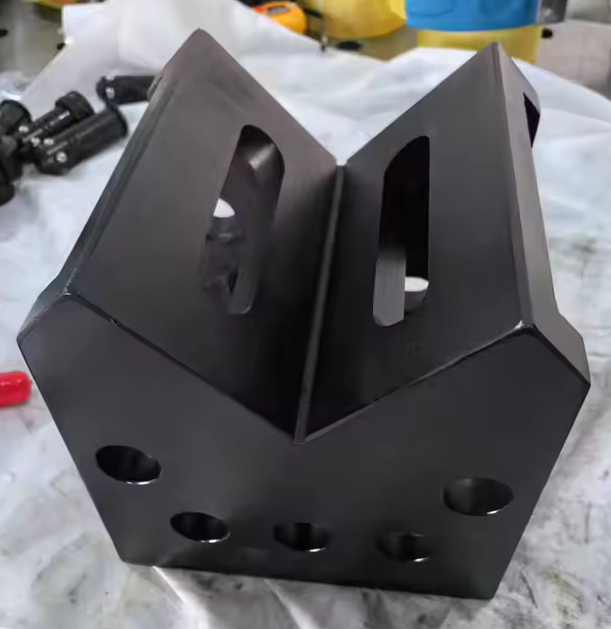
A laser welding fixture is a precision-engineered clamping system designed to hold workpieces in exact alignment during high-speed laser welding processes. Unlike traditional arc welding, laser welding demands micron-level accuracy to prevent beam deflection and ensure consistent penetration depth. Advanced manufacturing fixtures utilize modular components, such as 2D and 3D flexible platforms, to minimize thermal distortion and maximize repeatability. This guide details the engineering principles, selection criteria, and operational best practices for implementing high-precision fixturing solutions in modern industrial environments.
What Is a Laser Welding Fixture and Why Is It Critical?
Laser welding relies on a concentrated heat source to fuse materials with minimal heat-affected zones (HAZ). However, this precision introduces unique challenges regarding part fit-up. Even gaps as small as 0.1mm can lead to weld defects, porosity, or incomplete fusion. A laser welding fixture serves as the mechanical backbone that eliminates these variables by enforcing strict geometric tolerances before and during the welding cycle.
In advanced manufacturing, the fixture does more than just hold parts; it manages thermal dynamics. As the laser beam moves across the joint, localized heating causes expansion and contraction. High-quality fixtures, such as those developed by Botou Haijun Metal Products Co., Ltd., are engineered to counteract these forces. By providing rigid support and precise positioning, these systems ensure that the final assembly meets stringent automotive and aerospace standards without requiring extensive post-weld machining.
The Difference Between Laser and Traditional Welding Fixtures
While the basic function of clamping remains similar, laser welding fixtures differ significantly from those used in MIG or TIG processes. The primary distinctions lie in material transparency, accessibility, and tolerance levels.
- Tolerance Precision: Traditional welding can tolerate gaps up to 1-2mm with filler material. Laser welding, often autogenous (without filler), requires gap control within 0.05mm to 0.1mm.
- Beam Accessibility: Fixtures must be designed with low-profile clamps to avoid obstructing the laser head’s line of sight. Shadowing effects can cause incomplete welds.
- Material Reflectivity: Components near the weld zone must often be made from non-reflective or absorptive materials to prevent stray laser reflections from damaging the fixture or the optics.
- Thermal Conductivity: Advanced fixtures may incorporate copper or aluminum inserts to act as heat sinks, drawing heat away from sensitive areas to prevent warping.
Core Components of an Advanced Laser Welding System
An effective laser welding setup is not a single tool but an integrated ecosystem of modular components. Understanding these elements is crucial for engineers designing production lines. The versatility of the system depends on how well these components interact to secure complex geometries.
Flexible Modular Platforms: 2D vs. 3D
The foundation of any modern fixturing strategy is the base platform. Botou Haijun Metal Products Co., Ltd. specializes in both 2D and 3D flexible welding platforms, each serving distinct manufacturing needs.
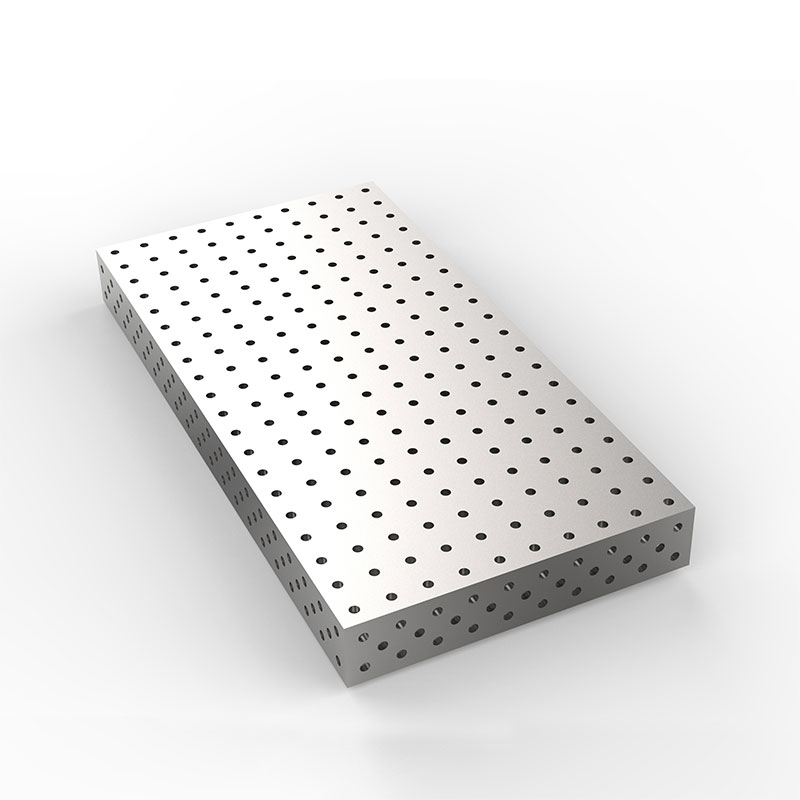
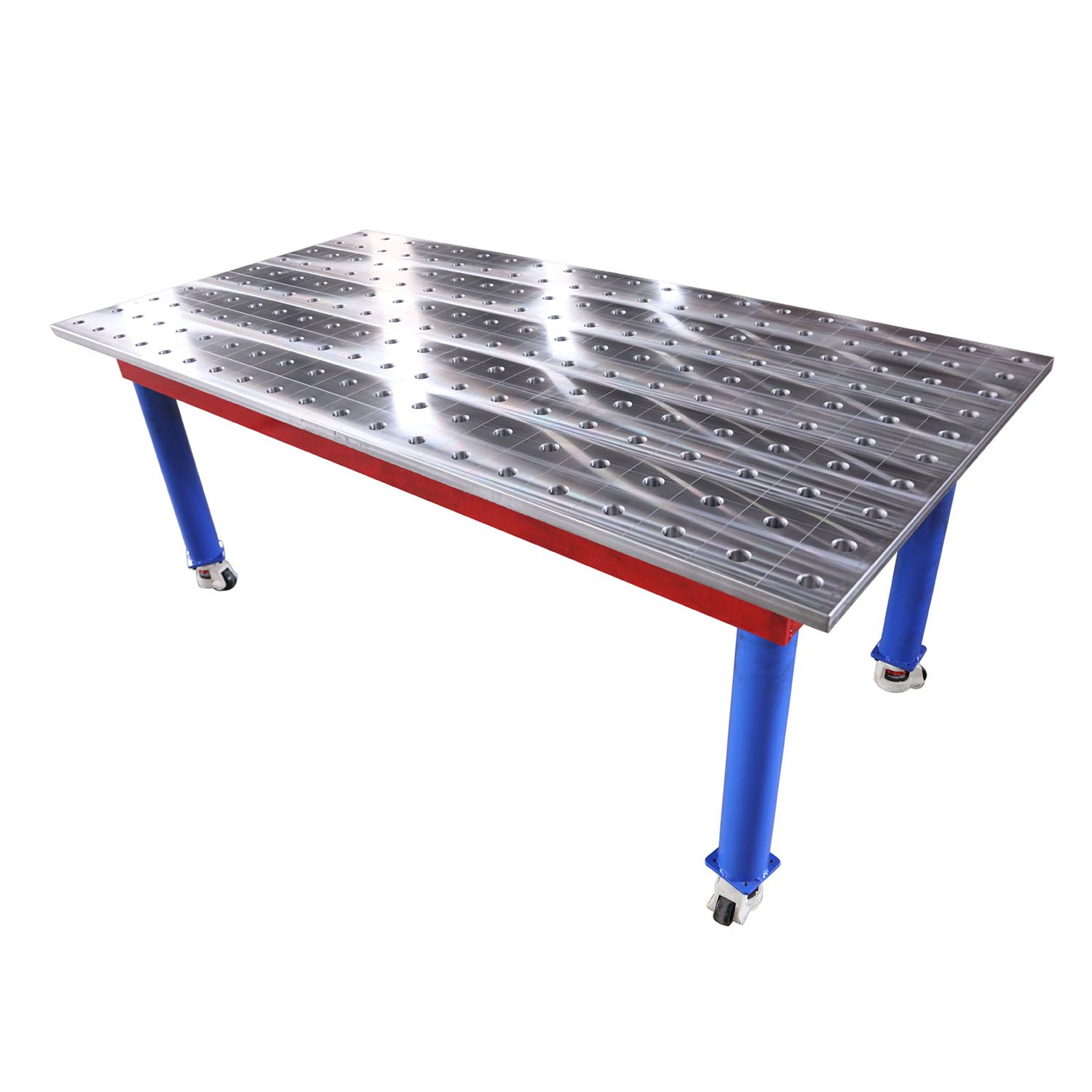
2D Flexible Platforms: These are ideal for flat sheet metal assemblies, such as automotive door panels or electronic enclosures. They feature a grid of precision-drilled holes that accept various clamps and stops. The modularity allows for rapid reconfiguration when switching between different product models, significantly reducing downtime.
3D Flexible Platforms: For complex, multi-dimensional parts like aerospace brackets or automotive chassis components, 3D platforms are essential. These systems use cube-like modules with holes on multiple faces, allowing clamps to approach the workpiece from any angle. This capability is critical for maintaining perpendicularity and angular accuracy in three-dimensional space.
Essential Clamping and Positioning Accessories
To fully leverage the potential of flexible platforms, specific accessories are required. These components ensure that every part is located correctly and held securely against welding forces.
- U-shaped and L-shaped Multi-purpose Square Boxes: These serve as foundational building blocks for creating custom stops and supports. Their hardened surfaces resist wear from repeated clamping and provide a reliable reference plane.
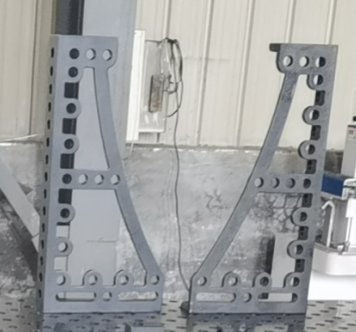
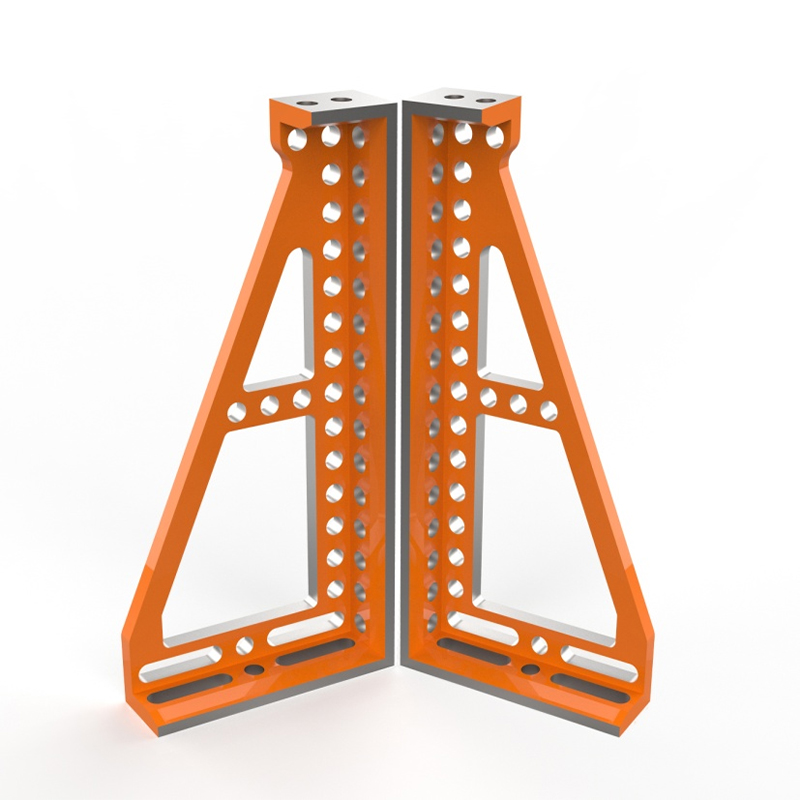
- 200-Series Support Angle Irons: These robust components provide vertical support for heavier workpieces. They are integral in maintaining the height and angle of large assemblies, ensuring stability during high-power laser operations.
- 0-225° Universal Angle Gauges: Precision angle setting is vital for inclined welds. These gauges allow operators to set and lock specific angles quickly, ensuring consistency across batch production runs.
- Angle Connection Blocks: Used in conjunction with cast iron 3D platforms, these blocks enable the creation of rigid, custom-shaped fixture frames that can withstand significant thermal stress.
Engineering Principles: Minimizing Distortion and Maximizing Accuracy
The primary engineering challenge in laser welding is managing thermal distortion. As the laser input energy melts the metal, the surrounding material expands. Upon cooling, it contracts, potentially pulling the assembly out of alignment. Advanced fixturing strategies mitigate this through several key mechanisms.
Clamping Sequence and Force Distribution
The order in which clamps are applied affects the final geometry. Best practices suggest a “center-out” clamping sequence for symmetrical parts to distribute stress evenly. However, for asymmetric parts, fixtures must be designed to constrain degrees of freedom strategically. Over-clamping can induce residual stresses that release after welding, causing spring-back. Therefore, fixtures should apply only the necessary force to maintain contact, often utilizing pneumatic or hydraulic systems for consistent pressure.
Heat Sink Integration
In high-speed laser welding, heat accumulation can be rapid. Integrating heat sinks into the fixture design helps dissipate energy. Copper inserts placed beneath the weld joint can absorb excess heat, reducing the size of the heat-affected zone and minimizing distortion. This technique is particularly effective in thin-sheet applications where warping is a common defect.
Reflection Management
Laser beams can reflect off metallic fixture components, posing safety risks and potentially damaging the laser optics. Fixture designs must account for this by using anti-reflective coatings or angling supporting structures away from the beam path. Non-metallic spacers or absorptive materials are often used in critical zones to trap stray light.
Application Scenarios Across Industries
Laser welding fixtures are pivotal in industries where precision, speed, and aesthetic quality are paramount. The adaptability of systems provided by manufacturers like Botou Haijun Metal Products Co., Ltd. allows them to serve diverse sectors.
Automotive Manufacturing
The automotive industry is the largest consumer of laser welding technology. From body-in-white (BIW) assemblies to battery trays for electric vehicles (EVs), fixtures must handle high volumes with zero defect tolerance. Flexible 3D platforms allow manufacturers to switch between different car models on the same line, accommodating the trend towards mixed-model production. The precision of U-shaped square boxes and angle irons ensures that door gaps and panel alignments meet consumer expectations for quality.
Aerospace and Aviation
Aerospace components, such as turbine blades and structural brackets, often involve exotic alloys like titanium and Inconel. These materials are sensitive to thermal input. Fixtures in this sector prioritize rigidity and heat dissipation. The use of cast iron 3D welding platforms provides the necessary mass and stability to dampen vibrations and maintain position during long weld seams. Precision angle gauges ensure that complex aerodynamic profiles are maintained within microns.
Consumer Electronics and Precision Machinery
In the electronics sector, miniaturization demands extremely small weld spots. Fixtures must be compact yet incredibly precise. Modular components allow for the creation of micro-fixtures that hold tiny components without obscuring the laser view. The repeatability of these systems ensures that thousands of units can be produced with identical quality, crucial for devices like smartphones and wearable technology.
Selection Guide: Choosing the Right Fixture Strategy
Selecting the appropriate fixturing solution requires a thorough analysis of the product geometry, production volume, and welding parameters. Engineers should consider the following factors when designing or purchasing a system.
| Factor | Consideration | Recommended Solution |
| Part Geometry | Flat sheets vs. complex 3D shapes | 2D Platform for flat parts; 3D Platform for complex assemblies |
| Production Volume | High mix/low volume vs. dedicated mass production | Flexible Modular System for high mix; Dedicated Hard Tooling for mass production |
| Material Thickness | Thin gauge (5mm) | Heat sink integration for thin gauge; Heavy-duty clamps for thick plate |
| Accessibility | Complex weld paths requiring multi-angle access | Low-profile clamps and modular angle blocks |
| Budget | Initial investment vs. long-term flexibility | Modular systems offer higher ROI for changing product lines |
Why Flexibility Matters in Modern Manufacturing
Traditional dedicated fixtures are expensive and time-consuming to design. Any change in product design renders them obsolete. In contrast, flexible modular fixtures, such as those offered by Botou Haijun Metal Products Co., Ltd., provide a future-proof solution. By reusing core components like square boxes, angle irons, and base plates, companies can reconfigure their lines in hours rather than weeks. This agility is essential in today’s fast-paced market, where product lifecycles are shortening.
Common Mistakes in Laser Welding Fixturing
Even with high-quality components, improper implementation can lead to poor results. Avoiding these common pitfalls is essential for achieving optimal weld quality.
- Ignoring Gap Control: Assuming the laser will bridge gaps is a critical error. Fixtures must actively close gaps or hold parts in tight contact before welding begins.
- Over-Constraining the Part: Applying too many clamps can lock in internal stresses. When the part is released, it may distort. Use the minimum number of clamps required for stability.
- Poor Maintenance of Modular Components: Dirt, spatter, and wear on locating pins and holes degrade accuracy over time. Regular cleaning and inspection of square boxes and angle gauges are mandatory.
- Neglecting Thermal Expansion: Failing to account for material expansion during welding can lead to dimensional errors. Allow for slight movement or use active cooling in the fixture design.
- Inadequate Beam Clearance: Placing clamps too close to the weld zone can cause shadowing. Always simulate the laser path to ensure unobstructed access.
Maintenance and Operational Best Practices
To ensure the longevity and precision of laser welding fixtures, a structured maintenance routine is necessary. The high-precision nature of components like universal angle gauges and support angle irons means they are sensitive to damage and contamination.
Daily Cleaning and Inspection
Remove welding spatter and dust from all fixture components daily. Spatter accumulation on locating surfaces can introduce errors of several tenths of a millimeter. Use non-abrasive tools to clean threads and holes. Inspect clamping jaws for wear and replace them if they show signs of deformation.
Periodic Calibration
Verify the accuracy of the base platform and modular components regularly. Check the squareness of U-shaped and L-shaped boxes against a master standard. Ensure that the 0-225° universal angle gauges retain their calibration. Recalibrate or replace components that fall outside specified tolerances to maintain process integrity.
Lubrication and Care
Apply appropriate lubricants to moving parts and threaded connections to prevent seizing and ensure smooth operation. However, avoid excessive lubrication near the weld zone, as oils can vaporize and contaminate the weld pool, leading to porosity.
Frequently Asked Questions (FAQ)
How does a laser welding fixture improve weld quality?
A laser welding fixture improves quality by ensuring consistent part fit-up, minimizing gaps, and reducing thermal distortion. By holding parts in precise alignment, it prevents beam deflection and ensures uniform penetration, resulting in stronger, cleaner welds with fewer defects.
What is the advantage of using a 3D flexible welding platform?
3D flexible welding platforms offer superior versatility for complex, multi-dimensional parts. They allow clamping from multiple angles, enabling precise positioning of intricate geometries. This flexibility reduces the need for dedicated tooling, lowering costs and speeding up production changes.
Can modular fixtures handle high-volume production?
Yes, modular fixtures are suitable for high-volume production, especially in mixed-model environments. While dedicated fixtures may be faster for a single part, modular systems like those from Botou Haijun Metal Products Co., Ltd. offer the agility to switch between products quickly, maintaining high overall equipment effectiveness (OEE).
What materials are best for laser welding fixture components?
Fixture components are typically made from hardened steel, cast iron, or aluminum. Hardened steel offers durability and wear resistance. Cast iron provides excellent stability and damping properties. Aluminum is used for lightweight applications and as a heat sink due to its high thermal conductivity.
How do I choose between 2D and 3D fixturing systems?
Choose a 2D system for flat or nearly flat assemblies, such as sheet metal panels. Opt for a 3D system for complex, sculpted parts that require clamping from various angles, such as automotive frames or aerospace components. The choice depends on the geometric complexity of your workpiece.
Conclusion: Elevating Manufacturing Precision with Advanced Fixturing
In the realm of advanced manufacturing, the laser welding fixture is not merely an accessory but a critical determinant of product quality and production efficiency. As industries push towards tighter tolerances and higher speeds, the demand for precise, flexible, and durable fixturing solutions continues to grow. By understanding the engineering principles behind thermal management, gap control, and modular design, manufacturers can significantly enhance their welding outcomes.
Companies seeking to optimize their production lines should prioritize solutions that offer both precision and adaptability. Botou Haijun Metal Products Co., Ltd. stands out as a trusted partner in this journey, providing high-quality 2D and 3D flexible welding platforms, along with a comprehensive range of accessories like universal angle gauges and support angle irons. Their commitment to research and development ensures that every component delivers the stability and versatility needed for modern industrial challenges.
Whether you are in the automotive, aerospace, or general machinery sector, investing in the right fixturing strategy is an investment in your brand’s reputation for quality. To explore how our modular solutions can streamline your welding processes and reduce operational costs, we invite you to review our detailed product specifications.
→ View Our Flexible Welding Platform Solutions and Request a Technical Consultation