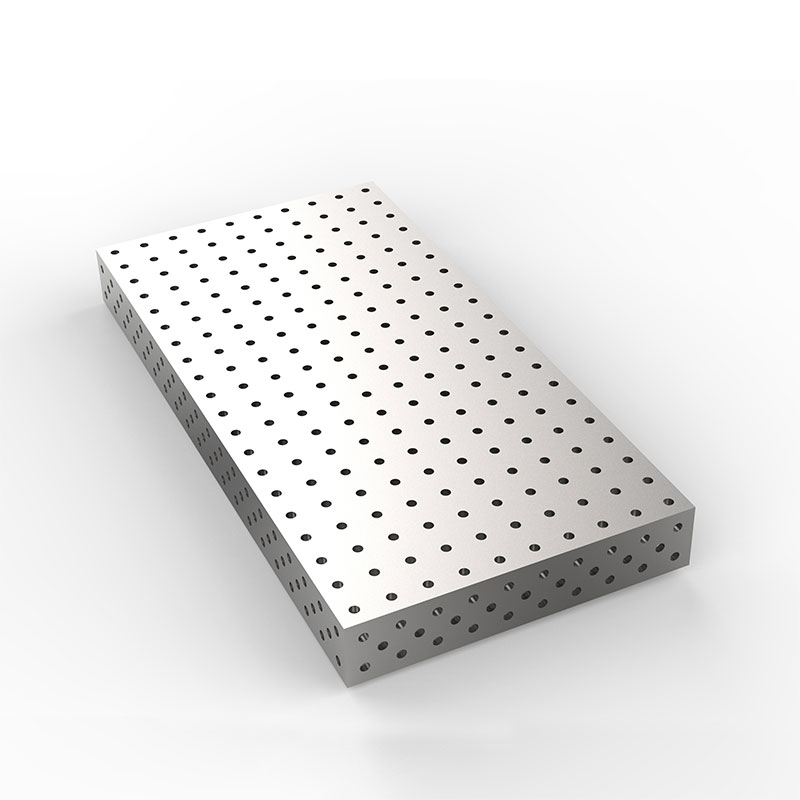
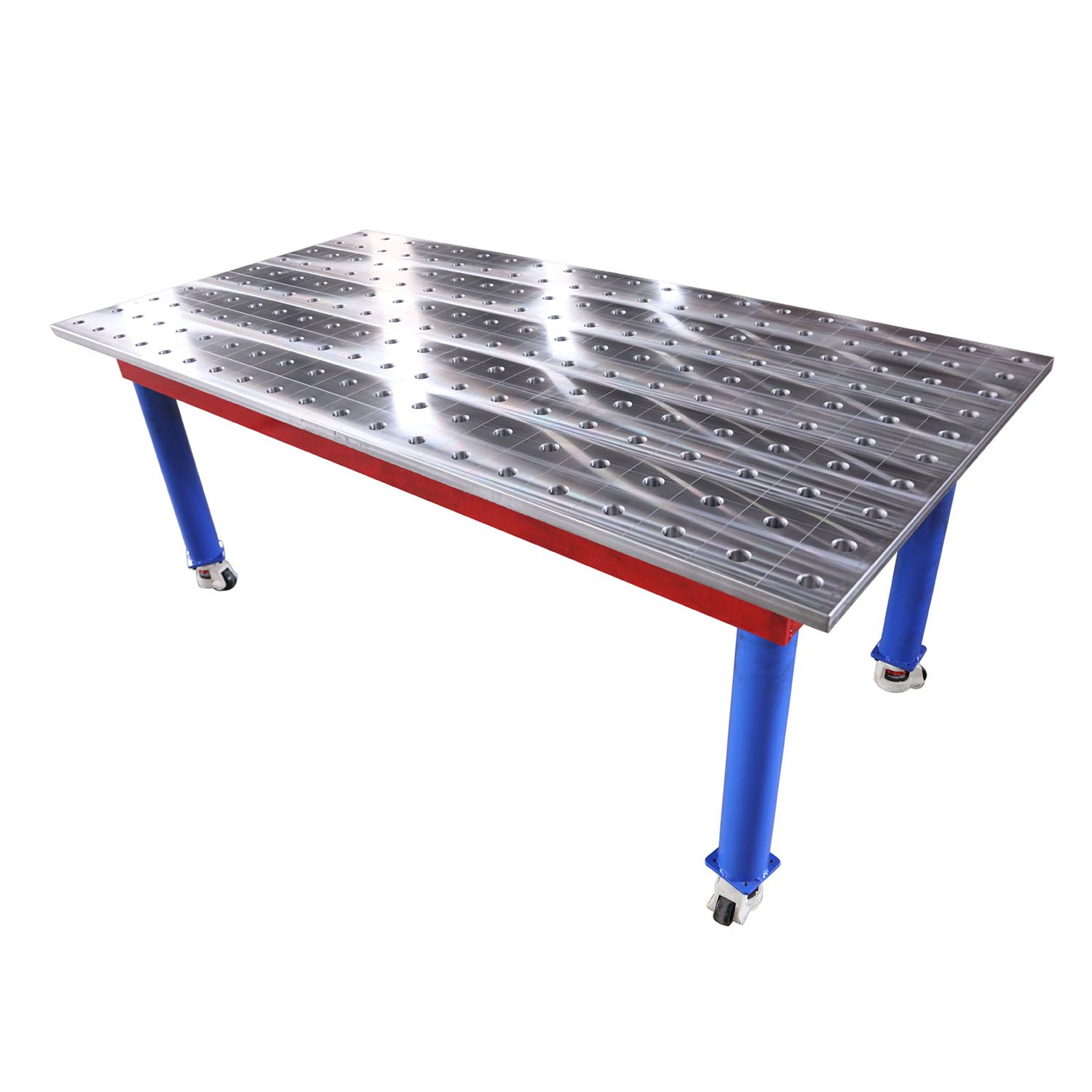
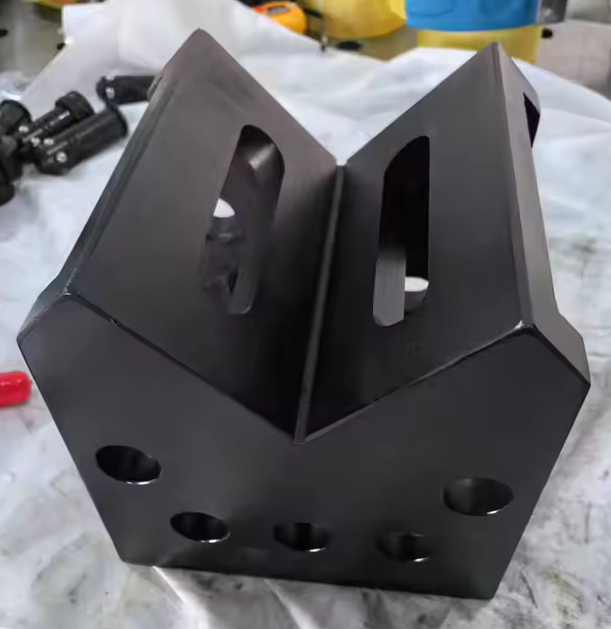
A 4×8 welding table is the industry-standard work surface for large-scale fabrication, offering a 4-foot by 8-foot (1220mm x 2440mm) footprint that accommodates full-sheet metal stock, heavy structural assemblies, and complex jigs. This size strikes an optimal balance between workspace utility and shop floor manageability, making it ideal for automotive frames, industrial machinery bases, and architectural steelwork. By providing a flat, rigid, and modular foundation, a 4×8 table ensures precision alignment and reduces setup time for high-volume production environments.
Why the 4×8 Footprint Dominates Large Fabrication Shops
In professional metalworking, space efficiency and material compatibility drive equipment selection. The 4×8 welding table has become the default choice for serious fabricators because it aligns perfectly with standard raw material dimensions. Most steel plates, aluminum sheets, and plywood substrates are manufactured in 4×8 foot sizes. Using a table of identical dimensions eliminates overhang issues, ensures uniform support across the entire workpiece, and prevents warping during the welding process.
Beyond material fit, the 4×8 size offers sufficient surface area for complex assemblies. Unlike smaller benches restricted to minor repairs or small parts, a 4×8 platform allows multiple operators to work simultaneously or enables the staging of large sub-assemblies. For shops handling structural steel, HVAC ducting, or custom vehicle chassis, this surface area is not just a convenience—it is a operational necessity.
Standard Dimensions and Material Compatibility
The nominal “4×8” designation refers to the external working surface. However, precise engineering requires understanding the actual usable area. A high-quality 4×8 welding table typically features a top thickness ranging from 1/4 inch to 1/2 inch (6mm to 12mm), depending on the load requirements. The underlying frame structure adds stability without encroaching on the primary workspace.
- Sheet Metal Support: Full 4×8 sheets rest flush, preventing sagging during cutting or tack welding.
- Structural Steel: Long beams and channels can be supported entirely within the frame, ensuring squareness.
- Modular Expansion: Multiple 4×8 tables can be bolted together to create massive 8×8 or 8×12 workstations for oversized projects like boat hulls or trailer frames.
Key Features of a High-Performance 4×8 Welding Table
Not all welding tables are created equal. For large fabrication jobs, the table must withstand significant thermal stress, mechanical impact, and heavy static loads. At Botou Haijun Metal Products Co., Ltd., we specialize in the research and development of high-precision flexible modular fixtures that meet these rigorous demands. Our approach integrates durability with flexibility, ensuring that the 4×8 footprint serves as a versatile foundation for modern manufacturing.
Flatness and Surface Integrity
The most critical attribute of any welding table is flatness. A warped table leads to misaligned assemblies, requiring costly rework. Professional-grade 4×8 tables undergo precision machining or stress-relieving processes to maintain tolerances within ±1mm across the entire surface. This level of accuracy is essential when building jigs or fixtures where geometric integrity is paramount.
Haijun Metal’s core product line includes 2D and 3D flexible welding platforms renowned for their exceptional versatility and precision. These platforms are engineered to resist distortion even under repeated high-heat welding cycles. The use of high-quality cast iron or stress-relieved steel ensures that the table remains a reliable reference plane for years of intensive use.
Modular Clamping Systems
A bare steel plate is insufficient for complex fabrication. The true value of a modern 4×8 table lies in its modularity. Integrated hole patterns—such as the standard 16mm or 28mm grid—allow for the rapid attachment of clamps, stops, and squares. This transforms the table from a passive surface into an active positioning system.
We offer a comprehensive range of complementary components that integrate seamlessly with our platforms. These include:
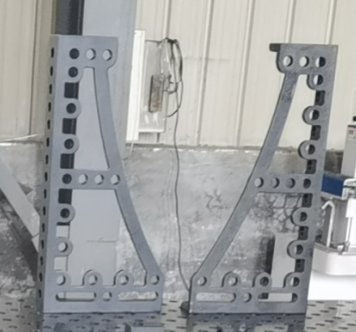
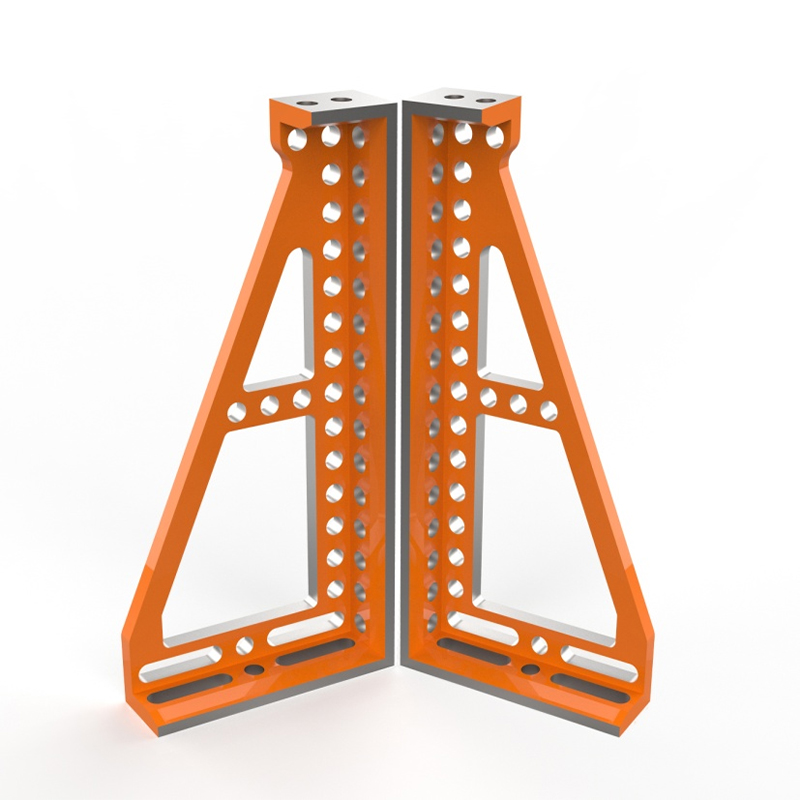
- U-shaped and L-shaped multi-purpose square boxes: Essential for establishing perfect 90-degree angles and supporting vertical pieces.
- 200-series support angle irons: Provide robust support for angled weldments and prevent tipping during assembly.
- 0-225° universal angle gauges: Allow for precise positioning of non-perpendicular joints, crucial for aerospace and automotive applications.
These accessories enable rapid workpiece positioning and clamping, significantly reducing setup time. In a production environment, minimizing the time spent measuring and squaring parts directly translates to higher throughput and lower labor costs.
Material Selection: Steel vs. Cast Iron for 4×8 Tables
Choosing the right material for your 4×8 welding table depends on the specific nature of your fabrication work. Both steel and cast iron offer distinct advantages, and understanding these differences is key to making an informed investment.
| Feature | Steel Welding Table | Cast Iron Welding Table |
| Durability | High impact resistance; can withstand heavy hammering. | Brittle under sharp impact; excellent compression strength. |
| Flatness Retention | Good, but may warp under extreme uneven heat. | Superior; naturally stress-relieved and maintains flatness. |
| Weight | Lighter, easier to move if equipped with casters. | Extremely heavy; provides inherent stability and vibration damping. |
| Cost | Generally more affordable. | Premium pricing due to casting and machining complexity. |
| Best Use Case | General fabrication, structural steel, heavy pounding. | Precision jigging, aerospace, automotive, delicate assembly. |
At Haijun Metal, we manufacture professional cast iron 3D welding platforms and angle connection blocks, ensuring that every product delivers exceptional durability and stability. For shops focused on high-precision work where flatness is non-negotiable, our cast iron solutions provide the thermal stability needed to maintain tight tolerances. For general-purpose heavy fabrication, our steel-based modular systems offer the ruggedness required for demanding industrial environments.
Applications of 4×8 Welding Tables in Industry
The versatility of the 4×8 welding table makes it a staple across various sectors. Its ability to support large, heavy, and complex structures makes it indispensable in industries where precision and scale intersect.
Automotive and Motorsports
Building car chassis, roll cages, and suspension components requires a perfectly flat reference surface. A 4×8 table allows fabricators to lay out the entire wheelbase of a vehicle, ensuring symmetry and alignment. The modular clamping systems enable quick adjustments for different vehicle models, making it ideal for custom shops and racing teams.
Aerospace and Aviation
In aerospace fabrication, tolerance margins are incredibly tight. Aircraft frames and wing structures often require assembly on large, stable platforms. The 3D flexible welding platforms provided by Haijun Metal are preferred jigging equipment in the aerospace industry due to their ability to hold complex geometries securely. The integration of universal angle gauges and precision stops ensures that every joint meets strict regulatory standards.
Industrial Machinery and Equipment
Manufacturing bases for CNC machines, conveyor systems, and robotic cells demands massive, rigid structures. A 4×8 table provides the necessary footprint to assemble these heavy components. The table’s rigidity prevents movement during the welding of thick plates, ensuring that the final machine base is square and level.
Architectural and Structural Steel
For custom staircases, gates, and building facades, a 4×8 table allows fabricators to pre-assemble large sections before installation. This off-site preparation improves quality control and speeds up on-site construction. The ability to clamp long beams and vertical supports simultaneously ensures that structural integrity is maintained throughout the welding process.
How to Choose the Right 4×8 Welding Table
Selecting the ideal 4×8 welding table involves evaluating several technical factors. Ignoring these details can lead to inefficiencies and compromised weld quality.
1. Top Thickness and Load Capacity
For light gauge metalwork, a 1/4-inch top may suffice. However, for heavy structural steel, a 1/2-inch or thicker top is recommended to prevent deflection. Consider the maximum weight of the assemblies you plan to build. Haijun Metal’s platforms are designed to handle substantial loads, ensuring that the table does not flex under pressure.
2. Hole Pattern and Modularity
The density and size of the hole pattern determine the flexibility of your clamping options. A finer grid allows for more precise positioning of stops and clamps. Ensure that the table you choose is compatible with a wide range of accessories. Our 2D and 3D flexible welding platforms are designed to integrate seamlessly with standard modular components, maximizing their utility.
3. Frame Construction and Stability
The frame supports the top and absorbs vibration. Look for tables with heavy-gauge tubing and reinforced corners. A rigid frame prevents the table from rocking during aggressive grinding or hammering. Additionally, consider whether you need a stationary base or a mobile unit with locking casters. For large fabrication jobs, a stationary, bolted-down base often provides the best stability.
4. Surface Treatment and Finish
Raw steel will rust, while painted surfaces can be damaged by spatter. Many professional tables come with a protective coating that resists spatter adhesion, making cleanup easier. Alternatively, some fabricators prefer untreated steel for better grounding, accepting the need for regular maintenance. Haijun Metal ensures that every product delivers exceptional durability, with finishes designed to withstand the harsh conditions of a welding shop.
Maximizing Efficiency with Flexible Fixturing
Owning a 4×8 table is only the first step. To truly leverage its potential, you must adopt a flexible fixturing strategy. This approach minimizes setup time and maximizes repeatability.
Rapid Prototyping and Jigging
With a modular 4×8 table, you can build custom jigs in minutes rather than hours. By using square boxes, angle irons, and clamps, you can create temporary fixtures that hold parts in exact positions. Once the weld is complete, the jig can be disassembled and the components reused for the next project. This flexibility is particularly valuable in low-volume, high-mix production environments.
Error Reduction and Quality Control
Manual measurement is prone to error. Modular fixturing relies on physical stops and guides, which eliminate measurement variability. When parts are consistently positioned against the same references, weld quality improves, and rework rates drop. This consistency is crucial for maintaining customer satisfaction and meeting industry standards.
Botou Haijun Metal Products Co., Ltd. is committed to providing efficient and flexible welding and positioning solutions for the modern manufacturing industry. By integrating our high-precision fixtures with your 4×8 table, you transform a simple work surface into a sophisticated manufacturing cell.
Maintenance and Care for Your Welding Table
To ensure longevity and consistent performance, proper maintenance of your 4×8 welding table is essential. Regular care prevents rust, maintains flatness, and keeps the modular holes clean.
- Clean Spatter Regularly: Remove weld spatter from the surface and holes using a chisel or grinder. Accumulated spatter can interfere with clamping and damage accessories.
- Prevent Rust: Apply a thin layer of oil or a specialized anti-spatter spray to the surface when not in use. This protects the steel from moisture and oxidation.
- Check Flatness: Periodically verify the table’s flatness using a straight edge and feeler gauges. If deviations are detected, address them before they affect production quality.
- Inspect Clamping Components: Regularly check your clamps, squares, and stops for wear and damage. Replace worn components to maintain positioning accuracy.
Frequently Asked Questions (FAQ)
What is the weight of a typical 4×8 welding table?
The weight varies significantly based on material and construction. A steel 4×8 table with a 1/4-inch top and tubular frame typically weighs between 300 and 500 lbs. A cast iron table of the same size can weigh over 1,000 lbs due to the density of the material. The heavier weight of cast iron provides superior vibration damping and stability.
Can I connect two 4×8 tables together?
Yes, most professional 4×8 tables are designed with modular connectivity in mind. They can be bolted together side-by-side or end-to-end to create larger work surfaces. Ensure that the tables are leveled precisely during installation to avoid steps or gaps at the junction. Haijun Metal’s modular systems are specifically engineered to facilitate such expansions seamlessly.
What accessories are essential for a 4×8 welding table?
Essential accessories include clamping squares, stop blocks, angle gauges, and hold-down clamps. U-shaped and L-shaped square boxes are particularly useful for establishing perpendicular references. Additionally, having a set of shims can help compensate for minor irregularities in workpieces. Our comprehensive range of complementary components ensures that you have everything needed for rapid workpiece positioning.
Is a 4×8 table suitable for small shops?
While a 4×8 table is large, it can be suitable for small shops if space allows. It serves as a central hub for all fabrication activities. If space is limited, consider a mobile unit with locking casters that can be moved when not in use. Alternatively, a smaller table might be more appropriate, but you may sacrifice the ability to handle full-sheet materials efficiently.
How does a 3D welding platform differ from a standard 2D table?
A standard 2D table provides a flat horizontal surface for assembly. A 3D welding platform, such as those offered by Haijun Metal, includes vertical and angled referencing capabilities. This allows for the assembly of complex, multi-dimensional structures without the need for custom jigs. 3D platforms are ideal for aerospace and automotive applications where parts have complex geometries.
Conclusion: Investing in Precision and Productivity
A 4×8 welding table is more than just a work surface; it is a foundational tool that defines the capability of your fabrication shop. By providing a large, flat, and modular platform, it enables the efficient handling of large-scale projects, reduces setup time, and improves weld quality. Whether you are working in automotive, aerospace, or industrial manufacturing, the right table can significantly enhance your productivity.
When selecting a 4×8 welding table, prioritize flatness, modularity, and durability. Consider the specific needs of your applications and choose a system that offers the flexibility to adapt to changing projects. Botou Haijun Metal Products Co., Ltd. stands ready to support your manufacturing goals with high-precision flexible modular fixtures and metalworking tools. Our commitment to quality and innovation ensures that you receive equipment that delivers lasting value.
For shops looking to elevate their fabrication capabilities, investing in a premium 4×8 table and a comprehensive suite of modular accessories is a strategic decision. It streamlines workflows, minimizes errors, and supports the production of high-quality, precision-engineered products.
If you are ready to optimize your welding operations with state-of-the-art fixturing solutions, explore our range of 2D and 3D flexible welding platforms and accessories. Contact our team today to discuss how our products can be tailored to your specific fabrication needs.
View Our Full Range of Welding Tables and Modular Fixtures