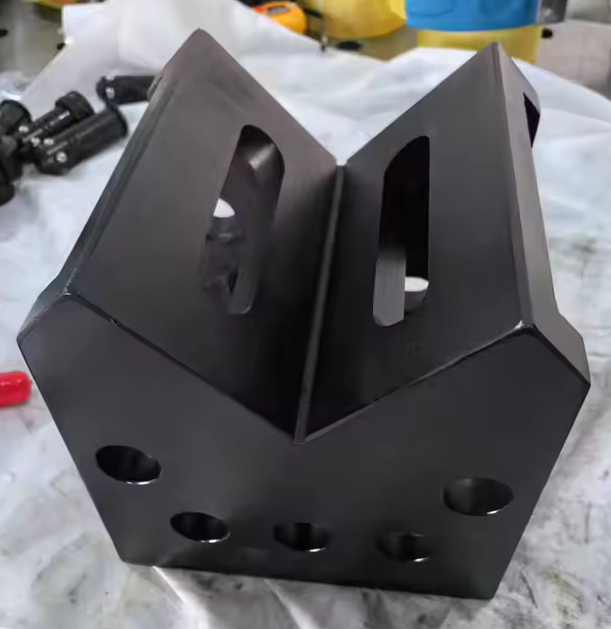
A Welding Table for Robotic Welding Systems is a high-precision, modular fixture platform designed to secure workpieces during automated welding processes. Unlike traditional static tables, these systems utilize a grid of precision-drilled holes and compatible clamping components to allow rapid reconfiguration for different part geometries. This flexibility minimizes downtime between production runs, ensuring consistent weld quality and dimensional accuracy in high-volume manufacturing environments such as automotive and aerospace sectors.
Why Robotic Welding Requires Specialized Fixture Tables
Robotic welding cells operate at speeds and precisions that far exceed manual welding capabilities. To fully leverage this automation, the workholding solution must match the robot’s repeatability. A standard industrial table often lacks the modularity and precision required for complex, multi-part assemblies.
In modern manufacturing, the shift towards high-mix, low-volume production demands fixtures that can adapt quickly. Traditional dedicated jigs are expensive and time-consuming to design and build for every new product variant. A modular welding table solves this by providing a universal base where components can be positioned and locked with micron-level accuracy.
Botou Haijun Metal Products Co., Ltd. specializes in the research, development, and production of high-precision flexible modular fixtures and metalworking tools. By committing to efficient and flexible welding solutions, Haijun Metal addresses the core challenge of modern robotic cells: reducing changeover time while maintaining strict tolerances.
The Role of Precision in Automated Welding
Robotic arms follow pre-programmed paths. If a workpiece shifts even slightly due to poor clamping or an unstable table surface, the weld torch will miss the joint, leading to defects such as lack of fusion or excessive spatter. High-quality welding tables provide a rigid, flat reference plane.
- Repeatability: Ensures that every part is located in the exact same position for every cycle.
- Rigidity: Absorbs vibration and thermal distortion during the welding process.
- Modularity: Allows engineers to build custom fixtures using standardized components like square boxes and angle irons.
Core Components of a Flexible Robotic Welding System
A complete robotic welding setup is not just a table; it is an ecosystem of compatible tools. Understanding these components is crucial for selecting the right system for your facility.
1. The Base Platform (2D vs. 3D)
The foundation of any system is the platform itself. These are typically categorized into 2D and 3D systems based on their working planes and hole patterns.
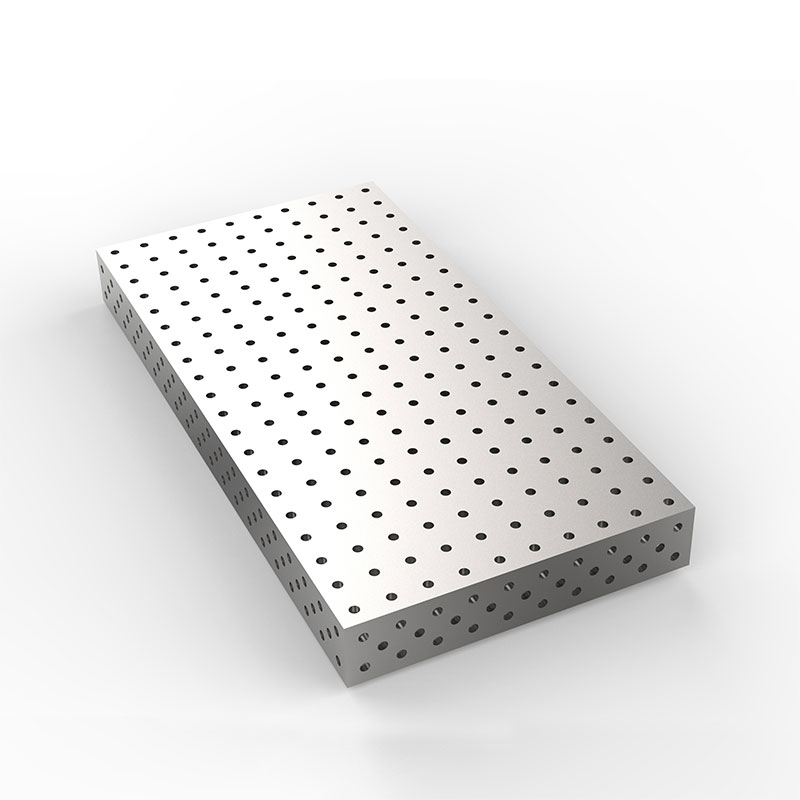
2D Flexible Welding Platforms: Ideal for flat sheet metal assemblies. They feature a grid of holes on a single horizontal plane. These are commonly used in automotive body-in-white applications where panels are joined together.
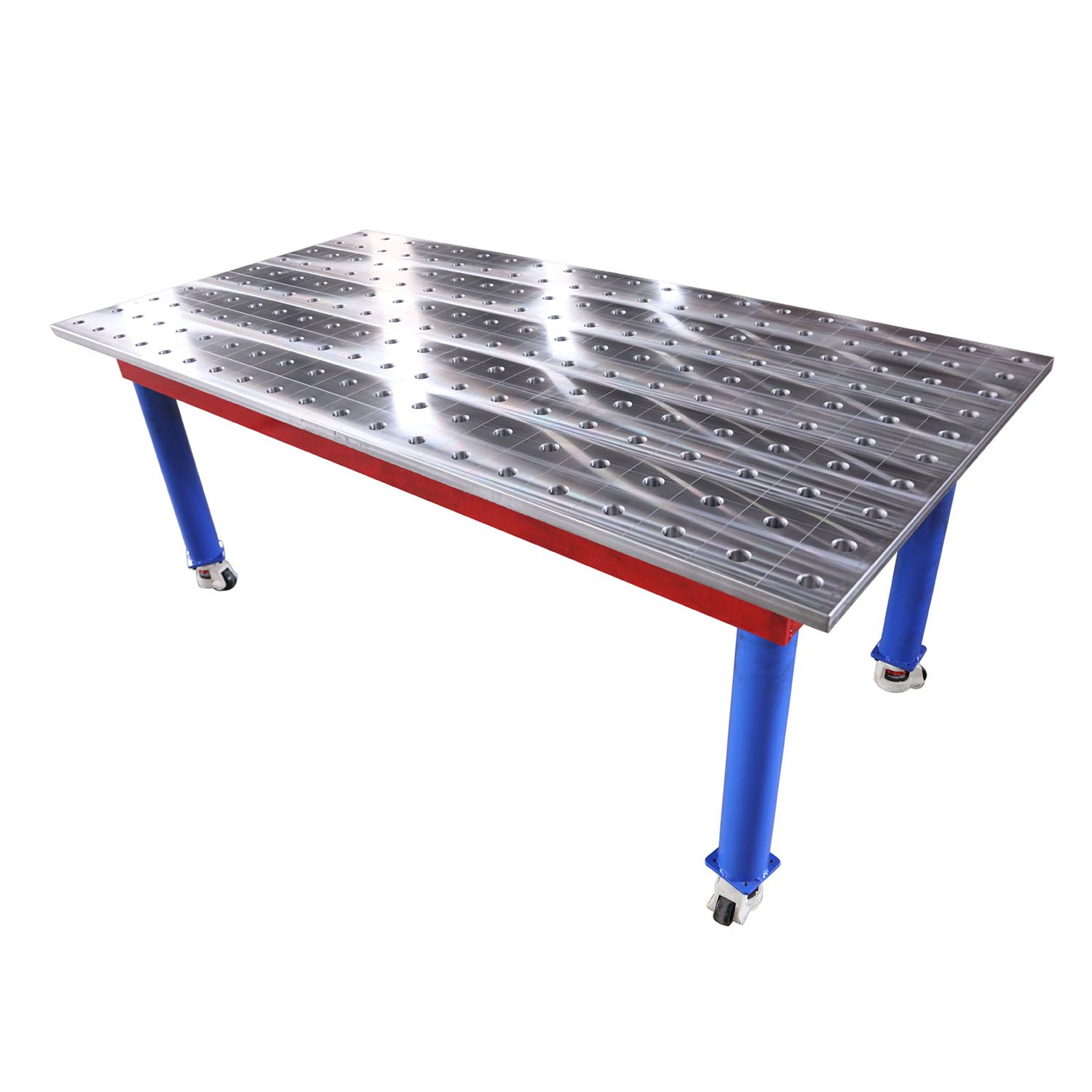
3D Flexible Welding Platforms: Designed for complex, multi-dimensional structures. These systems often include vertical columns or perforated plates that allow clamping from multiple angles. Botou Haijun Metal Products Co., Ltd. manufactures professional cast iron 3D welding platforms that offer exceptional durability and stability, making them suitable for heavy-duty aerospace and machinery components.
2. Clamping and Positioning Accessories
The versatility of a welding table comes from its accessories. These components integrate seamlessly with the platform’s hole pattern to secure workpieces.
- U-shaped and L-shaped Multi-purpose Square Boxes: These serve as foundational building blocks for creating custom stops and supports. Their precise machining ensures that angles remain true during welding.
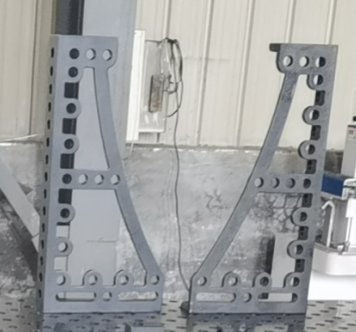
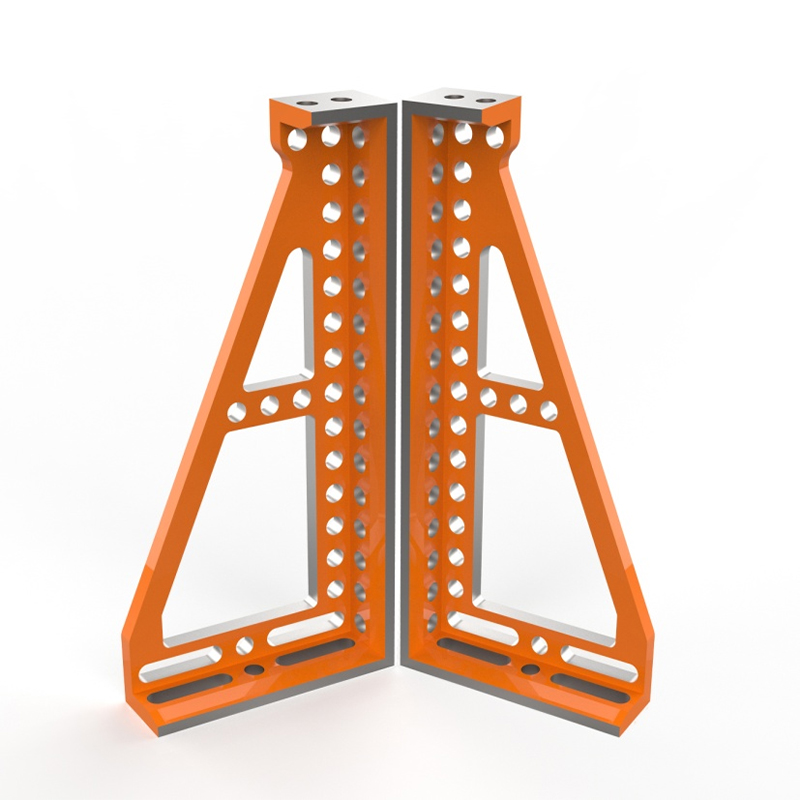
- 200-series Support Angle Irons: Essential for holding parts at 90-degree angles. They provide robust support for vertical assemblies and prevent warping due to heat input.
- 0-225° Universal Angle Gauges: These allow for the precise positioning of parts at non-standard angles. In complex fabrication, being able to lock a component at a specific degree is critical for assembly integrity.
These accessories are not generic; they are engineered to work in harmony. For instance, the angle gauges and support irons offered by Haijun Metal are designed to interlock with their 2D and 3D platforms, enabling rapid workpiece positioning and clamping without the need for custom machining.
Material Selection: Cast Iron vs. Steel Tables
When choosing a welding table for robotic systems, material composition significantly impacts performance and longevity. The two primary materials are cast iron and structural steel.
| Feature | Cast Iron Tables | Steel Tables |
| Damping Capacity | Excellent. Absorbs vibration effectively, protecting robot accuracy. | Moderate. May transmit vibration if not properly anchored. |
| Flatness Stability | High. Resists warping over time and under thermal stress. | Good, but prone to distortion if exposed to extreme heat repeatedly. |
| Weight | Heavy. Provides inherent stability but requires strong flooring. | Lighter. Easier to move but may require bolting to the floor. |
| Cost | Higher initial investment due to casting and machining costs. | Generally lower cost, suitable for budget-conscious projects. |
| Best Application | High-precision aerospace, automotive, and long-term production lines. | General fabrication, lighter gauge metals, and occasional use. |
For high-end robotic applications, cast iron is often the preferred choice due to its superior damping properties. Botou Haijun Metal Products Co., Ltd. focuses on high-precision cast iron 3D welding platforms, ensuring that every product delivers exceptional durability. This material choice minimizes the risk of table deformation, which is critical for maintaining the calibration of sensitive robotic welding arms.
Key Benefits of Modular Welding Tables in Automation
Implementing a modular welding table system offers several strategic advantages for manufacturing businesses. These benefits directly impact operational efficiency and bottom-line profitability.
Reduced Setup Time
In traditional welding, creating a new jig for a new part can take days or weeks. With a modular system, operators can reconfigure the fixture in hours or even minutes. By using standardized components like the U-shaped square boxes and angle irons, teams can build a new setup on the fly. This agility is vital for just-in-time manufacturing and custom job shops.
Improved Weld Quality and Consistency
Robotic welding relies on consistency. A rigid, precise table ensures that gaps between parts are uniform. This reduces the likelihood of burn-through or incomplete penetration. Furthermore, the ability to firmly clamp parts prevents movement during the weld cycle, resulting in cleaner, stronger joints that require less post-weld grinding or rework.
Cost Efficiency Over Time
While the initial cost of a high-quality modular system may be higher than a simple steel table, the long-term savings are significant. You eliminate the need to store hundreds of dedicated jigs. You also reduce labor costs associated with jig fabrication and maintenance. The versatility of products from suppliers like Haijun Metal means one table can handle thousands of different part numbers.
How to Choose the Right Welding Table for Your Robot
Selecting the appropriate welding table involves analyzing your specific production needs. Consider the following factors to make an informed decision.
1. Workpiece Size and Weight
Determine the maximum dimensions and weight of the parts you will weld. The table must be large enough to accommodate the largest assembly plus the necessary clamping hardware. For heavy components, a cast iron platform with high load-bearing capacity is essential to prevent sagging or deflection.
2. Complexity of Assemblies
If you primarily weld flat panels, a 2D system may suffice. However, if your products involve tubes, frames, or complex geometric shapes, a 3D system is necessary. 3D platforms allow for vertical and angular clamping, providing the flexibility needed for intricate assemblies. The 0-225° universal angle gauges available from Haijun Metal are particularly useful for these complex setups.
3. Hole Pattern and Compatibility
Check the hole spacing and diameter. Standardization is key. Ensure that the table’s hole pattern is compatible with a wide range of clamps and stops. Haijun Metal’s core product line includes 2D and 3D flexible welding platforms renowned for their exceptional versatility, ensuring compatibility with various industry-standard accessories.
4. Future Scalability
Consider your future production needs. Will you be adding more robots? Will product lines expand? Choose a system that can be extended or reconfigured easily. Modular systems are inherently scalable, allowing you to add extensions or additional tables as your business grows.
Common Mistakes to Avoid When Setting Up Robotic Welding Fixtures
Even with the best equipment, improper setup can lead to poor results. Avoid these common pitfalls to maximize the effectiveness of your welding table.
- Ignoring Grounding: Poor electrical grounding through the table can cause arc instability. Ensure the table is properly grounded to the welding power source.
- Over-clamping: Applying excessive force can distort thin materials. Use precision clamps that provide sufficient hold without deforming the workpiece.
- Neglecting Maintenance: Weld spatter can clog hole patterns. Regularly clean the table surface and holes to maintain positioning accuracy. Use anti-spatter sprays to facilitate cleanup.
- Inconsistent Reference Points: Always establish a consistent zero point or reference corner for your fixtures. This ensures that programs run correctly regardless of who sets up the job.
Industry Applications of Flexible Welding Tables
Flexible welding tables are transforming various sectors by enabling faster, more precise production.
Automotive Industry
The automotive sector relies heavily on robotic welding for body-in-white assemblies. The ability to quickly switch between different car models or components on the same line is crucial. 2D flexible platforms are widely used here for their speed and precision in handling sheet metal.
Aerospace Manufacturing
Aerospace components often involve exotic alloys and complex geometries. Precision is non-negotiable. 3D cast iron platforms provide the stability and accuracy required for welding aircraft frames and engine components. The high damping capacity of cast iron helps maintain the integrity of sensitive measurements during the welding process.
General Machinery and Equipment
Manufacturers of heavy machinery, agricultural equipment, and construction vehicles benefit from the versatility of modular tables. They can handle large, heavy frames and switch between different product lines efficiently. The robust nature of Haijun Metal’s cast iron platforms makes them ideal for these demanding environments.
Frequently Asked Questions (FAQ)
What is the difference between a 2D and 3D welding table?
A 2D welding table has a flat surface with a hole grid, suitable for flat assemblies. A 3D welding table includes vertical elements or perforated sides, allowing for clamping and positioning in three dimensions, ideal for complex, multi-angle structures.
Can I use manual welding clamps on a robotic welding table?
While possible, it is not recommended. Manual clamps may not offer the repeatability or speed required for robotic cells. Modular clamping systems designed specifically for robotic integration ensure faster setup and consistent positioning.
How do I maintain the flatness of my welding table?
Regularly clean spatter from the surface and holes. Avoid dropping heavy objects on the table. Periodically check flatness with a precision level or laser tracker. If deviations are found, professional resurfacing may be required.
Why is cast iron preferred for high-precision robotic welding?
Cast iron has superior vibration damping properties compared to steel. This reduces the transmission of vibrations from the welding process to the robot arm, maintaining higher accuracy and extending the life of the robotic equipment.
Are modular welding fixtures suitable for small batch production?
Yes, they are ideal for small batches. The quick changeover capability allows manufacturers to produce small lots economically without the high cost and lead time of dedicated jigs.
Conclusion: Enhancing Productivity with Precision Fixturing
Investing in a high-quality Welding Table for Robotic Welding Systems is a strategic move for any modern manufacturing facility. It bridges the gap between robotic speed and workpiece stability, ensuring that automation delivers on its promise of efficiency and quality. By choosing a modular system, you gain the flexibility to adapt to changing market demands without sacrificing precision.
Botou Haijun Metal Products Co., Ltd. stands out as a trusted supplier in this domain. With years of industry experience, Haijun Metal provides not just products, but comprehensive solutions. Their range of 2D and 3D flexible welding platforms, combined with precision accessories like U-shaped square boxes, 200-series support angle irons, and universal angle gauges, empowers manufacturers to achieve superior results. Whether you are in the automotive, aerospace, or general machining industry, their commitment to quality and innovation supports your production goals.
To optimize your robotic welding cell, consider the specific needs of your workpieces and the long-term benefits of modularity. A well-chosen fixture system reduces downtime, improves weld quality, and lowers overall operational costs.
Ready to upgrade your welding infrastructure? Explore our full range of high-precision flexible modular fixtures and metalworking tools. Contact our engineering team today to discuss your specific application requirements and discover how our solutions can enhance your production efficiency.
View Related Products and Technical Solutions