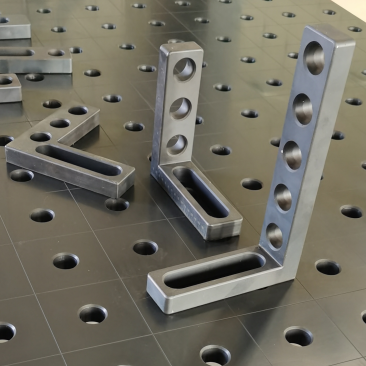
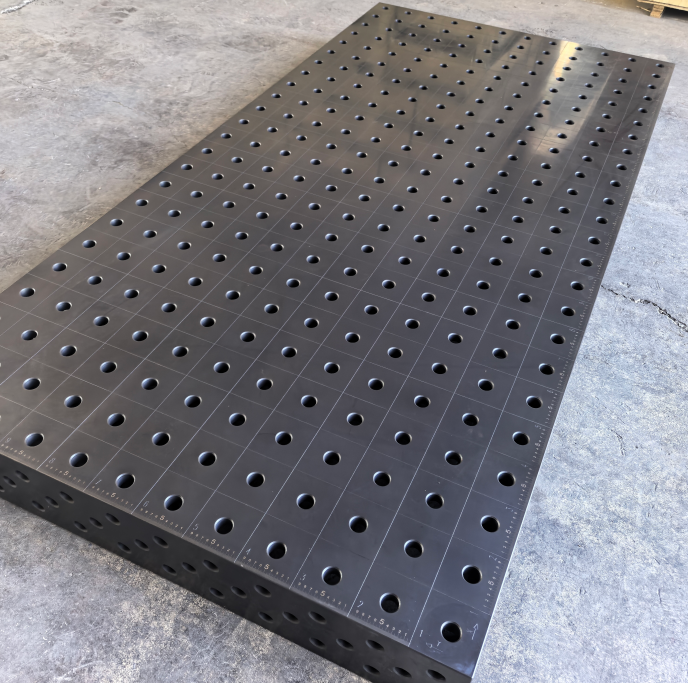
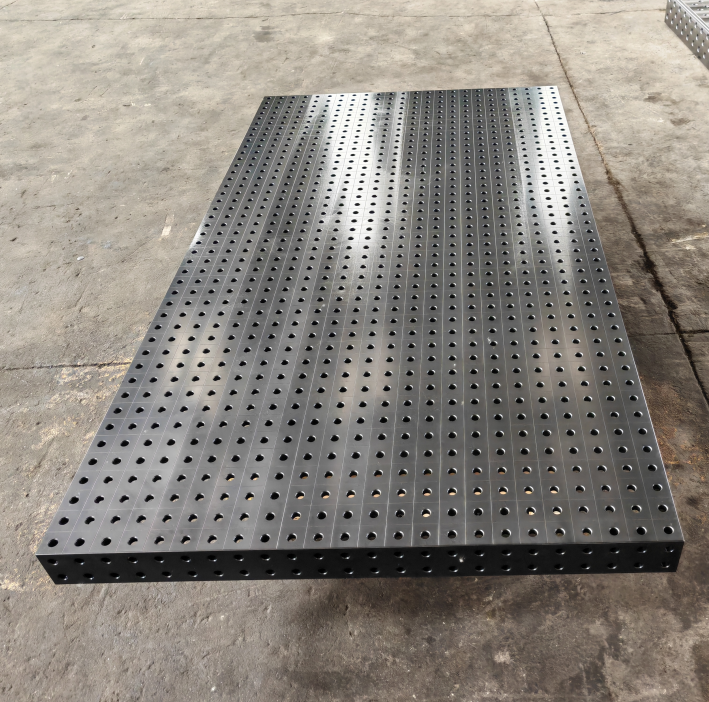
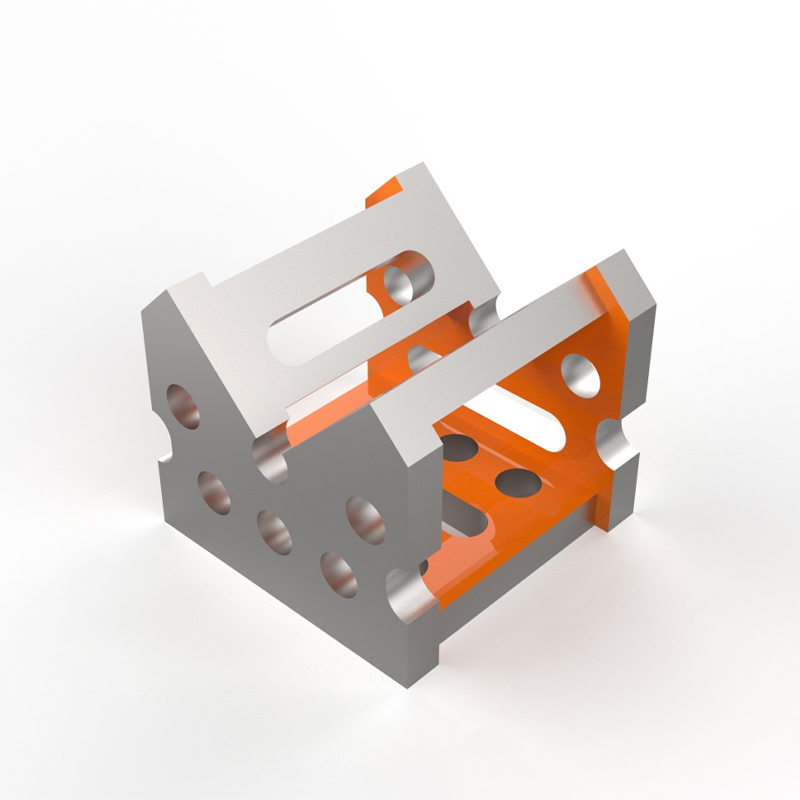
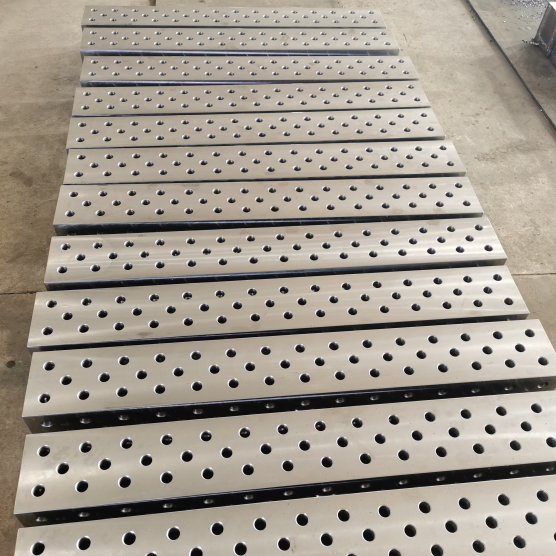
Welding fixture table for sale isn’t just a search phrase—it’s a signal from engineers, fabricators, and production managers who’ve hit the same wall: wasted setup time, inconsistent weld quality, and mounting rework costs. We’ve seen it firsthand on shop floors across North America and Europe—teams wrestling with makeshift jigs, recalibrating after every part change, or scrapping assemblies because clamping force shifted mid-weld. That’s why modular welding fixture tables aren’t “nice to have.” They’re the first line of defense against dimensional drift.
Why “Heavy-Duty Modular” Isn’t Marketing Fluff—It’s Measured Performance
A true heavy-duty welding fixture table holds position under 15 kN of dynamic clamping load—not just static weight. It resists torsion when a 400-amp MIG torch heats a 12-mm steel flange. It survives daily impacts from wrenches, angle grinders, and dropped tooling without losing flatness beyond ±0.15 mm over a 2-m span. That level of integrity comes from three non-negotiables: structural rigidity, precision-ground T-slot geometry, and material-grade consistency.
Most off-the-shelf tables use 304 stainless frames with 12-mm T-slots—but that’s where compromises begin. At Botou Haijun Metal Products Co., Ltd., we machine all base plates from certified Q345B low-alloy steel, stress-relieved post-forging and finish-machined on CNC gantry mills with real-time thermal compensation. Slot tolerances hold ±0.05 mm—tight enough to accept ISO-standard 20-mm clamps without play, yet forgiving enough to avoid galling during high-cycle use. Every table undergoes laser-tracked flatness verification before packaging. No spot checks. No sampling. Every unit.
Quick Setup Means Minutes—Not Hours—And It Starts Before You Unbox
“Quick setup” fails when documentation is vague, parts don’t interlock, or alignment pins wear out after 200 cycles. We learned this the hard way—during a 2022 pilot with a German agricultural machinery OEM. Their team spent 37 minutes per station rebuild until we replaced press-fit alignment dowels with hardened 42CrMo steel pins, added tactile indexing notches on all support rails, and embedded QR-coded assembly maps directly into the table’s side panels.
Today, our standard kits include:
Pre-sorted hardware trays labeled by torque spec (not just “M8”) and application zone (clamping vs. anchoring) Tool-free rail locks with dual-spring retention—no dropped screws, no stripped threads Modular base sections (1000 × 1000 mm, 1500 × 750 mm) that bolt together with 0.02 mm repeatability using dowel-and-bolt hybrid joints Integrated ground bus points at four corners—verified to <1 Ω resistance to earth—so arc flash risk drops before the first tack weld This isn’t plug-and-play theater. It’s repeatable, traceable, field-proven sequence engineering.
What Most Buyers Overlook—and Why It Costs Them Later
Some buyers focus only on table size and price. But the real cost driver hides in three places: compatibility, service life, and thermal management. A table built for aluminum work must dissipate heat differently than one for carbon steel. Slot corrosion in humid environments kills clamp retention in under 18 months—unless you specify electrophoretic coating (E-coat), not powder coat. And if your ERP system requires lot traceability, generic tables ship with no mill test reports or hardness logs.
Botou Haijun includes full material certification with every shipment: EN 10204 3.1 declarations, Rockwell C-scale hardness validation per ASTM E18, and salt-spray test results (1,000-hour neutral pH exposure, zero red rust). We also pre-drill and tap all accessory-mounting holes to ISO 228-1 thread standards—not “approximate metric.” That eliminates the #1 cause of misaligned locators: mismatched pitch between table and fixture plate.
Real-World ROI: Where the Numbers Land
One U.S. Tier-2 automotive supplier tracked 14 weeks of production before and after switching to our modular tables. Their results:
Fixture changeover time dropped from 22.4 minutes to 3.7 minutes per job Weld distortion scrap fell from 4.1% to 0.8%—driven by consistent part location, not operator skill Maintenance labor hours per table per quarter decreased by 68% (no more slot cleaning, pin replacement, or recalibration) That’s not theoretical efficiency. That’s measurable uptime—recovered in under 5 months for a mid-size 2000 × 1000 mm table. And because all components are replaceable—not welded-in—you never replace the entire system. Just the worn rail. Just the dented base plate. Just the fatigued clamp.
If you’re searching for a welding fixture table for sale that delivers dimensional control, not just convenience—if you need documented material integrity, not marketing brochures—start with engineering intent, not price per square meter. Visit haijunmetals.com to review certified flatness reports, download CAD-compatible mounting templates, or request a DFM review of your current fixture layout. No gatekeeping. No sales scripts. Just metal, measured.