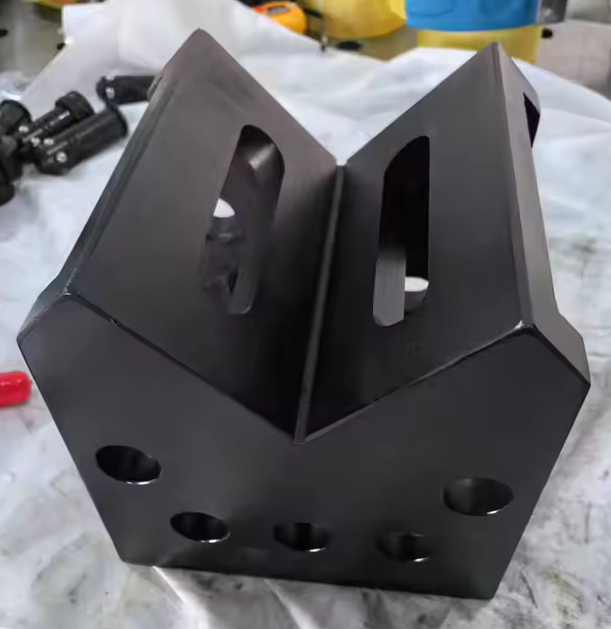
An ultrasonic welding fixture is a specialized holding device designed to secure workpieces with high precision during the ultrasonic welding process. Its primary function is to maintain exact alignment, prevent lateral movement, and absorb residual vibrational energy. In industrial applications, particularly within the automotive, medical, and consumer electronics sectors, the quality of an ultrasonic weld is directly dependent on the stability provided by the fixture. Without a rigid, acoustically isolated jig, components may shift under the pressure of the horn, leading to weak bonds, cosmetic defects, or equipment damage. This guide explores the engineering principles, design requirements, and industrial applications of ultrasonic welding fixtures, highlighting how precision tooling solutions from manufacturers like Botou Haijun Metal Products Co., Ltd. ensure consistent production outcomes.
What Is an Ultrasonic Welding Fixture?
Ultrasonic welding utilizes high-frequency mechanical vibrations to generate heat at the interface of two thermoplastic parts. Unlike traditional welding methods that use external heat sources, this process relies on friction generated by vibrations typically ranging from 15 kHz to 40 kHz. The ultrasonic welding fixture, often referred to as a nest or jig, plays a critical role in this dynamic environment.
The fixture must hold the lower part stationary while the ultrasonic horn (sonotrode) applies downward force and vibration to the upper part. If the fixture allows even microns of movement, the energy intended for melting the plastic interface is dissipated into kinetic motion, resulting in a “cold weld” or inconsistent bond strength. Therefore, the fixture is not merely a holder; it is an integral component of the acoustic system.
Core Functions of the Fixture
- Precision Positioning: Ensures parts are aligned within tight tolerances before the welding cycle begins.
- Vibration Damping: Absorbs excess energy to prevent parts from bouncing or shifting during the high-frequency oscillation.
- Support Against Downforce: Withstands the static and dynamic forces applied by the welding press without deforming.
- Part Protection: Prevents surface marring or scratching of sensitive cosmetic surfaces during clamping.
Why Fixture Design Is Critical for Weld Quality
In the realm of industrial manufacturing, the assumption that “any clamp will do” is a common misconception that leads to significant quality control issues. The physics of ultrasonic welding demands a fixture that complements the acoustic stack. A poorly designed fixture can detune the system, causing the generator to fault or producing inconsistent weld depths.
From an engineering perspective, the fixture must possess high stiffness. Materials such as aluminum or steel are commonly used for the base structure due to their rigidity. However, the contact surfaces often require softer materials like Delrin (acetal) or PTFE to protect the workpiece while maintaining grip. The design must also account for the ejection of the part post-weld, ensuring that operators or robotic arms can remove the finished assembly quickly without damaging the fragile molten zones.
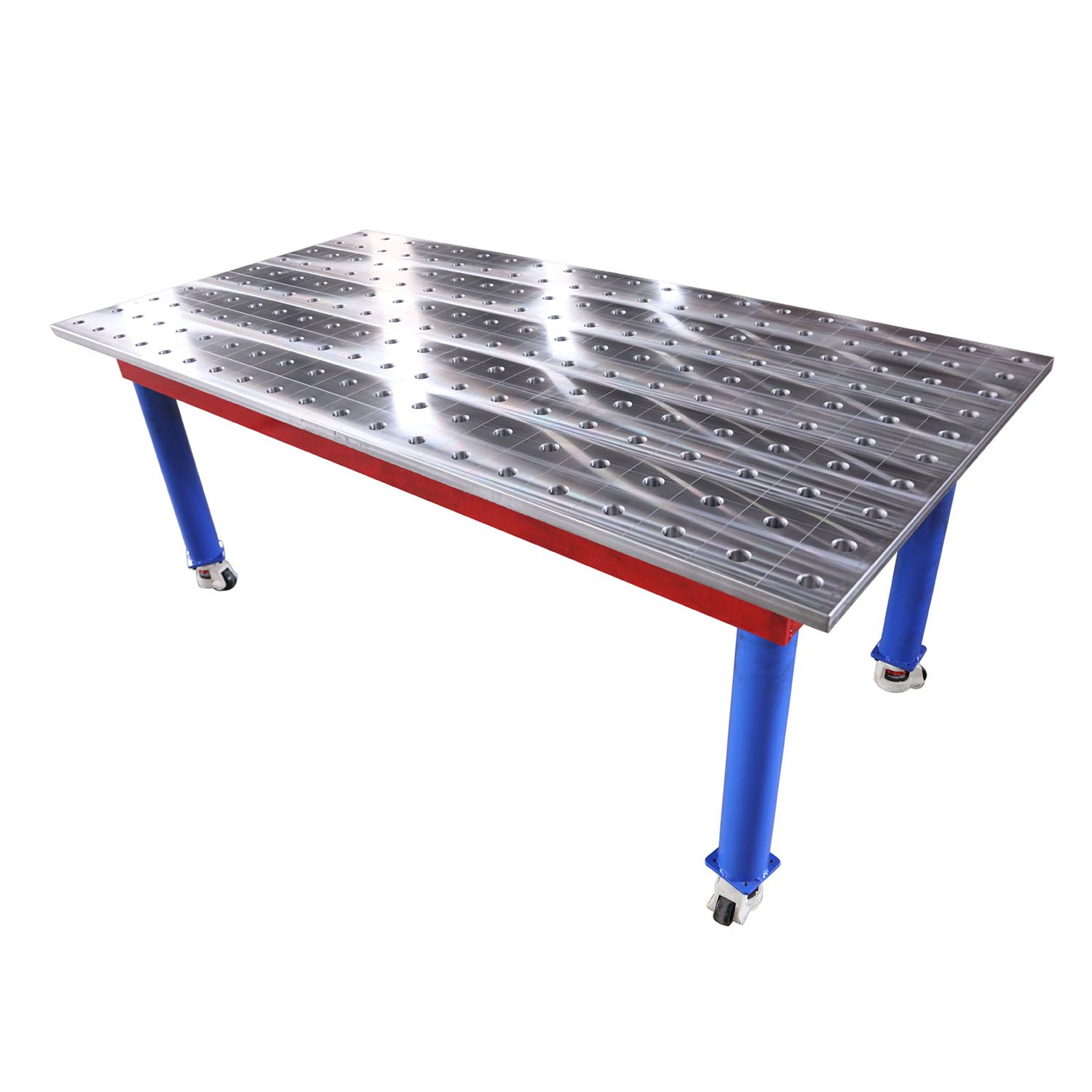
For companies specializing in high-precision modular systems, such as Botou Haijun Metal Products Co., Ltd., the focus is on creating flexible yet rigid platforms. Their 2D and 3D flexible welding platforms allow engineers to configure custom fixtures rapidly. This modularity is essential in modern manufacturing where product lifecycles are short, and changeovers must be efficient. By utilizing standardized components like U-shaped square boxes and support angle irons, manufacturers can build robust ultrasonic welding nests that meet strict tolerance requirements without the long lead times associated with fully custom-machined single-use fixtures.
Key Design Principles for Ultrasonic Welding Fixtures
Designing an effective fixture requires balancing several conflicting requirements: it must be rigid enough to resist vibration but accessible enough for easy loading and unloading. Here are the fundamental principles guiding professional fixture design.
1. Rigidity and Mass
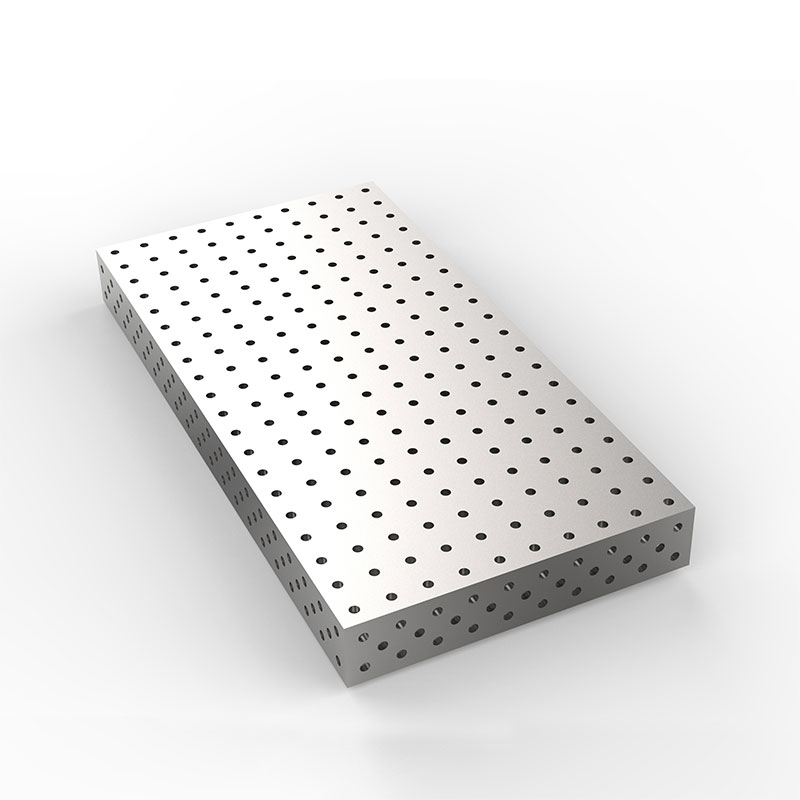
The fixture base must have sufficient mass and structural integrity to remain stationary. Lightweight or flimsy fixtures will resonate with the ultrasonic frequency, absorbing energy that should be directed into the weld interface. Cast iron bases, such as those offered in professional 3D welding platforms, provide excellent damping properties and stability. The heavier the base, the less likely it is to vibrate, ensuring that the energy transfer is efficient.
2. Acoustic Isolation
While the base must be heavy, the contact points with the part must be carefully engineered. Direct metal-to-metal contact can sometimes transmit unwanted vibrations to sensitive areas of the part. Designers often use isolating pins or compliant pads to localize the support directly under the weld zone. This technique ensures that the rest of the part remains unaffected by the high-frequency energy.
3. Ease of Loading and Unloading
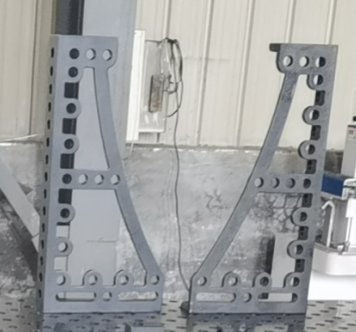
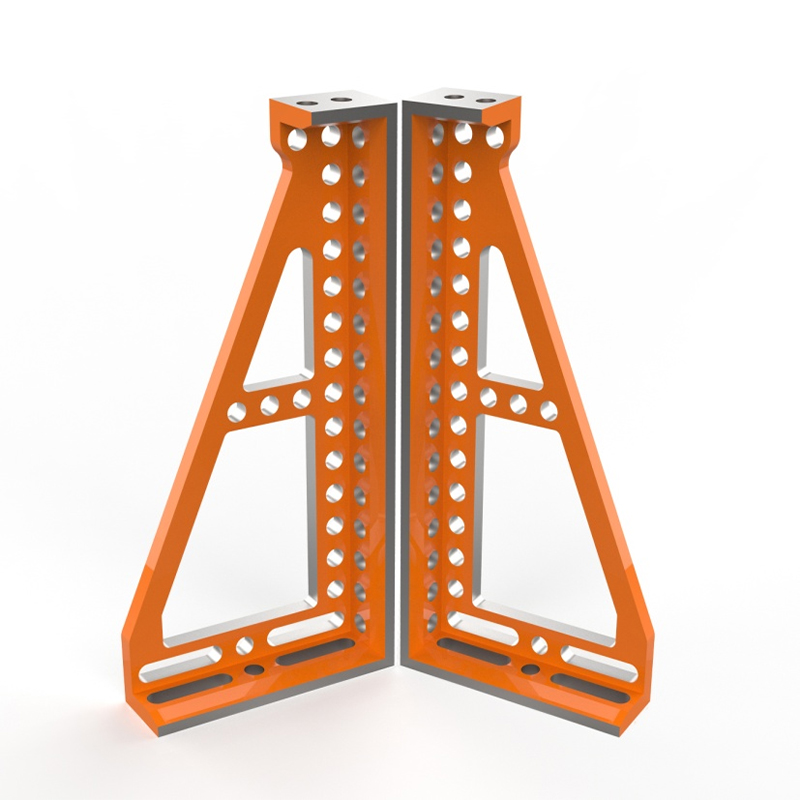
In high-volume production, cycle time is money. A fixture that requires complex manipulation to load or unload becomes a bottleneck. Features such as chamfered edges, quick-release clamps, and ergonomic handles are essential. Modular systems facilitate this by allowing the use of standardized clamping elements that can be repositioned instantly. For instance, using universal angle gauges and multi-purpose square boxes enables the creation of self-centering nests that guide the part into the correct position automatically.
4. Material Selection
The choice of material for the fixture contacts depends on the workpiece material:
- Aluminum: Good for general purposes, lightweight, and easy to machine.
- Steel: Used for high-wear applications or when extreme rigidity is required.
- Delrin/Acetal: Ideal for contact surfaces as it has low friction, protects part finishes, and provides slight compliance to accommodate minor part variations.
- Cast Iron: Excellent for base plates due to its superior vibration damping characteristics.
Industrial Applications of Ultrasonic Welding Fixtures
Ultrasonic welding is versatile, but each industry presents unique challenges that dictate specific fixture designs. Understanding these applications helps in selecting the right tooling strategy.
Automotive Industry
The automotive sector uses ultrasonic welding for interior trim, door panels, light assemblies, and fluid reservoirs. Parts in this industry are often large and complex, requiring fixtures that support multiple weld points simultaneously. Precision is paramount to ensure gap-and-flush aesthetics. Flexible modular platforms are increasingly popular here because they allow manufacturers to switch between different car model components quickly. The durability of cast iron 3D welding platforms ensures that these heavy-duty fixtures maintain their alignment over thousands of cycles, despite the harsh environment of an automotive assembly line.
Medical Device Manufacturing
Medical devices, such as filters, catheters, and surgical instruments, require hermetic seals and absolute cleanliness. Fixtures in this sector must be easy to clean and sterilize. They often feature minimal crevices where contaminants could hide. Furthermore, the tolerance requirements are extremely tight. Any misalignment can compromise the sterile barrier. High-precision positioning tools, such as the 0-225° universal angle gauges and fine-adjustment supports, enable the creation of fixtures that meet these stringent medical standards. The repeatability of the fixture ensures that every device meets regulatory compliance.
Consumer Electronics
Smartphones, wearables, and home appliances often use ultrasonic welding to join plastic housings without visible screws or adhesives. Cosmetic appearance is critical. Fixtures must hold delicate parts without leaving marks. Soft jaw inserts made from PTFE or customized Delrin profiles are standard. Additionally, the fixtures must accommodate small, intricate geometries. Modular systems allow for the rapid configuration of small, precise nests that can be swapped out as product designs evolve.
Packaging and Nonwovens
In packaging, ultrasonic welding seals films and fabrics. While the forces are lower, the speed is higher. Fixtures here focus on throughput and web guidance. Stability is still key to preventing wrinkles or misaligned seals. Simple, robust clamping mechanisms that can handle continuous feed materials are typical.
Comparison: Custom-Machined vs. Modular Flexible Fixtures
When implementing ultrasonic welding solutions, engineers often debate between traditional custom-machined fixtures and modern modular flexible systems. The following table highlights the key differences to aid in decision-making.
| Feature | Custom-Machined Fixture | Modular Flexible Fixture |
| Initial Cost | High (design and machining) | Lower (standard components) |
| Lead Time | Weeks to months | Days to hours |
| Flexibility | Low (single part number) | High (reconfigurable for multiple parts) |
| Precision | Very High (dedicated design) | High (dependent on component quality) |
| Storage | Requires significant space for each variant | Compact storage of components |
| Maintenance | Difficult (requires re-machining if worn) | Easy (replace standard worn parts) |
For industries with high product variability, such as aerospace and advanced machining, the modular approach offered by specialists like Botou Haijun Metal Products Co., Ltd. provides a strategic advantage. Their 2D and 3D flexible welding platforms enable rapid prototyping and production adjustments, reducing downtime and inventory costs associated with storing numerous custom fixtures.
Common Challenges and Troubleshooting
Even with a well-designed fixture, issues can arise. Identifying the root cause is essential for maintaining production efficiency.
Part Marking or Marring
If the finished product shows indentations or scratches, the fixture contact points may be too hard or the clamping force too high. Switching to softer contact materials like Delrin or adding protective tapes can resolve this. Ensure that the support is directly under the weld zone to minimize bending stress on the part.
Inconsistent Weld Strength
Variability in weld strength often indicates that the part is moving during the weld cycle. Check the fixture for wear or looseness. Verify that the clamping mechanism engages fully every time. In modular setups, ensure that all locking pins and angle gauges are securely tightened. Vibration from the machine itself can also affect the fixture; isolating the welding station from floor vibrations may be necessary.
Part Misalignment
If parts are not aligning correctly, the locating pins or stops in the fixture may be worn or incorrectly positioned. Use precision measurement tools to verify the fixture geometry. Regular maintenance of the fixture components, such as cleaning debris from locating holes, is crucial. High-quality accessories, such as the U-shaped and L-shaped multi-purpose square boxes, help maintain accurate geometric relationships between locating elements.
How to Select the Right Fixture Solution
Choosing the appropriate fixture strategy depends on several factors related to your production environment and product requirements.
- Production Volume: For high-volume, single-SKU production, a custom-machined fixture may offer marginal gains in cycle time. For mixed-model or medium-volume production, modular fixtures are more cost-effective.
- Part Complexity: Complex geometries with multiple weld points benefit from the flexibility of 3D modular platforms, which allow positioning in all axes.
- Tolerance Requirements: Industries like aerospace and medical demand high precision. Ensure that the modular components you select have certified accuracy levels. Botou Haijun’s commitment to high-precision flexible modular fixtures ensures that these stringent standards are met.
- Changeover Frequency: If you frequently switch products, a modular system drastically reduces setup time. The ability to reuse base plates and standard clamps accelerates the transition between jobs.
FAQ: Ultrasonic Welding Fixtures
Can I use a standard vise for ultrasonic welding?
No, standard vises are generally unsuitable. They lack the specific acoustic damping properties and precise locating features required for ultrasonic welding. They may also reflect vibrations back into the transducer, potentially damaging the equipment. Dedicated fixtures designed for ultrasonic processes are necessary.
How often should I inspect my welding fixture?
Regular inspection is recommended. Check for wear on locating pins and contact surfaces daily in high-volume operations. Look for signs of cracking or deformation in the fixture base. Periodic calibration using precision gauges ensures that the fixture maintains its original accuracy.
What is the benefit of using a 3D flexible welding platform?
A 3D flexible welding platform allows for positioning and clamping in three-dimensional space. This is ideal for complex assemblies that cannot be flattened onto a 2D plane. It offers greater versatility and reduces the need for multiple custom fixtures, streamlining the workflow for diverse product lines.
Does the fixture material affect the weld quality?
Yes. The material affects how vibrations are transmitted or dampened. Hard materials like steel provide rigidity but may mark parts. Softer materials like Delrin protect parts but must be supported by a rigid base to prevent energy loss. The right combination ensures optimal energy transfer to the weld interface.
Conclusion and Next Steps
The ultrasonic welding fixture is far more than a simple holding device; it is a critical determinant of weld quality, production efficiency, and product consistency. Whether in the automotive, medical, or electronics sectors, the demand for precision, flexibility, and durability in fixturing continues to grow. Traditional custom fixtures are giving way to modular, flexible solutions that offer faster changeovers and lower total cost of ownership.
By leveraging high-precision modular systems, manufacturers can achieve the rigorous standards required for modern industrial applications. Companies like Botou Haijun Metal Products Co., Ltd. exemplify this shift, providing comprehensive solutions that include 2D and 3D flexible welding platforms, cast iron bases, and a wide array of precision accessories. These tools empower engineers to create robust, adaptable, and accurate welding environments that enhance productivity and product quality.
If you are looking to optimize your ultrasonic welding process, consider evaluating your current fixturing strategy. Are you spending too much time on changeovers? Are you experiencing inconsistent weld quality due to part movement? Transitioning to a flexible modular system may be the solution.
For detailed specifications on our flexible welding platforms and accessories, or to discuss a custom fixturing solution for your specific application, please explore our product range. Our team is ready to assist you in designing a setup that maximizes your manufacturing potential.
View Our Flexible Welding Platform Solutions