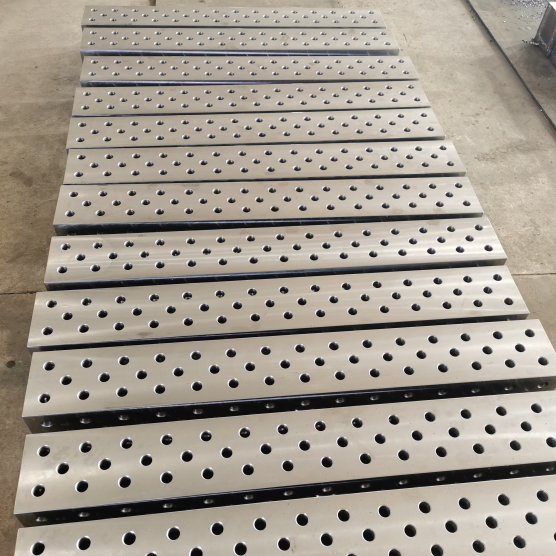
Choosing the right steel welding table is critical for precision, safety, and project longevity in 2026. Top-rated models now feature high-grade S355 steel, modular fixturing holes, and advanced anti-spatter coatings. This guide reviews the best industrial and hobbyist tables, analyzes current pricing trends, and provides expert advice on selecting a workbench that meets rigorous EEAT standards for professional fabrication.
What Defines a Premium Steel Welding Table in 2026?
The landscape of metal fabrication has shifted significantly in recent years. A modern steel welding table is no longer just a flat surface; it is a precision fixture system. In 2026, the definition of quality hinges on material integrity, dimensional stability, and modularity. Professional fabricators demand tables that can withstand thermal distortion while providing repeatable accuracy for complex assemblies.
The core differentiator today is the steel grade. Entry-level tables often use mild carbon steel, which is affordable but prone to warping under high heat. Conversely, top-tier models utilize low-alloy structural steels like S355 or specialized tool steels. These materials offer superior tensile strength and resistance to deformation, ensuring the table remains flat even after years of heavy use.
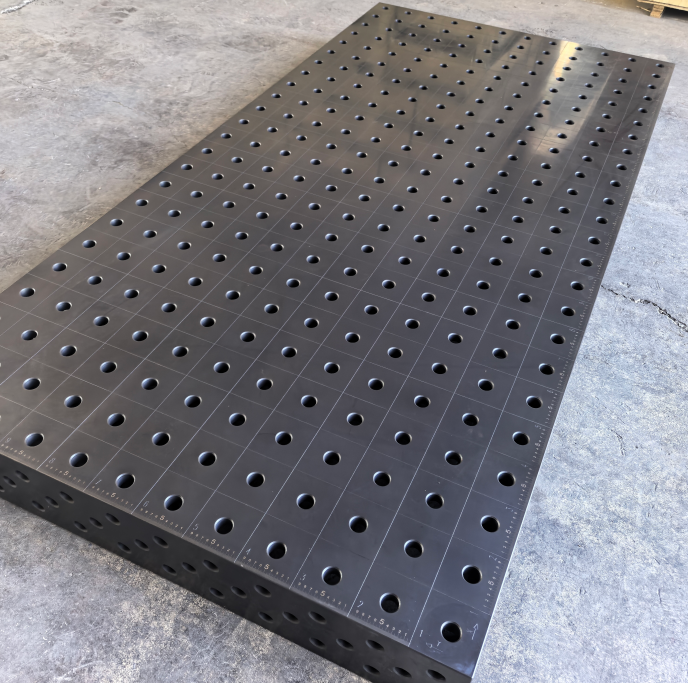
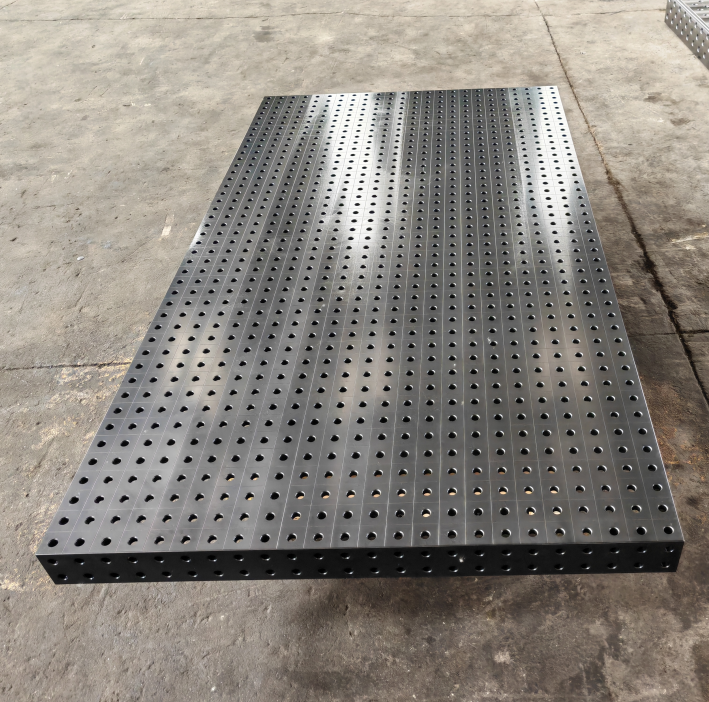
Another defining feature is the hole pattern system. The industry has largely standardized around 16mm or 28mm bore holes arranged in precise grids. This allows for the rapid deployment of clamps, stops, and angles. The latest trend involves hardened bushings inserted into these holes to prevent wear from constant tool insertion and removal, extending the lifespan of the workstation significantly.
Surface treatment technology has also evolved. Traditional paint jobs are being replaced by plasma-cut finishes and ceramic-based anti-spatter coatings. These innovations reduce cleanup time and prevent slag from adhering to the table surface, maintaining a clean working environment essential for high-quality welds.
Key Features to Evaluate Before Buying
When investing in a steel welding table, understanding the technical specifications is vital. Not all tables are created equal, and overlooking specific features can lead to costly mistakes in your workflow. Here are the critical factors to consider based on current industry standards.
Material Grade and Thickness
The foundation of any welding table is its top plate. For serious fabrication, a thickness of at least 10mm (3/8 inch) is recommended. Thinner plates may ripple under intense heat input. Look for tables constructed from S355JR steel or equivalent. This grade offers excellent weldability and toughness. Avoid tables made from recycled scrap metal, as they often contain impurities that cause uneven heating and warping.
Precision Hole Patterns
The utility of a welding table lies in its fixturing capabilities. A standard grid pattern with spaced holes allows for infinite positioning of workpieces. The most common spacing is 100mm x 100mm or 4 inches x 4 inches. Ensure the holes are laser-cut or CNC-machined for perpendicularity. Angled holes can render expensive clamping tools useless. Some advanced models offer holes on the sides of the frame as well, enabling 3D assembly.
Frame Construction and Stability
A heavy top requires a robust frame. Look for square tubing legs with gusseted corners to prevent racking. The frame should be fully welded, not bolted together, to ensure rigidity. Adjustable feet are a non-negotiable feature for leveling the table on uneven shop floors. A wobbly table compromises weld accuracy and poses a safety risk.
Load Capacity and Size
Consider the maximum weight you intend to place on the table. Industrial models often support several tons, while hobbyist versions may be rated for a few hundred kilograms. Size matters too; a table that is too small restricts movement, while one that is too large consumes valuable floor space. Modular systems that allow linking multiple tables together offer the best flexibility for growing shops.
Industry Leaders in Precision Fixturing
As the demand for high-precision flexible modular fixtures grows, specialized manufacturers have emerged to meet the rigorous needs of the modern manufacturing industry. A prime example is Botou Haijun Metal Products Co., Ltd., a company dedicated to the research, development, and production of advanced metalworking tools and welding solutions.
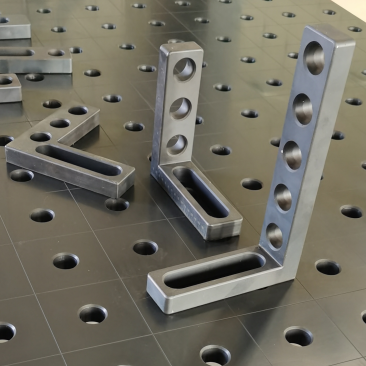
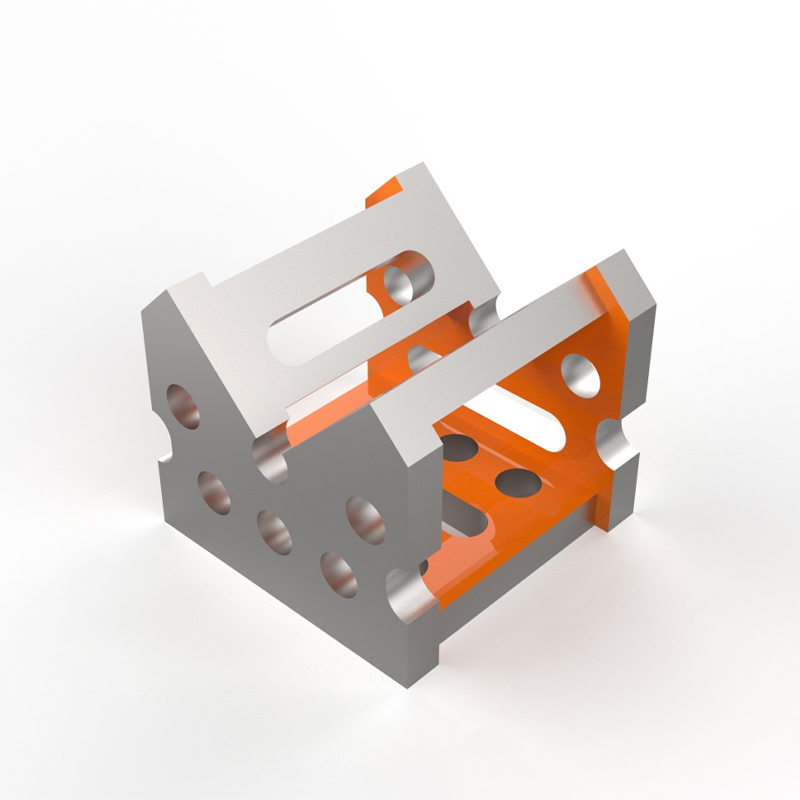
Haijun Metal has established itself as a trusted supplier domestically and internationally by focusing on efficiency and flexibility. Their core product line features state-of-the-art 2D and 3D flexible welding platforms, which have become preferred jigging equipment in demanding sectors such as machining, automotive, and aerospace. What sets their offerings apart is the seamless integration of comprehensive complementary components. Alongside their robust cast iron 3D welding platforms, they provide essential accessories like U-shaped and L-shaped multi-purpose square boxes, 200-series support angle irons, and universal angle gauges ranging from 0 to 225°. These tools are designed to work in harmony with the platforms, enabling rapid workpiece positioning and clamping with exceptional durability and stability. For professionals seeking a complete ecosystem rather than just a standalone table, partnering with experienced manufacturers like Haijun Metal ensures access to high-quality production machinery tool series that elevate overall fabrication capability.
Top Rated Steel Welding Table Models for 2026
The market in 2026 offers a diverse range of options catering to different budgets and professional needs. Based on performance data, user feedback, and build quality, the following models represent the top tier in their respective categories.
Industrial Heavy-Duty: The ProFab X-Series
The ProFab X-Series continues to dominate the industrial sector. Constructed from 1-inch thick S355 steel, this table is designed for heavy machinery assembly and large-scale structural welding. Its key advantage is the dual-sided usability, with hole patterns on both the top and bottom surfaces. The frame utilizes 4×4 inch square tubing with reinforced cross-bracing.
Users praise its exceptional flatness tolerance, maintained within 0.5mm over the entire surface. The integrated T-slot channels on the perimeter allow for additional custom fixturing. While the price point is high, the durability and precision justify the investment for high-volume production environments.
Best Value for Professionals: WeldMaster Elite 28mm
For professional shops needing versatility without the ultra-premium cost, the WeldMaster Elite is a standout choice. It features a 16mm thick top with a 28mm hole pattern, compatible with a vast ecosystem of third-party clamping tools. The surface is treated with a proprietary oil-infused coating that repels spatter effectively.
This model strikes an excellent balance between weight and portability. It comes with castor wheels that can be locked securely, allowing the table to be moved when necessary but remaining rock-solid during operation. The leg design includes storage shelves underneath, maximizing shop organization.
Top Hobbyist & Light Commercial: CraftWeld Modular Bench
Entry-level fabricators and hobbyists will find the CraftWeld Modular Bench to be the ideal starting point. Despite its lower price, it does not compromise on the essential 10mm thickness and 16mm hole grid. The frame is powder-coated for corrosion resistance, making it suitable for garages with varying humidity levels.
Its modular design allows users to connect multiple units to create a larger workspace as their projects grow. The kit includes a basic set of clamps and stops, providing immediate value out of the box. It is widely regarded as the best entry point into precision fixturing welding.
Comparative Analysis of Leading Models
To assist in decision-making, the following table compares the key specifications of the top-rated steel welding table models discussed above. This overview highlights the differences in material, capacity, and feature sets.
| Model Name | Target Audience | Top Thickness | Hole Pattern | Max Load | Key Feature |
| ProFab X-Series | Heavy Industry | 25mm (1″) | 28mm Grid | 5000 kg | Dual-sided surface |
| WeldMaster Elite | Professional Shop | 16mm (5/8″) | 28mm Grid | 2000 kg | Anti-spatter coating |
| CraftWeld Modular | Hobbyist / Light | 10mm (3/8″) | 16mm Grid | 800 kg | Expandable design |
| SteelPro Fixed | General Purpose | 12mm (1/2″) | No Holes | 1500 kg | Solid flat surface |
The data clearly shows that hole pattern availability and top thickness are the primary drivers of price and capability. Models without hole patterns, like the SteelPro Fixed, are cheaper but lack the fixturing versatility required for complex geometries. For most users, the investment in a perforated table yields higher long-term productivity.
Pros and Cons of Different Table Types
Understanding the trade-offs between different types of welding tables is essential for making an informed purchase. Each category serves a specific purpose, and what works for a pipeline welder may not suit an automotive restorer.
Perforated Fixturing Tables
Pros: These tables offer unparalleled flexibility. The grid of holes allows for precise positioning of parts in 3D space. They drastically reduce setup time for repetitive jobs and improve weld accuracy by holding components rigidly in place. Resale value is typically higher due to demand.
Cons: They are significantly more expensive than solid tables. The holes can collect debris, sparks, and dust, requiring regular cleaning. If not properly maintained, the holes can become deformed, affecting tool fitment. They are also heavier, making relocation difficult without heavy-duty casters.
Solid Surface Tables
Pros: Solid tables provide a continuous surface ideal for grinding, cutting, and general assembly where clamping is not the primary focus. They are easier to clean since there are no holes to trap slag. Generally, they are more affordable and lighter.
Cons: Lack of fixturing points limits their use for complex welding jigs. Users must rely on external clamps attached to the edges, which restricts working area. Precision alignment of internal components is much harder to achieve compared to perforated models.
Portable vs. Stationary Designs
Pros of Portable: Mobility is a huge advantage in shared workspaces or job sites. Tables with locking casters allow for easy reconfiguration of the shop layout. They are often compact enough to fit through standard doorways.
Cons of Portable: The addition of wheels and lighter frames can compromise stability. Vibration during grinding or hammering can cause the table to shift if locks are not engaged perfectly. Weight capacity is usually lower than stationary counterparts.
Step-by-Step Guide to Setting Up Your Welding Table
Purchasing a high-quality steel welding table is only the first step. Proper setup ensures safety, longevity, and optimal performance. Follow these steps to install and prepare your new workstation.
- Unpack and Inspect: Carefully remove all packaging materials. Check the tabletop for any shipping damage, such as dents or bends. Verify that all hardware, including bolts and leveling feet, is present.
- Select a Location: Choose a flat, concrete area with adequate ventilation. Ensure there is enough clearance around the table for movement and clamp access. Keep flammable materials at a safe distance.
- Assemble the Frame: If the table arrives partially disassembled, follow the manufacturer’s torque specifications when tightening bolts. Use a thread-locking compound on critical joints to prevent loosening from vibration.
- Level the Surface: Place a precision spirit level on the tabletop. Adjust the leveling feet until the bubble is centered in both directions. This step is crucial for accurate fixturing.
- Apply Protective Coating: Even if the table comes pre-treated, applying a thin layer of anti-spatter spray or welding gel can enhance protection. Wipe off excess to avoid contaminating future welds.
- Organize Tooling: Arrange your clamps, stops, and squares logically. Consider adding magnetic holders or racks under the table for frequently used items to keep the surface clear.
Applications and Use Cases
A versatile steel welding table serves as the hub of various fabrication processes. Its applications extend far beyond simple joining of metals, supporting a wide array of manufacturing tasks.
Precision Fabrication and Assembly
In aerospace and automotive sectors, these tables are used to build complex frames and chassis. The ability to lock components in exact positions ensures that assemblies meet tight tolerances. Jigs built on the table can be reused for batch production, ensuring consistency across multiple units.
Robotics and Automation Integration
Modern welding tables are increasingly designed to integrate with robotic welding arms. The standardized hole patterns allow for the secure mounting of robot bases and positioners. This setup enables automated welding cells to operate with high repeatability and efficiency.
Educational and Training Environments
Vocational schools and training centers rely on durable welding tables to teach students proper techniques. The robust construction withstands the inevitable mistakes of learners, while the fixturing options help instructors demonstrate correct part alignment and joint preparation.
Maintenance Tips for Longevity
To maximize the return on your investment, regular maintenance is required. A well-cared-for table can last for decades, while neglect can lead to premature failure.
Cleaning Routine: After every use, brush away slag and spatter. Use a scraper to remove stubborn deposits from the hole bushings. Avoid using water, which can cause rust; instead, use compressed air or a dry brush.
Rust Prevention: If you notice surface rust, lightly sand the area and apply a rust-inhibiting primer followed by a high-heat paint. For daily protection, a light coat of machine oil on non-welding surfaces can prevent oxidation.
Hole Care: Inspect the fixturing holes regularly for burrs or deformation. Use a reaming tool to smooth out any rough edges that might hinder clamp insertion. Replace worn bushings immediately to maintain precision.
Frequently Asked Questions (FAQ)
What is the ideal thickness for a steel welding table?
For professional applications, a thickness of 16mm (5/8 inch) or greater is recommended to prevent warping. Hobbyists can often get by with 10mm (3/8 inch), but anything thinner risks deformation under heavy heat.
Can I use a regular workbench for welding?
While possible, regular workbenches are not designed for the thermal stress of welding. They lack the necessary ground connection, fire resistance, and fixturing capabilities. Using a dedicated steel welding table is safer and yields better results.
How do I ground my welding table properly?
Attach the welding ground clamp directly to the table frame or a dedicated grounding lug. Ensure the contact point is clean and free of paint or rust to establish a solid electrical circuit. This prevents arc stray and improves weld quality.
Are 16mm and 28mm hole patterns interchangeable?
No, they are not directly interchangeable. A 16mm tool will fit loosely in a 28mm hole, compromising accuracy. However, adapter bushings are available to allow smaller tools to be used in larger holes, though the reverse is not possible.
How much should I expect to spend on a quality table?
Prices vary widely. Entry-level hobby tables start around $300-$500. Professional-grade tables typically range from $1,000 to $3,000. Heavy-duty industrial models with advanced features can exceed $5,000 depending on size and specifications.
Price Guide and Market Trends for 2026
The cost of steel welding table units has seen moderate fluctuations in recent years due to raw material prices and supply chain dynamics. In 2026, consumers can expect a stabilization in pricing, though premium features continue to command higher rates.
Budget models, often imported, remain competitive but may lack the rigorous quality control of domestic manufacturers. Mid-range tables offer the best value, combining decent steel grades with functional designs. The high-end market is driven by customization, with companies offering bespoke sizes and hole configurations to fit specific production lines.
When analyzing price, consider the total cost of ownership. A cheaper table that warps within a year is more expensive in the long run than a pricier, durable model. Additionally, factor in the cost of fixturing tools, which can sometimes equal the price of the table itself.
Conclusion: Making the Right Choice
Selecting the right steel welding table is a strategic decision that impacts the quality and efficiency of your fabrication work. In 2026, the market offers sophisticated solutions ranging from modular hobby benches to heavy-duty industrial platforms. The key is to match the table’s specifications—material grade, thickness, and hole pattern—to your specific project requirements.
For professional welders and shops focused on precision, investing in a thick, S355 steel table with a standardized hole pattern is indispensable. Whether choosing a generic model or a specialized system from experts like Botou Haijun Metal Products, the goal is to secure a platform that offers exceptional versatility and stability. Hobbyists should look for value-oriented models that still offer sufficient rigidity and expandability. Regardless of the choice, prioritizing build quality and proper maintenance will ensure your workstation serves as a reliable asset for years to come.
Ready to upgrade your workshop? Evaluate your current workflow, identify your precision needs, and choose a model that grows with your capabilities. A high-quality welding table is not just a purchase; it is an investment in the excellence of your craft.