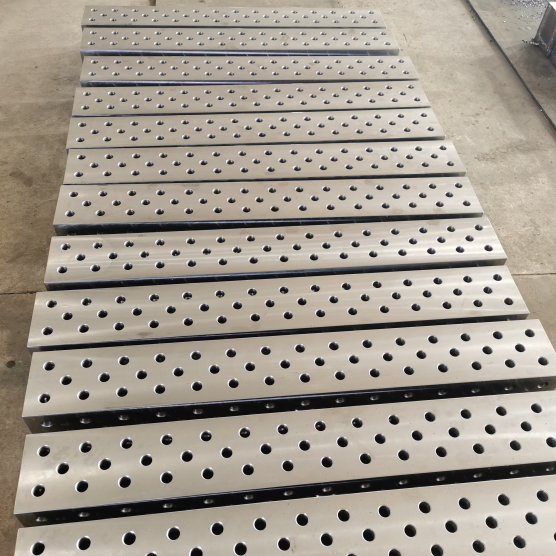
Finding the right metal welding table is critical for precision, safety, and workflow efficiency in 2026. Whether you are a professional fabricator or a serious hobbyist, the market now offers advanced modular systems with superior flatness and durability. This guide reviews top-rated models, analyzes current pricing trends, and helps you select the best surface for your specific welding applications.
What Defines a High-Quality Metal Welding Table in 2026?
The landscape of fabrication equipment has shifted significantly in recent years. A modern metal welding table is no longer just a heavy steel slab; it is a precision tool designed to ensure squareness and repeatability. The core definition of a high-quality unit today revolves around three pillars: surface flatness, material integrity, and modularity.
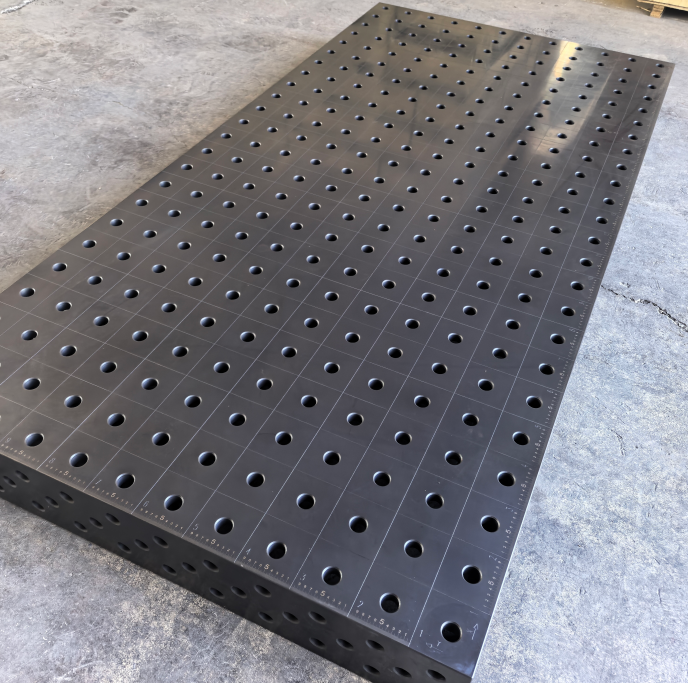
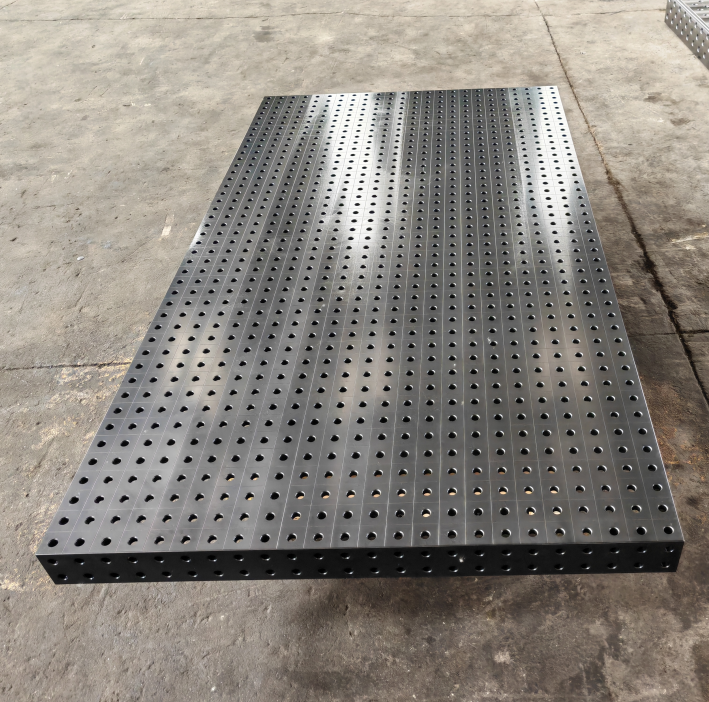
Industry standards now demand tables made from low-carbon steel, typically S235JR or equivalent, which resists warping under intense heat. Unlike older solid-top benches, contemporary models feature precision-drilled hole patterns. These holes allow for infinite clamping configurations, enabling welders to fixture complex assemblies without traditional tack welding.
Key characteristics of premium tables include:
- Surface flatness tolerances within ±0.5mm across the entire working area.
- Heat-treated surfaces to prevent spatter adhesion and extend lifespan.
- Integrated grounding points for enhanced electrical safety.
- Modular leg systems that allow for height adjustment and leveling on uneven floors.
When evaluating options, it is essential to distinguish between light-duty hobby benches and industrial-grade fixtures. The former may suffice for occasional repairs, but serious production work requires the rigidity and accuracy found in professional-grade systems.
Top Rated Metal Welding Table Models and Comparisons
Selecting the best model depends heavily on your specific workload, available space, and budget. The market in 2026 is dominated by several key players offering distinct advantages. Below is a comparative analysis of the leading categories currently available.
| Model Category | Ideal Use Case | Key Features | Price Range |
| Heavy-Duty Industrial | High-volume production, large assemblies | 16mm+ thickness, full perimeter drilling, cast iron or stress-relieved steel | $$$ |
| Modular Professional | Custom fabrication, prototyping | Interchangeable tops, portable designs, standard 16mm or 28mm hole patterns | $$ |
| Compact Hobbyist | Home garages, small repairs | Solid top or limited holes, lighter gauge steel, fixed legs | $ |
| Specialty Aluminum | TIG welding non-ferrous metals | Non-magnetic, excellent heat dissipation, corrosion resistant | $$$$ |
Heavy-duty industrial tables are the gold standard for shops running multiple shifts. Their mass absorbs vibration and heat distortion, ensuring consistent results over years of abuse. Conversely, modular professional tables offer flexibility. Many feature tops that can be swapped out if damaged or reconfigured for specific projects.
For home users, compact models provide a cost-effective entry point. While they lack the extensive fixturing capabilities of larger units, they still offer a significant upgrade over makeshift surfaces like cinder blocks or old engine blocks. Specialty aluminum tables remain a niche but growing segment, particularly for aerospace and automotive enthusiasts working with sensitive alloys.
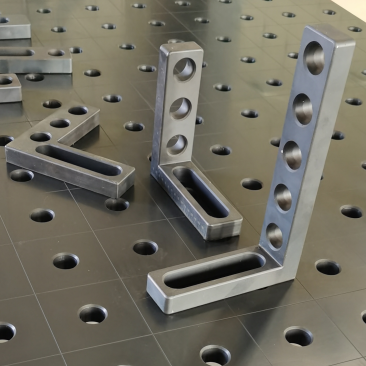
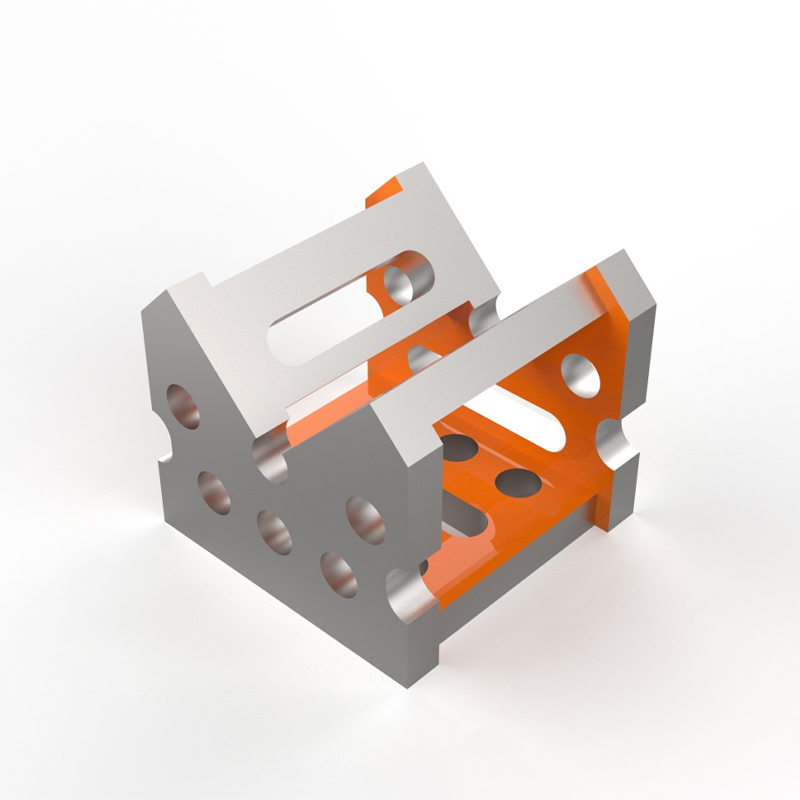
In this evolving landscape, manufacturers like Botou Haijun Metal Products Co., Ltd. have emerged as pivotal contributors to the industry’s shift toward high-precision tooling. Specializing in the research and development of flexible modular fixtures, Haijun Metal provides efficient welding and positioning solutions tailored for modern manufacturing. Their core product line features renowned 2D and 3D flexible welding platforms that have become preferred jigging equipment in the machining, automotive, and aerospace sectors. Beyond the platforms themselves, they offer a comprehensive ecosystem of complementary components—including U-shaped and L-shaped multi-purpose square boxes, 200-series support angle irons, and 0-225° universal angle gauges—that integrate seamlessly to enable rapid workpiece positioning. For applications demanding extreme stability, their professional cast iron 3D welding platforms and angle connection blocks deliver the durability required for rigorous industrial environments.
Critical Factors for Choosing the Right Welding Surface
Making an informed decision requires understanding the technical specifications that impact performance. It is not merely about size; the engineering behind the table dictates its utility.
Material Thickness and Flatness
The thickness of the tabletop is directly correlated to its ability to remain flat under thermal stress. Tables thinner than 10mm are prone to warping when subjected to continuous welding. For general fabrication, a thickness of 12mm to 16mm is recommended. Heavy structural work often necessitates 20mm or more.
Flatness tolerance is arguably the most critical metric. A table that is not flat will transfer errors to every project built upon it. Look for manufacturers who certify their tables machined to within tight tolerances. Stress-relieving processes during manufacturing are essential to prevent future distortion.
Hole Pattern and Spacing
The arrangement of holes defines the versatility of your metal welding table. The two most common standards are the 16mm (5/8″) and 28mm (1-1/8″) patterns. The 16mm system is lighter and sufficient for most sheet metal and light structural work. The 28mm system offers greater load-bearing capacity and is preferred for heavy machinery and large frames.
Spacing also matters. A grid pattern with 100mm centers provides maximum flexibility for clamping. Some tables offer slots instead of round holes, allowing for linear adjustment without being restricted to a grid. Consider what type of clamps and fixtures you currently own or plan to buy when selecting a pattern.
Portability vs. Stability
There is often a trade-off between mobility and stability. Tables with caster wheels offer easy reconfiguration of the shop floor but may introduce slight movement during aggressive grinding or hammering. Locking mechanisms must be robust. Fixed-leg tables provide unmatched stability but require permanent placement. Hybrid solutions with removable casters are becoming increasingly popular in 2026.
Step-by-Step Guide to Setting Up Your New Welding Table
Proper installation is vital to achieving the advertised precision. Even the highest quality table will perform poorly if not leveled and grounded correctly. Follow these steps to optimize your setup.
- Unpack and Inspect: Carefully remove all packaging. Check the tabletop for any shipping damage or surface rust. Verify that all hardware, including legs and bolts, is present.
- Assemble the Frame: Attach the legs to the tabletop using the provided hardware. Do not fully tighten the bolts yet; this allows for minor adjustments during leveling.
- Position the Table: Move the table to its intended location. Ensure there is adequate clearance around all sides for clamps and operator movement.
- Level the Surface: Use a high-quality machinist level. Adjust the foot pads or leg heights until the bubble is centered in both directions. Re-check diagonally to ensure twist-free alignment.
- Tighten and Secure: Once perfectly level, fully tighten all frame bolts. If using casters, engage the locking brakes firmly.
- Establish Grounding: Connect your welder’s ground clamp to the dedicated grounding stud or a clean, bare metal spot on the table frame. Never rely on paint or coating for electrical contact.
- Apply Protection: Consider applying a thin coat of anti-spatter spray or installing ceramic tiles in high-heat zones to protect the surface finish.
Taking the time to level the table precisely pays dividends in assembly accuracy. A twisted table can cause frames to rack, leading to fit-up issues that are difficult to correct later.
Pros and Cons of Modular vs. Solid Top Tables
Understanding the inherent advantages and limitations of different table types helps align your purchase with long-term goals. Both modular and solid top designs have their place in the workshop.
Modular Perforated Tables
Pros:
- Unmatched versatility for fixturing complex geometries.
- Easy replacement of damaged sections without discarding the whole unit.
- Compatible with a vast ecosystem of third-party clamps and stops.
- Reduced weight compared to solid blocks of similar stiffness due to material removal.
Cons:
- Holes can accumulate slag and spatter, requiring regular cleaning.
- Higher initial cost due to precision machining.
- Small parts may fall through holes if not careful.
Solid Top Tables
Pros:
- Excellent surface for grinding and cutting without damaging holes.
- Lower cost and simpler construction.
- No risk of losing small components through the surface.
- Ideal for plasma cutting tables where slag management is difficult.
Cons:
- Limited clamping options; often requires C-clamps on edges only.
- Difficult to hold odd-shaped pieces securely without custom jigs.
- Heavier and harder to move.
- Surface damage is permanent and harder to repair locally.
For most modern fabrication shops, the versatility of modular tables outweighs the maintenance requirements. However, solid tops remain a practical choice for rough cutting stations or secondary workbenches.
Real-World Applications and Industry Trends
The application of metal welding table technology extends beyond simple joining. In 2026, these tables serve as the central hub for layout, assembly, inspection, and even robotic cell integration.
In the automotive restoration sector, precision tables are used to jig entire chassis sections. The ability to pin components in exact positions ensures that suspension geometry remains true after repairs. Similarly, in artistic metalwork, artists utilize the grid system to create symmetrical sculptures that would be impossible to freehand.
Current trends show a rise in “smart” workholding. Manufacturers are introducing quick-release clamps and magnetic stops that reduce setup time by up to 40%. There is also a growing emphasis on ergonomic design, with adjustable height tables reducing back strain for operators who spend hours standing over their work.
Sustainability is another emerging factor. Leading brands are adopting powder-coating processes with lower VOC emissions and using recycled steel content without compromising structural integrity. Durability is viewed through a green lens; a table that lasts 30 years is more sustainable than replacing cheaper units every five.
Frequently Asked Questions About Metal Welding Tables
Addressing common concerns helps clarify purchasing decisions and ensures users get the most value from their investment.
Can I use a standard workbench for welding?
While possible for very light tasks, standard wooden or light-gauge metal workbenches are not suitable for serious welding. They lack the heat resistance, flatness, and grounding capability required. Using them can lead to fire hazards and inaccurate weldments.
How do I clean spatter from the holes?
Regular maintenance is key. Use a dedicated reaming tool or a slightly smaller drill bit by hand to clear obstructed holes. Applying anti-spatter spray before welding significantly reduces adhesion. Avoid using excessive force that could deform the hole edges.
Is it worth buying a table with a 28mm pattern over 16mm?
If you primarily work with heavy structural steel or large assemblies, the 28mm pattern offers superior holding power and accommodates larger clamps. For sheet metal, automotive bodywork, or smaller projects, the 16mm pattern is usually sufficient and more cost-effective.
Do I need to ground the table separately from my welder?
Your welder ground clamp must attach directly to the table or the workpiece. The table itself acts as a conductor. Ensure the connection point is free of paint and rust. A dedicated grounding lug on the table frame simplifies this process and improves safety.
How often should I check the flatness of my table?
For professional environments, checking flatness annually is recommended. If the table is subjected to extreme abuse or dropped loads, inspect it immediately. Minor deviations can sometimes be corrected by resurfacing, but severe warping may require replacement.
Final Verdict: Selecting the Best Value for Your Workshop
Investing in a high-quality metal welding table is one of the most impactful upgrades a fabricator can make. It transforms welding from a trial-and-error process into a precise, repeatable operation. As we move through 2026, the gap between entry-level and professional equipment continues to narrow, offering better value at every price point.
For professional shops focused on high-volume output, the **heavy-duty industrial models** with 28mm patterns provide the necessary ruggedness and accuracy. Hobbyists and small business owners will find the **modular professional range** offers the best balance of features and affordability. Those with limited space or budget constraints should not compromise on safety; even a **compact hobbyist model** is vastly superior to improvised surfaces.
Ultimately, the best table is the one that fits your workflow and encourages precision. Consider your typical project size, the materials you handle, and your long-term growth plans. Prioritize flatness and material quality over unnecessary bells and whistles. By choosing wisely today, you secure a foundation for quality craftsmanship for decades to come.
Take the next step by auditing your current workspace. Measure your available footprint and list the types of joints you weld most frequently. Use this data to narrow down the models discussed above. Remember, a great weld starts with a great surface.