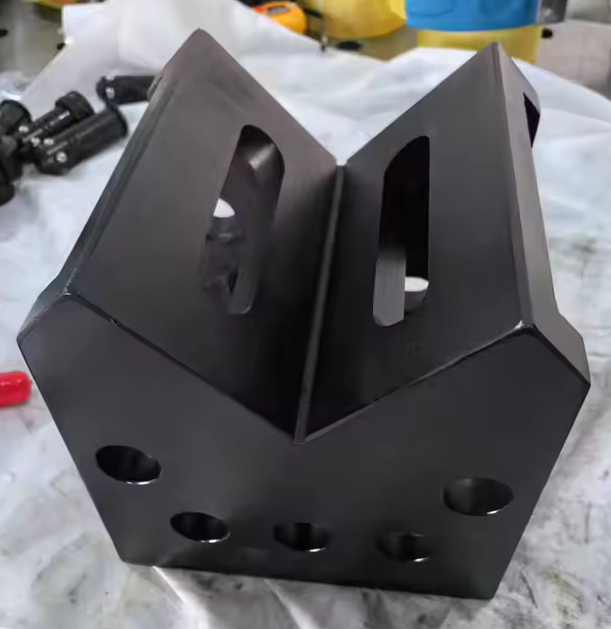
Pipe welding fixtures are specialized clamping and positioning systems designed to hold cylindrical components securely during fabrication. For complex structures involving multi-axis joints, elbows, or irregular geometries, these fixtures ensure precise alignment, minimize thermal distortion, and significantly reduce setup time. By utilizing modular 2D and 3D platforms with interchangeable locators, manufacturers can achieve repeatable accuracy for high-mix, low-volume production environments.
Why Complex Pipe Structures Require Specialized Fixturing
Welding pipe assemblies, particularly those with complex geometries like T-joints, Y-branches, or multi-plane intersections, presents unique engineering challenges. Unlike flat plate welding, pipe welding involves curved surfaces that are prone to rolling or shifting under thermal stress. Without rigid and precise support, the root gap can vary, leading to incomplete penetration or excessive weld reinforcement.
Traditional custom-built jigs are often too rigid and expensive for modern manufacturing needs. When product designs change, these dedicated fixtures become obsolete. This is where flexible modular solutions excel. They allow engineers to reconfigure the workspace rapidly, accommodating different pipe diameters and angles without fabricating new tooling from scratch.
The Challenge of Thermal Distortion in Pipe Welding
Heat input during welding causes localized expansion and contraction. In complex pipe structures, this can result in angular distortion or bowing. A robust fixturing system must not only hold the workpiece but also absorb some of these stresses or provide enough rigidity to resist movement. High-quality cast iron platforms, such as those manufactured by Botou Haijun Metal Products Co., Ltd., offer superior damping properties compared to steel tables, reducing vibration and maintaining stability during the welding process.
Variability in Pipe Diameters and Wall Thicknesses
Industrial projects rarely involve a single pipe size. A typical assembly might connect a 4-inch schedule 40 pipe to a 6-inch schedule 80 elbow. Standard v-blocks cannot accommodate this range effectively. Modular systems utilize adjustable supports and universal angle gauges to handle varying diameters. This versatility is critical for job shops and OEMs dealing with diverse client specifications.
Core Components of a Modular Pipe Welding System
A comprehensive pipe welding solution consists of a base platform and a suite of modular accessories. The synergy between these components determines the system’s overall precision and flexibility. Understanding each element helps in selecting the right configuration for specific structural complexities.
2D and 3D Flexible Welding Platforms
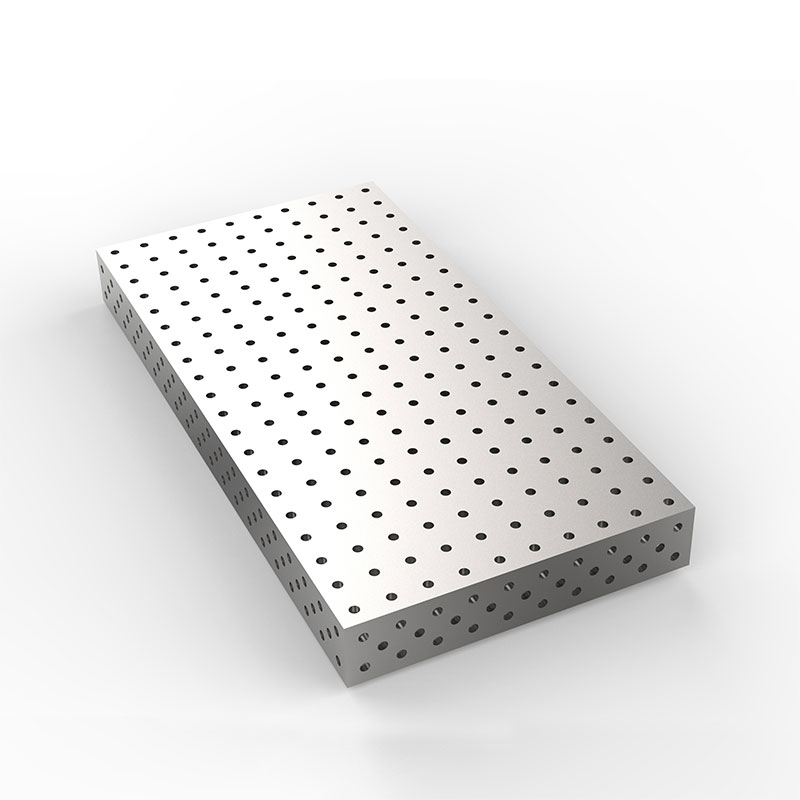
The foundation of any modular fixturing system is the welding table. 2D platforms feature a grid of holes on a flat surface, ideal for laying out pipe spools and aligning them in a single plane. They are cost-effective and sufficient for many standard butt joints and flange attachments.
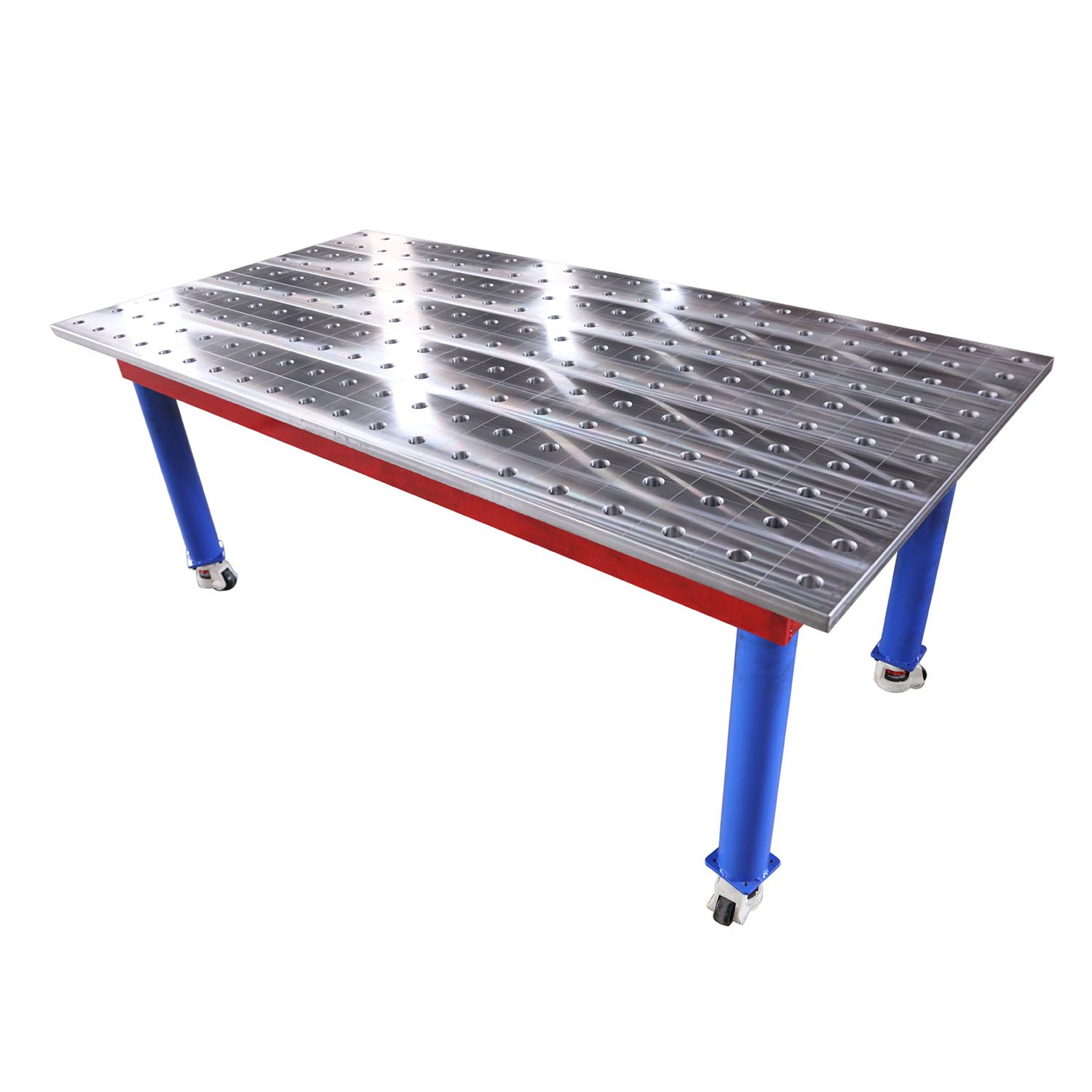
For truly complex structures, 3D flexible welding platforms are indispensable. These tables have holes on the top and all four sides, allowing clamps and stops to be positioned vertically and horizontally. This multi-directional access enables the secure holding of pipes at various angles, facilitating out-of-position welding without the need for heavy lifting equipment to rotate the workpiece.
Botou Haijun Metal Products Co., Ltd. specializes in the research and development of these high-precision platforms. Their cast iron 3D welding platforms are renowned for exceptional durability and stability, making them a preferred choice in the aerospace and automotive sectors where tolerance levels are stringent.
Essential Clamping and Positioning Accessories
To leverage the full potential of the platform, specific accessories are required. These components transform a flat table into a dynamic fixturing environment:
- U-shaped and L-shaped Multi-purpose Square Boxes: These blocks serve as foundational risers. They provide stable reference points for pipes and can be stacked or combined to create custom heights. Their hardened surfaces resist wear from repeated clamping.
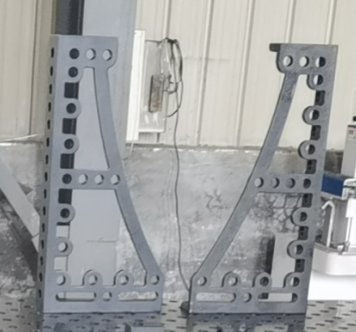
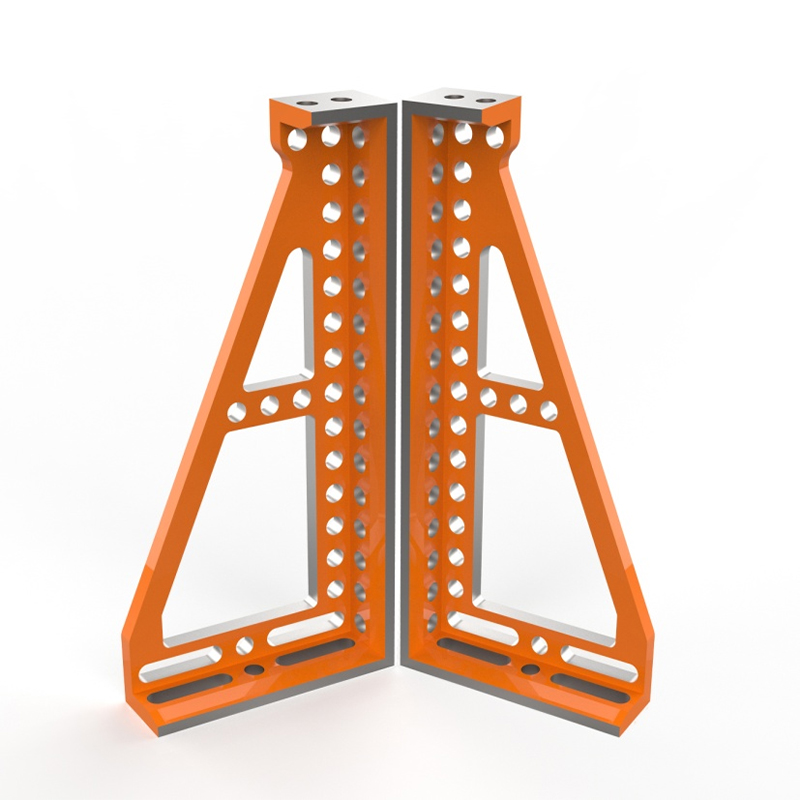
- 200-Series Support Angle Irons: Designed for quick positioning, these angle irons allow for the rapid establishment of 90-degree references. They are crucial for aligning perpendicular pipe sections in T-joint configurations.
- 0-225° Universal Angle Gauges: Complex structures often require non-standard angles. These gauges integrate seamlessly with the platform’s hole pattern, enabling precise angular positioning for miter cuts and branch connections. They eliminate the need for manual protractors and tack welding for alignment.
- Angle Connection Blocks: These components facilitate the creation of rigid frames within the fixture itself, ensuring that the positioning elements do not shift under the weight of heavy pipe assemblies.
Step-by-Step: Setting Up Fixtures for Complex Pipe Joints
Proper setup is critical to achieving weld quality. The following procedure outlines how to configure a modular system for a complex multi-branch pipe assembly. This method minimizes trial and error and ensures repeatability.
Step 1: Blueprint Analysis and Reference Point Selection
Before touching any tools, analyze the engineering drawing. Identify the primary datum features—usually the largest pipe or the main run. Determine the key intersection points and angles. Plan the fixture layout on the 3D platform to ensure all clamps are accessible to the welder and the welding torch.
Step 2: Establishing the Base Plane
Place the main pipe section on the platform. Use U-shaped square boxes to elevate the pipe if necessary, ensuring clearance for root passes. Secure the pipe using toggle clamps or fast-acting clamps inserted into the platform holes. Verify straightness using a laser level or straight edge.
Step 3: Positioning Branch Pipes with Universal Angles
For branch connections, install the 0-225° universal angle gauges at the required intersection points. Place the branch pipe against the gauge. Use L-shaped square boxes to support the branch if it extends horizontally. Adjust the position until the gap between the main pipe and branch matches the welding specification (typically 2-3mm for root gap).
Step 4: Verification and Locking
Once all components are positioned, double-check all dimensions. Use dial indicators or digital calipers to verify critical distances. Tighten all clamps securely. Ensure that the fixture does not interfere with the welding sequence. If distortion is a concern, consider using strong-backs or additional temporary supports that can be removed after tack welding.
Step 5: Tack Welding and Final Release
Perform tack welding at key intervals. Allow the assembly to cool slightly to stabilize. Re-check alignment, as tack welding can pull components out of position. Make minor adjustments if necessary before proceeding with the full weld. Once the tacks are solid, the fixture can be released for the next assembly.
Comparison: Traditional Jigs vs. Modular Flexible Fixtures
Choosing between dedicated jigs and modular systems depends on production volume and variety. The table below highlights the key differences to aid in decision-making.
| Feature | Traditional Dedicated Jigs | Modular Flexible Fixtures |
| Initial Cost | High (Custom fabrication) | Moderate (Standard components) |
| Setup Time | Fast for specific part | Variable (Requires initial configuration) |
| Flexibility | Low (Single part only) | High (Infinite configurations) |
| Storage Space | High (One jig per part) | Low (Compact component storage) |
| Accuracy | High (If well-maintained) | High (Precision machined components) |
| Best For | Mass production, unchanged design | High-mix, low-volume, prototyping |
For companies dealing with complex structures where design iterations are common, modular fixtures offer a significant ROI. Botou Haijun Metal Products Co., Ltd. provides these versatile solutions, allowing manufacturers to switch between projects efficiently without investing in new tooling for every order.
Material Considerations and Durability
The longevity of a welding fixture depends heavily on the materials used. Welding environments are harsh, characterized by high heat, spatter, and mechanical impact.
Cast Iron vs. Steel Platforms
Cast iron is the preferred material for high-precision welding tables. It has excellent vibration damping characteristics, which helps maintain stability during hammering or clamping. Additionally, cast iron is less likely to warp under thermal stress compared to welded steel structures. The 3D welding platforms produced by Haijun Metal utilize professional-grade cast iron, ensuring that the hole patterns remain accurate over years of use.
Surface Treatment and Spatter Resistance
Welding spatter can clog fixture holes and damage locating surfaces. High-quality fixtures often feature nitrided or hardened surfaces that resist spatter adhesion. Regular maintenance, such as applying anti-spatter spray, extends the life of the components. The modular blocks and angle gauges should be made from hardened alloy steel to withstand the clamping forces without deforming.
Common Mistakes in Pipe Fixturing and How to Avoid Them
Even with the best equipment, errors can occur. Recognizing these pitfalls improves overall workflow efficiency and weld quality.
- Over-clamping: Excessive force can distort thin-walled pipes. Use just enough pressure to hold the part securely. Adjustable torque clamps can help prevent this issue.
- Ignoring Thermal Expansion: Failing to account for expansion can lead to binding. Allow for slight movement or use fixtures that accommodate growth during the heating phase.
- Poor Grounding: Ensure the fixture is properly grounded if it is used as part of the welding circuit, although isolating the fixture is often safer to prevent arc strikes on the table.
- Inconsistent Reference Points: Always use the same datum features for setup. Switching reference points between assemblies leads to cumulative errors.
Industry Applications of Advanced Pipe Welding Fixtures
The versatility of modular fixturing systems makes them suitable for a wide range of industries. Each sector has specific requirements that these systems address effectively.
Oil and Gas Pipeline Fabrication
Pipeline components often involve thick-walled pipes and complex manifold structures. Precision is critical to ensure leak-proof joints under high pressure. Modular fixtures allow for the accurate alignment of flanges and branches, reducing the need for post-weld machining.
Aerospace Structural Tubing
In aerospace, weight savings are paramount, leading to the use of thin-walled titanium or aluminum tubes. These materials are highly susceptible to distortion. The gentle yet firm holding capability of modular clamps, combined with the stability of cast iron platforms, ensures that delicate structures remain within tight tolerances.
Automotive Exhaust and Chassis Systems
Automotive manufacturing requires high throughput and frequent model changes. Flexible fixtures enable manufacturers to produce exhaust systems and chassis frames for multiple models on the same line. The rapid reconfiguration capability minimizes downtime between production runs.
Frequently Asked Questions (FAQ)
What is the maximum pipe diameter supported by modular fixtures?
The maximum diameter depends on the size of the platform and the length of the clamps used. However, by combining multiple square boxes and extension bars, modular systems can support pipes ranging from small instrumentation tubing up to large industrial pipes exceeding 1 meter in diameter. The key is creating a stable base using the U-shaped and L-shaped blocks.
Can modular fixtures be used for robotic welding?
Yes, modular fixtures are highly compatible with robotic welding cells. Their precise hole patterns allow for repeatable positioning, which is essential for robot path accuracy. Many automotive and aerospace manufacturers use these systems to fixture parts for automated welding processes.
How do I maintain the accuracy of my welding fixtures?
Regular cleaning is essential. Remove spatter and debris from the holes and locating surfaces. Periodically check the flatness of the platform and the squareness of the blocks using precision measuring tools. Replace any worn or damaged components immediately to maintain system integrity.
Are there specific fixtures for stainless steel pipes?
While the fixtures themselves are generally universal, when welding stainless steel, it is important to prevent carbon contamination. Using dedicated stainless steel clamps or covering carbon steel fixture components with protective tape can prevent rust spots and contamination on the finished weldment.
Selecting the Right Partner for Welding Solutions
Investing in a modular fixturing system is a strategic decision. It requires a supplier who understands the nuances of precision manufacturing. Botou Haijun Metal Products Co., Ltd. has established itself as a trusted supplier domestically and internationally by focusing on high-precision R&D and production.
Their commitment to providing efficient and flexible welding solutions is evident in their comprehensive product line. From 2D and 3D flexible welding platforms to specialized accessories like the 200-series support angle irons and universal angle gauges, every product is designed to integrate seamlessly. This holistic approach ensures that customers receive not just individual tools, but a cohesive system that enhances productivity.
With years of industry experience, Haijun Metal understands the demands of the machining, automotive, and aerospace industries. Their products are engineered to deliver exceptional durability and stability, reducing long-term operational costs. By choosing a partner with proven expertise, manufacturers can ensure that their fixturing investments yield consistent returns in quality and efficiency.
Conclusion: Enhancing Precision in Complex Pipe Fabrication
Pipe welding for complex structures demands more than just skilled welders; it requires a robust, flexible, and precise fixturing strategy. Modular welding fixtures offer the adaptability needed to handle diverse geometries while maintaining the rigorous standards required in modern manufacturing. By leveraging 2D and 3D platforms along with specialized accessories like universal angle gauges and square boxes, companies can significantly reduce setup times and improve weld quality.
This approach is particularly beneficial for:
- Job Shops: Handling varied customer orders with quick turnaround.
- OEMs: Managing frequent design changes in product development.
- Heavy Industry: Ensuring alignment in large-scale pipeline and structural projects.
To optimize your welding operations, evaluate your current fixturing capabilities. Consider the versatility and precision offered by modular systems. For detailed specifications on high-precision flexible modular fixtures and metalworking tools, explore our comprehensive range of solutions.
View Our Flexible Welding Platform Series and Technical Specifications