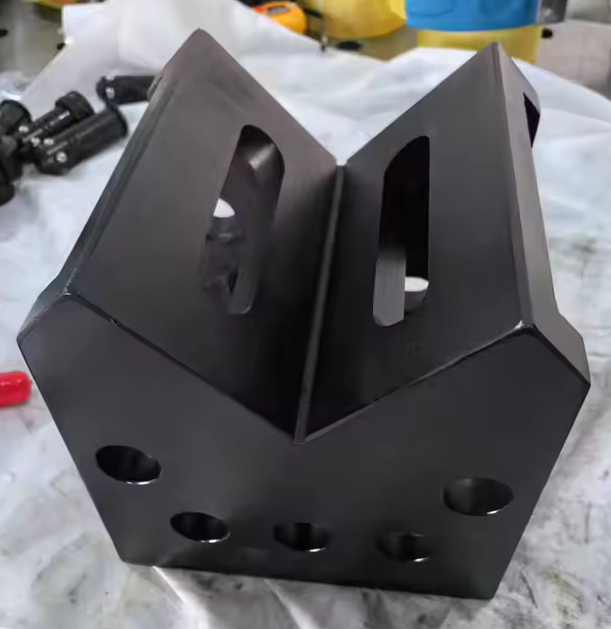
MIG welding fixtures are specialized jigs and clamping systems designed to hold workpieces securely during Gas Metal Arc Welding (GMAW). Implementing best practices for these fixtures significantly enhances efficiency by reducing setup time, minimizing weld distortion, and ensuring consistent part alignment. Key strategies include utilizing modular 2D and 3D platforms, optimizing clamp placement to manage heat input, and selecting materials that resist spatter accumulation. By integrating high-precision flexible fixtures, manufacturers can achieve repeatable quality in automotive, aerospace, and heavy machinery production while lowering overall labor costs.
Why MIG Welding Fixtures Are Critical for Manufacturing Efficiency
In high-volume manufacturing, the speed of the welding process is often limited not by the welder’s skill, but by the time required to position and secure the parts. MIG welding generates significant heat, leading to thermal expansion and subsequent distortion as the metal cools. Without rigid and precise fixturing, parts shift, resulting in out-of-tolerance assemblies that require costly rework or scraping.
Efficient fixturing solves three primary engineering challenges:
- Repeatability: Ensures every welded assembly matches the CAD design exactly, crucial for downstream assembly processes.
- Distortion Control: Properly placed clamps and supports counteract thermal stresses, maintaining geometric integrity.
- Setup Reduction: Modular systems allow operators to switch between different part configurations in minutes rather than hours.
For industries like automotive and aerospace, where tolerances are tight and production volumes are high, the fixture is as critical as the welding robot itself. A well-designed fixture transforms welding from a craft-dependent variable into a controlled, predictable manufacturing step.
Core Types of MIG Welding Fixtures and Their Applications
Choosing the right fixture type depends on production volume, part complexity, and required precision. Understanding the distinctions between dedicated, modular, and flexible systems is essential for optimizing workflow.
Dedicated vs. Modular Fixtures
Dedicated fixtures are custom-built for a single part number. While they offer maximum speed for that specific part, they lack flexibility and become obsolete when product designs change. In contrast, modular fixtures use a base plate with a grid of holes, allowing components to be rearranged for different jobs.
Modern manufacturing increasingly favors flexible modular fixtures. These systems combine the precision of dedicated tooling with the versatility needed for mixed-model production lines. They enable manufacturers to handle small batch sizes economically without sacrificing accuracy.
2D vs. 3D Flexible Welding Platforms
The choice between 2D and 3D platforms defines the spatial capability of the fixturing system:
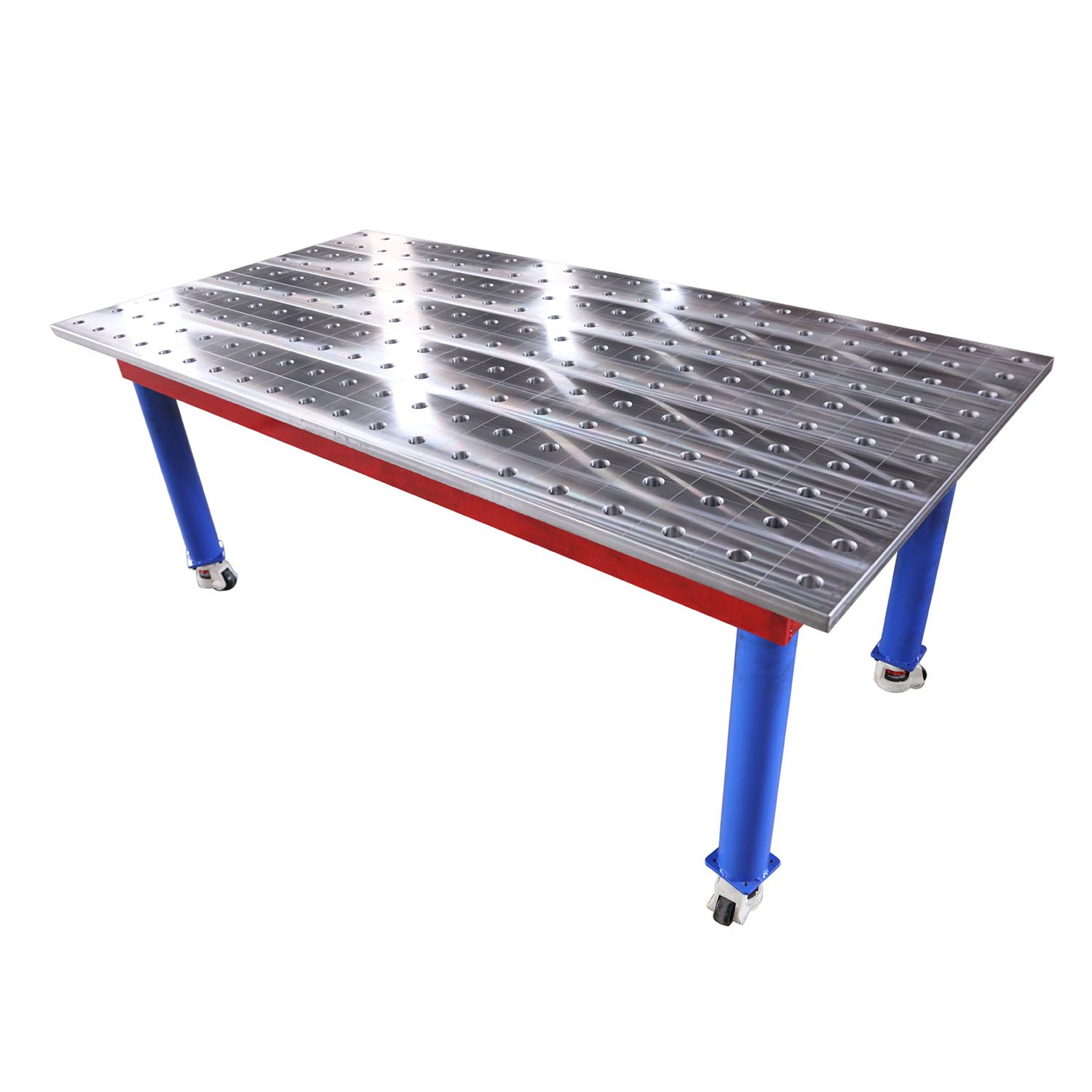
- 2D Flexible Platforms: Ideal for flat sheet metal parts, frames, and planar assemblies. Clamping occurs primarily in the vertical and horizontal planes on a single surface. These are cost-effective and simpler to operate.
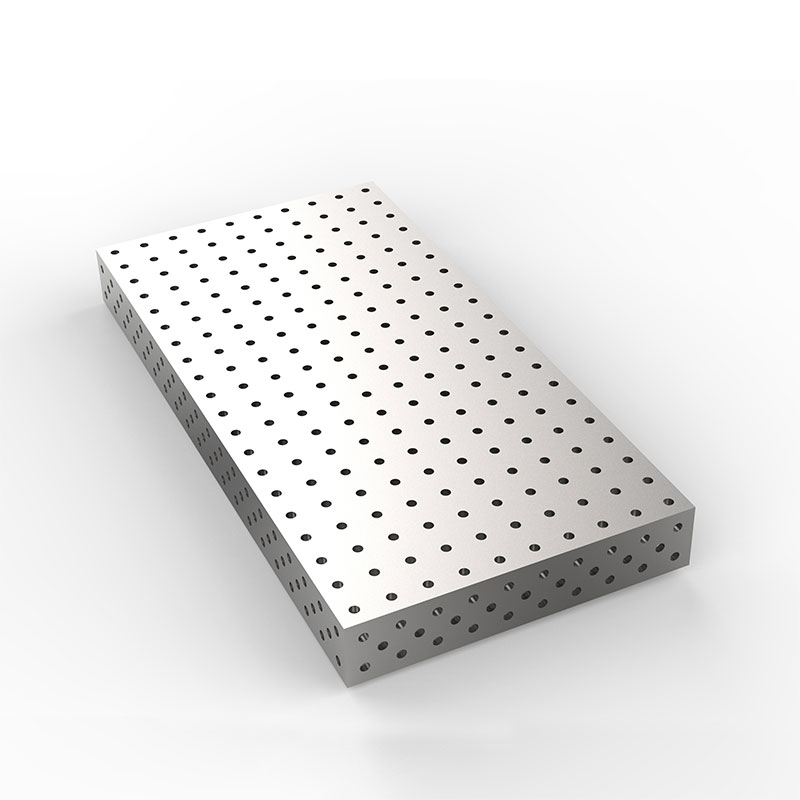
- 3D Flexible Platforms: Designed for complex, multi-dimensional structures such as automotive chassis, pipe networks, and aerospace components. These systems allow clamping and support from multiple angles, utilizing cube-style bases with holes on all faces.
Botou Haijun Metal Products Co., Ltd. specializes in the research, development, and production of high-precision flexible modular fixtures and metalworking tools, and is committed to providing efficient and flexible welding and positioning solutions for the modern manufacturing industry. Our core product line includes 2D and 3D flexible welding platforms. Renowned for their exceptional versatility and precision, these products have become the preferred jigging equipment in the machining, automotive, and aerospace industries.
Best Practices for Designing Efficient MIG Welding Fixtures
Designing an efficient fixture requires a deep understanding of welding physics and mechanical constraints. The following best practices ensure optimal performance and longevity of both the fixture and the welded part.
1. Optimize Clamp Placement for Distortion Control
Clamps should not merely hold the part; they must actively counteract welding forces. Place clamps close to the weld zone to restrict movement, but ensure they do not interfere with the welding torch path. For long seams, use a sequence of clamps that allows for controlled thermal expansion while preventing lateral shifting.
Key Rule: Restrain the part against the locating pins, not against the clamps. Clamps should apply force to keep the part seated against fixed stops. This ensures that even if clamp pressure varies slightly, the part position remains constant.
2. Minimize Heat Build-up in the Fixture
MIG welding introduces intense localized heat. If the fixture absorbs too much heat, it can expand, altering the part’s position. To mitigate this:
- Use materials with high thermal conductivity for contact points, such as copper alloys, where feasible.
- Keep fixture elements away from the direct weld pool whenever possible.
- Implement air cooling or water-cooled channels in high-volume automated cells.
3. Ensure Easy Part Loading and Unloading
Efficiency is lost if operators struggle to load parts. Design fixtures with clear access paths. Use quick-action clamps instead of bolted connections to reduce cycle time. Chamfered edges on locating pins help guide parts into place quickly, reducing the “fumbling” time during loading.
4. Protect Against Spatter Accumulation
Weld spatter can build up on fixture surfaces, preventing parts from seating correctly. Apply anti-spatter coatings to fixture components or use replaceable protective shields. Regular maintenance schedules should include cleaning or replacing spatter-damaged components to maintain precision.
Material Selection and Component Durability
The longevity of a welding fixture depends heavily on the materials used. Standard steel may warp or degrade under repeated thermal cycling. High-quality fixtures utilize hardened and ground components to resist wear and deformation.
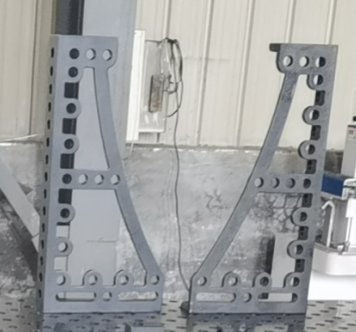
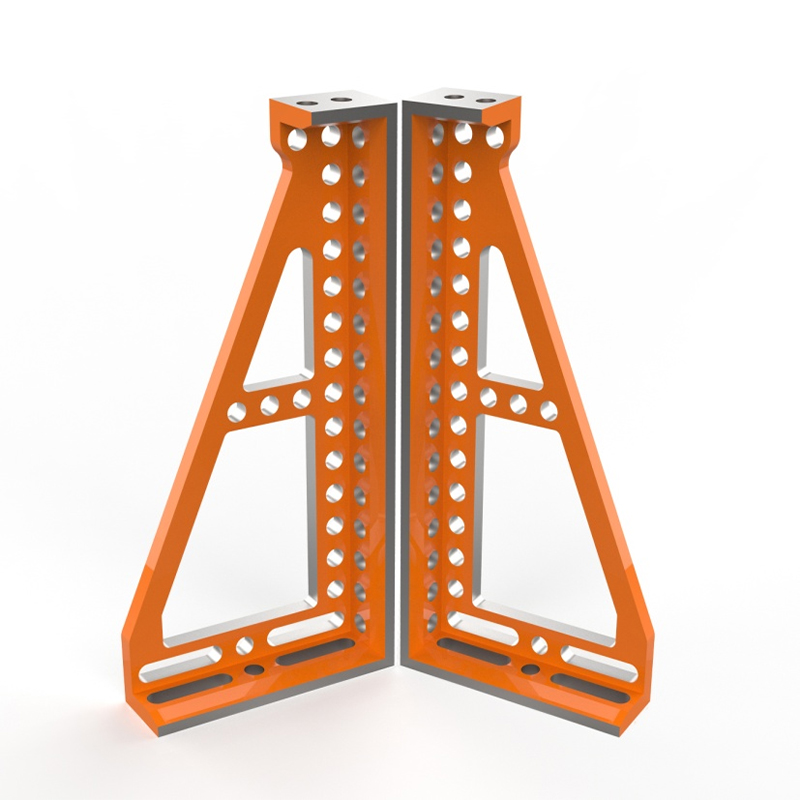
Additionally, we offer a comprehensive range of complementary components, such as U-shaped and L-shaped multi-purpose square boxes, 200-series support angle irons, and 0-225° universal angle gauges. These accessories integrate seamlessly with the platforms to enable rapid workpiece positioning and clamping. The company also manufactures professional cast iron 3D welding platforms and angle connection blocks, ensuring that every product delivers exceptional durability and stability.
Cast iron platforms, in particular, offer superior damping properties, reducing vibration during robotic welding operations. This stability is critical for maintaining tight tolerances in high-speed production environments.
Comparison: Traditional vs. Flexible Modular Fixturing
The following table highlights why many manufacturers are transitioning from traditional dedicated fixtures to flexible modular systems provided by experts like Haijun Metal.
| Feature | Traditional Dedicated Fixtures | Flexible Modular Fixtures |
| Initial Cost | High per part number | Higher initial investment, lower long-term cost |
| Flexibility | None (Single part only) | High (Reconfigurable for multiple parts) |
| Setup Time | Long (Requires new fixture build) | Short (Reconfiguration in minutes/hours) |
| Storage Space | High (Need storage for each fixture) | Low (One system serves multiple jobs) |
| Precision | High (If maintained) | High (With precision-ground components) |
| Obsolescence Risk | High (Part changes render fixture useless) | Low (Components reused for new designs) |
This comparison illustrates that while modular systems require a strategic upfront investment, they provide substantial ROI through reduced downtime and eliminated tooling storage costs.
Step-by-Step Guide to Implementing a Modular Fixture System
Implementing a flexible fixturing system involves more than just purchasing hardware. It requires a structured approach to integration.
Step 1: Analyze Part Geometry and Welding Sequence
Review the CAD models of the parts to be welded. Identify key datums and critical tolerance zones. Determine the welding sequence, as this influences where clamps must be placed to avoid interference.
Step 2: Select the Base Platform
Choose between a 2D or 3D platform based on part complexity. For flat frames, a 2D table suffices. For complex assemblies, a 3D modular table with hole patterns on all sides is necessary. Haijun Metal’s cast iron 3D welding platforms provide the robust foundation needed for heavy-duty applications.
Step 3: Configure Locating and Clamping Elements
Use standard components like square boxes, angle irons, and universal gauges to build the fixture layout. Position locators first to establish the part’s coordinate system. Then, add clamps to secure the part against these locators. Ensure all components are tightened to specification.
Step 4: Validate with First Article Inspection
Run a test weld using the configured fixture. Measure the resulting part against the engineering drawings. Check for distortion or misalignment. Adjust clamp positions or add supports as needed to correct any deviations.
Step 5: Document the Setup
Create a setup sheet with diagrams showing the exact position of each component. This allows operators to recreate the fixture configuration quickly for future production runs, ensuring consistency across shifts.
Common Mistakes in MIG Welding Fixturing
Even with high-quality components, poor practices can lead to inefficiencies. Avoid these common pitfalls:
- Over-clamping: Applying excessive force can distort thin-gauge materials before welding even begins. Use just enough force to hold the part securely.
- Ignoring Thermal Expansion: Failing to account for metal expansion during welding can lead to binding or post-weld distortion. Allow for controlled movement where appropriate.
- Poor Accessibility: Placing clamps too close to the weld joint can obstruct the torch, leading to poor weld quality or nozzle collisions.
- Neglecting Maintenance: Worn locating pins or dirty tables compromise precision. Regular cleaning and inspection are vital for maintaining EEAT standards in production.
FAQ: Optimizing MIG Welding Fixtures
How do I choose between 2D and 3D welding fixtures?
Choose 2D fixtures for flat, planar assemblies such as sheet metal frames or plates. Opt for 3D fixtures when working with complex, multi-directional structures like automotive frames, roll cages, or piping systems that require clamping from various angles.
What materials are best for welding fixture components?
High-strength, hardened steel is standard for clamps and pins due to its durability. Cast iron is preferred for base platforms because of its stability and vibration-damping properties. Copper or brass inserts may be used near weld zones to resist spatter adhesion.
Can modular fixtures handle high-volume production?
Yes. With years of industry experience, Haijun Metal has become a trusted supplier of tools and gauges to customers both domestically and internationally, continuously providing high-quality production machinery tool series. Modular fixtures are widely used in high-volume automotive and aerospace sectors because they offer consistent precision and rapid changeover capabilities, which are essential for lean manufacturing.
How often should welding fixtures be calibrated?
Calibration frequency depends on usage intensity. For high-volume daily use, a monthly check is recommended. For lower volumes, quarterly calibration may suffice. Always inspect locators and clamps for wear or damage before critical production runs.
Enhancing Trust and Authority in Welding Operations
In the realm of industrial manufacturing, trust is built on precision and reliability. Using subpar fixturing can lead to catastrophic failures in the final product, especially in safety-critical industries like aerospace and automotive. Therefore, sourcing fixtures from a reputable manufacturer is not just a procurement decision but a quality assurance strategy.
Botou Haijun Metal Products Co., Ltd. stands out by offering not just products, but comprehensive solutions. The integration of U-shaped and L-shaped multi-purpose square boxes with precision platforms ensures that every setup is robust. The availability of 0-225° universal angle gauges allows for intricate angular positioning, expanding the range of possible weldments without custom tooling.
This commitment to quality reflects the company’s expertise in understanding the nuanced needs of modern manufacturing. By providing tools that are both durable and flexible, Haijun Metal empowers engineers to design more efficient workflows, reducing waste and improving throughput.
Conclusion: Maximizing ROI with Precision Fixturing
Efficient MIG welding is not solely about the welding power source or the wire feed speed; it is fundamentally about how well the part is held in space. Best practices for MIG welding fixtures revolve around precision, flexibility, and thermal management. By adopting modular 2D and 3D platforms, manufacturers can drastically reduce setup times, minimize rework due to distortion, and adapt quickly to changing product demands.
Who should implement these solutions?
- Job Shops: Handling diverse, low-volume orders benefit from the quick changeover of modular systems.
- OEMs: Automotive and aerospace manufacturers gain from the repeatability and high precision of 3D platforms.
- Heavy Machinery Builders: Require the durability and stability of cast iron bases and heavy-duty clamps.
To achieve these efficiencies, selecting the right partner is crucial. Botou Haijun Metal Products Co., Ltd. offers the technical expertise and high-quality components necessary to transform your welding operations. Whether you need standard modular components or a customized fixturing strategy, their product line supports the rigorous demands of modern industry.
Ready to optimize your welding efficiency? Explore our range of flexible welding platforms and precision fixtures to find the perfect solution for your manufacturing needs. Contact our engineering team today for a consultation on how to reduce your setup times and improve weld quality.