Summary Selecting the right welding table is a critical decision that directly impacts weld quality, operator safety, and workshop efficiency. This guide provides a comprehensive framework for evaluating welding tables based on material thickness, surface flatness, clamping systems, and mobility requirements. It explores the differences between standard steel tables and precision modular fixtures, offering actionable advice for fabricators, engineers, and procurement professionals to choose a solution that aligns with their specific production volumes and technical needs.
Why the Right Welding Table Matters for Workshop Efficiency
In metal fabrication, the welding table is often underestimated. Many workshops treat it as a simple workbench, yet it serves as the foundational reference plane for nearly every assembly and welding operation. A poorly chosen table can lead to distorted assemblies, inconsistent weld seams, and increased rework rates. Conversely, a high-quality welding table enhances precision, reduces setup time, and improves overall workflow ergonomics.
For B2B manufacturers and industrial workshops, the choice of welding fixture extends beyond mere convenience. It affects throughput, labor costs, and the ability to meet tight geometric tolerances. Whether you are producing custom brackets for agricultural machinery or assembling complex automotive subsystems, the stability and accuracy of your welding surface are paramount. In 2026, with increasing demands for precision in cold-formed and stamped components, the role of the welding table has evolved from a passive support structure to an active tool in quality control.
Key Factors to Consider When Choosing a Welding Table
Before selecting a specific model or designing a custom solution, it is essential to evaluate several critical parameters. These factors determine whether a table will serve as a temporary holding area or a precision engineering asset.
1. Material Thickness and Structural Rigidity
The top plate of a welding table must withstand significant thermal stress, mechanical impact, and heavy loads without warping. Standard mild steel tables often range from 6mm to 12mm in thickness, but for high-precision applications, thicker plates (15mm–25mm) are preferred. The underlying frame structure also plays a crucial role. A rigid frame prevents vibration during grinding or hammering, ensuring that the workpiece remains stable.
When evaluating structural integrity, consider the type of welding processes used. High-amperage MIG or submerged arc welding generates substantial heat, which can cause thin tabletops to bow over time. For workshops handling heavy-duty fabrication, such as construction equipment parts, a robust, heavily reinforced frame is non-negotiable.
2. Surface Flatness and Precision Levels
Flatness is the most critical metric for any precision welding operation. A warped table transfers inaccuracies directly to the welded assembly. Industrial-grade welding tables are often machined to specific flatness tolerances, such as ±0.5mm over a square meter. For general-purpose repair work, minor imperfections may be acceptable. However, for manufacturing precision sheet metal components or custom bracket systems, high-level flatness is essential to ensure that parts fit together correctly before welding begins.
Regular maintenance and periodic resurfacing may be required for standard steel tables. Alternatively, modular fixture tables with hardened, replaceable surface plates offer long-term consistency without the need for frequent machining.
3. Clamping and Fixturing Compatibility
A welding table is only as useful as its ability to hold workpieces securely. The clamping system determines how quickly operators can set up jobs and how accurately they can position parts. Common clamping options include:
- C-Clamps and F-Clamps: Versatile and inexpensive, but slow to adjust and prone to slipping under heavy load.
- Toggle Clamps: Fast-acting and ideal for repetitive production runs where parts have consistent dimensions.
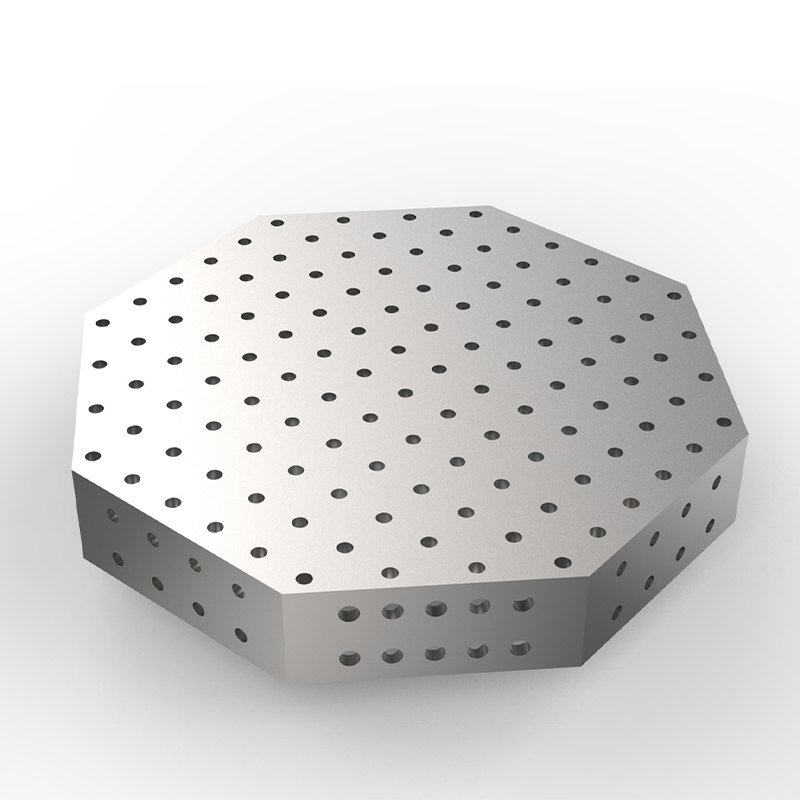
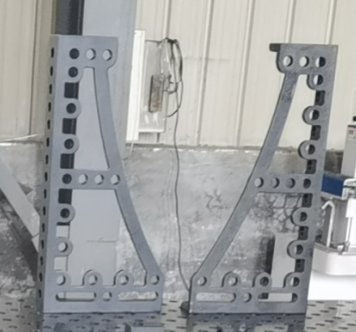
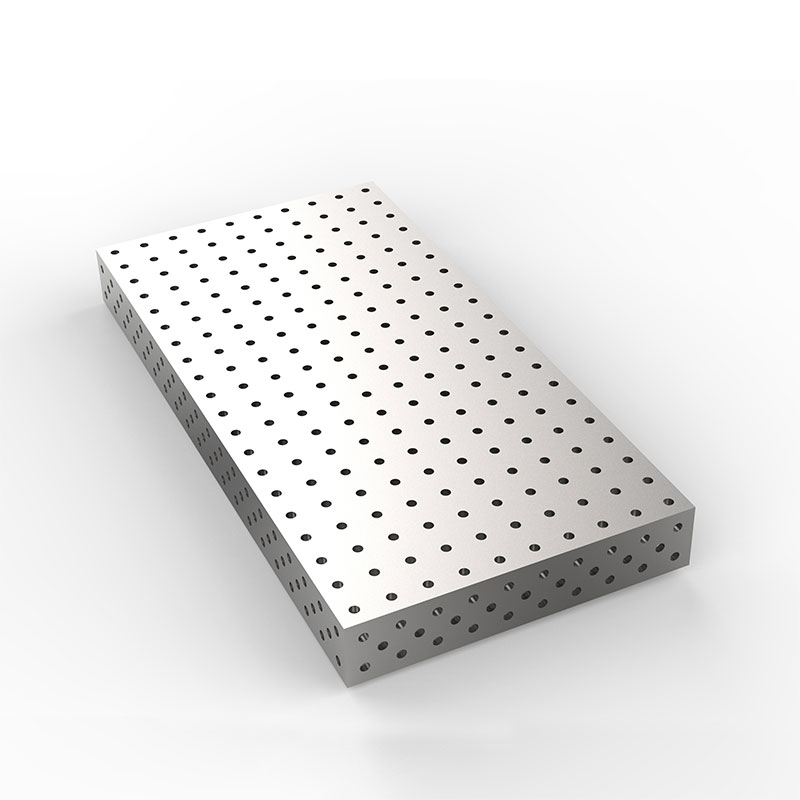
- Modular Fixture Systems: Utilize a grid of holes (square or round) to accept specialized clamps, stops, and squares. These systems allow for rapid, repeatable setup and are highly recommended for batch production.
For companies like Botou Haijun Metal Products Co., Ltd., which specializes in precision-stamped parts and deep-drawn components, the ability to quickly fixture complex geometries is vital. A modular system enables engineers to validate designs rapidly and transition smoothly from prototyping to volume production.
4. Mobility vs. Stationary Setup
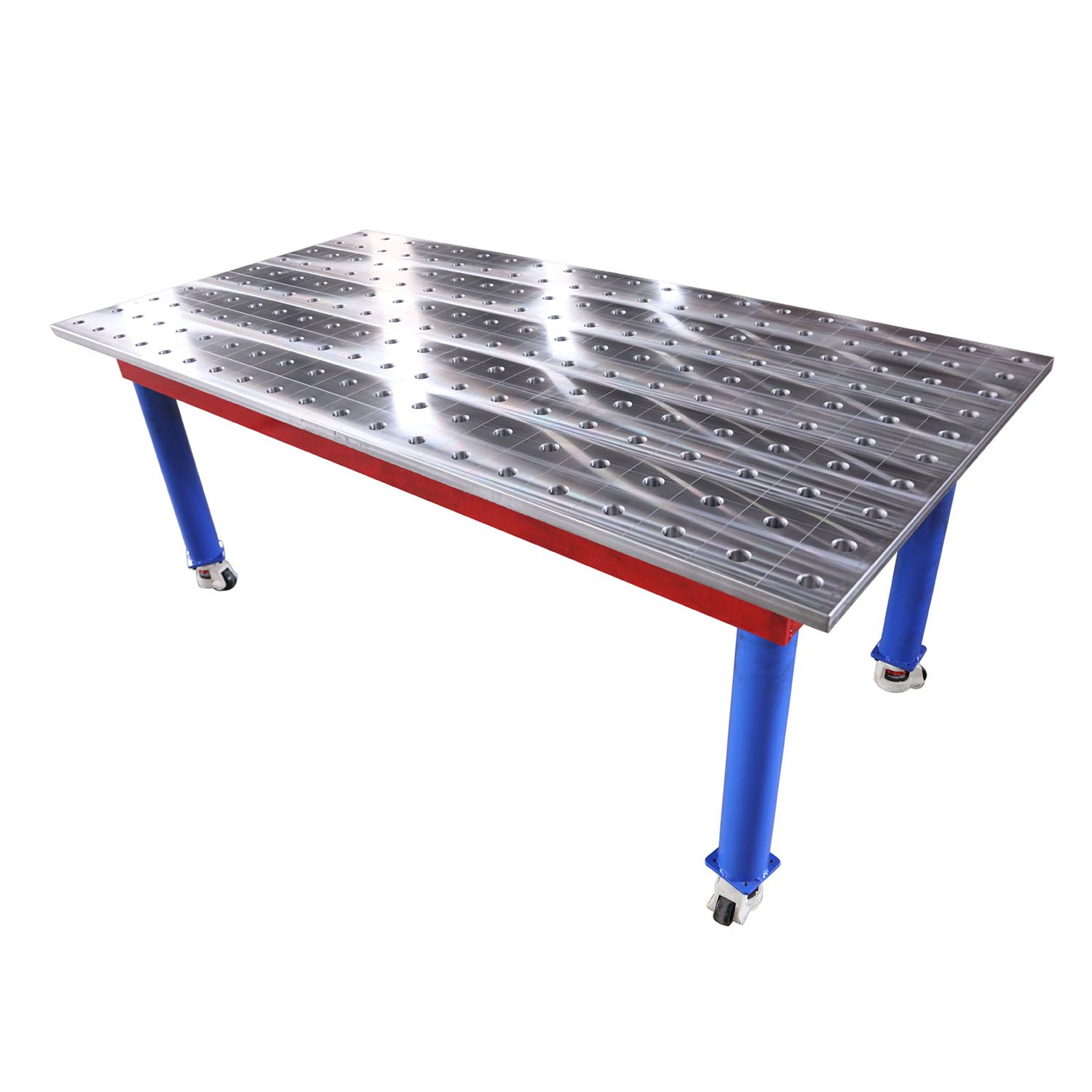
The decision between a mobile and stationary table depends on workshop layout and part size. Mobile tables with heavy-duty casters offer flexibility, allowing large assemblies to be moved to different welding stations or inspection areas. However, mobility introduces potential instability. Locking mechanisms must be robust to prevent movement during welding.
Stationary tables, often bolted to the floor, provide maximum stability and are ideal for heavy fabrication or automated welding cells. For workshops producing smaller, high-precision components, a stationary setup with ergonomic height adjustment may improve operator comfort and reduce fatigue.
Types of Welding Tables: Comparing Options
Understanding the different types of welding tables available helps align the purchase with specific operational needs. Below is a comparison of common table types.
| Table Type | Best For | Pros | Cons |
| Standard Steel Table | General fabrication, repair shops, heavy structural work | Low cost, durable, easy to repair | Limited precision, no modular fixturing, prone to warping |
| Modular Fixture Table | Precision manufacturing, batch production, complex assemblies | High repeatability, flexible clamping, excellent flatness | Higher initial cost, requires training on fixture usage |
| Cast Iron Table | Machining-heavy environments, high-precision alignment | Naturally dampens vibration, stable temperature response | Brittle, heavy, expensive, difficult to modify |
| Portable Folding Table | Field work, small hobby shops, limited space | Space-saving, lightweight, affordable | Low rigidity, poor flatness, limited clamping options |
Material Selection: Steel, Stainless, and Aluminum Considerations
The material of the welding table itself influences its longevity and suitability for specific tasks. Most industrial tables are made from low-carbon steel due to its strength and weldability. However, the choice of base material for the workpieces being welded also dictates table requirements.
Carbon Steel Tables
Carbon steel is the industry standard. It is strong, affordable, and can be easily repaired by grinding or welding new mounting points. However, it is susceptible to rust and spatter adhesion. Regular cleaning and application of anti-spatter coatings are necessary to maintain surface quality.
Stainless Steel and Aluminum Applications
When working with stainless steel or aluminum, cross-contamination becomes a concern. Iron particles from a carbon steel table can embed into stainless steel surfaces, leading to corrosion issues later. In such cases, dedicated tables or protective covers are recommended. Some high-end facilities use stainless steel-topped tables for specific clean-room applications, though these are less common due to cost and lower structural rigidity compared to carbon steel.
Botou Haijun Metal Products Co., Ltd. manufactures components from cold-rolled steel, stainless steel, and aluminum alloys. For such diverse material portfolios, having a versatile welding environment that prevents contamination while maintaining precision is essential. Using dedicated fixtures or protective sheets on modular tables can help manage multi-material workflows effectively.
Integrating Welding Tables into Precision Manufacturing Workflows
For B2B manufacturers serving industries like automotive, agriculture, and construction, the welding table is not an isolated tool but part of a broader quality assurance ecosystem. The precision of the table supports the integrity of the final product, especially when dealing with tight geometric tolerances.
Supporting Design for Manufacturability (DFM)
During the DFM phase, engineers assess how a part will be fixtured and welded. A modular welding table allows for rapid iteration of fixture designs. By simulating production setups on a precision table, manufacturers can identify potential distortion issues early. This capability aligns with the service philosophy of responsiveness and technical collaboration, enabling faster feedback loops between design and production.
Quality Control and Inspection
A flat, stable welding table can double as an inspection surface. After welding, assemblies can remain on the table for dimensional checks using coordinate measuring machines (CMM) or manual gauges. This reduces the need to move parts to a separate inspection area, minimizing handling damage and saving time. For companies adhering to ISO 9001 principles, maintaining documented control plans includes ensuring that all reference surfaces, including welding tables, are regularly calibrated and maintained.
Scalability from Prototype to Production
One of the key advantages of modern modular welding systems is scalability. A setup used for a single prototype can be replicated for batch production by duplicating the fixture layout. This supports agile operational structures, allowing manufacturers to handle both small-batch custom orders and sustained production runs without compromising accuracy. This flexibility is particularly valuable for Tier-2 suppliers who must respond to varying demand levels from international OEMs.
Maintenance and Longevity of Welding Tables
Investing in a high-quality welding table is only the first step. Proper maintenance ensures that the table retains its precision and functionality over years of use.
- Regular Cleaning: Remove spatter, slag, and debris after each shift. Buildup can affect flatness and interfere with clamping mechanisms.
- Surface Protection: Apply anti-spatter sprays or use disposable cover sheets during heavy welding operations to protect the base plate.
- Periodic Calibration: Check flatness annually using a straightedge and feeler gauges or laser levels. Resurface or machine the table if deviations exceed tolerance limits.
- Clamp Maintenance: Inspect clamps and fixture components for wear. Replace worn pins or jaws to maintain holding force and positioning accuracy.
- Rust Prevention: For carbon steel tables, apply a light coat of oil or rust inhibitor during periods of inactivity, especially in humid environments.
By implementing a structured maintenance plan, workshops can extend the lifespan of their equipment and ensure consistent quality output. This approach mirrors the rigorous adherence to quality standards seen in leading metal fabrication facilities, where internal procedures align with international best practices.
Common Mistakes to Avoid When Buying a Welding Table
Even experienced buyers can make costly errors when selecting welding equipment. Being aware of these pitfalls can save time and money.
Underestimating Weight Capacity
Choosing a table that is too light for the intended workload leads to instability and premature failure. Always calculate the maximum weight of the largest assembly plus the weight of clamps and fixtures, then add a safety margin of at least 20%.
Ignoring Hole Pattern Standards
If opting for a modular table, ensure the hole pattern (e.g., 16mm or 28mm grids) is compatible with widely available fixture components. Proprietary systems may limit future expansion or replacement options. Standardized systems offer greater flexibility and access to a wider range of third-party accessories.
Overlooking Ergonomics
Welding is physically demanding. A table that is too high or too low can cause operator fatigue and increase the risk of injury. Adjustable-height tables or platforms can help accommodate different operators and tasks, improving overall productivity and safety.
Neglecting Grounding Points
Proper electrical grounding is essential for safe and efficient welding. Ensure the table has dedicated, robust grounding points that are easily accessible. Poor grounding can lead to arc instability and safety hazards.
FAQ: Frequently Asked Questions About Welding Tables
What is the ideal height for a welding table?
The ideal height depends on the operator and the task. Generally, a height of 34 to 36 inches (86–91 cm) is comfortable for standing welding operations. For detailed TIG welding or assembly, a slightly higher table may reduce back strain. Adjustable-height tables offer the greatest versatility.
Can I build my own welding table?
Yes, many fabricators build custom tables. However, achieving precise flatness and structural rigidity requires skilled welding and machining. For high-precision applications, purchasing a professionally manufactured and calibrated table is often more cost-effective in the long run due to reduced rework and setup time.
How often should I check the flatness of my welding table?
For general fabrication, an annual check is sufficient. For high-precision manufacturing or heavy-use environments, quarterly checks are recommended. Any significant impact or exposure to extreme heat should trigger an immediate inspection.
Are modular welding tables worth the investment?
For businesses involved in batch production, complex assemblies, or frequent changeovers, modular tables offer significant ROI through reduced setup times and improved accuracy. For occasional, simple welding tasks, a standard steel table may be more appropriate.
Conclusion: Making an Informed Decision
Choosing the right welding table is a strategic decision that impacts the quality, efficiency, and safety of your metal fabrication operations. By considering factors such as material thickness, surface flatness, clamping compatibility, and mobility, you can select a solution that meets your current needs and supports future growth. Whether you opt for a robust standard steel table or a sophisticated modular fixture system, ensuring that it aligns with your production processes is key to achieving consistent results.
For manufacturers seeking reliable, custom-engineered metal components, the precision of the welding process is paramount. Companies like Botou Haijun Metal Products Co., Ltd. emphasize the importance of engineering precision and material integrity throughout the production lifecycle. From initial design review to final inspection, every step contributes to delivering high-quality products that meet international standards. By investing in the right tools and partnering with experienced manufacturers, businesses can enhance their competitive edge and deliver superior value to their customers.