Summary Choosing the right welding table clamps is critical for maintaining dimensional accuracy, ensuring operator safety, and improving workflow efficiency in metal fabrication. This guide details the essential factors for selecting precision fixturing, including clamp types, material compatibility, load capacity, and ergonomic design. It also explores how high-quality custom components from manufacturers like Botou Haijun Metal Products Co., Ltd. can enhance fixture reliability and production consistency.
Why Precision Fixturing Matters in Modern Welding
In the realm of metal fabrication, the quality of a weld is not determined solely by the skill of the welder or the capabilities of the welding power source. A significant portion of weld integrity depends on the stability and accuracy of the workpiece during the joining process. This is where welding table clamps play a pivotal role. These devices are not merely accessories; they are fundamental tools that define the geometric accuracy of the final assembly.
Precision fixturing serves three primary purposes: it holds components in the exact position required by the engineering drawing, it prevents distortion caused by thermal expansion and contraction during welding, and it ensures repeatable results across multiple production runs. Without adequate clamping, even the most skilled welder may struggle to maintain tight tolerances, leading to rework, material waste, and delayed project timelines.
For B2B manufacturers and industrial fabricators, the selection of clamping systems directly impacts operational efficiency. Poorly chosen clamps can slow down setup times, damage sensitive materials, or fail under high heat, causing safety hazards. Therefore, understanding how to choose the right welding table clamps is a crucial competency for engineering teams, procurement specialists, and shop floor managers alike.
Key Factors to Consider When Selecting Welding Clamps
With a vast array of clamping solutions available on the market, selecting the appropriate tool requires a systematic evaluation of your specific application needs. The following factors should guide your decision-making process to ensure you invest in fixtures that deliver long-term value.
1. Material Compatibility and Surface Protection
The material of the workpiece dictates the type of clamp jaw and contact surface required. Standard steel clamps are robust and suitable for heavy-duty structural steel applications. However, when working with stainless steel, aluminum, or finished surfaces, standard steel jaws can cause galvanic corrosion or physical marring.
- Stainless Steel and Aluminum: Use clamps with non-marring pads made of copper, brass, or specialized polymers. These materials prevent surface scratches and avoid contaminating the weld zone with iron particles, which can lead to rust spots on stainless steel.
- Finished or Painted Surfaces: For assemblies where aesthetics matter, such as automotive subsystems or architectural metalwork, soft-jaw clamps or those with adjustable pressure settings are essential to preserve the surface finish.
- High-Temperature Applications: Ensure that any plastic or rubber components in the clamp can withstand the radiant heat generated during welding. Some high-performance polymers degrade quickly under intense heat, leading to premature failure.
2. Clamping Force and Holding Power
The holding power of a clamp must exceed the forces exerted by the welding process. Thermal expansion can generate significant internal stresses, pushing components out of alignment. If the clamp cannot resist these forces, the joint will shift, resulting in poor fit-up and potential structural weaknesses.
When evaluating clamping force, consider the following:
- Static vs. Dynamic Loads: While welding is largely a static process, the act of hammering chipping slag or adjusting parts can introduce dynamic shocks. Heavy-duty clamps with higher tensile strength are preferable for rugged environments.
- Leverage and Mechanical Advantage: Toggle clamps and quick-action clamps provide high holding power with minimal operator effort. This is particularly important for repetitive tasks where operator fatigue is a concern.
- Throat Depth and Reach: The physical geometry of the clamp determines how far it can reach into an assembly. Deep-throat clamps are necessary for box sections or complex assemblies where standard C-clamps cannot access the joint line.
3. Ease of Use and Workflow Efficiency
In a high-volume production environment, time spent setting up fixtures is time lost on actual welding. The ergonomics of welding table clamps significantly influence throughput. Quick-release mechanisms, such as cam-action levers or pneumatic actuators, allow for rapid loading and unloading of parts.
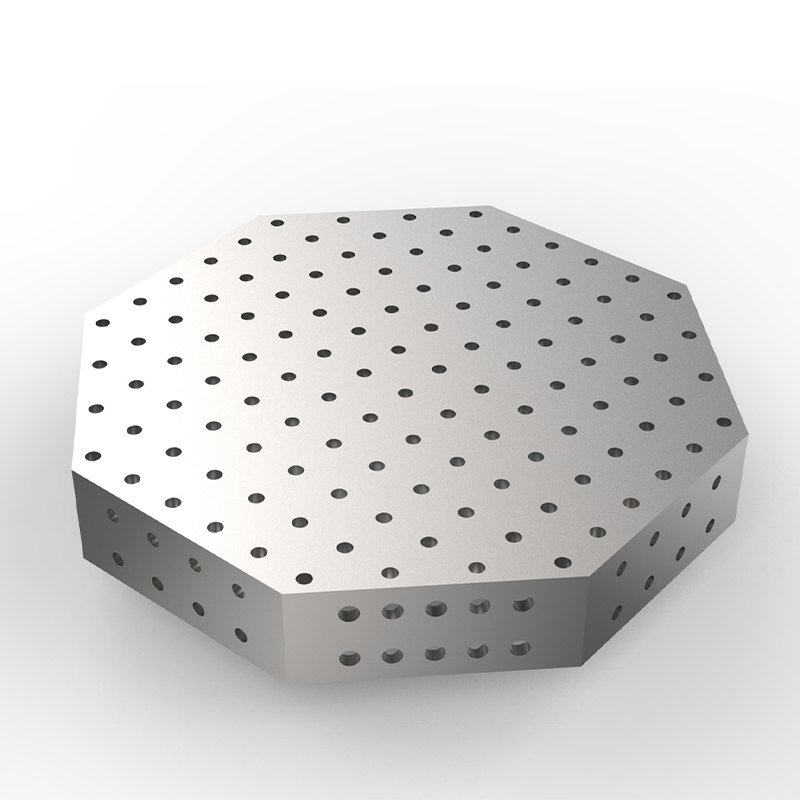
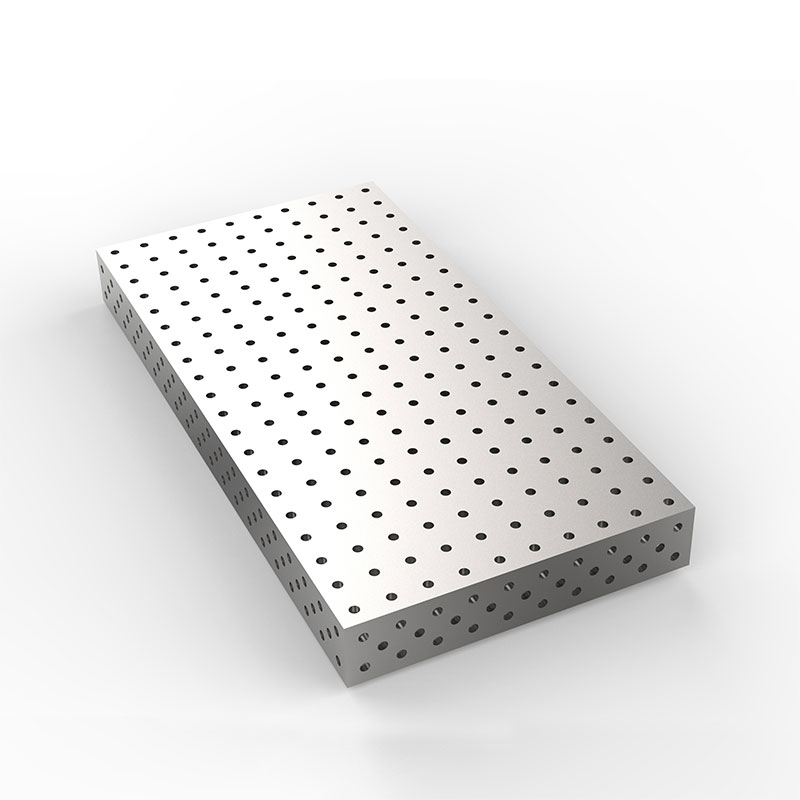
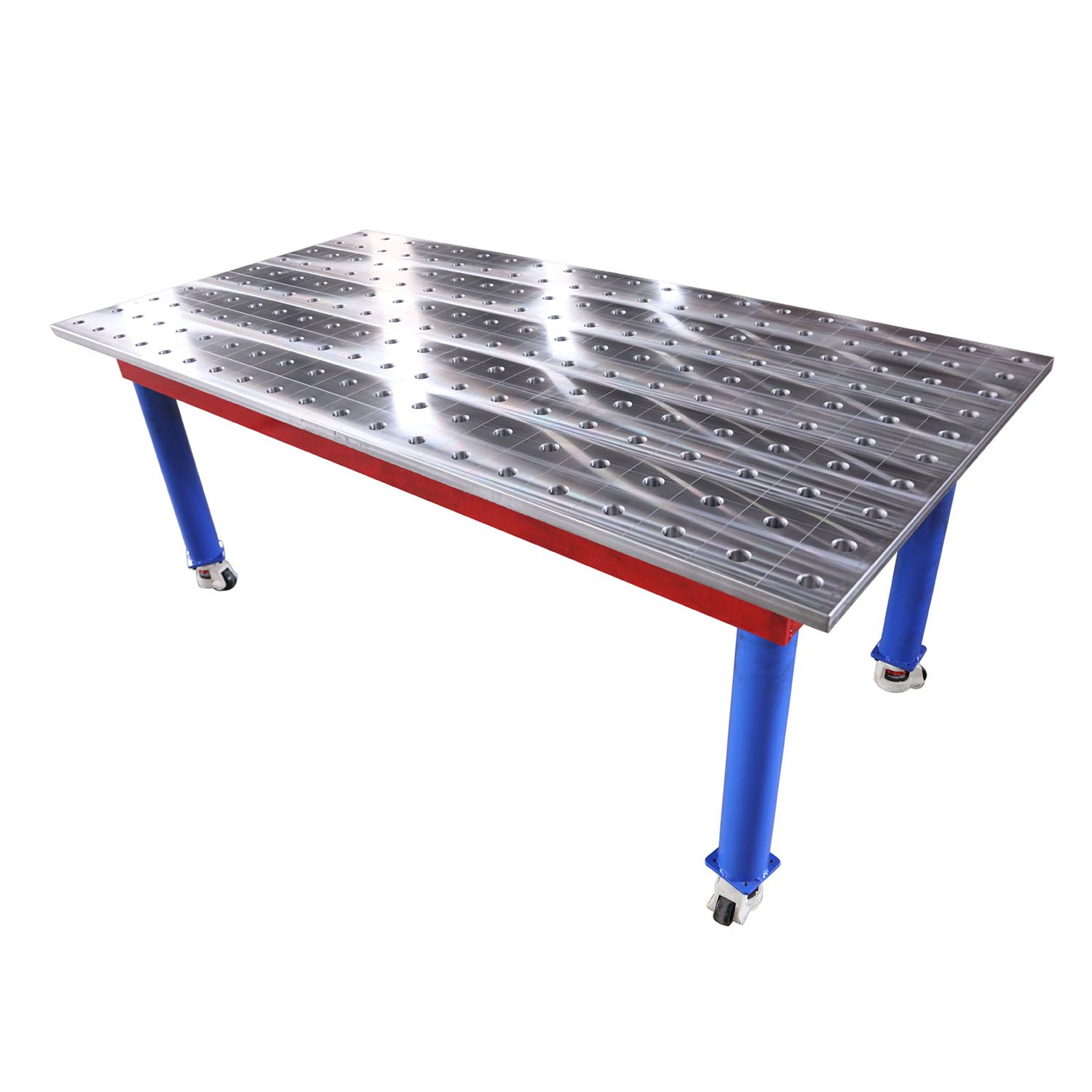
For custom or low-volume jobs, versatility is key. Modular clamping systems that can be easily reconfigured on a perforated welding table offer the flexibility needed to handle diverse projects without requiring dedicated fixtures for every part. Look for clamps that integrate seamlessly with standard table hole patterns (such as 16mm or 28mm systems) to maximize adaptability.
4. Durability and Maintenance Requirements
Welding environments are harsh, characterized by spatter, UV radiation, and mechanical abuse. High-quality clamps are constructed from hardened alloys that resist deformation and wear. Cheaper alternatives may bend under pressure or have threads that strip after limited use.
Consider the maintenance profile of the clamp. Self-cleaning designs that shed spatter easily reduce downtime. Additionally, clamps with sealed bearings or protected moving parts require less frequent lubrication and are less likely to seize up due to dust and debris accumulation.
Common Types of Welding Table Clamps and Their Applications
Understanding the specific strengths of different clamp types allows you to build a versatile toolkit that addresses various fixturing challenges. Below is a comparison of the most common clamping solutions used in professional fabrication shops.
| Clamp Type | Primary Application | Advantages | Limitations |
| C-Clamps (G-Clamps) | General purpose, heavy-duty holding | High clamping force, simple design, durable | Slow to adjust, can obstruct access, requires wrench |
| Toggle Clamps (Hold-Downs) | Quick release, sheet metal, repetitive tasks | Fast operation, consistent pressure, ergonomic | Fixed reach, lower maximum force than screw clamps |
| F-Clamps (Bar Clamps) | Wide assemblies, framing, large panels | Long reach, lightweight, versatile | Can flex under extreme load, bars can get hot |
| Corner Clamps | Box structures, frames, 90-degree joints | Ensures perfect squareness, holds two axes | Specialized use, limited to corner applications |
| Magnetic Clamps | Ferrous materials, temporary positioning | Instant placement, no mechanical obstruction | Only works on magnetic materials, limited holding power |
C-Clamps and G-Clamps
These are the workhorses of the welding world. Their simple screw mechanism provides immense holding power, making them ideal for heavy structural steel. However, their slow adjustment speed makes them less suitable for high-mix, low-volume production where setup time is critical. For precision work, look for C-clamps with swivel pads that distribute pressure evenly and prevent slipping.
Toggle Clamps and Hold-Downs
Toggle clamps utilize a lever mechanism to lock into place, providing rapid clamping and release. They are extensively used in jig and fixture builds for automotive and agricultural machinery components. When integrated into a custom welding fixture, they allow operators to load parts quickly, weld, and unload without using tools. This significantly reduces cycle time and operator fatigue.
Corner Clamps
Achieving perfect 90-degree angles is one of the most challenging aspects of frame welding. Corner clamps are designed specifically to hold two pieces of material at a right angle while simultaneously pulling them tight against the welding table. This ensures that the resulting frame is square and true, minimizing the need for post-weld straightening.
The Role of Custom Engineered Components in Fixturing
While off-the-shelf clamps are sufficient for many applications, complex assemblies often require custom-engineered fixturing solutions. This is where the expertise of a specialized manufacturer becomes invaluable. Standard clamps may not address unique geometric constraints, specific material handling requirements, or high-volume automation needs.
Custom Brackets and Fixture Plates
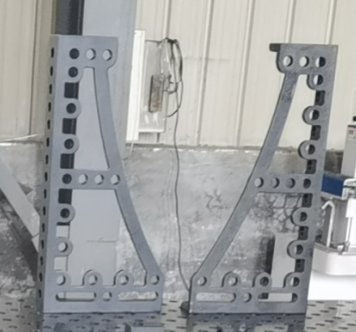
Custom bracket systems and fixture plates serve as the backbone of advanced welding setups. These components are designed to locate parts precisely and provide mounting points for various clamps. By investing in custom fixturing, manufacturers can achieve repeatability that is impossible with generic tools.
For instance, in the production of automotive subsystems or construction equipment, parts often have complex curves or irregular shapes. Standard clamps may slip or fail to hold these shapes securely. Custom-formed sheet metal assemblies and deep-drawn components can be engineered to match the contour of the workpiece, providing uniform support and preventing distortion during welding.
Integration with Manufacturing Capabilities
When designing custom fixturing, it is essential to partner with a manufacturer who understands both the design intent and the manufacturability of the components. Botou Haijun Metal Products Co., Ltd. exemplifies this approach by offering vertically integrated capabilities that cover stamping, bending, welding, and assembly. This integration ensures that custom fixture components are produced with high dimensional accuracy and surface finish, directly contributing to the reliability of the welding process.
The ability to produce precision-stamped parts and custom brackets from materials such as cold-rolled steel, stainless steel, and aluminum alloys allows for the creation of fixtures that are not only strong but also resistant to the specific environmental conditions of the welding shop. For example, stainless steel fixture components can resist spatter adhesion and corrosion, extending the lifespan of the tooling.
Material Selection for Long-Term Fixture Performance
The longevity and performance of welding clamps and fixtures are heavily influenced by the base materials used in their construction. Understanding the properties of these materials helps in making informed procurement decisions.
Cold-Rolled Steel
Cold-rolled steel is the most common material for general-purpose clamps and fixture bases. It offers a good balance of strength, cost, and machinability. However, it is susceptible to rust if not properly maintained or coated. In humid environments or where water-based coolants are used, protective coatings or regular maintenance are necessary to prevent seizure and degradation.
Stainless Steel
Stainless steel is preferred for fixtures used in clean-room environments, food processing equipment manufacturing, or when welding stainless steel parts. Its resistance to corrosion and contamination ensures that the weld zone remains pure. While more expensive, stainless steel fixtures require less maintenance and have a longer service life in corrosive environments.
Aluminum Alloys
Aluminum alloys are lightweight and non-magnetic, making them ideal for fixtures that need to be frequently moved or reconfigured. They are also excellent for welding aluminum parts, as they do not introduce iron contamination. However, aluminum has lower strength compared to steel and can be damaged by high-heat spatter, so protective measures are often required.
Quality Control and Inspection in Clamp Manufacturing
The precision of a welding clamp is only as good as the quality control processes behind its manufacture. Inconsistent thread pitches, uneven jaw surfaces, or weak heat treatment can lead to premature failure and inaccurate welding results. When sourcing clamps or custom fixture components, it is crucial to verify the manufacturer’s quality assurance protocols.
Reputable manufacturers adhere to internationally recognized quality standards, such as ISO 9001. This involves rigorous incoming material verification, in-process inspections at critical stages, and final dimensional checks. For example, the use of calibrated coordinate measuring machines (CMM) ensures that custom brackets and fixture plates meet tight tolerances, guaranteeing that they fit perfectly with existing clamping systems.
Furthermore, functional testing is essential. Clamps should be tested for holding force, cycle life, and ease of operation. Documentation such as mill test reports for raw materials and inspection reports for finished goods provides transparency and accountability, giving buyers confidence in the product’s reliability.
Best Practices for Maintaining Welding Clamps
Even the highest quality welding table clamps require proper maintenance to perform optimally over time. Implementing a routine maintenance schedule can extend the life of your tooling and ensure consistent welding results.
- Regular Cleaning: Remove welding spatter and debris from clamp jaws and threads after each use. Spatter buildup can prevent jaws from closing fully, leading to slippage.
- Lubrication: Apply high-temperature anti-seize lubricant to threads and moving parts. This prevents seizing and ensures smooth operation, especially in high-heat environments.
- Inspection for Wear: Regularly inspect jaws for dents, scratches, or wear. Replace worn pads immediately to prevent damage to workpieces. Check for bent frames or stripped threads, which compromise holding power.
- Proper Storage: Store clamps in a dry, organized location. Hanging clamps on pegboards or storing them in designated bins prevents them from being dropped or damaged by other heavy tools.
- Calibration Checks: For precision toggle clamps and modular systems, periodically verify that the clamping position and force remain within specified tolerances.
FAQ: Common Questions About Welding Table Clamps
What is the difference between a welding clamp and a standard woodworking clamp?
Welding clamps are designed to withstand higher temperatures, resist spatter, and provide greater holding force than woodworking clamps. They are typically made from hardened steel or other durable metals, whereas woodworking clamps often use softer materials and mechanisms that can be damaged by heat and sparks.
Can I use magnetic clamps for all welding applications?
No, magnetic clamps only work on ferromagnetic materials such as carbon steel. They are ineffective on stainless steel (depending on the grade), aluminum, copper, or other non-magnetic metals. Additionally, magnetic clamps may lose strength if exposed to extremely high temperatures, so they are best used for positioning rather than heavy-duty holding during high-amperage welding.
How do I prevent clamps from damaging thin sheet metal?
To prevent damage to thin sheet metal, use clamps with wide, flat jaws or add protective padding made of copper, brass, or hard plastic. Distribute the clamping force over a larger area by using backing plates or blocks. Avoid overtightening, and consider using toggle clamps with adjustable pressure settings for better control.
Why is it important to use non-marring clamps for stainless steel?
Standard steel clamps can leave iron particles on the surface of stainless steel. These particles can embed into the stainless steel and cause rust spots, compromising the corrosion resistance and aesthetic appeal of the final product. Non-marring clamps made from stainless steel, copper, or polymer prevent this contamination.
How does Botou Haijun Metal Products support custom fixturing needs?
Botou Haijun Metal Products Co., Ltd. offers comprehensive technical support, including CAD-based design review and Design for Manufacturability (DFM) feedback. Their vertically integrated production capabilities allow for the rapid prototyping and manufacturing of custom brackets, stamped parts, and formed assemblies tailored to specific fixturing requirements. With a focus on precision and quality control, they ensure that custom components meet the exact specifications needed for reliable welding operations.
Conclusion
Selecting the right welding table clamps is a strategic decision that impacts the quality, efficiency, and safety of your metal fabrication processes. By considering factors such as material compatibility, clamping force, ease of use, and durability, you can choose tools that enhance your operational capabilities. Whether you rely on standard off-the-shelf solutions or require custom-engineered fixturing components, partnering with a reputable manufacturer ensures that your tools meet the highest standards of precision and reliability.
Investing in high-quality clamping systems and maintaining them properly will yield significant returns in the form of reduced rework, faster setup times, and superior weld quality. For businesses seeking to optimize their welding workflows, exploring custom solutions from experienced providers like Botou Haijun Metal Products Co., Ltd. can provide the competitive edge needed in today’s demanding industrial landscape.