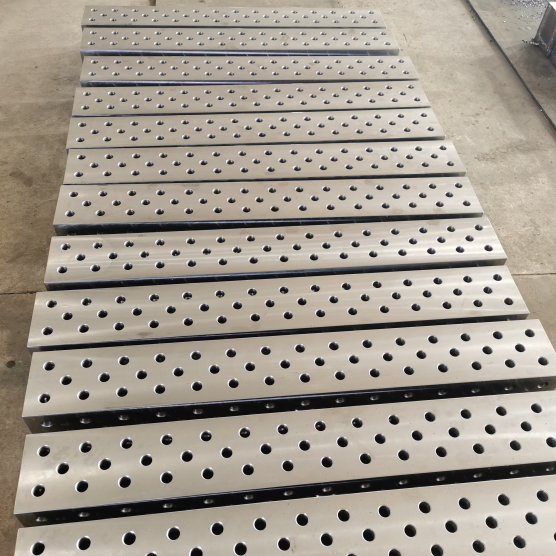
Aluminum alloy casting parts are precision-engineered components manufactured by pouring molten aluminum into molds to create complex geometries with high strength-to-weight ratios. As a specialized manufacturer, we deliver custom solutions for automotive, aerospace, and industrial sectors, ensuring strict adherence to international quality standards such as ISO 9001 and IATF 16949. Our production capabilities span die casting, sand casting, and investment casting, providing scalable options for both prototyping and mass production. By leveraging advanced metallurgical expertise and automated machining centers, we guarantee dimensional accuracy, superior surface finishes, and enhanced mechanical properties tailored to specific engineering requirements.
Understanding Aluminum Alloy Casting: Core Concepts and Manufacturing Excellence
Aluminum casting is a foundational process in modern manufacturing, enabling the creation of intricate parts that would be difficult or cost-prohibitive to produce via machining alone. The process involves melting aluminum alloys and introducing them into a mold cavity where they solidify into the desired shape. This method is favored globally due to aluminum’s unique combination of lightness, corrosion resistance, and thermal conductivity.
The Metallurgy Behind High-Performance Castings
The performance of any aluminum alloy casting part begins with the chemical composition of the alloy itself. Pure aluminum is rarely used in structural applications due to its softness. Instead, it is alloyed with elements such as silicon, magnesium, copper, and zinc to enhance specific properties. For instance, the Al-Si (Aluminum-Silicon) series, particularly A380 and A360, is widely recognized for its excellent fluidity and pressure tightness, making it ideal for thin-walled die-cast components.
In contrast, Al-Mg (Aluminum-Magnesium) alloys offer superior corrosion resistance and higher ductility, often selected for marine environments or outdoor architectural hardware. Understanding these metallurgical nuances is critical for engineers selecting materials. Our engineering team assists clients in choosing the right alloy based on load-bearing requirements, environmental exposure, and post-processing needs such as anodizing or powder coating.
Why Choose Aluminum Over Other Metals?
When comparing materials for industrial components, aluminum stands out for several decisive factors. First, its low density—approximately one-third that of steel—allows for significant weight reduction in moving assemblies, directly contributing to energy efficiency in vehicles and machinery. Second, aluminum forms a natural oxide layer that protects against corrosion, reducing maintenance costs over the product lifecycle.
Furthermore, aluminum exhibits excellent thermal and electrical conductivity. This makes it the material of choice for heat sinks, LED housing, and electronic enclosures. From a manufacturing perspective, aluminum’s lower melting point compared to steel or iron reduces energy consumption during the casting process, aligning with sustainable manufacturing goals.
Primary Casting Processes: Selecting the Right Method for Your Project
Not all casting methods are created equal. The choice of process depends on volume, complexity, tolerance requirements, and budget. As a comprehensive manufacturer, we specialize in three primary techniques, each offering distinct advantages for different applications of aluminum alloy casting parts.
High-Pressure Die Casting (HPDC)
Die casting is the dominant process for high-volume production. It involves forcing molten aluminum under high pressure into reusable steel molds, known as dies. This method produces parts with exceptional dimensional accuracy and smooth surface finishes, often eliminating the need for secondary machining.
- Speed: Cycle times are short, allowing for thousands of parts per day.
- Precision: Tight tolerances can be maintained consistently across large batches.
- Complexity: Ideal for intricate shapes with thin walls and detailed features.
However, die casting requires significant upfront investment in tooling. Therefore, it is most economically viable for projects with annual volumes exceeding several thousand units. Common applications include automotive transmission cases, engine blocks, and consumer electronics housings.
Sand Casting for Flexibility and Large Components
Sand casting utilizes expendable sand molds to form the component. This traditional method is highly versatile and suitable for producing larger, heavier parts that may not be feasible for die casting due to size constraints or lower volume requirements. The molds are created by packing sand around a pattern, which is then removed before pouring the metal.
While sand casting generally offers looser tolerances and rougher surface finishes than die casting, it excels in flexibility. Tooling costs are significantly lower, and design changes can be implemented rapidly. This makes it an excellent choice for prototypes, low-volume production runs, and large industrial components like pump housings and valve bodies.
Investment Casting (Lost-Wax Process)
Investment casting provides the highest level of detail and surface quality among casting methods. It involves creating a wax pattern, coating it with ceramic slurry, and then melting out the wax to leave a hollow ceramic mold. Molten aluminum is then poured into this mold.
This process is ideal for complex geometries with undercuts and fine details that cannot be achieved with other methods. Although it is more labor-intensive and costly per unit, investment casting minimizes material waste and reduces the need for extensive post-processing. It is frequently used in aerospace components, medical devices, and high-end architectural fittings.
Key Aluminum Alloys Used in Precision Casting
Selecting the correct alloy is pivotal to the success of your project. Different alloys offer varying levels of strength, castability, and corrosion resistance. Below is a detailed breakdown of the most commonly used aluminum alloys in our manufacturing facility.
| Alloy Series | Common Designations | Key Characteristics | Typical Applications |
| Al-Si-Cu (3xx.x) | A380, A383, ADC12 | Excellent fluidity, good mechanical properties, moderate corrosion resistance. | Automotive engine parts, gearbox housings, power tool bodies. |
| Al-Si-Mg (3xx.x) | A356, A357 | High ductility, excellent corrosion resistance, heat treatable (T6). | Wheel rims, aerospace structures, military components, pump impellers. |
| Al-Si (4xx.x) | A413, A360 | Superior pressure tightness, high fluidity, good corrosion resistance. | Hydraulic components, marine hardware, intricate electronic enclosures. |
| Al-Mg (5xx.x) | A514, A518 | Highest corrosion resistance, good machinability, moderate strength. | Marine fittings, chemical processing equipment, outdoor architectural parts. |
Deep Dive: A380 vs. A356
Two of the most frequently requested alloys are A380 and A356, yet they serve very different purposes. A380 is the workhorse of the die casting industry. It offers a balanced combination of castability and mechanical properties, making it cost-effective for general-purpose engineering parts. However, it is not typically heat-treated to high strength levels.
On the other hand, A356 is preferred when high structural integrity is required. It responds well to T6 heat treatment, which significantly enhances its yield strength and hardness. A356 is also known for its superior weldability and corrosion resistance, making it the standard for safety-critical components in the automotive and aerospace sectors. Choosing between these two depends largely on whether the priority is cost-efficiency (A380) or maximum mechanical performance (A356).
Post-Casting Processes: Enhancing Performance and Aesthetics
Raw casting is rarely the final step. To meet stringent functional and aesthetic requirements, aluminum alloy casting parts undergo various secondary processes. These treatments improve surface quality, dimensional accuracy, and mechanical properties.
CNC Machining for Precision
While casting creates the near-net shape, CNC machining is essential for achieving tight tolerances on critical interfaces, such as mounting holes, mating surfaces, and threads. Our integrated machining centers allow us to perform milling, drilling, and tapping operations immediately after casting. This vertical integration ensures that datum references are maintained, reducing cumulative errors and lead times.
Surface Treatments and Finishes
Surface treatment not only improves appearance but also enhances durability. Common finishes include:
- Anodizing: An electrochemical process that thickens the natural oxide layer, providing superior corrosion resistance and allowing for dyeing in various colors. Type II anodizing is standard for decorative purposes, while Type III (hard coat) offers enhanced wear resistance.
- Powder Coating: A dry finishing process where electrostatically charged powder is applied and cured under heat. It provides a thick, durable, and uniform coating available in a wide range of textures and colors.
- Shot Blasting: Uses abrasive media to clean the surface, remove scale, and create a uniform matte texture. This is often a preparatory step for painting or coating.
- Polishing and Buffing: Mechanical processes used to achieve a mirror-like finish, often required for decorative automotive trim or lighting fixtures.
Heat Treatment (Tempering)
Heat treatment alters the microstructure of the aluminum alloy to relieve internal stresses induced during casting and to improve mechanical properties. The T5 and T6 tempers are most common. T5 involves cooling from an elevated temperature shaping process and artificially aging, while T6 includes solution heat treatment followed by quenching and artificial aging. This process is crucial for alloys like A356 to reach their full potential in terms of tensile strength and hardness.
Quality Assurance and Certification Standards
In the B2B industrial sector, trust is built on consistency and compliance. Our manufacturing framework is designed to meet rigorous international standards, ensuring that every batch of aluminum alloy casting parts meets specified requirements.
IATF 16949 and Automotive Compliance
For automotive clients, adherence to IATF 16949 is non-negotiable. This standard focuses on defect prevention and the reduction of variation and waste in the supply chain. Our quality management system incorporates Advanced Product Quality Planning (APQP), Production Part Approval Process (PPAP), and Failure Mode and Effects Analysis (FMEA). These tools ensure that potential risks are identified and mitigated before mass production begins.
ISO 9001:2015 General Quality Management
Our ISO 9001 certification demonstrates our commitment to continuous improvement and customer satisfaction. It governs all aspects of our operation, from raw material procurement to final shipment. Regular internal audits and third-party inspections ensure that our processes remain robust and responsive to client needs.
Advanced Inspection Technologies
We employ state-of-the-art inspection equipment to verify dimensional accuracy and internal integrity:
- Coordinate Measuring Machines (CMM): For precise 3D dimensional verification of complex geometries.
- X-Ray Inspection: To detect internal voids, porosity, or inclusions that are not visible on the surface.
- Spectrometry: To verify the chemical composition of incoming raw materials and finished casts, ensuring alloy purity.
- Leak Testing: Critical for fluid-handling components like pump housings and valve bodies to ensure pressure tightness.
Industry Applications: Where Aluminum Castings Excel
The versatility of aluminum casting allows it to serve a diverse range of industries. Each sector has unique demands, and our engineering team adapts its approach to meet these specific challenges.
Automotive and Electric Vehicles (EV)
The automotive industry is the largest consumer of aluminum castings. The shift towards electric vehicles has accelerated this demand, as manufacturers seek to reduce vehicle weight to extend battery range. Key components include:
- Motor Housings: Requiring high thermal conductivity to dissipate heat from electric motors.
- Battery Trays: Large, complex structures that must be lightweight yet robust enough to protect battery packs.
- Transmission Cases: Demanding high dimensional stability and pressure tightness.
Aerospace and Defense
In aerospace, the strength-to-weight ratio is paramount. Aluminum castings are used in structural components, landing gear parts, and engine accessories. The strict regulatory environment requires full traceability of materials and processes. We provide comprehensive documentation packages, including material certificates and inspection reports, to support airworthiness certification.
Industrial Machinery and Robotics
Heavy machinery and robotic arms benefit from aluminum’s ability to reduce inertial loads, allowing for faster acceleration and deceleration. Components such as motor mounts, gearboxes, and robotic end-effectors are commonly cast from aluminum to improve operational efficiency and reduce energy consumption.
Telecommunications and Electronics
With the rollout of 5G networks, heat management has become a critical issue. Aluminum castings are extensively used for heat sinks and base stations due to their excellent thermal dissipation properties. Additionally, electromagnetic interference (EMI) shielding is often integrated into the casting design, providing a compact and effective solution for electronic enclosures.
How to Choose the Right Manufacturer for Aluminum Alloy Casting Parts
Selecting a manufacturing partner is a strategic decision. Beyond price, several factors determine the long-term success of your supply chain. Here is a guide to evaluating potential suppliers.
1. Technical Capability and Equipment
Assess whether the manufacturer has the appropriate machinery for your project. Do they have high-tonnage die casting machines for large parts? Do they offer in-house CNC machining and surface treatment? A supplier with integrated capabilities can reduce lead times and improve quality control by keeping the entire process under one roof.
2. Engineering Support and DFM Analysis
Look for a partner who offers Design for Manufacturability (DFM) feedback. Early engagement with engineers can help optimize your design for casting, reducing costs and improving quality. A proactive manufacturer will identify potential issues such as wall thickness variations, undercuts, or draft angle problems before tooling begins.
3. Quality Systems and Certifications
Verify that the manufacturer holds relevant certifications such as ISO 9001 or IATF 16949. Request examples of their quality control procedures and inspection reports. A transparent supplier will be willing to share their quality metrics and corrective action processes.
4. Supply Chain Stability and Scalability
Consider the supplier’s capacity to scale with your business. Can they handle sudden increases in demand? Do they have reliable sources for raw materials? A stable supply chain is crucial for avoiding production delays and ensuring consistent product quality.
Common Defects in Aluminum Casting and How We Mitigate Them
Understanding potential defects helps in setting realistic expectations and implementing effective quality controls. Here are common issues and our mitigation strategies.
| Defect Type | Description | Root Cause | Mitigation Strategy |
| Porosity | Small voids or holes within the casting. | Trapped gas or shrinkage during solidification. | Optimized gating systems, vacuum assistance, and controlled cooling rates. |
| Cold Shuts | Lines or cracks where metal streams meet but do not fuse. | Low metal temperature or slow injection speed. | Adjusting process parameters, improving venting, and optimizing runner design. |
| Misruns | Incomplete filling of the mold cavity. | Insufficient metal volume or premature solidification. | Increasing injection speed, raising metal temperature, and modifying part geometry. |
| Hot Tears | Cracks formed during cooling due to stress. | Uneven cooling or restricted contraction. | Uniform wall thickness, proper draft angles, and optimized ejection timing. |
Our engineering team uses simulation software to predict and prevent these defects before physical tooling is created. This proactive approach significantly reduces scrap rates and ensures higher first-pass yield.
Frequently Asked Questions (FAQ)
What is the minimum order quantity (MOQ) for aluminum casting parts?
MOQ varies depending on the casting process. For die casting, MOQs are typically higher (e.g., 1,000–5,000 units) to amortize the cost of steel tooling. For sand casting or investment casting, lower MOQs (e.g., 50–100 units) are feasible due to lower tooling costs. We work with clients to find the most cost-effective solution for their volume needs.
Can you assist with design optimization?
Yes, our engineering team provides comprehensive DFM (Design for Manufacturability) analysis. We review your CAD files to suggest improvements in wall thickness, draft angles, and rib placement to enhance castability and reduce costs without compromising functionality.
What is the typical lead time for production?
Lead times depend on tooling complexity and order volume. Sample tooling can take 2–4 weeks, while production tooling may take 4–8 weeks. Once tooling is approved, production runs typically take 2–4 weeks depending on quantity. We prioritize clear communication to keep your project on schedule.
Do you provide secondary machining and finishing?
Yes, we offer integrated secondary services including CNC machining, tapping, drilling, deburring, anodizing, powder coating, and assembly. This one-stop-shop approach ensures tighter quality control and faster turnaround times.
What file formats do you accept for quotes?
We accept 3D CAD files in formats such as STEP, IGES, and X_T. 2D drawings in PDF or DWG format are also helpful for specifying tolerances and critical dimensions. Providing complete data allows us to give accurate and timely quotations.
About Botou Haijun Metal Products: Precision Beyond Casting
At Botou Haijun Metal Products Co., Ltd., our expertise extends beyond the production of aluminum alloy casting parts. We are deeply committed to the research, development, and manufacturing of high-precision flexible modular fixtures and metalworking tools, providing efficient welding and positioning solutions for the modern manufacturing industry.
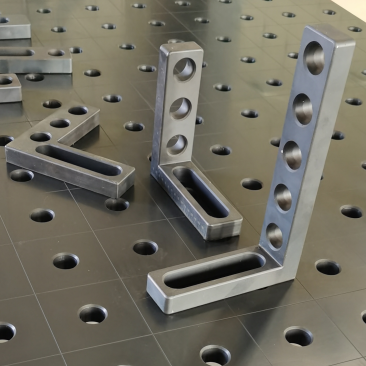
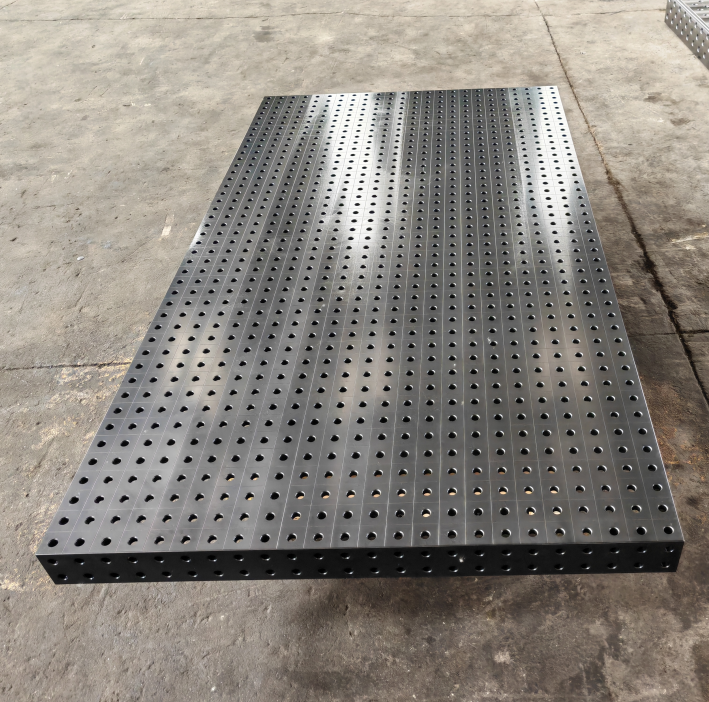
Recognizing that precision casting often requires equally precise assembly and machining setups, we offer a comprehensive ecosystem of tooling solutions. Our core product line features renowned 2D and 3D flexible welding platforms, which have become the preferred jigging equipment in the machining, automotive, and aerospace sectors due to their exceptional versatility. To complement these platforms, we supply a wide range of accessories—including U-shaped and L-shaped multi-purpose square boxes, 200-series support angle irons, and 0-225° universal angle gauges—that enable rapid, accurate workpiece positioning and clamping.
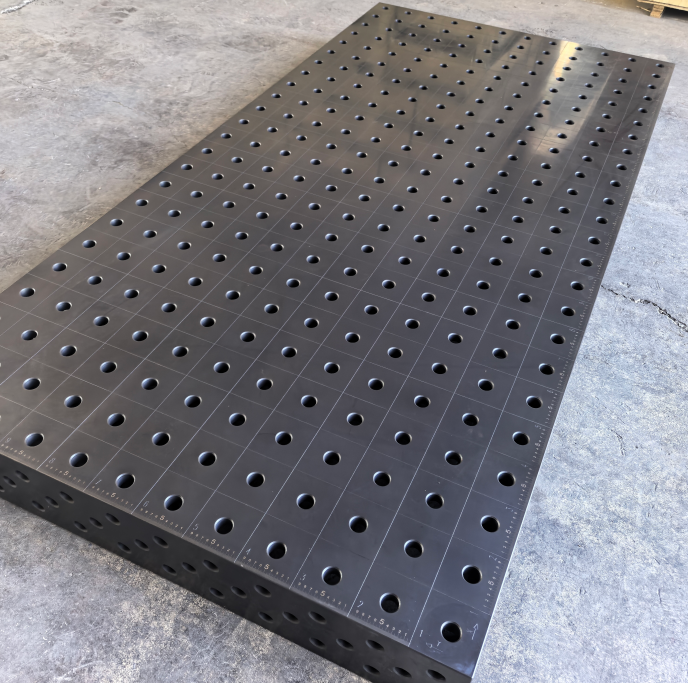
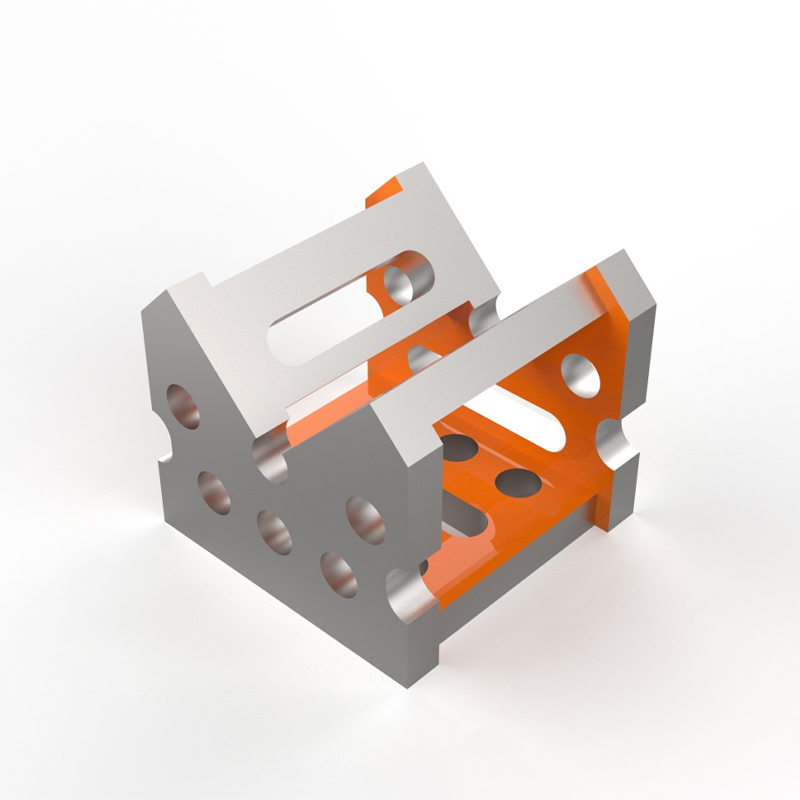
Additionally, we manufacture professional cast iron 3D welding platforms and angle connection blocks, ensuring exceptional durability and stability for heavy-duty applications. With years of industry experience, Haijun Metal serves as a trusted global supplier, seamlessly integrating our casting capabilities with high-quality production machinery tools to support your entire manufacturing workflow.
Conclusion: Partnering for Precision and Performance
Choosing the right manufacturer for aluminum alloy casting parts is a critical step in ensuring the success of your product. With our deep expertise in metallurgy, advanced manufacturing technologies, and rigorous quality assurance protocols, we are equipped to deliver components that meet the highest standards of performance and reliability. Whether you are developing a prototype or scaling up for mass production, our team is dedicated to providing tailored solutions that drive efficiency and innovation.
We invite engineers, procurement specialists, and product developers to collaborate with us. By leveraging our integrated capabilities—from design support to final finishing—you can streamline your supply chain and bring superior products to market faster.
Ready to start your next project? Contact our engineering team today for a free DFM analysis and competitive quote. Let us help you transform your design concepts into high-quality, precision-engineered reality.
Explore Our Full Range of Casting Solutions and Technical Capabilities