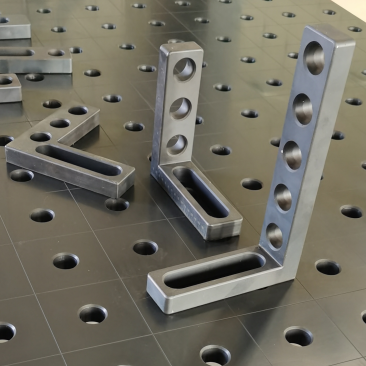
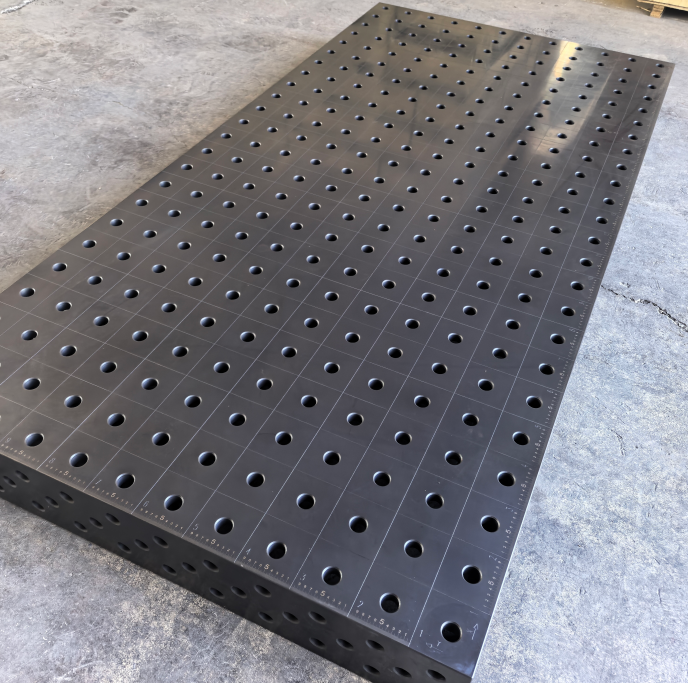
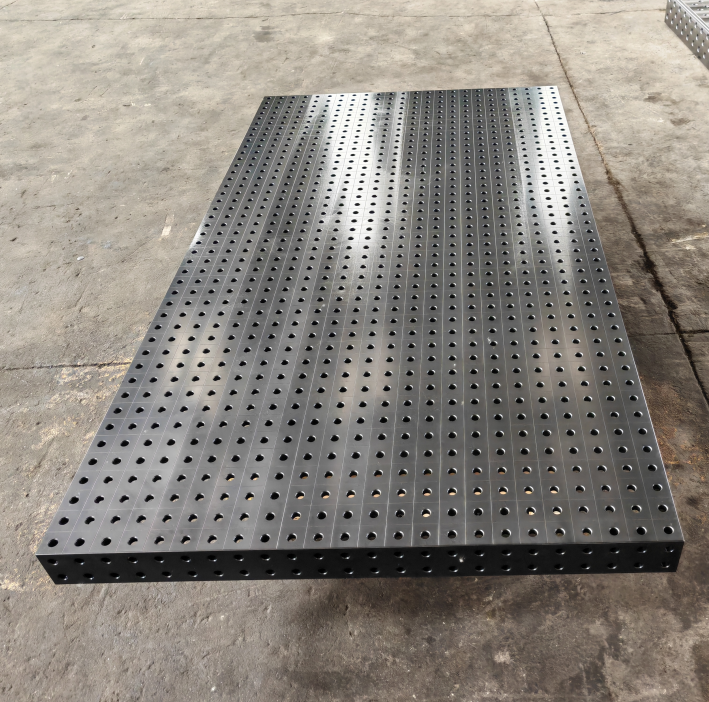
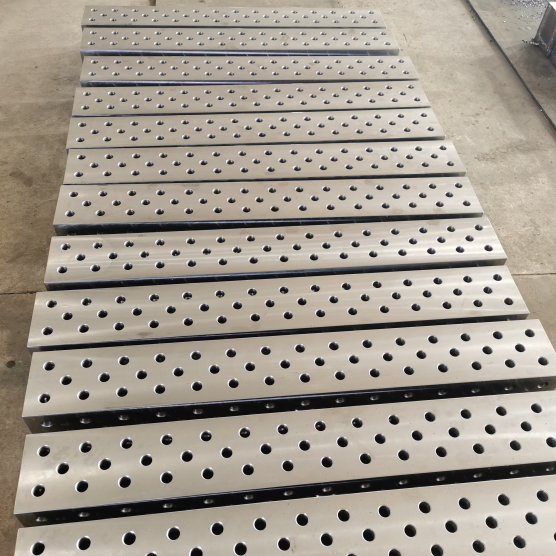
A welding table with holes is a precision-engineered work surface featuring a grid of threaded or unthreaded apertures designed for modular fixturing. Unlike solid-top tables, these perforated surfaces allow welders to secure clamps, stops, and jigs at any point on the table, ensuring repeatable accuracy for complex assemblies. In 2026, the best models combine high-tensile steel construction with advanced heat resistance, making them essential for industries requiring tight tolerances, such as aerospace, automotive fabrication, and heavy machinery manufacturing.
Why a Welding Table with Holes is Essential for Modern Fabrication
The shift from traditional solid welding benches to modular welding tables with holes represents a fundamental change in how professional fabricators approach efficiency and precision. The primary advantage lies in the versatility of the hole pattern. Whether using a square grid or a staggered arrangement, these openings transform the table surface into a three-dimensional workspace where components can be locked in place instantly.
In high-volume production environments, setup time directly impacts profitability. A standard solid table often requires custom-built jigs or temporary tack welding to hold parts in position. In contrast, a perforated table allows for the immediate deployment of universal clamping systems. This flexibility reduces setup times by up to 50% in many reported shop floor scenarios, allowing teams to switch between different projects without extensive retooling.
- Precision Alignment: The uniform hole spacing ensures that stops and angles can be positioned with mathematical accuracy, critical for batch production.
- Versatile Clamping: Access from the top, sides, and sometimes even underneath enables complex multi-axis welding operations.
- Debris Management: Holes allow slag, spatter, and cutting debris to fall through or be easily cleared, keeping the working surface clean.
- Scalability: Multiple tables can be bolted together via the hole patterns to create massive assembly platforms for large-scale structures.
For engineers and shop managers, the decision to upgrade to a table with holes is not just about buying new furniture; it is an investment in process control. The ability to replicate exact setups day after day minimizes human error and ensures that every welded assembly meets strict quality standards.
Key Features Defining the Best Welding Tables in 2026
As we move through 2026, the market for industrial welding equipment has matured. Buyers are no longer satisfied with basic functionality; they demand durability, thermal stability, and ergonomic design. When evaluating a welding table with holes, several technical specifications separate premium equipment from entry-level options.
Material Composition and Heat Resistance
The core of any high-quality welding table is its material. Top-tier models utilize low-carbon structural steel, often treated to resist warping under extreme thermal stress. During welding, localized temperatures can exceed 3,000°F (1,650°C). Inferior metals may warp or distort over time, rendering the hole pattern misaligned and useless for precision work.
Advanced manufacturing processes now include stress-relieving treatments post-fabrication. This ensures that the table remains flat within tight tolerances, typically +/- 0.5mm over the entire surface. For applications involving robotic welding arms, this flatness is non-negotiable, as even minor deviations can cause collision errors or poor weld penetration.
Hole Pattern Geometry and Spacing
The arrangement of holes dictates the utility of the table. The two most common patterns found in professional settings are:
- Square Grid (e.g., 100mm x 100mm or 4″ x 4″): Ideal for right-angle constructions and standard fixture layouts. It offers simplicity and ease of calculation for positioning.
- Staggered or Hexagonal Pattern: Provides more mounting points per square foot, offering greater flexibility for odd-shaped components and circular assemblies.
In 2026, the trend favors larger hole diameters (typically 16mm to 28mm) to accommodate heavier-duty clamps and faster locking mechanisms. The edges of these holes are often chamfered or hardened to prevent deformation when heavy clamps are tightened repeatedly.
Surface Finish and Coating
Bare steel is prone to rapid oxidation, especially in humid workshop environments. While some purists prefer untreated surfaces for better electrical grounding, modern coatings offer a balance between protection and conductivity. High-temperature powder coatings are now standard, providing resistance to sparks and UV degradation without peeling. Some specialized tables feature a nitrided surface, which significantly increases hardness and reduces the likelihood of spatter sticking to the table.
Technical Comparison: Solid Top vs. Perforated Welding Tables
Understanding the operational differences between solid and perforated tables helps buyers make informed decisions based on their specific workflow. While solid tables have their place in rough cutting or grinding stations, they lack the modularity required for precise fabrication.
| Feature | Solid Top Welding Table | Welding Table with Holes (Perforated) |
| Clamping Flexibility | Limited to table edges or magnetic bases | Unlimited positions across the entire surface |
| Setup Time | High (requires custom jigs/tacking) | Low (instant modular fixturing) |
| Precision Repeatability | Low (dependent on manual measurement) | High (grid-based positioning) |
| Spatter Management | Accumulates on surface, requires scraping | Falls through holes or easy to clear |
| Initial Cost | Lower | Higher (due to machining and tooling) |
| Long-Term ROI | Moderate | High (labor savings and reduced scrap) |
The data clearly indicates that while the upfront cost of a welding table with holes is higher, the return on investment is realized through reduced labor hours and improved first-pass yield rates. For shops handling diverse projects, the ability to reconfigure the workspace in minutes is a game-changer.
How to Choose the Right Welding Table for Your Application
Selecting the optimal table requires a detailed analysis of your current and future production needs. A table that works for a small jewelry workshop will fail in a heavy equipment manufacturing plant. Here is a step-by-step guide to selecting the right specifications.
Step 1: Assess Load Requirements
Determine the maximum weight of the assemblies you intend to weld. Light-duty tables (capacity up to 500 kg) are suitable for sheet metal work and tubing. Heavy-duty industrial tables must support several tons without deflection. Consider not just the static weight but also the dynamic loads imposed by clamping forces and hammering during fit-up.
Step 2: Define Hole Size and Thread Type
The choice between threaded and unthreaded holes is critical. Threaded holes allow bolts to be screwed directly into the table, providing immense holding power for vertical or overhead clamping. However, they require careful maintenance to prevent thread damage from spatter. Clean-bore (unthreaded) holes rely on friction clamps and are faster to use but may slip under extreme lateral force if not properly secured. Many 2026 models offer a hybrid approach or interchangeable inserts.
Step 3: Evaluate Table Dimensions and Modularity
Measure your available floor space, but also consider the size of your largest typical workpiece. It is often wiser to choose a slightly larger table than currently needed to accommodate future growth. Additionally, check if the table design supports daisy-chaining. The ability to bolt multiple units together creates a continuous reference plane, essential for assembling long beams or large frames.
Step 4: Check Leg Stability and Adjustability
A wobbling table ruins precision. Look for legs made from heavy-gauge rectangular tubing rather than thin-walled pipe. Adjustable feet are mandatory for uneven shop floors. Some premium models include leveling screws that can be adjusted without lifting the table, saving significant time during installation.
Common Applications and Industry Use Cases
The versatility of the welding table with holes has led to its adoption across a wide spectrum of industries. Understanding these applications highlights the breadth of its utility.
- Automotive Chassis Fabrication: Manufacturers use these tables to build roll cages and subframes. The precise hole grid ensures that left and right sides of a chassis are identical, maintaining vehicle balance and safety standards.
- Aerospace Component Assembly: In aerospace, tolerances are measured in thousandths of an inch. Perforated tables allow for the creation of complex jigs that hold lightweight aluminum or titanium parts securely without distortion during TIG welding.
- Custom Machinery Manufacturing: When building one-off machines or prototypes, engineers can rapidly prototype fixtures on the table. The ability to move stops and clamps allows for iterative design testing without welding new jigs for every iteration.
- Artistic Metalwork: Sculptors and architectural metalworkers benefit from the 3D clamping capabilities. Creating complex curves and organic shapes requires holding pieces at unusual angles, which is only possible with a multi-axis fixturing system.
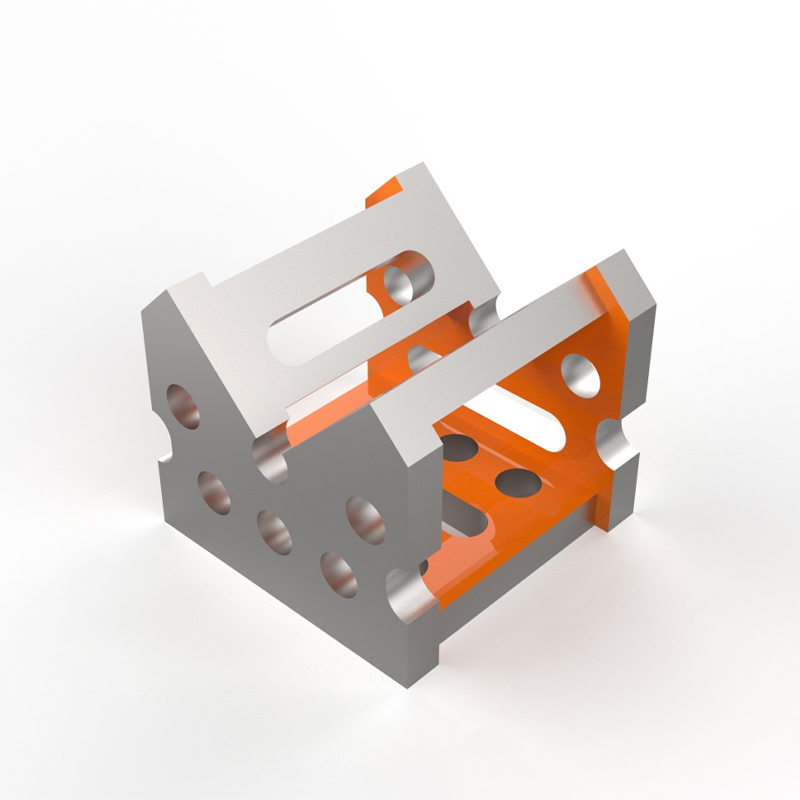
Leading this charge in innovation is Botou Haijun Metal Products Co., Ltd., a specialist dedicated to the research, development, and production of high-precision flexible modular fixtures. Recognizing the critical needs of the machining, automotive, and aerospace sectors, Haijun Metal has established itself as a trusted global supplier by offering comprehensive solutions that go beyond simple tables. Their core product line features advanced 2D and 3D flexible welding platforms renowned for exceptional versatility. To maximize the potential of these platforms, the company provides a seamless ecosystem of complementary components, including U-shaped and L-shaped multi-purpose square boxes, 200-series support angle irons, and 0-225° universal angle gauges. Furthermore, for applications demanding superior damping and stability, Haijun Metal manufactures professional cast iron 3D welding platforms and precision angle connection blocks, ensuring every project benefits from decades of industry expertise and unwavering quality.
Maintenance and Care for Longevity
Investing in a high-end welding table is only the first step. Proper maintenance ensures that the table retains its flatness and functionality for decades. Neglect can lead to clogged holes, rust, and surface warping.
Preventing Spatter Accumulation
Welding spatter is the enemy of modular fixturing. If spatter builds up inside the holes, clamps will not seat correctly, leading to inaccurate positioning. Applying a specialized anti-spatter spray before starting work creates a barrier that makes cleanup easier. Regularly brushing out the holes with a dedicated wire brush or using compressed air prevents buildup. For threaded holes, running a tap through periodically keeps the threads clean and functional.
Surface Protection Strategies
While the table is designed to be worked on, unnecessary abuse should be avoided. Using sacrificial plates or copper backing bars under critical weld zones can protect the main surface from arc strikes that might cause pitting. If the table is used for cutting with plasma or oxy-fuel torches, ensure that the slag does not fuse to the surface. Periodic application of a light oil coat can prevent rust in non-clamping areas, though care must be taken not to contaminate weld zones.
Flatness Verification
Over years of heavy use, it is prudent to verify the flatness of the table. Using a precision straightedge and feeler gauges, operators can check for high or low spots. If minor warping occurs, some tables allow for resurfacing by milling, restoring them to factory specifications. This service extends the life of the asset significantly compared to replacement.
Frequently Asked Questions (FAQ)
What is the standard hole spacing for welding tables?
While there is no single global standard, the most common spacing in the industry is 100mm x 100mm (approx. 4 inches). This metric and imperial overlap allows for compatibility with a wide range of international tooling. Some specialized tables use 50mm spacing for finer adjustments or 200mm for heavy-duty applications.
Can I drill additional holes in my welding table?
It is generally not recommended to drill additional holes into a precision welding table. Doing so can compromise the structural integrity, induce stress that leads to warping, and void warranties. Furthermore, manually drilled holes rarely achieve the perpendicularity and tolerance of factory-machined apertures, reducing their utility for precision fixturing.
Are welding tables with holes suitable for robotic welding?
Yes, they are highly suitable and often preferred for robotic cells. The predictable grid system allows robot programmers to set coordinate systems easily. The rigidity of these tables also minimizes vibration, which is crucial for maintaining weld quality at high travel speeds. Ensure the table is grounded properly to prevent electrical interference with robot sensors.
How do I remove stuck clamps from the holes?
If a clamp becomes stuck due to spatter or corrosion, avoid using excessive force which could damage the hole. Apply a penetrating oil and let it sit. Gently tapping the clamp with a soft-faced mallet can help break the bond. For threaded inserts, using the correct size tap to clean the threads is often necessary. Prevention via anti-spatter spray is the most effective strategy.
What is the difference between cast iron and steel welding tables?
Cast iron tables offer excellent damping properties, reducing vibration, and are naturally resistant to spatter adhesion. However, they are brittle and can crack under impact or extreme point loads. Steel tables, particularly those made from structural steel, offer higher tensile strength and toughness, making them better suited for heavy hammering and dynamic loads common in general fabrication.
Final Thoughts: Investing in Precision and Efficiency
In the competitive landscape of 2026 manufacturing, efficiency and precision are not optional; they are survival metrics. A welding table with holes serves as the cornerstone of a modern fabrication cell, enabling workflows that are faster, more accurate, and infinitely more flexible than traditional methods. By eliminating the need for custom jigs and reducing setup times, these tables pay for themselves through labor savings and reduced material waste.
Whether you are outfitting a new facility or upgrading existing equipment, the choice of a high-quality perforated welding table signals a commitment to excellence. It empowers your workforce to tackle complex geometries with confidence and ensures that every product leaving your shop meets the highest standards of quality.
Ready to Upgrade Your Workshop?
Choosing the right configuration for your specific needs requires expert guidance. From determining the optimal hole pattern to selecting the appropriate load capacity, our team is ready to assist you in designing a workstation that maximizes your productivity.
Explore our full range of industrial welding solutions and discover how the right equipment can transform your production line. Contact us today for a detailed consultation, custom quotes, and technical specifications tailored to your project requirements.
View Our Full Range of Welding Tables & Fixturing Solutions